
The steady hum of your tires on the pavement can be almost hypnotic right up until a sudden, violent thumping sound shatters the peace. The steering wheel jerks in your hands. Your car lurches hard to one side. A jolt of panic sends your heart racing as you realize the unthinkable has happened, you’ve lost a tire at highway speed.
This terrifying scenario plays out every day on Oklahoma City’s busiest roads, from the constant rush of I-35 to the wide-open stretches of the Turner Turnpike. How you react in the next few moments will determine much more than whether you’re late. It could determine whether you get home at all.
According to Automotive Fleet, bad tires are behind 11,000 accidents every single year in the United States. That’s why knowing how to handle a blowout or a flat isn’t just a handy skill, it’s a critical survival skill. This guide is here to cut through the confusion. We’ll walk you through the expert-approved steps for changing a tire safely, help you recognize when the risk is just too high, and show you how to maintain your tires to hopefully prevent the problem in the first place. The time to make a plan is now, before the emergency ever happens.
Key Points
- Never, ever try to change a tire on a narrow shoulder or in a lane of traffic. It’s far better to drive slowly on a flat tire to a safe exit and pay for a new wheel than to risk your life.
- Make sure your car is equipped with a working jack, a lug wrench, and reflective triangles. It’s a scary thought, but nearly 20% of drivers don’t actually know how to use them.
- Defective tires are responsible for thousands of crashes each year, with summer heat and low tire pressure being two of the biggest culprits.
- If it’s dark, wet, or traffic is flying by, the smartest and only safe choice is to stay in your car with your seatbelt on and call for professional help.
Why Tire Issues are a Major Risk
Highways are designed for one thing, movement. They are not built for you to be stopped on the side doing repairs. When you pull over on the shoulder, you are placing yourself just inches away from vehicles that weigh thousands of pounds and are moving at deadly speeds. There is simply no room for error. Tire-related problems aren’t just minor annoyances, they are a serious threat to everyone on the road.
The National Highway Traffic Safety Administration (NHTSA) connects tire trouble to over 11,000 crashes annually in the U.S. In 2022 alone, a staggering 563 people lost their lives in these incidents. And this is a global problem. Data from the UK’s TyreSafe shows that 190 people were killed or seriously injured in 2023 because of bad tires, which is a 29% jump from the year before.
These aren’t just statistics. They represent real people, drivers just like you, stuck on the side of the road, completely exposed and vulnerable. TyreSafe also found that one out of every five breakdowns on major roads is because of a tire problem, adding up to over 51,500 incidents in 2023. Teen drivers are especially at risk, with around 300,000 crashes involving teens each year being linked to tire issues. Taking preventative measures and being disciplined about what you do on the roadside can dramatically improve your odds.
Flat Tire on the Highway? Your First Actions Are Critical
Your first instinct is going to be to slam on the brakes and stop immediately. You have to fight that urge. Stopping in a traffic lane or on a tiny sliver of pavement next to speeding cars is practically an invitation for disaster. The very first thing you should do is turn on your hazard flashers to signal to other drivers that you’re in trouble.
Take a deep breath and assess your surroundings. If the shoulder is dangerously narrow or you’re on a curve, keep driving. Slow way down, but keep moving. Yes, you might completely destroy the wheel rim by grinding it on the pavement, but a rim can be replaced. A life cannot.
Choosing the Safest Possible Place to Stop
Your goal is to find a wide, paved area. An exit ramp, a designated rest stop, or even a large parking lot are all great options. If you absolutely have to stop on the side of the road, look for ground that is flat and firm. Soft dirt or grass can cause your jack to sink or slip, which could send the car crashing down. Always try to stop on a straight stretch of road where oncoming drivers will be able to see you from far away.
Pull your vehicle as far off the pavement as you possibly can. You want to create a buffer zone. Try to have at least a full car’s width of empty space between your vehicle and the passing traffic. If you can’t create that much space, do not get out of the vehicle. Stay inside with your seatbelt buckled and call for professional help. These same precautions can help you stay safe while waiting for a tow truck.
Dangerous Locations You Must Avoid
Never, ever try to change a tire on a blind curve or just over the top of a hill. Drivers coming up behind you won’t see your car until they’re right on top of it, leaving them no time to react. Bridges and tunnels are also terrible spots because they often have no shoulders at all, turning them into death traps for a disabled car.
Steer clear of soft, unpaved shoulders. A jack needs a solid, stable base to lift thousands of pounds. Mud, sand, or loose gravel will likely shift under that much weight. If the ground isn’t solid concrete or asphalt, it probably isn’t a safe place to attempt a tire change.
A Step-by-Step Guide to Changing a Tire Safely
Secure Your Vehicle Before You Begin
Once you’ve pulled over in a safe spot, put the vehicle in Park and engage the parking brake as firmly as you can. This will lock the rear wheels in place. If you have a manual transmission, put it in first gear or reverse. Now, get everyone out of the car. Have your passengers stand far away from the road, ideally behind a guardrail or up on an embankment. Never let anyone wait inside the car or stand anywhere near where you’ll be working. To be extra safe, find a wheel chock, a large rock, or a heavy piece of wood and wedge it behind the tire that’s diagonally opposite the flat one. This is your backup to prevent the car from rolling. A tire change is just one of the common roadside quick fixes drivers may need to handle.
Prepare Your Tools and Set Up a Warning Zone
Get your spare tire, jack, and lug wrench from the trunk. Visibility is your best defense out here. Set up reflective warning triangles to create a safe corridor for yourself. Place the first triangle about 10 feet behind your car to alert drivers immediately next to you. Place the second one about 100 feet back. If you’re on a high-speed highway, place a third triangle 200 to 300 feet back. This gives fast-approaching traffic plenty of time to see you and move over. Before you do anything else, put on a high-visibility reflective vest.
Loosen the Lug Nuts and Position the Jack
If your wheel has a hubcap, pop it off. Before you lift the car, use the lug wrench to loosen the lug nuts while the tire is still on the ground. You’ll be glad you did. Turn them counterclockwise (remember: righty-tighty, lefty-loosey). The weight of the car on the tire will keep the wheel from spinning as you work. Now, check your owner’s manual to find the specific jacking points on your car’s frame. This is crucial placing the jack on a piece of plastic trim or a radiator support will cause expensive damage and could be incredibly dangerous.
Raise the Vehicle and Swap the Tire
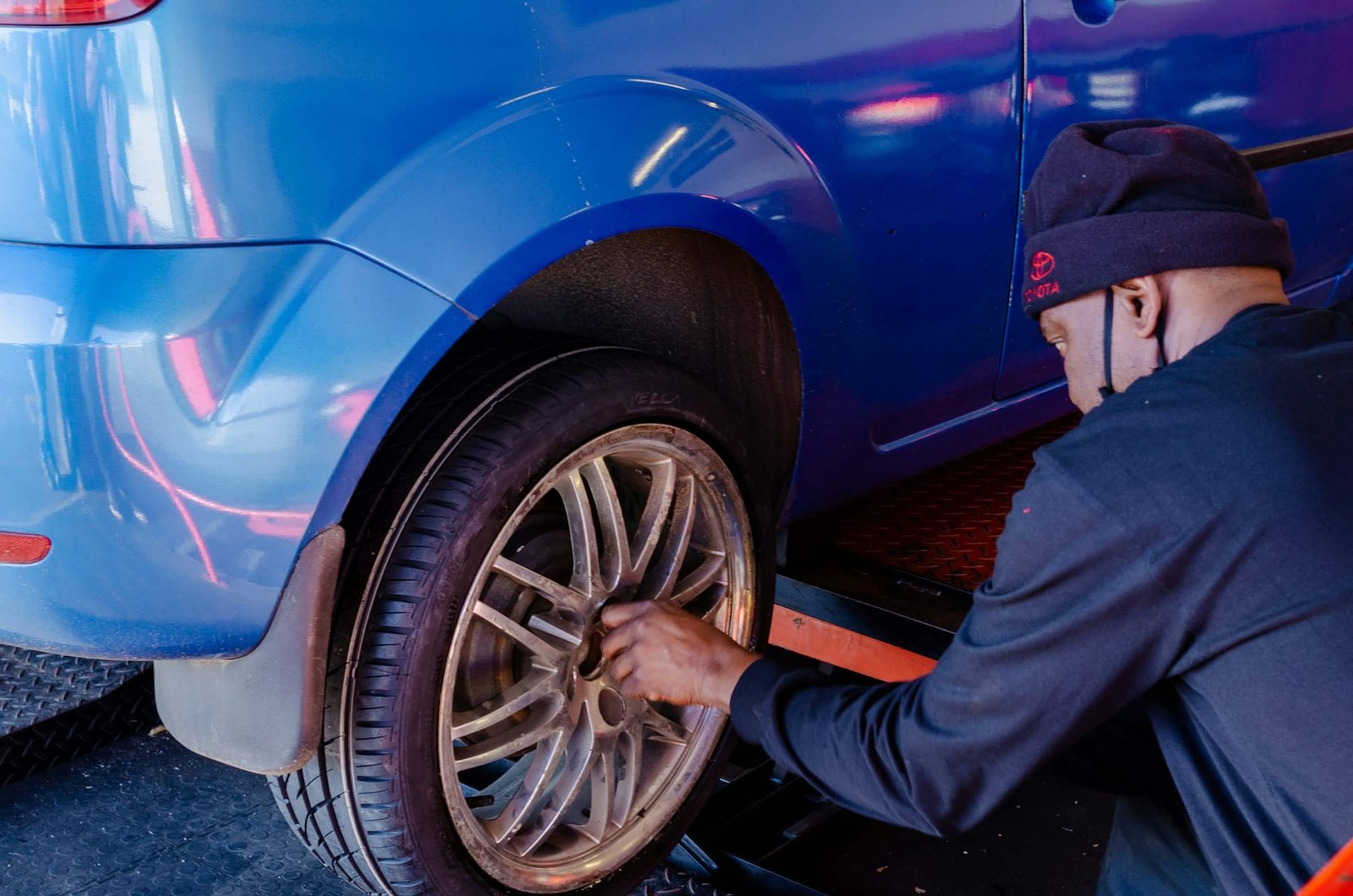
Slowly pump the jack to lift the vehicle until the flat tire is hanging about six inches off the ground. At no point should you ever place any part of your body under the vehicle. Once it’s lifted, you can finish removing the loosened lug nuts and pull the flat tire straight off the bolts. Line up the spare tire with the bolts and push it on. Make sure the valve stem (the little nozzle you use to fill it with air) is facing outward. If you put it on backwards, you won’t be able to check the air pressure later. Thread the lug nuts back on and tighten them by hand.
Lower and Final Tighten
Carefully lower the jack until the spare tire is touching the ground but isn’t yet bearing the full weight of the car. Now, use your lug wrench to tighten the nuts in a star pattern (tighten one, then the one across from it, and so on). This helps the wheel sit flush and evenly against the hub. Lower the car the rest of the way and remove the jack. Give the lug nuts one last forceful turn to make sure they’re secure. Pack up all your tools and the flat tire. It’s a good idea to pull over after a few miles of driving to double-check the lug nut tightness. And remember, most “donut” spares are temporary. They usually have a speed limit of around 50 mph and are only designed to be driven for 50 to 70 miles.

Know When to Call for Help
Trying to be brave on the side of a highway is often just being foolish. Professional roadside assistance exists for a good reason. If you find yourself on a razor-thin shoulder with 18-wheelers roaring past just a few feet away, do not get out of your car. The wind created by a large truck can actually pull you into its path. Stay inside with your seatbelt fastened and make the call.
The weather has the final say. Heavy rain, dense fog, or snow can reduce visibility to almost nothing. If you can’t see other cars clearly, they definitely can’t see you crouching by your tire. In bad weather, your only safe move is to call a tow truck.
Lacking the right equipment or the confidence to do the job is also a perfectly valid reason to call for help. AAA reports that nearly 20% of U.S. drivers, that’s about 39 million people, don’t know how to change a flat tire. So if you’re unsure, you’re not alone. On top of that, nearly a third of new cars are sold without a spare tire at all, coming with a small inflator kit instead. If you have a major blowout in your sidewall, those kits are completely useless.
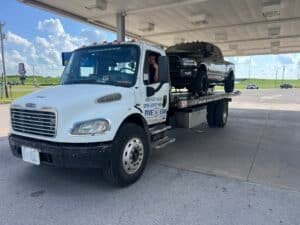
Even professionals face serious risks. The AAA Foundation has noted that tow truck drivers are struck and killed at an alarming rate. Professionals like the operators at Five Star Towing use specialized lighting and position their trucks in a way that creates a protective barrier. Let the experts, who have the right training and equipment, handle the danger zone when you need flat tire assistance.
Tire Maintenance to Avoid a Roadside Stop
Master the Tread Depth Test
Your tires start to lose their grip long before they look “bald.” You can easily check the wear on your tires with a tread depth gauge or even just a penny. Stick a penny into one of the tread grooves with Lincoln’s head pointing down. If you can see the top of his head, your tires are worn out and you need new ones right away. Regular tire checks are an important part of preventing a tire blowout. A UK survey that looked at over 500,000 tires found that 17.1% had dangerously low tread, and another 40.4% were borderline. That means millions of people are driving on unsafe tires. Don’t be one of them.
The Critical Importance of Proper Tire Pressure
Underinflation is a silent killer of tires. When a tire is low on air, its sidewalls flex more than they should. This constant flexing builds up a tremendous amount of heat, and heat is what causes catastrophic blowouts. One study found that 34% of men and 50% of women rarely, if ever, check their tire pressure. A tire that’s more than 25% under-inflated is at a significantly higher risk of failing. Get in the habit of checking your pressure once a month and always before a long road trip. And while you’re down there, take a look at the rubber for any cuts, bulges, or nails that might have gotten embedded in the tread. Low tire pressure is just one of the frequent causes of minor breakdowns drivers can encounter on the road.
Your Essential Roadside Tire Change Emergency Kit
Core Tire-Changing Tools
First and foremost, make sure your car has a spare tire that’s fully inflated. A flat spare is just useless dead weight. Check that your jack works and that you know where the proper lifting points are on your car. Keep a lug wrench in the car that you know fits your vehicle’s lug nuts. It’s also smart to add a portable 12V air compressor and a tire plug kit for fixing minor punctures.
Visibility and Warning Gear
Your kit should have at least three reflective triangles or LED flares. A high-visibility vest is non-negotiable, you need to stand out against the grey backdrop of the road. Also, include a powerful flashlight or headlamp with a fresh set of batteries. You can’t fix what you can’t see.
Personal Protection and Comfort
Toss in a pair of heavy-duty mechanic gloves to protect your hands from hot brake parts and sharp bits of road debris. A small kneeling pad or even just a thick blanket can make the job a lot more comfortable and keep you off the wet, dirty ground. It’s also wise to keep a basic first-aid kit, some bottled water, and a few non-perishable snacks in the trunk. Breakdowns never happen on a convenient schedule.
Why You Should Learn Before an Emergency
The side of a busy highway during a thunderstorm is the absolute worst place to learn a new skill. The best time to figure out the mechanics of a tire change is in the comfort of your own driveway on a sunny Saturday afternoon. Getting familiar with the process now will make you faster and safer if you ever have to do it for real.
This is especially vital for teen drivers. With so many crashes involving teens being linked to tire problems, this education is a powerful defense strategy. Teach them where the jack points are. Show them how to use their body weight to break a stubborn lug nut loose.
If your car doesn’t have a spare, find the tire mobility kit and read the instructions now. Understand that the sealant inside can only fix small punctures in the tread itself, it won’t do anything for major structural damage. You could even create a small “cheat sheet” with the jacking points and basic steps listed, and keep it in the glovebox. A little bit of knowledge can go a long way in reducing panic.
Roadside emergencies demand respect, preparation, and a clear head. When you find yourself in a situation that’s beyond your skill level or outside your safety comfort zone, know that Five Star Towing is always ready here in Oklahoma City to get you home safely. We’re here to handle the hazard so you don’t have to.
Frequently Asked Questions
Changing a tire on the highway is incredibly dangerous and should always be your last resort.
You should only even think about attempting a tire change if you can get your car to a very wide, paved shoulder or an exit ramp that gives you at least a full car's width of space between you and moving traffic. The risk of being hit by a passing car is terrifyingly high on narrow shoulders.
The reality is, the NHTSA reports hundreds of deaths every year involving people on the side of the road. Reports from Automotive Fleet show that tire issues cause 11,000 accidents annually, and many of those happen when someone is vulnerably trying to fix the problem.
Bottom line, if you can't find a wide, safe, and secure area, stay in your car with your seatbelt on, put your hazard lights on, and call for professional roadside assistance right away.
Your immediate priorities are to let other drivers know you're in trouble and to keep control of your car without panicking.
First, grip the steering wheel firmly to keep the car going in a straight line, as a blowout can cause the vehicle to pull sharply to one side. Immediately turn on your hazard lights to warn everyone around you. Don't slam on the brakes; instead, take your foot off the gas and let the car slow down on its own.
Safety experts at Geico stress that braking suddenly can make you lose control when the car is already unstable. Likewise, Bridgestone Tire advises that it's better to use your remaining momentum to coast to a safer stopping place.
The key is to prioritize stability and signaling over stopping as fast as possible. A controlled coast to a safe spot can prevent a much more serious secondary collision.
Yes, you absolutely can, and you should. Driving slowly on a flat is much better than stopping in a dangerous, high-risk area.
While driving on a completely flat tire will probably ruin both the tire and the metal wheel rim, that cost is nothing compared to the risk of being hit by another car. Drive at a crawl with your hazard lights flashing until you can get to a parking lot, an exit, or a very wide shoulder.
Safety checklists from Consumer Reports all agree that getting to a safe location is more important than saving the tire. Towing experts at Five Star Towing confirm that a damaged wheel is easily replaced, while a person injured in a highway collision is not.
Always be willing to sacrifice the rim to save your life. Never stop in a lane of traffic or on a blind curve just to try and save a piece of hardware.
Lug nuts need to be tightened to a specific torque setting to make sure the wheel stays on securely without damaging other parts.
During a roadside change, your goal is to tighten them as much as you can by hand with the lug wrench. Use the star pattern while the car is still slightly raised, then give them a final, forceful turn once the car's weight is back on the tire. "As tight as possible" by hand is usually enough for a temporary spare until you can get to a pro. Be careful not to over-tighten, especially with power tools, as that can be dangerous too.
Data from TireSafe shows that wheels can actually come off a car if they're not torqued correctly. Your car's manual will list a specific torque range (usually 80-100 ft-lbs for most cars) that prevents the bolts from breaking.
After you've changed a tire on the road, your very next stop should be a tire shop to have them use a torque wrench to tighten the lug nuts to the exact right specification.
You'll have to rely on the tire mobility kit that came with your car or call for roadside assistance.
First, figure out if your car has a sealant and inflator kit (it's usually in the trunk). These kits can work well for temporarily sealing small punctures in the main tread of the tire. However, if you have a major blowout or a tear in the sidewall of the tire, the kit won't work at all, and your only option is to call a tow truck.
Research from AAA has found that nearly one-third of all new vehicles are sold without a spare. They also point out that those sealant kits are useless for major tire damage.
So, take a look in your trunk today. If you don't have a spare, think about buying one or make sure you have a reliable roadside assistance plan with a provider like Five Star Towing.
The biggest and most dangerous mistakes people make involve putting the jack in the wrong place and not paying attention to traffic.
Never place the jack under a plastic body panel, the bumper, or the radiator support. Only use the reinforced frame points shown in your owner's manual. When you're working, never turn your back to traffic, and never, ever put your legs or any part of your body under the car while it's on the jack.
Emergency guides from the Red Cross always emphasize the importance of making the scene safe before you do anything else. Blogs from Safety Kits Plus point out that using the jack incorrectly is a top cause of vehicle damage and personal injury during a self-repair.
Take a few minutes to look through your owner's manual now and find your car's jacking points. Knowing where they are before an emergency will help you avoid costly damage or serious injury during a stressful situation.
You should check the pressure in your spare tire every time you check your other tires or at least once a month.
Spare tires lose air over time, just like the ones you drive on every day. A spare that has been sitting untouched in the trunk for five years is very likely to be flat right when you need it most.
Studies mentioned by Automotive Fleet show that a huge number of drivers neglect checking their tire pressure. Experts at Bridgestone recommend monthly checks for all tires, including the spare, to prevent failures caused by low pressure.
Make checking your spare a part of your regular car maintenance routine. Finding out your spare is flat turns a small inconvenience into a major headache and a guaranteed tow truck bill.
If you don't have the physical strength, the right tools, or a completely safe environment, then calling for professional help is always the better and smarter choice.
Roadside assistance professionals come equipped with commercial-grade tools, powerful high-visibility lighting, and years of experience working right next to moving traffic. If it's raining, dark, or you're on a busy highway, the risk of doing it yourself is far greater than the inconvenience of waiting for a tow.
The AAA Foundation even tracks fatalities among roadside workers, which shows just how dangerous that environment is, even for trained professionals. Checklists from Applewood Service strongly recommend calling for help in any high-risk scenario.
Don't let your ego make a dangerous decision. Here in OKC, calling Five Star Towing is a much safer alternative to wrestling with a lug wrench on the shoulder of I-35.