
That awful click-whirring sound of a starter that just won’t catch is something every Oklahoma City driver knows and dreads. It always seems to happen at the worst possible moment when you’re already late for work, or worse, stranded in a sun-baked parking lot during one of our sweltering July heatwaves. In that moment, panic kicks in. You dig a set of jumper cables out of your trunk or wave down a friendly stranger, desperate to get your engine running again.
But that moment of haste can easily turn a minor headache into a major financial disaster. Today’s vehicles are incredibly complex machines, packed with sensitive electronics, and trying to jump them like an old 1970s pickup truck can have some seriously expensive consequences.
KeyPoints
- Jumping a car the wrong way can send a massive voltage spike sometimes up to 20 volts through a system designed for much less. This can instantly destroy expensive Electronic Control Units (ECUs).
- A bad jump can knock out the computers that control your airbags, anti-lock brakes, and even your power steering, leaving you vulnerable when you need them most.
- Car batteries produce highly explosive hydrogen gas. One little spark from a misplaced cable clamp can cause the battery to explode, causing devastating eye injuries.
- Using a modern car to jump another one can cause a power surge to flow backward, damaging the electronics of the perfectly good car that was just trying to help.
- Letting a service like Five Star Towing handle it ensures you don’t accidentally cause thousands of dollars in damage to your vehicle’s delicate electrical system.
Why a Simple Jumpstart Can Cost You Thousands in Electronic Repairs
Most of us think of a car battery as a simple tank of electricity. When it’s empty, you just fill it back up and drive off. That logic worked fine for cars a few decades ago, but the vehicle you drive today is a completely different animal. Your car is basically a rolling network of computers. In fact, a modern vehicle can have anywhere from 50 to over 200 of these electronic control units, or ECUs. These little computers are the brains of the operation, managing everything from how your engine gets fuel and when your transmission shifts to whether your airbags deploy and what’s on your infotainment screen.
The real danger pops up the moment you connect and disconnect those jumper cables. An incorrect jumpstart can create a massive voltage spike that sends up to 20 volts surging through your car’s standard 12-volt system. While the thick, heavy-duty copper wiring of your starter motor might be able to take that hit, your delicate ECUs absolutely cannot. Most of these sensitive computer chips are only built to handle about 16 volts, max. The instant your car starts, the alternator senses the dead battery and unleashes a huge wave of current and voltage to try and charge it. To your car’s electrical grid, it’s like being hit by a small, localized lightning strike.
The fallout from this can be catastrophic. You could easily fry critical sensors, blow fuses all over the car, or corrupt the control modules for your anti-lock brakes and traction control. And replacing just one of those ECUs is never cheap. The part alone can run hundreds of dollars, and the more complex modules can soar into the thousands. On top of that, you have to pay for the labor to program and install it. That “free” jumpstart from your helpful neighbor can quickly morph into a $2,000 repair bill at the dealership.
How Reversing Cables Instantly Destroys an Electrical System
When you’re stressed and stranded on the side of the road, anxiety can easily cloud your judgment. This is when the most common and most destructive mistake happens, reversing the polarity. It’s as simple as connecting the red (positive) clamp to the negative terminal and the black (negative) clamp to the positive one. The moment you do this, you create an immediate and incredibly powerful short circuit.
This short circuit isn’t just a little spark. It forces a tidal wave of electricity to flow backward through systems that were only ever designed for a one-way street. Your car’s main fuses will blow in an instant. The diodes inside your alternator, which are responsible for converting power for your car’s use, are often completely destroyed. Multiple ECUs can be fried all at once. The damage happens in milliseconds, often before you even have time to realize the clamps are on the wrong posts.
Another critical mistake involves how you make the ground connection. A lot of drivers connect the final negative clamp directly to the dead battery’s negative terminal, but this is a huge safety risk. You should always connect that last negative clamp to a clean, unpainted metal spot on the engine block or chassis. Connecting it right at the battery terminal dramatically increases the chance of creating sparks right next to where the battery is venting flammable gases.
The Shocking Personal Safety Risk
Fixing a car is expensive, but a physical injury can be life-altering. As part of their normal chemical process, lead-acid batteries produce hydrogen gas. The amount of this gas increases dramatically when the battery is being charged or discharged very quickly, like during a jumpstart. And you probably remember from science class, hydrogen is extremely flammable.
A single spark from a poorly connected cable can be enough to ignite that gas. The explosion that follows has enough force to completely shatter the battery’s plastic casing, spraying sharp shrapnel and corrosive sulfuric acid all over anyone standing nearby.
This isn’t just a hypothetical problem; it’s a documented public safety hazard. According to research from the NHTSA back in 1994, an estimated 442 people in the U.S. were injured by exploding batteries while trying to jump-start a car in just one year. The kinds of injuries these explosions cause are particularly gruesome. As many as three-quarters of them involve the eyes. Knowing the signs of a failing battery can also help you recognize when a battery may need attention. Acid burns can lead to permanent blindness or scarring.
For your own safety, you must always wear eye protection. Take off any metal jewelry that could accidentally conduct electricity and cause severe burns. And it should go without saying, but never, ever smoke or have any open flames anywhere near a car battery.

How a Bad Jump Disables Critical Safety Systems
Compromising Your Airbags, Brakes, and Steering When You Need Them Most
Sometimes, a car starts up right after a bad jump and seems to be running just fine. You breathe a sigh of relief and drive home. The problem is, silent and invisible damage is often lurking within your car’s most important safety systems. A voltage surge or a short circuit can leave behind persistent fault codes or, even worse, permanently damage the very control modules designed to save your life.
Your airbag system, for example, depends on precise electrical signals to know when to deploy in a crash. If that control module gets fried, your airbags may not open at all if you get into an accident. The same goes for your Anti-lock Braking System (ABS) and traction control. These are the systems that keep you from skidding and losing control on slick Oklahoma City roads. If their computer module is disabled, you’ve lost a critical layer of electronic stability. Electric power steering is another frequent casualty. If its module fails, the steering wheel can suddenly become incredibly heavy and difficult to turn, making it hard to maneuver your car safely in traffic.
You have to treat any new warning lights on your dashboard with extreme seriousness. If you see an ABS, airbag, or battery light that stays on after you’ve jump-started the car, don’t just ignore it and hope it goes away. It’s your car’s way of telling you that a critical safety feature might be compromised and needs to be inspected immediately.
How Every Jumpstart Shortens Your Battery’s Life
For a battery, getting a jump-start is a violent event. Your car’s alternator is designed to maintain the charge in a healthy battery, not to perform a miracle and bring a completely dead one back to life. When you jump a car and then just let the alternator take over, it has to force an incredibly high current into a deeply discharged battery. This process causes the battery to overheat very quickly.
This kind of aggressive, high-amperage recharging physically damages the battery’s internal components. It can bend the delicate lead plates that are suspended inside the acid. It also causes the active material on those plates to flake off, creating a pile of debris at the bottom of the battery case that can cause shorts.
This internal damage is permanent. Each time it happens, it reduces the battery’s ability to hold a full charge in the future. A standard car battery should last you about 3-5 years in Oklahoma’s weather. But if you have to jump-start it regularly, you can drastically shorten that lifespan. You’re essentially trading months of your battery’s future reliability for the convenience of a quick fix today. At some point, you have to decide whether to keep jump-starting the battery or replace it.
Why Your Modern Car Shouldn’t Be a Good Samaritan
That kind person who pulled over to help you is also putting their own car at risk. If they’re driving a newer vehicle that’s packed with its own complex electronics, using it as a donor car is a dangerous gamble. When the dead car’s engine finally turns over, a powerful electrical surge can travel backward through the jumper cables and into the donor vehicle’s system.
This electrical “blowback” can attack the donor car’s electrical system with a vengeance. You could end up damaging the ECUs, alternator, fuses, and sensors in the car that was running perfectly just moments before. That single good deed could end up costing the helpful driver thousands of dollars in their own repair bills.
It’s gotten so bad that many car manufacturers now put explicit warnings in their owner’s manuals against using their modern vehicles as donor cars for a jumpstart. Take a look at your manual. Most now recommend using a dedicated portable jump pack to avoid damaging all the sensitive electronics. Using your $50,000 truck to jump a little sedan is a high-stakes gamble with very poor odds.
The Right Way to Restore Power
A Step-by-Step Guide to the Safest Possible Jumpstart Procedure
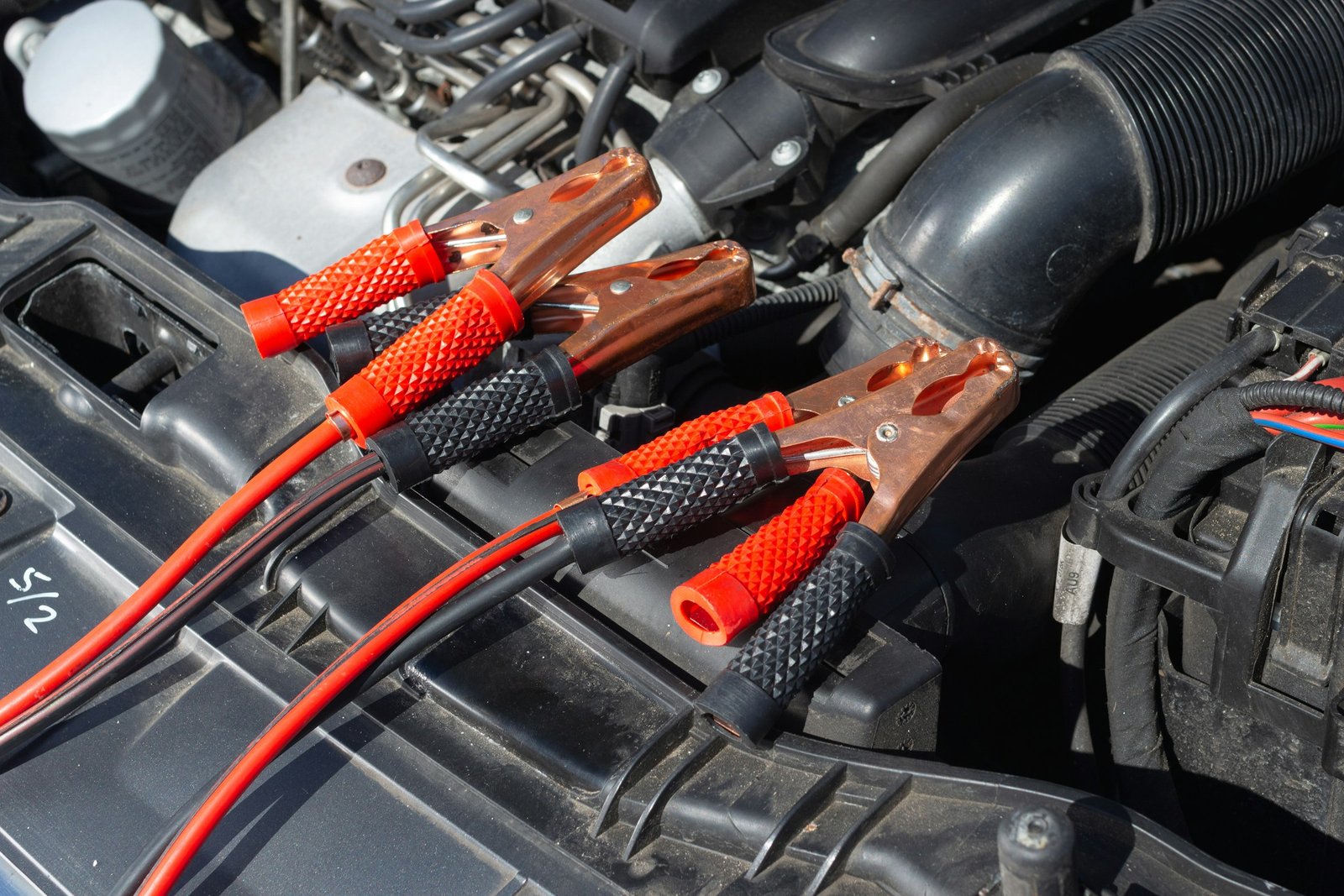
If you absolutely have to use jumper cables, following the procedure with precision is your only defense against causing expensive damage. Before you connect a single thing, make sure both vehicles are turned completely off. And never, ever let the metal cable clamps touch each other.
Follow this exact sequence to minimize the electrical risk:
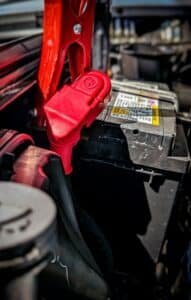
- Connect one Red (+) clamp to the POSITIVE terminal on the DEAD battery.
- Connect the other Red (+) clamp to the POSITIVE terminal on the DONOR battery.
- Connect one Black (-) clamp to the NEGATIVE terminal on the DONOR battery.
- Connect the final Black (-) clamp to an unpainted metal ground point on the DEAD car’s engine block or chassis to make sure it’s far away from the battery itself.
- Start the donor vehicle and let it run for 5-10 minutes. This allows a bit of a surface charge to transfer over.
- Now, try to start the dead car.
- Once it’s running, disconnect the cables in the exact reverse order of how you connected them.
That step of letting the donor vehicle idle for 5-10 minutes is absolutely critical. It gently puts some energy back into the dead battery, so that when the car finally starts, its alternator doesn’t have to do all of the heavy lifting at once. This simple pause helps reduce the severity of the voltage spike when the engine roars to life.
Why a Portable Jump Starter is Your Car’s Best Friend
Thankfully, technology has given us a much safer solution than old-fashioned jumper cables. Modern portable jump starters, often called jump packs, are small, powerful lithium-ion batteries that can easily crank an engine. Best of all, they completely eliminate the need for a second vehicle.
Good quality jump packs have smart safety computers built right in. They offer things like reverse polarity protection, which means the unit simply won’t send power if you accidentally hook it up backward. They also have features like spark suppression and over-voltage regulation. These safeguards protect both you and your vehicle’s sensitive electronics from the most common and damaging jumpstarting mistakes. Keeping one of these in your glove box is a much smarter choice for any modern car.
When to Skip the Jump and Call a Professional
Sometimes, a jump-start is simply the wrong tool for the job. If you find yourself needing a boost over and over again, your car is trying to tell you it has a deeper problem. It could be a failing battery that can no longer hold a charge, a parasitic electrical drain that’s sucking power when the car is off, or a faulty alternator that isn’t recharging the battery as you drive. Forcing the car to run in these conditions just risks causing even more damage.
The safest and smartest solution is to have a professional test your battery and charging system. Being proactive is always better than being stranded. Simply replacing your battery every 3-5 years can prevent you from ever needing an emergency jump in the first place.
Before you do anything, take a close look at the battery itself. If you see that the plastic case is cracked, leaking fluid, or has heavy corrosion caked around the terminals, do not even think about attempting a jumpstart. The risk of an explosion or getting acid on your skin is just too high. In situations like these, calling for professional roadside assistance is the only smart move. Experts have the right tools to test the system safely and can tow your vehicle if it turns out the electrical damage is already severe.
Here at Five Star Towing, we understand all the delicate details of modern vehicle electronics. We provide safe, professional jump-start services and towing all across Oklahoma City. Don’t risk frying your car’s computer just to save a few minutes. Let our experts handle the power so you can get back on the road without worry.
Frequently Asked Questions
Absolutely. It poses a significant risk to your car's electronic brain, the ECU.
A jump-start introduces a sudden, powerful surge of electricity into your car's system. When the alternator kicks in to charge the dead battery, it can create a voltage spike of up to 20 volts.
Your car's modern Electronic Control Units (ECUs) are only designed to handle a maximum of about 16 volts.
That excess voltage acts like a power surge from a lightning strike, frying the delicate circuits inside the ECU. This can lead to repair bills that easily top $1,000.
Connecting the cables backward causes immediate and often catastrophic damage.
Connecting positive to negative creates what's known as a "reverse polarity" short circuit.
This forces a massive amount of current to flow in the wrong direction, which blows main fuses and completely destroys the diodes inside your alternator.
Beyond just the alternator, this simple mistake can instantly ruin multiple onboard computers and even melt wiring, leaving your vehicle completely inoperable.
Yes, for any modern vehicle, a portable unit is by far the safer choice.
A portable jump starter isolates your car from the electrical system of another vehicle, which means there's no risk of a power surge jumping between them.
High-quality jump packs come with smart technology like reverse polarity protection (they won't work if you hook them up wrong) and spark-proof clamps.
You don't have to worry about potentially damaging a "Good Samaritan's" car, protecting both your vehicle and theirs from electrical strain.
Yes, the donor vehicle, the one giving the jump, is definitely at risk.
A power surge from the dead car can travel backward through the jumper cables and into the donor car's electrical system.
The donor car's alternator has to work overtime to supply power to the dead battery, which can cause it to overheat.
The risk is so real that many modern car manuals now include specific warnings against using the vehicle to jump-start others because of the potential damage to its own complex electronics.
Connecting that last clamp directly to the negative terminal creates a serious explosion hazard.
Making that final connection is what completes the electrical circuit, and it almost always creates a spark.
All lead-acid batteries vent small amounts of flammable hydrogen gas. If that spark happens right next to the battery terminal where the gas is concentrated, it can ignite it.
Connecting that last clamp to a metal ground point on the engine block puts the spark a safe distance away from the battery and its flammable gases.
You need to give the dead battery a few minutes to build up a surface charge before you try to start it.
After connecting the cables correctly, leave them connected with the donor car running for about 5 to 10 minutes.
This process allows the dead battery to build up a small amount of energy on its surface.
Giving it this head start reduces the immense electrical load on the alternator and cables when you finally try to crank the engine, which helps minimize those dangerous voltage spikes.
Yes, because alternators are not designed to be heavy-duty battery chargers.
An alternator's job is to maintain the charge of a healthy battery while you drive, not to resurrect a completely dead one from zero.
The extremely high current needed to charge a dead battery forces the alternator to overheat, which can easily burn out its delicate internal components.
Using your alternator to repeatedly recharge a dead battery is a sure way to significantly shorten its operational lifespan.
Keep an eye on your dashboard lights and watch for any unusual behavior from your car.
Look for persistent check engine, airbag, ABS, or battery warning lights that stay lit even after the car is running.
Pay attention to things like a rough idle, flickering headlights, or a radio that seems to turn itself on and off.
A distinct smell of burning plastic or ozone is a bad sign that wiring has been fried or a component has overheated.
It carries much higher risks than it did with older, simpler cars.
Modern cars have a whole network of 50 to 200+ ECUs that are all very sensitive to changes in voltage.
You have to follow the instructions in your owner's manual to the letter, which often means using very specific connection points.
Using a regulated, smart jump pack or simply calling a professional is always a safer bet than using traditional cables on today's highly computerized vehicles.
Yes, and the reason is the hydrogen gas they produce.
Batteries naturally vent flammable hydrogen gas, especially when they are damaged or under a heavy electrical load like a jump-start.
A single spark from connecting the cables improperly or in the wrong order can be all it takes to ignite that gas.
NHTSA data from as far back as 1994 showed hundreds of people were injured each year from battery explosions during jump-starts, often suffering serious eye damage or chemical burns from the acid.
You should immediately stop trying to jump it.
The issue could be more serious. The battery might have an internal short, or your starter motor could have failed completely.
Continuing to force power into a failed system can melt the jumper cables and even cause a fire.
It's time to call a professional towing service to come inspect the vehicle. It's very likely that it needs a tow to a repair shop, not another jump.
More often than not, yes.
A battery that has been drained completely dead often sustains permanent internal damage, reducing its ability to function properly.
While a jump might get you home today, the battery's ability to hold a full charge has been seriously compromised.
You should have the battery professionally load-tested right away. If it's already more than 3 years old, replacement is usually the best and safest option.
It's very difficult to do and extremely dangerous.
A deeply discharged battery has very high internal resistance, which makes it hard for it to accept a charge.
The donor car's alternator has to work incredibly hard to try and push energy into it, which creates an immense amount of heat.
As a safety precaution, many modern smart jump packs are designed to not even send power if they detect a battery that is at or near zero volts.