
That unmistakable turn of the key, followed by…nothing. Just a heavy, hollow silence that hangs in the air where the familiar roar of an engine should be. Here in Oklahoma City, few things can derail a morning faster than a dead car battery.
It’s a moment most drivers don’t see coming, we tend to ignore the subtle warnings, assuming our cars will just keep starting, day after day, until they don’t.
The truth is, your battery has been trying to tell you something long before it gives up completely. Learning to recognize these signals is the key to saving yourself from being stranded in a chilly parking lot or on the shoulder of a busy highway.
Key Notes
Catching the signs of battery failure early on can save you from the headache of an unexpected breakdown and the expense of a tow truck. Keep an eye out for these key indicators:
- That distinct clicking sound or a slow, groaning engine crank is your battery’s way of saying its voltage has dropped too low to do its job.
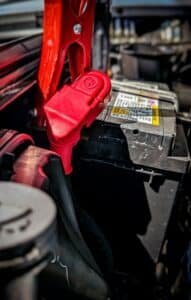
- A quick look under the hood can reveal a swollen battery case or crusty, corroded terminals, both of which point to internal damage or leaking acid.
- If your headlights seem dim or your dashboard lights flicker, it’s often a sign that a total power loss isn’t far behind.
- Just like anything else, batteries get old. Most standard car batteries only have a good 3-5 years in them, especially in a hot climate like ours.
- It’s not the cold that does the most damage, high summer temperatures are notorious for degrading battery chemicals and shortening their lifespan.
What a Failing Battery Sounds Like
Often, your own ears are the first to pick up on the signs of trouble. A healthy battery gives you a powerful, immediate spark that brings the engine to life in an instant. A dying one, however, really has to struggle. The most common warning sound you’ll hear is a sharp clicking or a rapid ticking noise the moment you turn the ignition. This sound is a classic sign that the battery simply lacks the power to fully engage the starter motor, usually because its voltage has dipped below 12.4V. The starter solenoid is trying its best to connect, but the battery can’t supply the sustained power it needs.
A grinding noise is another specific sound to listen for. This usually means the starter solenoid is straining against a weak electrical current, with the battery putting out less than the 300 cold cranking amps (CCA) it needs. You might also notice the engine itself turning over with a slow, sluggish crank. If it takes more than a couple of seconds for your engine to fire up, the battery’s internal cells are likely worn out. When under load, the voltage in these failing units can drop to as low as 10-11V. A strong, healthy system should maintain a resting voltage of 12.6V and start without a moment’s hesitation. Make a habit of listening to your car each morning. That slow, tired “rur-rur-rur” sound is essentially a countdown to failure.
Your Battery’s Cry for Help
Today’s vehicles are packed with electronics, and all of them depend on a stable flow of electricity. A weak battery can throw this entire system out of whack. You might first notice your headlights dimming significantly when the car is idling or just after you’ve turned the engine off. This dimming is a clear signal of a voltage drop below 12V, meaning the battery can no longer pick up the slack when the alternator isn’t spinning at full speed.
The electronics inside your car will feel the effects, too. Dashboard lights might start to flicker, or the radio could cut out for no reason. These little glitches are happening because the power delivery has become intermittent and unstable, often caused by a buildup of sulfated plates inside the battery casing. In a healthy car, the electrical system should sit at 12.6V when off and climb to between 13.7V and 14.7V while the engine is running. If you find your windows are rolling up slower than they used to or your cabin lights have a yellowish tint instead of a bright white, it’s time to check your battery’s voltage right away. These signs can help you decide whether a jump start or battery replacement is the better option.
What a Failing Battery Looks Like
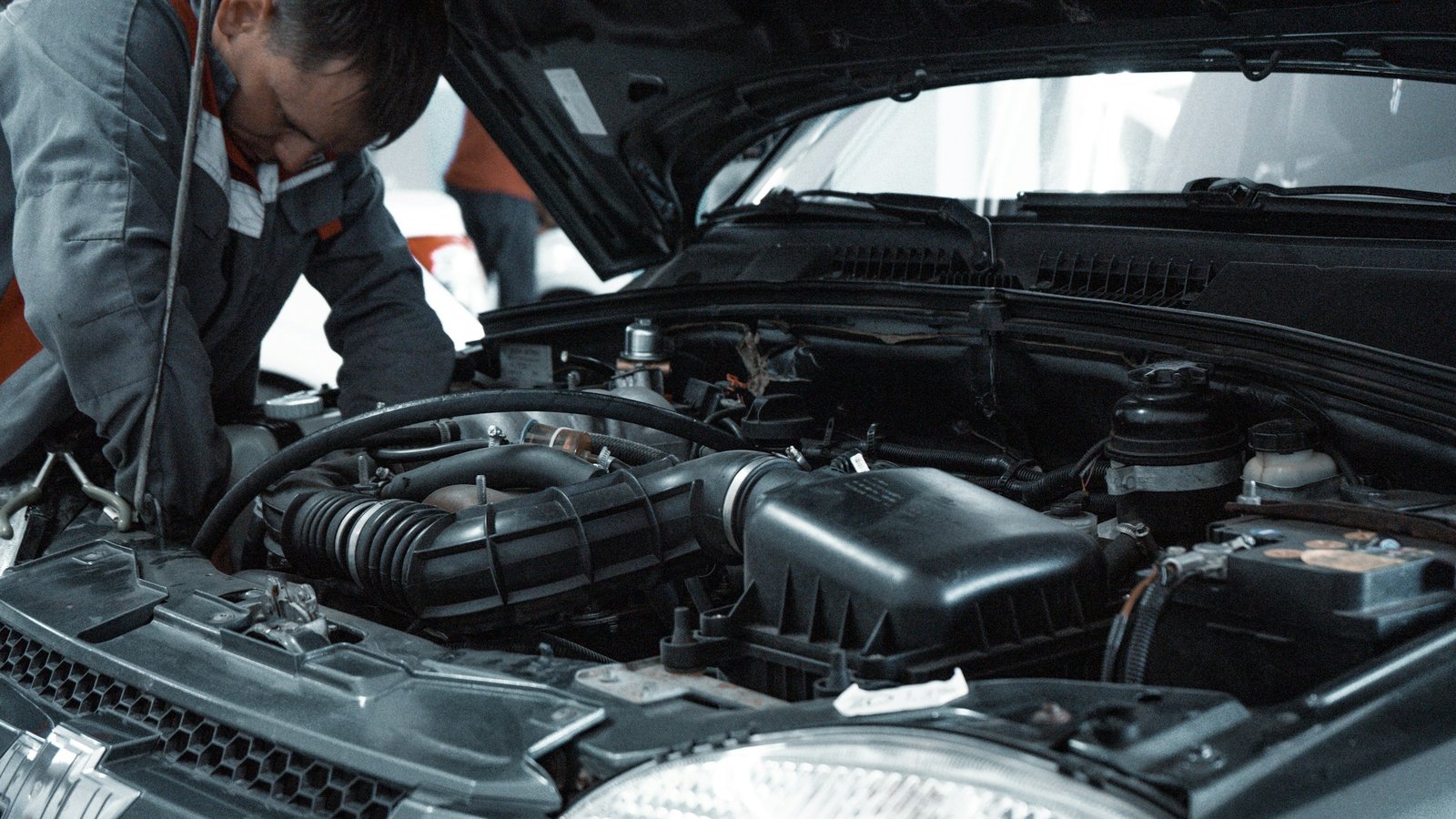
Sometimes, you can spot a problem with your own eyes long before you notice any performance issues. It’s worth popping the hood every now and then to take a direct look at the battery. Physical changes to the unit are almost never a good sign.
The Swollen or Bulging Battery Case
A battery that’s lost its shape is a battery you shouldn’t trust. Look at the sides of the rectangular case, you might see them bulging outward. This swelling is a result of pressure building up inside from an accumulation of gases, a dangerous situation often caused by overcharging or damage from extreme heat.
A swollen case is a serious red flag, and it often means:
- The internal grid structure has probably collapsed or warped.
- The battery might look visibly larger, sometimes by as much as 10-20% compared to a new one.
- Once you see swelling, a complete failure is likely just a few weeks away.
Corroded Terminals
Take a close look at the connection points on the top or side of your battery. Do you see a crusty, powdery substance gathering around the metal posts? That’s corrosion. If it’s a white or clear film, it’s a sign that acid is leaking from the vent caps.
A blue or powdery white buildup is a telltale sign of sulfation. This is a chemical process where lead sulfate crystals harden on the battery plates, severely limiting the battery’s ability to hold a proper charge. As experts at Nationwide point out, this corrosion can act like an insulator, literally blocking the flow of electricity. Over time, this buildup can slice the battery’s effective capacity in half and reduce its cranking amps by up to 50%.
Leaking Battery Fluid
Finding moisture where it’s not supposed to be is never a good sign. Any fluid pooling around the base of the battery or near its vents indicates a critical breach. These leaks are usually caused by cracked cells or failed seals, often a result of thermal stress cracking the plastic casing. Remember, this fluid is acidic and highly corrosive, capable of damaging other engine components and posing a safety risk to anyone who handles it.

Why Your Battery's Age Is More Than Just a Number
Just like a carton of milk, batteries have an expiration date. Their internal chemistry degrades with every single charge and discharge cycle. Knowing when your battery was installed is a great way to anticipate when it will need to be replaced.
Lifespan of Common Car Batteries
The standard lead-acid batteries that power most vehicles on Oklahoma roads have an average lifespan of about 3 to 5 years. According to AAA, while it’s possible for some to last up to 10 years with perfect care, that’s definitely the exception, not the rule. If your battery is already over five years old, it’s living on borrowed time.
Newer vehicle technologies come with different timelines. Absorbent Glass Mat (AGM) batteries, which you’ll often find in cars with start-stop technology, generally last a bit longer, from 4 to 7 years. Enhanced Flooded Batteries (EFB) typically perform well for 4 to 6 years. It’s also worth noting that even a new battery sitting on a shelf can lose 5% of its charge each month. Age wears down the internal chemistry, regardless of how many miles you’ve driven.
Understanding Battery Degradation For Electric Vehicle Owners
Electric vehicles (EVs) are in a different league entirely. The large lithium-ion packs in hybrids and fully electric cars are engineered for incredible longevity. Research from Recurrent Auto shows that these batteries typically last somewhere between 10 and 20 years. In fact, modern EV batteries are projected to outlast the vehicle itself in many cases, often pushing well past the 100,000-mile mark.
Degradation in EVs happens very slowly. Data from Geotab reveals an average degradation rate of just 1.8% per year, which is an impressive improvement from the 2.3% figure seen in 2019. It might take five years for an owner to even notice a 10% drop in usable capacity. Manufacturers stand behind this reliability, with most offering an 8-year/100,000-mile warranty that guarantees at least 70% of the original capacity. Because of this, actual replacement rates are very low. Less than 4% of all EV batteries have ever been replaced, and that number drops to a tiny 0.3% for vehicles made in 2022 or later.
How Your Climate and Driving Habits Secretly Kill Your Battery
Where you live and how you drive play a huge role in your battery’s survival rate. External conditions can accelerate its chemical breakdown, and your daily driving routine matters just as much.
The Damaging Effects of Extreme Heat and Cold
Those brutal Oklahoma summers are especially tough on car batteries. While we often blame cold weather for starting problems, it’s the intense heat that causes the real, lasting damage. Any temperature above 77°F starts to speed up the internal corrosion of the lead plates. The experts at Interstate Batteries confirm that extreme heat can actually double the rate of chemical degradation.
This kind of thermal stress dramatically shortens a battery’s life:
- Batteries in hot southern climates like ours often only last about 3 years.
- In contrast, batteries in cooler northern regions can average 5 years or more.
- Heat also causes water in the electrolyte mix to evaporate faster, leading to quicker sulfation.
- In consistently high-heat conditions, a battery can lose as much as 20% of its capacity each year.
EVs have to contend with similar challenges. Geotab points out that vehicles with liquid-cooled batteries, like a Tesla Model S, handle heat much better (2.3% degradation) than those with older, air-cooled systems, like an early Nissan Leaf (4.2% degradation).
The Problem with Short Trips and Fast Charging
Your driving patterns have a direct impact on how your battery charges. If you mostly take short, infrequent trips, you’re not giving the alternator enough time to fully recharge the system. This constant state of partial charge leads to problems like stratification and sulfation. In fact, RAC data suggests that batteries in cars used only for short hops around town fail 1-2 years sooner than those driven regularly on highways.
For EV drivers, the type of charger you use also matters. Recurrent Auto notes that relying too often on DC fast chargers raises the battery’s temperature. This extra thermal load can increase the rate of degradation by an additional 1-2% annually. To protect your battery’s lifespan, it’s best to keep its state of charge between 20% and 80% and prioritize using a Level 2 charger at home, which puts far less heat and stress on the cells. And for any car, letting it sit for long periods is bad news. If a battery loses 75% of its charge while inactive, there’s a high risk of irreversible sulfation.
Learning to recognize these signs puts you back in control and keeps you in the driver’s seat. It helps you avoid that helpless feeling of being stranded by a silent engine in an empty lot. So, if you hear that telltale clicking sound, see that crusty corrosion, or notice your lights are getting dim, don’t press your luck and gamble on one more trip.
Here at Five Star Towing, we provide reliable towing and rapid roadside assistance all across Oklahoma City. Whether you just need a jump start, a professional battery assessment, or a tow to your favorite shop, our team is ready to respond with the urgency you deserve. We’ll handle the heavy lifting so you can get back on the road and on with your day. Call Five Star Towing today.
Frequently Asked Questions
A failing battery will usually show itself through some obvious performance issues. You'll probably notice the engine cranking over much slower than it used to, taking several seconds to start instead of firing up right away. The most surefire way to know is with a voltage test; if the battery is resting below 12.4 volts, it’s a clear sign that it can no longer hold a sufficient charge to do its job properly.
As noted by Interstate Batteries, heat damage is one of the main culprits behind these symptoms, especially in warmer climates. The chemical breakdown inside the battery case reduces the Cold Cranking Amps (CCA) it has available to start your car.
If you start experiencing slow starts, get the voltage checked immediately. Ignoring these early warnings is the surest way to end up with a car that won't start at all, forcing you to find a jump or call for a tow.
The very earliest signs are often related to your car's electronics rather than the engine itself. You might see your dashboard lights flicker for a moment when you start the car, or notice that your headlights seem dimmer than usual when the car is idling. This happens because the weakened battery is struggling to stabilize the voltage when the alternator isn't running at full speed.
AAA points out that modern cars have huge electrical demands, which makes these little power fluctuations much more noticeable. As the battery loses its reserve capacity, it has a harder time powering accessories like your power windows or radio when the engine is off or just idling.
It's smart to address these electronic glitches as soon as you see them. Think of them as an early warning before the more serious mechanical failure, the engine refusing to start happens.
Yes, it is possible for a battery to die suddenly, but it's rare. This usually happens because of an abrupt internal structural failure. A sudden break in the connections between the battery's cells can cut off all power instantly, turning a perfectly functioning car into a large paperweight in a matter of seconds.
Unitil explains that while most batteries show their age slowly, extreme shifts in temperature or even severe physical vibration can cause these internal connections to sever. This type of "open circuit" failure gives you no prior warning signs like dimming lights or a slow crank.
Your only real defense against this kind of sudden failure is regular maintenance. It’s a good idea to have your battery load-tested by a professional once a year after it turns three years old to catch any internal weaknesses before they break completely.
Attempting to jump-start a battery that has heavy corrosion or visible damage is quite risky. That corrosion is a sign of acid leaks or venting gases, which can be flammable or even explosive if a spark occurs while you're connecting the jumper cables.
Nationwide strongly advises that you check for any cracks or leaking fluid before trying to jump a battery. If the case looks swollen or feels wet, sending a surge of power into it from another vehicle could cause the battery to rupture or explode.
If you just see some light corrosion, you can clean it off safely before attaching the cables. But if the battery case is damaged or leaking, do not try to jump-start it. The safest thing to do is call a professional for a tow and a replacement. Knowing which jump-start mistakes can damage a car can help you avoid making a risky situation worse.
A battery's lifespan really depends on where you live and what kind of car you drive. Here in a hot climate like Oklahoma, a standard lead-acid battery will typically only last about three years because the heat causes it to degrade so much faster.
Data on EVs from Geotab shows a much longer lifespan, with their batteries often lasting 10-20 years. Meanwhile, traditional car batteries struggle to make it past the five-year mark even in more temperate zones. As RAC highlights, your driving habits also play a big role; making lots of short trips can shorten that lifespan significantly.
A good rule of thumb in OKC is to plan on replacing your battery every 3-4 years. Waiting for the full five years often leads to an unexpected failure right in the middle of the hottest or coldest months of the year.
Here’s the simplest way to tell them apart, a bad battery causes problems when you're trying to start the car, while a bad alternator causes problems that keep the car running. If your car starts with a jump-start but then dies as soon as you remove the jumper cables, your alternator is most likely the culprit because it's failing to recharge the system.
AAA offers a quick tip, check to see if your headlights get brighter when you rev the engine. If they do, it could mean your alternator is producing some current, but not enough to keep everything powered. A battery problem, on the other hand, usually won't stop the car from running once it's started, because the alternator takes over all the electrical work.
Figuring out which one is the problem can save you a lot of money. Replacing a battery won't fix a bad alternator, and a faulty alternator will just drain your brand-new battery until it's ruined, too.