
You feel the rush of wind before you ever see the grille. A massive 18-wheeler drifts just slightly in its lane on I-35, and in that split second, the margin for error completely vanishes.
Here in Oklahoma City, we share the highways with these giants every single day, often forgetting the incredible physics at play until the sudden wail of sirens shatters the calm. While these heavy haulers are the lifeblood of the American economy, they also introduce a level of risk on our roads that demands both respect and constant awareness.
The line between a routine commute and a catastrophic event can be drawn in a matter of moments, depending on split-second decisions and the mechanical integrity of a vehicle.
Main Points
- In 2023, truck crashes tragically claimed over 5,100 lives, and the vast majority of those lost were people in regular passenger cars.
- Even though we’ve seen a recent 8.4% drop in fatalities, the bigger picture shows a troubling 40% increase over the last decade.
- The main culprits behind these collisions haven’t changed, driver fatigue, distractions behind the wheel, and critical brake failures.
- Surprisingly, it’s not just city streets. Rural roads and major interstate highways are where the most severe incidents tend to happen.
- There’s hope on the horizon, as new technology like Electronic Logging Devices (ELDs) and automatic braking systems is expected to cut down crashes by as much as 25%.
The Human Cost of Large Truck Crashes
Behind every statistic is a story, and the numbers surrounding collisions with heavy transport trucks paint a truly sobering picture of road safety. In 2023 alone, crashes involving large trucks led to over 5,100 deaths and left 125,000 people injured across the nation. The difference in who survives these crashes is tragically clear. Because of the immense size difference a loaded semi can outweigh a family sedan by 20 to 30 times. Crashes involving a truck are three times more likely to be fatal than those between two cars.
The data reveals that a staggering 76% of those killed in these wrecks were people inside the passenger vehicles, not the truck drivers themselves. This reality hits especially hard in areas heavy with daily commuters. As of late July 2025, reports are already showing that 1,600 fatal truck crashes have occurred this year throughout the country.
Looking back at 2023, the 5,472 recorded deaths marked an 8% decrease from the year before. However, this short-term dip doesn’t erase the long-term struggle, over the last decade, fatalities have climbed by 40%. Injuries, as tracked by sources like Injury Facts, reached 153,452 in 2023, which is a small 4.4% drop. For those who survive, the consequences are often life-altering, with head trauma, spinal cord damage, and devastating crush injuries being the most common outcomes.
Understanding the Downward Trend
Recent numbers do suggest a welcome shift in the right direction. Cogo Insurance points out that in 2023, 5,375 large trucks were involved in fatal crashes, an 8.4% decrease from 2022. This improvement seems to be part of a broader, positive trend on American roads. Overall motor vehicle fatalities dropped by 8.2% in the first half of 2025, though that still means 17,140 lives were lost.
The fatality rate per 100 million vehicle miles traveled (VMT) is now at 1.06. This is the lowest mid-year rate we’ve seen since 2014, which is a remarkable achievement when you consider that drivers logged an extra 12.1 billion miles. The involvement rate for large trucks per 100 million miles also fell by 8% in 2023.
The progress we’re seeing is real, but it’s also fragile. While the safety measures being taken are clearly working, the long-term data still reminds us of that 40% rise in fatalities over ten years. To keep this downward trend going, it will take constant vigilance from both trucking companies and every single one of us driving our cars alongside them.
The Causes of Semi-Truck Accidents
To stop these crashes, we first have to understand why they happen. The leading culprits are tragically familiar, driver fatigue, distraction, speeding, and poor vehicle maintenance. According to data from Trucking Accident, distracted driving is a factor in 9% of these crashes. When a driver glances away from the road to check a dispatch log or a text message, the massive stopping distance required for an 80,000-pound vehicle can disappear in an instant.
Mechanical failure is another huge threat. Problems like brake failures are responsible for 10% of incidents. A rig that can’t stop on a steep hill or in sudden traffic becomes an unstoppable force of destruction. Impairment from drugs or alcohol, while less common than in passenger car crashes, still played a part in 5% of fatal truck collisions.
It’s rarely a question of skill. In fact, statistics show that 72.7% of large truck drivers involved in fatal crashes in 2021 held a valid Commercial Driver’s License (CDL). The errors often come from the systemic pressure to meet tight delivery deadlines, rather than a fundamental lack of driving ability.
Pinpointing the Danger Zones
You might think most accidents would happen in the heart of congested cities, but the data tells a different story. More than half of all fatal truck crashes happen in rural areas, where speeds are higher and the roads are often less forgiving. Another quarter of these devastating incidents take place on interstates.
The time of day also matters. A surprising 62% of these crashes occur during daylight hours on weekdays, which is when commerce is in full swing and the roads are busiest. The months of August and October consistently stand out as the peak season for these collisions.
While Oklahoma certainly has its share of risks, looking at national hotspots gives us a broader perspective. California is one of the top three states for fatal large-truck crashes. The Corrales Law Group points to the I-5, I-10, and I-405 freeways as major danger zones. While Los Angeles County sees the highest number of these crashes, a significant 40% of the state’s fatal accidents still happen on rural highways. In 2025 alone, California has already reported 48,563 injuries resulting from truck accidents.
Your Immediate Action Plan After a Semi-Truck Incident
The moments right after a collision with a semi-truck are pure chaos. Your adrenaline is pumping, and confusion makes it hard to think clearly. Knowing exactly what to do can protect not only your physical well-being but also your legal rights.
First things first, if your vehicle can still move, get to a safe location. If you’re on a busy Oklahoma City highway like I-40, staying in a live lane of traffic can be deadly. Check yourself and your passengers for injuries right away. Then, call 911. Report the accident and be sure to specifically ask for medical assistance if anyone is hurt.
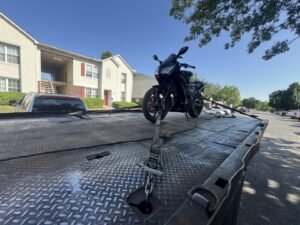
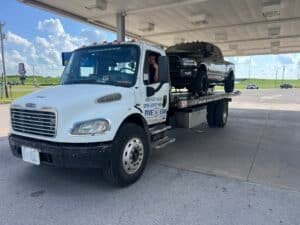
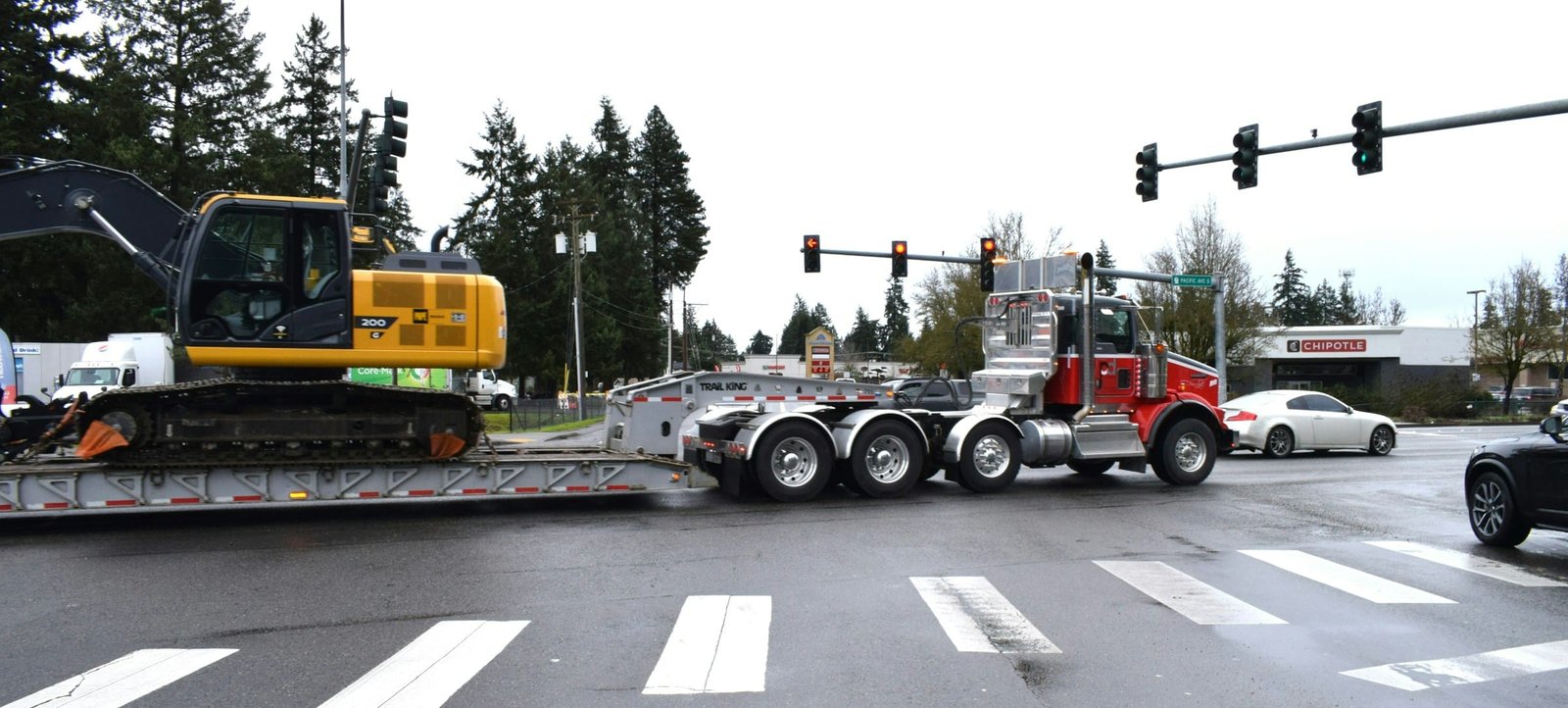
Once you know emergency services are on their way, contact a professional service for vehicle recovery. A company like Five Star Towing specializes in clearing these complex and dangerous scenes safely, including the careful handling of jackknifed semi-trucks. The equipment used for these recoveries depends on the size and condition of the truck, which is why special tow vehicles are sometimes necessary. Be careful with your words. Avoid admitting fault to anyone at the scene, including the truck driver or even the police. A simple “I’m sorry” can be twisted and used against you as an admission of liability later on.
Make sure you exchange information with everyone involved. You’ll need names, CDL numbers, insurance details, and the name of the trucking company. Document everything you possibly can. Take photos of skid marks, the damage to all vehicles, license plates, and the surrounding road conditions. If there are any witnesses, get their names and phone numbers before they leave the scene. This evidence will be absolutely vital for your insurance claim and any potential legal action.
How Technology and Regulation are Preventing Crashes
To close the safety gap, the trucking industry is embracing technology. Federal regulations and modern engineering are now working together to reduce the chances of human error. The Federal Motor Carrier Safety Administration (FMCSA) leads these efforts, tracking progress and publishing resources like the Large Truck and Bus Crash Facts report.
New interventions are already saving lives. Electronic Logging Devices (ELDs) are now required for most commercial carriers. These devices automatically track a driver’s hours behind the wheel, making it much more difficult to fake logbooks and drive while exhausted. In states like California, the rollout of ELDs has corresponded with a drop in fatigue-related crashes, though there are still some gaps in enforcement.
Hardware improvements are just as crucial. Systems for automatic emergency braking and lane departure warnings are quickly becoming standard equipment. Experts predict these technologies could reduce accidents by 20-25% over the next decade. By taking control in the milliseconds before an impact when a driver is tired or distracted, these systems can lessen the severity of crashes that still happen. Because technology cannot prevent every collision, knowing the right steps to take at the scene remains important. See these crash scene safety tips for practical guidance.
Training, Responsibility, and Performance Metrics
Technology is a powerful tool, but it’s there to support the driver, not replace them. Excellent training and strict adherence to safety regulations are still the foundation of a safe trucking industry. It’s also interesting to note that professional truckers are, statistically, safer drivers than the average person. The fatal crash rate for large truck drivers was 1.3 per 100 million miles in 2023. When you compare that to the passenger vehicle rate of 1.6, the skill of these professional haulers becomes clear.
Best practices from the FMCSA emphasize comprehensive driver training that goes far beyond just learning to handle the vehicle. This includes advanced defensive driving techniques and strict compliance with the hours-of-service rules that are now tracked by ELDs. The goal is to create a culture of safety and accountability that eliminates the twin threats of fatigued and distracted driving.
Are Foreign-Born Drivers a Major Safety Risk?
There’s a persistent rumor floating around that suggests non-domiciled or foreign-born drivers are making our roads more dangerous. The data, however, simply does not back this up.
In 2025, only 5 fatal crashes involved drivers with non-domiciled Commercial Driver’s Licenses. That represents just 0.31% of the 1,600 total fatal crashes reported by the middle of the year. While it’s true that 19% of the trucking workforce is foreign-born, this percentage is very close to the 17% found in the overall U.S. workforce.
The geography of accidents offers even more proof. California has a high number of non-domiciled CDL holders, yet its fatal crash rate is 40% lower than the national average. On the other hand, Texas has a rate that is 50% higher. The real deciding factor in safety isn’t where a driver was born, but the validity of their license and the quality of their training. The focus must remain on enforcing strict licensing standards for every single driver, regardless of their background.
Ultimately, safety on our roads is a shared responsibility. While the trucking industry continues to adopt new technologies and stricter regulations to bring down accident rates, those of us in passenger vehicles have to remain vigilant. Simply understanding the risks that come with driving alongside an 80,000-pound machine can help you make smarter, safer decisions on the highway.
If the unthinkable does happen and you find yourself in an accident, you need a partner who understands the urgency of your situation. Five Star Towing provides fast, professional roadside assistance and towing services in Oklahoma City. We are here to handle the heavy lifting, so you can focus on what truly matters, your safety and your recovery.
Frequently Asked Questions
It really boils down to human error. A dangerous combination of driver fatigue, distracted driving, and speeding is the number one cause of collisions involving large trucks.
Data from sources like the Trucking Accident blog and Injury Facts shows that distracted driving is a factor in about 9% of crashes, while fatigue and speeding make it much harder for drivers to stop their heavy vehicles in time. Mechanical problems, like brake failure, are also significant, accounting for about 10% of crashes, but they are secondary to driver behavior.
Tackling these root causes means we need a two-pronged approach, strictly enforcing hours-of-service rules to fight fatigue and encouraging the adoption of new driver-assist technologies to help prevent human error.
The FMCSA requires drivers to strictly follow Hours of Service (HOS) regulations, undergo regular medical exams, and use Electronic Logging Devices (ELDs) in their trucks.
According to the FMCSA Large Truck and Bus Crash Facts, these rules are specifically designed to prevent driver fatigue, which is a leading cause of accidents. Drivers have limits on how many hours they can drive in a row and are required to take mandatory rest breaks. ELDs automatically record this information to ensure drivers aren't falsifying their logbooks.
These protocols create a safety net that can be verified. Ignoring them doesn't just risk huge fines and a suspended license; it also puts the trucking company in a position of major legal liability if a crash occurs.
In 2023, a total of 5,472 people tragically lost their lives in crashes involving large trucks.
Reports from Injury Facts and Cogo Insurance show that while this number was an 8% decrease from the previous year, it's still part of a very concerning 40% increase over the last decade. Preliminary data for 2025 already shows 1,600 fatal crashes as of July.
This high number of fatalities really underscores the disproportionate danger that large trucks can pose to everyone else on the road, and it highlights the urgent need for better safety innovations and infrastructure improvements.
An overwhelming 76% of all people killed in large truck crashes are the occupants of the smaller passenger vehicles.
Data from the Insurance Institute for Highway Safety (IIHS) and the National Safety Council makes this disparity painfully clear. The simple physics of a collision between a 4,000-pound car and an 80,000-pound truck almost guarantees that the smaller vehicle and its occupants will suffer the most catastrophic damage.
This statistic is a stark reminder of how important defensive driving is for all of us. Staying out of a truck's blind spots and always giving them plenty of room to stop isn't just courteous, it's critical for your own survival.
First, ensure your safety. Then, call 911 to get medical and police help on the way, and do your best to document the scene thoroughly.
Legal experts and safety guides all agree that you should never admit fault at the scene. Make sure to collect the truck driver’s CDL number, their insurance information, and the name of their company. Use your phone to take pictures of everything skid marks, vehicle positions, and any damage.
Gathering this documentation right away is the most powerful tool you'll have for your insurance claim or legal case. Once the scene is cleared, that evidence is gone forever, making it much harder to prove who was at fault, especially against large commercial carriers that often have legal teams on standby.
It’s a mixed picture, the short-term data shows a decrease, but the long-term trend is still pointing upward.
Cogo Insurance reports an 8.4% drop in fatal crashes involving large trucks in 2023, with the fatality rate continuing to fall in early.
However, the National Safety Council points out that fatalities are still up by 40% compared to a decade ago.
This fluctuation seems to suggest that recent safety measures like ELDs are beginning to make a real difference, but the ever-increasing volume of freight being moved on our highways continues to keep the overall risk level high.
The most impactful new safety technologies are Automatic Emergency Braking (AEB), Lane Departure Warning systems, and Electronic Logging Devices (ELDs).
The IIHS projects that these technologies have the potential to reduce accidents by 20-25%. ELDs help ensure drivers are well-rested, while AEB systems can physically apply the brakes when a driver fails to react to a stopped vehicle ahead, preventing or lessening the severity of a crash.
The widespread adoption of these systems is a major step forward, shifting safety from being solely reliant on human reaction time to a more proactive, automated approach. This can significantly lower the chances of devastating rear-end and lane-drift collisions.
California, Texas, and Florida consistently have the unfortunate distinction of being the top states for fatal crashes involving large trucks.
Data from the Corrales Law Group points to factors like California's massive port traffic and incredibly dense highways (like the I-5 and I-10). Texas also sees high numbers due to its vast network of rural highways and heavy transport related to the oil industry.
For drivers in these high-volume states, the risks are elevated. Knowing where local hotspots are like the busy freeways in Los Angeles or the long rural highways in Texas can help you be extra cautious in those specific areas.
An ELD is a small piece of hardware that syncs with a truck's engine to automatically and accurately record driving time.
Mandated by the FMCSA, these devices replaced the old paper logbooks, which were easy for drivers to fake. ELDs ensure that drivers are complying with federal Hours of Service regulations, which directly combats the problem of driver fatigue.
By taking away the ability to "cook the books," ELDs force drivers to take their required rest breaks. This results in drivers who are fresher and more alert behind the wheel, directly addressing one of the most common causes of fatal accidents.
Yes, the vast majority of truck drivers involved in fatal accidents are properly licensed to operate their vehicles.
Statistics show that 72.7% of drivers in these incidents held a valid Commercial Driver's License (CDL). This tells us that the problem is rarely about uncertified drivers getting behind the wheel illegally.
The implication is that most of these tragic accidents are caused by situational errors like fatigue, distraction, or a sudden mechanical failure rather than a lack of fundamental driving qualifications.
A fully loaded semi-truck can weigh up to 80,000 pounds, which is an astonishing 20 to 30 times heavier than an average 4,000-pound passenger car.
IIHS data confirms that this massive difference in weight is the primary reason why accidents involving a truck are so often deadly for people in cars.
Because of this incredible mass, trucks need 20-40% more distance to come to a complete stop than cars do. When a car cuts off a truck, it robs the driver of that essential braking cushion, making a collision physically impossible for the truck driver to avoid.
The majority of fatal truck crashes actually happen during daylight hours on weekdays.
Data shows that 62% of these incidents occur between 6 a.m. and 6 p.m., which lines up perfectly with peak business delivery hours and daily commuter traffic.
This fact often surprises people who assume that night driving would be more dangerous due to lower visibility. In reality, the sheer volume of trucks and cars sharing the road during the day creates more opportunities for conflict.