
It’s a sound every driver dreads. That sudden sputter from under the hood, the one that immediately silences the radio and any conversation in the car. Your dashboard lights flicker like a distress signal as the vehicle starts losing speed on the highway.
That sinking feeling is something we can all relate to. Whether you’re cruising down I-35 or just navigating the side streets of Oklahoma City, a mechanical failure can instantly turn a simple trip into a logistical nightmare. Knowing how to react in those critical first few minutes can make all the difference for your safety and your wallet.
Key Notes
- Your immediate priority should be to move your vehicle off the road. It’s a shocking fact, but 16% of driver fatalities involve cars that were already disabled.
- Electrical failures are behind a whopping 30% of all breakdowns. A portable jump starter is your most reliable friend in these moments.
- Problems with tires contribute to 82,000 crashes every year. Take the time to learn how to change a spare or properly use a tire sealant kit.
- If you see that temperature gauge creeping into the red, pull over and stop driving. Failures in the cooling system are the reason for 11% of roadside assistance calls.
- If you hear scary sounds like loud knocking or see heavy smoke, it’s not the time for a quick fix. That’s a clear signal you need a professional tow.
How to Stay Safe
All the repair tools in the world won’t do you any good if you get hurt trying to use them. When your car breaks down, your number one goal is to minimize the amount of time you spend in a dangerous spot. Statistics show that disabled vehicles parked on the shoulder of the road are involved in about 16% of all driver fatalities. Your absolute priority is to create a safe distance between you and moving traffic.
Get your vehicle out of the travel lane right away. If the engine is still giving you some power, try to make it to a nearby parking lot or even a wide patch of dirt on the shoulder. If you’re stuck on the highway, flip on your hazard lights immediately. When you get out of the car, always exit on the side away from traffic. It can feel safer to stay inside your car, but standing right next to it on that white line is even worse. One analysis found that around 10% of all fatal car accidents are connected to roadside emergencies. If there’s a barrier or a guardrail nearby, get yourself safely behind it. Once you’ve called for help, these precautions can also help you stay safe while waiting for a tow.
Using High-Visibility Warning Devices to Alert Other Drivers
When you’re stuck on the side of the road, visibility is your best defense against distracted drivers. It’s a great idea to carry and know how to use reflective triangles, LED beacons, or flares. Just dropping a warning device three feet behind your bumper isn’t going to help anyone.
You need to create a real buffer zone. Place your first triangle or flare about 10 yards (or 30 feet) behind your car. Walk back another 100 feet or so and place your second one. If you have a third, set it even farther back. This gives oncoming traffic plenty of warning, guiding them to move over long before they get close to you. This layered approach gives other drivers the time they need to react and safely change lanes.
Preparing Your Information for a Faster Response
In the middle of a chaotic breakdown, it’s easy for your mind to go blank. Do yourself a favor and store your critical information in one easy-to-find spot, like your glovebox or center console. You’ll want your insurance card, the direct phone number for your roadside assistance provider, and your vehicle registration. And if your car has alloy wheels with special locking lug nuts, now is the time to find that wheel-lock key.
When you call for help, the dispatcher will need your exact location. Being able to provide precise GPS coordinates or a specific mile marker can dramatically reduce the time it takes for help to arrive. In a sprawling area like Oklahoma City, giving a vague location can lead to the driver getting lost, leaving you waiting much longer.
The Shocking Scope of Roadside Breakdowns in the United States
Breakdowns aren’t some rare, unlucky event; they’re a statistical certainty of driving. Across the U.S., drivers deal with about 69 million vehicle breakdowns every single year. If you break that down, it comes out to roughly 189,000 incidents every day. The financial toll of all this is massive.
These unexpected failures cost drivers an estimated $44 billion a year in repairs, towing fees, and other related expenses. When you put that staggering figure next to other household costs like your car insurance premiums, the true price of skipping routine maintenance becomes painfully clear. It’s almost always cheaper to fix your car before it breaks down than it is to pay for the emergency aftermath.
Why Older Cars Are a Higher Roadside Risk
When it comes to cars, age is often the enemy of reliability. Vehicles that are more than 10 years old are responsible for over two-thirds of all calls to roadside assistance. And even though these older cars make up less than half of the vehicles on our roads, they account for a staggering 81% of all towed vehicles.
An analysis comparing cars by age shows the difference in stark terms. Older cars are about twice as likely to break down and four times more likely to need a tow than newer models. If you’re driving a vintage truck or a sedan with a lot of miles on it, your level of preparation needs to be that much higher than someone driving a car fresh off the showroom floor. That includes knowing where to find reliable roadside assistance in your area when you need it.
The Most Common Causes of Roadside Emergencies
When you look at what actually goes wrong, three specific systems are responsible for most of the headaches. Battery issues are the undisputed champion of breakdowns, causing about 30% of all service calls. Problems with the cooling system come in at a distant second, accounting for around 11% of calls.
Tires are the third major weak spot. Poor tire maintenance leads to an estimated 82,000 crashes each year in the U.S., thanks to flats, blowouts, and tread separations. If you understand these top three failure points, you can put together an emergency kit that will actually help you when you need it most.
How to Jump-Start a Dead Car Battery Safely and Quickly
That dead silence when you turn the key is usually a tell-tale sign of a battery problem. Since battery issues are behind about 30% of all vehicle breakdowns, knowing how to properly jump-start a car is probably the single most useful skill you can have on the road. A successful jump-start, from connecting the cables to hearing the engine turn over, usually takes just 5 to 10 minutes.
Using a Portable Jump Starter (Jump Box)
Thankfully, technology has made this process much safer and easier. Modern portable jump starters, often called jump boxes, are really the best option for most drivers today. They completely remove the need to find another vehicle to help you.
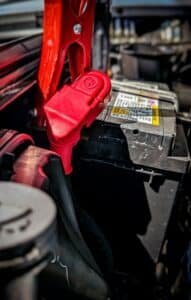
You just clamp the red cable to the positive terminal and the black cable to the negative terminal or another metal ground point. Then you turn the unit on and start the car. These handy devices can start most vehicles in under 10 minutes from the moment you connect them. They’re small enough to fit in a glovebox and save you from the awkwardness of having to flag down a stranger for help.
Jumper cables are a reliable old-school backup, but they do require a good samaritan with a running car. To avoid frying the sensitive electronics in either vehicle, you have to follow a very specific connection sequence.
- Make sure both vehicles are turned off.
- Connect one red clamp to the positive (+) terminal of the working battery.
- Connect the other red clamp to the positive (+) terminal of the dead battery.
- Connect one of the black clamps to the negative (-) terminal of the working battery.
- Connect the final black clamp to a clean, unpainted metal surface on the dead car’s engine block (this is the ground).
Now, start the donor car and let it run for a few minutes. Then, try to start the car with the dead battery. Once it’s running, remove the cables in the exact reverse order you put them on. Let the newly revived engine run for at least 15 to 20 minutes to give the battery a chance to recharge before you shut it off again.
What a Recurring Dead Battery Might Mean
Think of a jump-start as a temporary band-aid. If you find that your car needs a jump over and over again, you’re likely dealing with a bigger problem. It could be a sign that your alternator is failing or there’s another fault in the charging system, not just a weak battery. A professional diagnostic check is the only way to figure it out for sure and prevent you from getting stranded for good. When the problem keeps coming back, it helps to understand when to jump-start or replace your battery.
How to Handle a Flat Tire on the Road
Tire failures can be sudden and violent. With tire problems being a factor in about 82,000 crashes every year, knowing how to handle them is a critical safety skill. If you can act decisively, changing a tire on the roadside is a job that an experienced person can usually handle in about 10 to 15 minutes.
Changing a Flat Tire With a Spare
First things first, park on level ground. This is non-negotiable, as a jack can easily slip on an incline. Once you’re parked, apply the parking brake firmly.
- Slightly loosen the lug nuts while the tire is still on the ground. This uses the car’s own weight to help you break them free.
- Place the jack under the vehicle at the lift points specified by the manufacturer.
- Raise the car until the flat tire is completely off the pavement.
- Take off the wheel and mount your spare tire.
- Hand-thread the lug nuts back on to make sure you don’t cross-thread them.
Lower the vehicle until the spare tire just touches the ground but isn’t bearing the full weight yet. Tighten the lug nuts in a star pattern to ensure they are seated evenly. Finish lowering the car and then give the lug nuts one final, full torque. And remember, those compact “donut” spares are only for temporary use and should be driven on at reduced speeds.
Using Temporary Tire Sealant as a Quick Fix
For drivers who aren’t physically able to change a tire, chemical sealants like Fix-a-Flat can be a real lifesaver. These are meant to be short-term solutions for small punctures in the tire’s tread. They won’t do anything for damage to the sidewall or for a major blowout.
You should also be aware that some tire shops might refuse to repair a tire that’s been filled with sealant. It creates a chemical mess inside that has to be completely cleaned out before a permanent patch can be properly applied. It can get you home, but it might make the final repair a bit more complicated.
What If Your Car Doesn't Have a Spare Tire?
In the quest to make cars lighter and more efficient, spare tires have been eliminated from the trunks of many modern vehicles. A lot of newer cars, especially electric ones, no longer come with a spare. This trend actually contributed to a 6% increase in flat-tire incidents that required a tow in 2024 compared to 2023.
If you drive a car that doesn’t have a spare, you should seriously consider adding a tire plug kit and a 12-volt air compressor to your trunk. These tools allow you to seal a puncture from the outside, often without even needing to take the wheel off the car.

What to Do When Your Engine Overheats
Nothing destroys an engine faster than heat. With cooling system failures causing about 11% of all breakdowns, this is a situation you need to take seriously. If you see your temperature gauge climbing into the red zone or notice steam billowing from under the hood, pull over safely and shut off the engine immediately. Trying to drive for “just another mile” can be the difference between a simple repair and a cracked engine block.
Immediate Steps for an Overheating Car
Your first line of defense is right on your dashboard, the heater. Turn off your air conditioning and crank the heater to the highest, hottest setting. This might feel counterintuitive, but it actually pulls heat away from the engine block and releases it into the cabin.
Once you’ve pulled over, patience is your most important tool. You need to wait at least 15 to 30 minutes before you even think about popping the hood. Never, ever try to remove a radiator cap while the engine is hot. The cooling system is under extreme pressure, and removing the cap can cause boiling coolant to spray out, leading to severe burns.
Checking for the Cause and When to Call for a Tow
After the engine has had plenty of time to cool down, you can take a look at the visible hoses. Check for any splits, bulges, or hissing sounds that might indicate a leak. Look on the ground under the car for any puddles of green or orange coolant.
As a short-term emergency fix, you can top up the reservoir with coolant or even water to try and limp to a service station. However, if the car starts to overheat again right away, makes loud knocking noises, or is losing power, do not try to restart it. That’s when you need to call for a tow to avoid catastrophic engine damage.
More Common Roadside Quick Fixes
Not every breakdown is a major mechanical failure. Sometimes, life just happens.
Running Out of Fuel
It happens more often than most of us would like to admit. Emergency fuel delivery is still one of the most common requests for roadside assistance teams. If you have to make the call, you can usually expect to wait somewhere between 20 to 60 minutes. Most services will bring you just enough fuel, typically a gallon or two to get you to the nearest gas station. The amount you pay can depend on several factors, including what fuel delivery services cost.
For those driving electric vehicles, “running out of gas” is a bit more complicated. A completely depleted battery almost always requires a flatbed tow to a charging station, or you’ll need a service truck that’s equipped with a specialized mobile charger.
Getting Locked Out of Your Car
A moment of distraction is all it takes to lock your keys in the car. This is another frequent call, right up there with flat tires and dead batteries. Professional help can usually arrive within 20 to 60 minutes and can get your vehicle unlocked quickly and without any damage.
Whatever you do, avoid the temptation to use a coat hanger or other improvised tools. Modern car doors are packed with delicate electronics and airbag sensors. Poking around blindly in there could easily trigger a side airbag or damage the locking mechanism. If you have one, use your spare key or see if your car’s manufacturer offers a remote unlock feature through an app.
Your Essential Roadside Emergency Kit for Fast Fixes
You can’t solve a problem if you don’t have the right tools. A well-stocked emergency kit can be the difference between a three-hour wait for a tow truck and a fifteen-minute DIY fix. Every item you keep in your trunk should have a purpose, like a jump starter to deal with the 30% of breakdowns caused by batteries.
Knowing When to Call a Pro
There’s a limit to roadside heroics. Some problems simply can’t be fixed on the shoulder of a highway. Nationwide, breakdowns cost drivers about $44 billion every year, a figure that underscores the financial impact of major repairs that go way beyond a simple patch.
Listen to what your car is telling you. If it keeps stalling, if you see thick smoke coming from the tailpipe, if you smell strong gasoline fumes, or hear loud, mechanical knocking sounds, these are signs of a serious failure. Trying to keep driving will likely destroy your engine or transmission. In these situations, your first and only call should be for a tow truck.
DIY versus Tow and Repair
A DIY fix can definitely save you money, but only if it’s the right fix for the problem. A jump start costs you nothing but a few minutes of your time. A tow to a shop for a diagnosis, on the other hand, could run you hundreds of dollars.
But it’s important to remember that older vehicles (those 10 years or older) are four times more likely to need a tow. If you’re driving an older car, the chances are higher that a breakdown is due to a major component failure. You have to weigh the cost of a tow against the very real risk of causing thousands of dollars in additional damage by trying to drive a seriously broken car.
How to Avoid Roadside Breakdowns with Preventive Maintenance
The best breakdown is the one that never happens in the first place. A 2022 AAA survey revealed that 35% of drivers in the U.S. either postpone or completely skip recommended maintenance on their vehicles. This procrastination puts them at a much higher risk of getting stranded. With cars over 10 years old accounting for more than two-thirds of roadside calls and 81% of tows, proactive care is truly the best insurance policy you can have.
Your Simple Maintenance Checklist
You can stay ahead of most problems by sticking to a simple, routine schedule:
- Every month, take a few minutes to check your tire pressure and tread depth. Look at your battery terminals for any white or blue crusty corrosion. Check your oil, coolant, and brake fluid levels.
- Seasonally rotate your tires to make sure they wear down evenly. It’s a smart idea to have your battery’s load tested before winter arrives and get your cooling system inspected before the summer heat kicks in.
- Annually, especially for older vehicles, it’s worth it to have a comprehensive inspection of all the rubber hoses, drive belts, and the alternator.
Danger of Unrepaired Recalls
The Hidden Factory defects could be lurking in millions of cars on the road right now. In 2023, the National Highway Traffic Safety Administration (NHTSA) reported over 1,000 different vehicle recalls that affected more than 32 million vehicles. Shockingly, about one in every four of these recalled vehicles remains unrepaired.
You can check your car’s VIN (Vehicle Identification Number) against the national database. Repairs for recalls are typically done for free at the dealership. Ignoring a recall notice means you could be driving a ticking time bomb.
Roadside emergencies are always stressful, often dangerous, and never convenient, but they are absolutely manageable if you have the right knowledge. From jump-starting a battery in a quiet parking lot to safely changing a tire on the shoulder of I-40, these skills empower you to take control of an unexpected situation. However, there are times when tools and determination just aren’t enough.
Roadside Quick Fixes
Don’t get stranded. Learn common roadside quick fixes for a dead battery, flat tire, or overheating engine with our step-by-step DIY car breakdown guide.
A roadside breakdown is more than an inconvenience, it can be dangerous and expensive. With 69 million breakdowns occurring in the U.S. each year, knowing how to perform a few common roadside quick fixes is an essential skill for any driver. This comprehensive guide walks you through the safest and most effective ways to handle everything from a dead battery and a flat tire to an overheating engine. Learn the step-by-step procedures, the tools you need in your emergency kit, and when it’s time to stop and call for a professional tow. Be prepared, stay safe, and get back on the road faster.
When that heat gauge spikes into the red or the engine starts making a horrible knocking sound, you need a partner you can trust to get you and your vehicle to safety without delay.
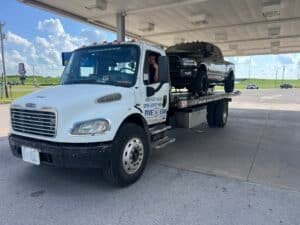
For drivers here in Oklahoma City, Five Star Towing is that partner. We provide fast, professional towing and roadside assistance across the entire metro area. Whether you just need a couple of gallons of gas or a flatbed tow for a specialized vehicle, our team is always ready to help you get back on your way. Don’t let a breakdown leave you stranded, save our number in your phone and drive with a little more confidence.
Frequently Asked Questions
It almost always comes down to three things, your battery, your tires, and your engine's cooling system.
Dead batteries are the number one culprit, causing about 30% of all breakdown calls. Flat tires and problems with engine overheating or the cooling system (around 11%) are the next most common issues.
Industry reports from trusted organizations like AAA consistently show that battery failure is the top problem, and it often gets worse in extreme weather that messes with battery chemistry.
So, here's what you should do, make a habit of checking your battery's health and your tire pressure every month. Just by carrying a portable jump starter and having a good spare tire, you can handle nearly half of all the things that could potentially leave you stranded.
Wait times can really vary depending on where you are and how busy they are, but in a city, it's usually less than an hour.
In a metro area like Oklahoma City, you can typically expect someone to arrive in 20 to 60 minutes. If you're in a rural area or if there's severe weather, that wait could be significantly longer.
Most towing companies try to meet a 45-60 minute arrival time, but real-world data from insurance companies shows that it really depends on how many providers are in that specific area.
Always ask for an estimated time of arrival (ETA) when you call. If you're told it will be more than 90 minutes and you're stuck in extreme heat or cold, you might want to call local law enforcement for a safety check or even try another provider.
Yes, it's generally safe as long as you take a few basic precautions. Your car's electrical system is 12-volt DC, which is much safer than the high-voltage AC in your house.
You are not going to get electrocuted by a standard 12-volt car battery, even in the rain. The main thing is to keep the connection points as dry as possible to ensure you get a good connection and to prevent things from getting slippery.
A car's electrical system is grounded to the metal frame. While water is a conductor, the voltage is just too low to easily pass through your skin's resistance under normal jump-starting conditions.
Try to shield the battery terminals with your body or an umbrella while you connect the clamps. And no matter the weather, make sure you don't lean directly over the battery, as a stray spark could ignite hydrogen gas.
Yes, you can, but think of it as a temporary limp to a repair shop. You should only drive a short distance and at a reduced speed.
Products like Fix-a-Flat are designed for emergencies, not as a permanent fix. The sealant is a liquid that can throw your tire off balance, and over time, it can corrode the wheel or clog up your tire pressure monitoring system (TPMS) sensors.
Tire manufacturers and professional groups (like the Tire Industry Association) are clear that liquid sealants are only temporary. Many repair shops charge extra for the time and labor it takes to clean out all the gooey sealant before they can apply a proper patch.
Treat a sealed tire just like you would a donut spare, keep your speed under 50 mph and go directly to a tire professional. Make sure you tell the technician that you used a sealant so they can handle the tire safely.
Your immediate goal is to stop the engine from creating more heat and to get rid of the heat that's already built up.
First, turn off the air conditioner, which puts a heavy load on the engine. Then, turn on your heater to full blast. This makes the heater act like a second radiator. After that, pull over to a safe spot and turn off the engine completely.
Mechanics all agree that continuing to drive an engine that's in the "red zone" can warp cylinder heads or even crack the engine block in a matter of minutes. That can turn a $200 repair into a $5,000 engine replacement.
Don't open the hood right away. Give it at least 15 to 30 minutes to cool down and for the pressure to release. This will help you avoid getting a nasty steam burn from the radiator cap.
You need to give the alternator enough time to recharge the depleted battery.
After a successful jump, you should drive the car for at least 15 to 20 minutes. Just letting it idle in the driveway isn't as effective as driving at highway speeds, which makes the alternator spin faster and generate more power.
Battery experts point out that a completely dead battery might not get a full charge from just driving around and may need to be put on a bench charger. However, 20 minutes of driving is usually the minimum to ensure the car will be able to start again on its own.
Don't just turn the engine off right after you get it started. Drive directly to your destination or, even better, to a parts store where they can often test your battery's health for free.
A good kit should help you be seen, communicate, and handle basic mechanical problems.
At the very least, you should have a portable jump starter, a flashlight, reflective triangles, a first-aid kit, and some basic tools (like a screwdriver and pliers). It's also smart to have water and a blanket for your own safety and comfort.
Safety groups like the National Safety Council recommend these items because crash and breakdown data shows that being visible to other drivers and being protected from the weather are two of the biggest risks.
Customize your kit for the local climate. Here in Oklahoma, that means packing extra water in the summer and having warm clothing or hand warmers in your kit during the winter.
Simply put, heat is brutal on car parts, especially batteries and tires.
High temperatures outside can cause the fluid inside your battery to evaporate, which speeds up internal corrosion. Heat also makes the air inside your tires expand, which increases the risk of a blowout on scorching hot pavement.
AAA data consistently shows a big jump in service calls during the summer months. These calls are specifically for battery replacements and tire issues, and they directly correlate with rising temperatures.
Do a "summer check-up" on your car in late spring. Have the battery's load tested and check your tire pressure when the tires are cool.
Using your spare is free at the moment, but you'll still have to deal with the flat tire eventually.
If you can put the spare on yourself, it doesn't cost a dime. Having a punctured tire repaired at a shop is usually pretty cheap (around $20-$40), which is much less than buying a brand new tire (which can be $150 or more).
Most tire shops offer low-cost flat repairs as a way to earn your future business. You'll only need to replace the whole tire if the sidewall is damaged or if the tread is already worn down too far.
The best thing to do is swap to the spare right away to avoid damaging the rim. Driving on a flat tire will destroy its internal structure, guaranteeing you'll have to buy a new one instead of just paying for an inexpensive patch.
In this situation, you have to rely on passive signals and stay with your car.
Don't start walking down the road to find service unless you know exactly where help is. Instead, raise the hood of your car (which is the universal sign for distress) and display a white cloth or a piece of paper in your window.
Search and rescue teams always stress that you should stay with your vehicle. A car is much bigger and easier for a passing police officer or highway patrol to spot than a person walking along the side of the road.
If you often travel through areas with spotty cell service, it might be worth investing in a satellite messenger or even keeping a CB radio in your emergency kit.
The main clue is whether the car dies while it's running or if it just won't start in the first place.
If your car starts with a jump but then dies as soon as you remove the jumper cables, the problem is most likely the alternator. If it runs fine after a jump but then won't restart after you turn it off, the problem is likely the battery.
The alternator is what provides power to your car while the engine is running; the battery's main job is to provide the power to start the engine. Mechanics use this simple logic to diagnose the problem.
Pay attention to your headlights. If they get dim when you rev the engine, your alternator is probably struggling. If your lights are bright but all you hear is a clicking sound when you try to start the car, it's almost certainly the battery.
Absolutely. Simple wear and tear makes older parts much more likely to fail.
Statistically speaking, cars that are over 10 years old are far more likely to have a mechanical failure than newer cars. Over time, rubber hoses get brittle and dry out, and electrical connections start to corrode.
Data from roadside assistance companies shows that vehicles aged 10 years and older make up the vast majority of tow requests. Their probability of breaking down is roughly double that of cars that are under 5 years old.
If you drive an older car, it’s a good idea to be extra diligent about following the maintenance schedule and to keep a more robust emergency fund set aside for inevitable repairs.
Yes, but it's a special job that requires specific equipment because of the low ceilings.
Standard flatbed tow trucks are usually too tall to fit inside parking garages. You'll need to specifically request a "wheel-lift" truck or a specialized low-clearance wrecker.
Towing companies keep different types of trucks in their fleets for this very reason. A standard flatbed needs a lot of vertical space to tilt its bed, which garages just don't have.
When you call for a tow, immediately tell the dispatcher that you're in a parking garage. If you can, also provide the clearance height that's posted at the entrance (it's usually around 6'8" or 7'0") to make sure they send the right truck for the job.
As long as your car is safely out of the flow of traffic, the safest place to be is inside your vehicle with your seatbelt on.
If you're on the shoulder, stay buckled up inside. This will protect you if another vehicle accidentally hits your parked car from behind. If you're stuck in an active lane of traffic, you should get out of the car and move to a safe location far away from the road.
Highway safety studies have found that secondary collisions (when another car hits a disabled vehicle) are a major cause of injuries and fatalities. The safety cage of your vehicle is your best protection when you're on the shoulder.
Lock your doors and keep your hazard lights flashing. Do not stand directly behind or in front of your vehicle while you wait.