
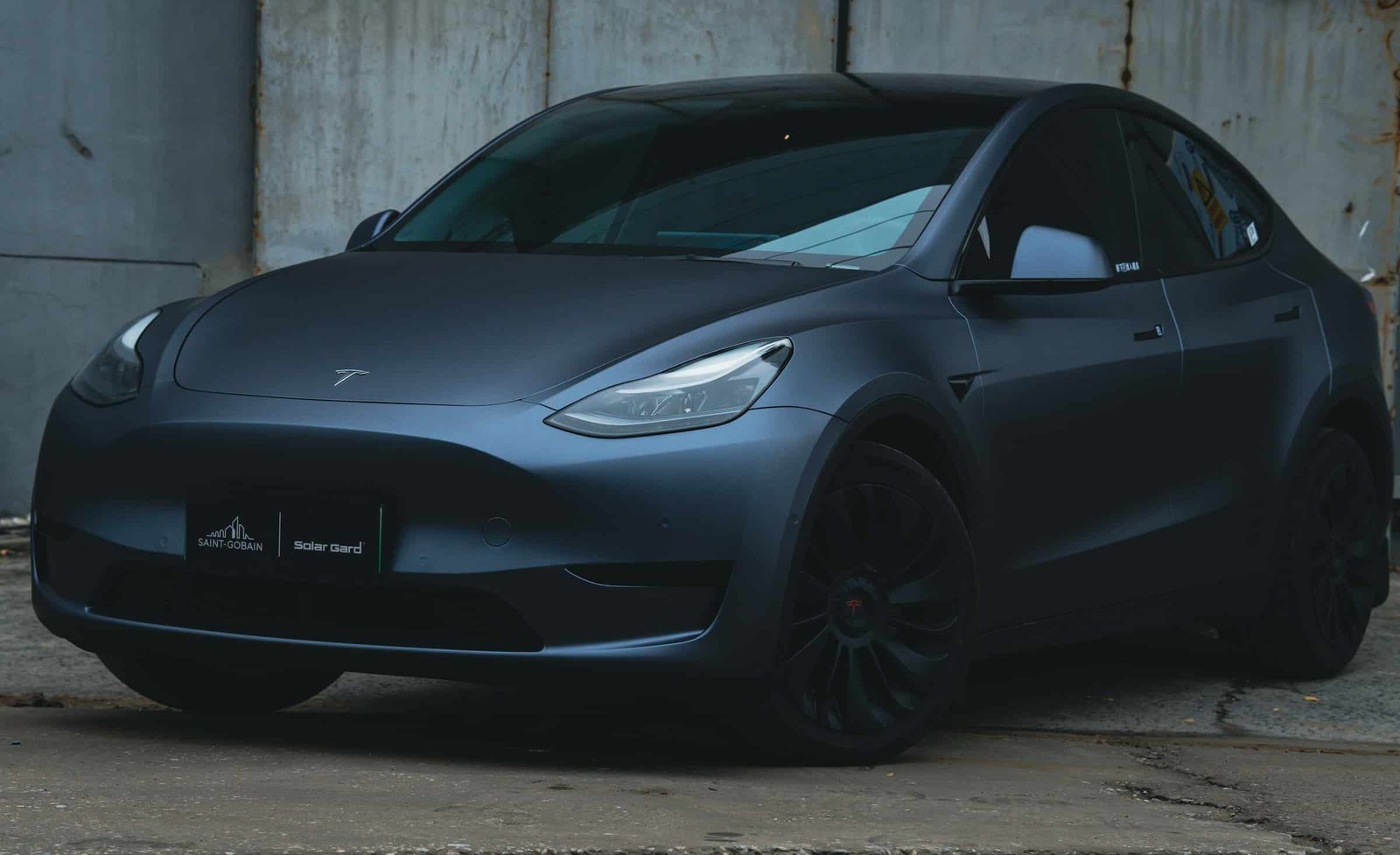
With its impressive numbers and zippy, instant torque, the Tesla Model Y is a really appealing choice for an electric SUV. It has an official towing capacity of 3,500 pounds, putting it right in the mix for hauling small campers, boats, and utility trailers.
But that number on the page doesn’t tell the whole story. The reality is, towing takes a huge bite out of your real-world range, often by 40-60%, which can turn what should be a simple trip into a serious logistical puzzle.
In this guide, we’ll break down everything you really need to know, from the mandatory factory tow package and aftermarket brake controller you’ll need, to understanding the crucial difference between the 350-pound tongue weight limit for a trailer and the much lower 160-pound limit for things like a bike rack.
Key Points
- The Tesla Model Y can tow up to 3,500 lbs with the factory tow package.
- Towing reduces range by about 40 to 60 percent, so plan shorter trips.
- Expect to charge every 80 to 120 miles when towing.
- The tow package includes hitch and wiring but requires a separate trailer brake controller.
- Tongue weight limit is 350 lbs for trailers and 160 lbs for hitch accessories.
- Best practice is to stay under 2,800 to 3,000 lbs for safer towing.
- Charging with a trailer can be inconvenient since many stations require unhitching.
How Towing Annihilates Your Model Y's Range
A Reality Check From 229 Miles to Just 99
Towing with an electric vehicle is a whole new ballgame. You’ll feel the battery drain right away, and it’s dramatic. A real-world test from the folks at MotorTrend showed just how big the hit is. They started with a highway range of 229 miles without a trailer. After hooking up a 2,250-pound trailer, that range nosedived to a mere 99 miles. That’s a staggering 56% reduction in range. The data from their test revealed that for every single mile they towed, the car burned through about 3.1 miles of its estimated range. This isn’t just a small dip; it’s a complete change in how you have to think about and plan your journey.
The 40-60% Rule for Towing
When you’ve got a trailer hooked up, you can pretty much ignore the car’s standard range estimate. As a solid rule of thumb, you should brace yourself for a 40–60% loss in range whenever you’re towing something close to the Model Y’s limit at highway speeds. So, if your vehicle normally has a 300-mile EPA range, you’re really looking at a practical towing range of about 150 miles. To play it safe, you should plan your charging stops for every 80 to 120 miles, especially if you’re hauling a heavier load. This conservative approach is the best way to keep from getting stranded with a dead battery and a trailer in tow which is a situation nobody wants to be in and one that requires a specialist, like us here at Five Star Towing in Oklahoma City, to solve.
Your Model Y's 3,500 Lb Tow Rating Explained
Maximum Towing Capacity in the U.S. versus International Specs
The maximum towing capacity for a Tesla Model Y here in the United States is 3,500 lbs, which is about 1,588 kg. This rating applies to both the Long Range and Performance models, but only when they’re “properly equipped.” What’s interesting is that these numbers can change depending on where you are in the world. In Europe and other international markets, the official rating is a bit higher at 1,600 kg (3,527 lbs) for several versions, including the Long Range, Performance, and even the Rear-Wheel Drive model. The golden rule is to always check the owner’s manual for your specific region to confirm your vehicle’s rating.
The "Properly Equipped" Requirement
That 3,500-pound rating isn’t something you get automatically. It’s only valid if your Model Y has the official Tesla factory tow package, and this isn’t something you can piece together with aftermarket parts. The package comes with a high-strength steel tow bar and a Class II, 2-inch receiver hitch. If you decide to install an aftermarket hitch, your vehicle won’t qualify for the manufacturer’s stated capacity. One of the most critical details to understand is that Tesla doesn’t provide an integrated trailer brake controller. This part is absolutely essential for safely handling a trailer that’s at or near the maximum weight limit, meaning you’ll need to find and install one on your own.
Everything in the Tesla Tow Package and What's Missing
What's Included in the Factory Tow Package
When you order the official tow package from Tesla, you’ll have it installed at a Tesla Service Center. The hardware itself includes a Class II hitch receiver that’s built to integrate directly into your car’s rear structure for the best possible strength. You’ll also get a 7‑pin wiring connector, which is tucked away behind a small pop-out panel on the bumper, all set to connect to your trailer’s lights and signals. Just as important is the software that comes with it. The package enables “Trailer Mode,” which tells your car to automatically tweak its driving dynamics, traction control, and braking to handle the extra weight and drag from the trailer.
The Trailer Brake Controller
But here’s the one glaring omission in Tesla’s otherwise complete package: there’s no factory-installed trailer brake controller. If you’re planning to tow anything close to that 3,500-pound limit, you’ll have to buy and install an aftermarket brake controller. This little device is what lets your car activate your trailer’s own electric brakes. Without it, you’re asking the Model Y’s brakes to stop both the car and a heavy trailer all on their own, which is not only unsafe but often illegal. Most U.S. states require trailer brakes by law for any trailer weighing over 1,500–3,000 lbs. This makes it an absolutely essential, non-negotiable add-on if you’re serious about towing.
Tongue Weight versus Vertical Load The 350 Lb Tongue Weight Limit
Tongue weight is simply the downward force that the trailer’s tongue pushes down on the hitch. For the Model Y, the official U.S. owner’s manual sets the maximum tongue weight at 350 lbs (159 kg). This limit is for models with 19″ and 20″ wheels when you’re towing up to the 3,500 lb maximum. Getting the tongue weight right is absolutely critical for maintaining stability and preventing the terrifying experience of trailer sway. A good rule of thumb is to aim for a tongue weight that’s about 10% of your total trailer weight. For example, if you have a 2,500-pound trailer, you’d want its tongue weight to be right around 250 pounds.
The 160 Lb Vertical Load Limit
Now, let’s talk about accessories, because the weight limit here is completely different and a whole lot lower. This 160-pound (72 kg) vertical load limit is specifically for things you mount directly onto the hitch, like bike racks or cargo carriers. This weight has to include the rack plus anything you load onto it. And believe us, that weight adds up fast. For instance, if you have two 55-pound e-bikes and a 50-pound rack, your total is 160 pounds, putting you right at the limit with zero room for error. Going over this limit can put way too much stress on the hitch and your car’s rear suspension, which could potentially lead to serious damage.
What Can a Tesla Model Y Realistically Tow?
So, with that 3,500-pound rating, what can you realistically tow? The good news is the Model Y is surprisingly capable for its size. You can comfortably pull a wide variety of fun gear and equipment. This includes small campers, teardrop trailers, lightweight aluminum boats, jet skis, utility trailers for moving day, and even small toy haulers for your dirt bike or ATV. The golden rule here is that the trailer’s total weight and that includes all your gear, water, propane, and supplies has to stay under that 3,500-pound limit. Always double-check the trailer’s Gross Vehicle Weight Rating (GVWR) right on its sticker before you even think about hitching it up.
A Word of Warning on Overloading
Don’t be tempted to see how far you can push the limits. You might see discussions in online forums or owner groups about towing larger travel trailers, like Airstreams that can weigh up to 6,000 pounds, but let’s be clear, this is incredibly dangerous and irresponsible. It blows past Tesla’s official limit and puts you, your car, and everyone else on the road at risk. Before you head out on any long trip, it’s always a smart move to take your fully loaded trailer to a public scale, like the ones at truck stops or moving centers, just to be sure you are safely within your Model Y’s operating capacity.

The Model Y Towing versus Other Electric SUVs
When you look at the competition, the Tesla Model Y holds its own in the compact and midsize electric SUV world when it comes to towing. While some of its rivals can’t tow at all, the Model Y’s 3,500-pound rating puts it at the high end of the pack, matching some premium competitors and leaving many others behind. This makes it one of the most versatile choices out there if you need your electric vehicle to be more than just a daily commuter.
Competitive Towing Capacity Chart
Here’s a quick look at how the maximum towing capacities stack up for some popular electric SUVs:
- Tesla Model Y offers a towing capacity of 3,500 lbs
- Cadillac Lyriq also supports up to 3,500 lbs of towing
- Audi e-tron matches with a 3,500 lb towing capacity
- Hyundai Ioniq 5 can tow up to 2,300 lbs
- Volvo EX40 and Volvo XC40 Recharge are rated for about 2,000 lbs
- Ford Mustang Mach-E is not rated for towing on some U.S. trims
What It Feels Like to Tow with a Model Y
So, what’s it actually like to tow with a Model Y?
Drivers almost universally say it feels incredibly confident and stable on the road. Because of the instant torque you get from its electric motors, it feels shockingly quick off the line, even when you’re pulling a trailer that’s two-thirds of its maximum rating. You won’t hear any engine straining or feel a transmission struggling to find the right gear.
The regenerative braking also works seamlessly with a trailer, helping you control your speed on downhills while putting a little bit of energy back into the battery. As long as the trailer is loaded correctly and Trailer Mode is on, the car’s suspension and advanced traction control systems work in harmony to manage and reduce trailer sway, giving you a feeling of being securely in control.
The Logistics of a Towing Road Trip
The Uncoupling Problem
Let’s talk about the biggest headache of taking a road trip while towing an EV. It’s not actually the range loss, it’s the charging station layout. The vast majority of Tesla Supercharger sites and other public fast chargers simply weren’t designed for vehicles with trailers.
They don’t have pull-through stalls. This means you have to unhitch your trailer, park it somewhere out of the way, charge your car, and then hook everything back up again before you can continue your trip.
This whole process adds a significant amount of time and hassle to every single charging stop. In perfect conditions, a Model Y at a 250 kW V3 Supercharger can get a solid charge, going from 5% to 80% in about 32 minutes, but when you factor in the time to unhitch and hitch back up, you can easily double your total time at the station.
Best Practices for Planning Your Route
Spontaneity is great, but not when you’re towing with an EV. You can’t just hop in the car and go. You absolutely have to plan your charging stops ahead of time using apps that can show you the layouts of the stations. Look for chargers in big, open parking lots or near spaces where you’ll have room to maneuver or uncouple without causing a traffic jam.
To make your stops as quick as possible, try to roll into the charger with a lower battery level, since charging is fastest when the battery is closer to empty. Then, only charge up enough to get you comfortably and safely to your next planned stop. This strategy helps you spend less time waiting and more time driving.
Towing Safely and Legally
Staying Within the Limits
The 3,500-pound tow rating is an absolute maximum, not a target. For everyday use and to give yourself a nice safety buffer, it’s always a good idea to aim to keep your total trailer weight in the 2,500–3,000-pound range. Many experienced towers even live by an unofficial “80% rule,” which means staying under 80% of your vehicle’s rated capacity. For the Model Y, that would be 2,800 pounds. It’s absolutely critical that you never exceed the lowest of these three numbers; your vehicle’s tow rating, the hitch’s rating, or the trailer’s GVWR.
Legal and Insurance Implications
Exceeding your vehicle’s manufacturer-stated towing capacity is a really big deal. It can cause premature wear and tear on your brakes, suspension, and drivetrain, and in the worst-case scenario, lead to a catastrophic structural failure. Even more importantly, it makes your stopping distances much longer and compromises your handling. If you were to get into an accident while overloaded, your insurance company could deny your claim, which could leave you on the hook for a massive financial bill. The 3,500-pound figure is a common practical limit for unibody compact SUVs, and it lines up with certain Department of Transportation guidelines for safe operation on public roads.
Pro Tips for Maximizing Towing Efficiency and Stability
Master Your Load Distribution
Where you put the weight in your trailer is just as important as how much weight you’re pulling. Distributing your load correctly is the secret to safe, stable towing. You should always follow the 60/40 rule, place about 60% of your trailer’s total weight in front of its axle. This helps make sure you have the right amount of tongue weight, which should be somewhere between 10–15% of the total trailer weight. Always put your heaviest items down low and centered over the axle to keep the center of gravity low, which is your best defense against dangerous trailer sway.
Adjust Your Driving Style for EV Towing
Your driving habits have a massive impact on your range. The single best thing you can do to stretch your towing range is to simply slow down. Dropping your cruising speed from 75 mph down to 60–65 mph can make a huge difference in how much energy you use. You should also try to use gentle acceleration and braking whenever you can. Try to avoid those jackrabbit starts from a stoplight and slam-on-the-rakes moments. Finally, give yourself more following distance from the car in front of you. This gives you plenty of time and space to make longer, more controlled stops.
Towing Myths and Regional Differences
One common myth you might hear floating around is that the “Model Y is not rated for towing.” For any Model Y that has the official Tesla tow package, this is simply not true. This incorrect claim usually comes from people talking about vehicles without the factory package or is sometimes based on old, outdated information.
The fact that several Model Y versions, including the Long Range, Performance, and RWD models are all rated for 1,600 kg (3,527 lbs) in many international markets, as noted in the European owner’s manual, is proof that the vehicle’s platform was designed from the ground up with towing in mind. To be 100% sure, always check the owner’s manual that came with your specific car.
The bottom line is that towing with a Tesla Model Y is absolutely possible and can be a fantastic experience, as long as you go into it with a solid plan and the right gear. The 3,500-pound capacity opens up a world of possibilities for weekend trips and new adventures. But the tough realities of reduced range and tricky charging logistics mean you always have to be prepared.
Sometimes, even when you’ve planned everything perfectly, things can still go wrong. Whether you misjudged your remaining range or find yourself with a flat tire on the side of the Kilpatrick Turnpike, you need help you can really count on. Here in Oklahoma City, Five Star Towing is your trusted partner for any kind of roadside situation. Our experienced team knows the unique challenges of electric vehicles and has the right equipment to handle your Model Y safely and efficiently. If you ever find yourself in a bind, please don’t hesitate to give us a call.
Frequently Asked Questions
The official towing capacity for a properly equipped Tesla Model Y in the U.S. is 3,500 pounds for both the Long Range and Performance models.
This rating only applies if the vehicle is equipped with the factory-installed Tesla tow package, which includes a Class II hitch receiver. As it says in the Tesla Model Y Owner's Manual, without that specific package, the vehicle isn't rated for towing at all.
This capacity allows it to handle things like small campers, utility trailers, and lightweight boats, putting it in the same league as other premium electric SUVs like the Cadillac Lyriq, which also has a 3,500 lb rating according to Cadillac of Beverly Hills.
Towing has a huge impact on the Model Y's battery range, usually cutting it by 40% to 60% depending on the trailer's weight, how aerodynamic it is, the terrain you're driving on, and your speed.
A real-world test done by MotorTrend showed a Model Y's highway range dropping from 229 miles to just 99 miles when it was pulling a 2,250-pound trailer, which is a 56% decrease.
This massive energy use means you'll need to plan for much more frequent charging stops, often every 80 to 120 miles, so you don't run out of juice.
Yes, you absolutely must have the official factory-installed Tesla tow package to get the 3,500-pound tow rating.
Aftermarket hitches are not certified by Tesla for that kind of weight, and using one could void your warranty or create safety problems.
The factory package, as detailed by sources like TPARTS, comes with a high-strength steel tow bar with a built-in 2-inch Class II receiver, a 7-pin wiring harness for the trailer's lights, and the essential software that enables "Trailer Mode" for better, safer driving dynamics.
No, the Tesla Model Y does not have a factory-integrated trailer brake controller. This is a vital piece of equipment that you'll need to buy and install yourself from the aftermarket.
A brake controller is needed to work the electric brakes on a trailer, which is actually required by law in most states for trailers that weigh over 1,500 to 3,000 pounds.
Without one, you can't safely or legally tow a trailer that's anywhere near the Model Y's 3,500-pound maximum capacity.
The maximum tongue weight for a Tesla Model Y is 350 pounds (159 kg) when you're towing. This limit applies to the models with 19" and 20" wheels, as outlined in the U.S. owner's manual.
Making sure you have the correct tongue weight, which should ideally be 10-15% of the total trailer weight, is key for stability and preventing dangerous trailer sway.
You should never mix this number up with the much lower vertical load limit for accessories.
Yes, a Tesla Model Y is perfectly capable of towing smaller campers and teardrop travel trailers, as long as their total weight (GVWR) stays under the 3,500-pound limit.
It's a great vehicle for the kind of lightweight campers that are becoming increasingly popular.
However, it is not designed to pull larger travel trailers, like many Airstream models, which can easily weigh over 5,000 pounds.
Always make sure to confirm the trailer's GVWR before you buy or tow it to be sure you're staying within the car's safe limits.
The Tesla Model Y's 3,500-pound towing capacity is quite a bit higher than many of its direct competitors.
For instance, the Hyundai Ioniq 5 has a maximum towing capacity of 2,300 pounds, as noted by MotorTrend in a head-to-head comparison.
The Ford Mustang Mach-E isn't officially rated for towing in most of its U.S. versions, which makes the Model Y a much more flexible and useful option for drivers who need to pull a trailer.
"Trailer Mode" is a special software feature that turns on automatically whenever you plug a trailer's wiring harness into a Model Y that has the factory tow package.
According to Tesla's owner's manual, this mode adjusts several of the car's systems to make towing safer.
It changes how Autopilot features work, as well as the traction control, rear parking sensor alerts, and the air suspension (if your car has it) to account for the extra weight and length of the trailer.
This helps to reduce trailer sway and improve overall stability on the road.
Towing capacity (3,500 lbs) is all about the maximum weight the Model Y can pull behind it.
The vertical load limit (160 lbs), on the other hand, is the maximum downward weight the hitch can support from an accessory that isn't being towed.
That 160-pound limit is specifically for things like bike racks or cargo carriers, and this weight has to include the rack itself plus all the gear you put on it.
As many users on the Tesla Motors Club forums have pointed out, going over this much lower limit can damage the hitch or your car's suspension because it wasn't designed to handle that kind of static load.
Yes, it can be a real challenge. Most Tesla Supercharger stations were not designed with pull-through stalls, meaning you often can't get to the charger without unhitching your trailer first.
This logistical problem can add a lot of time and hassle to every charging stop.
As a driver, you have to carefully plan your routes using apps to find stations in large, open parking lots where it's easier to maneuver and find a temporary spot to park your trailer.
Going over the 3,500-pound towing limit is extremely dangerous and can lead to some very bad outcomes.
It puts a huge amount of stress on the car's frame, brakes, suspension, and powertrain, which risks a major mechanical failure.
Overloading also makes your stopping distances much longer and hurts your ability to handle the car, creating a serious safety hazard for you and others.
On top of all that, if you get into an accident, your insurance company might deny your claim if they find out you were operating the vehicle beyond the manufacturer's specified limits.
In the United States, both the Long Range and Performance versions of the Tesla Model Y are rated to tow up to 3,500 pounds, as long as they are equipped with the official Tesla tow package.
In other parts of the world, this capability is even more widespread.
European specifications, for example, show a 1,600 kg (3,527 lb) tow rating for the Long Range, Performance, and even the base Rear-Wheel Drive models, according to data from EV-Specs.
The price of the official Tesla tow package can vary, but you can typically choose it as an option when you order the car, or you can buy it later for a retrofit installation at a Tesla Service Center.
The price usually covers the hitch hardware, the wiring harness, and the labor to install it all.
While the cost can change, you should expect to pay a premium for the factory-certified equipment compared to aftermarket options, but it's the only way to guarantee your vehicle is officially rated for its maximum towing capacity.