

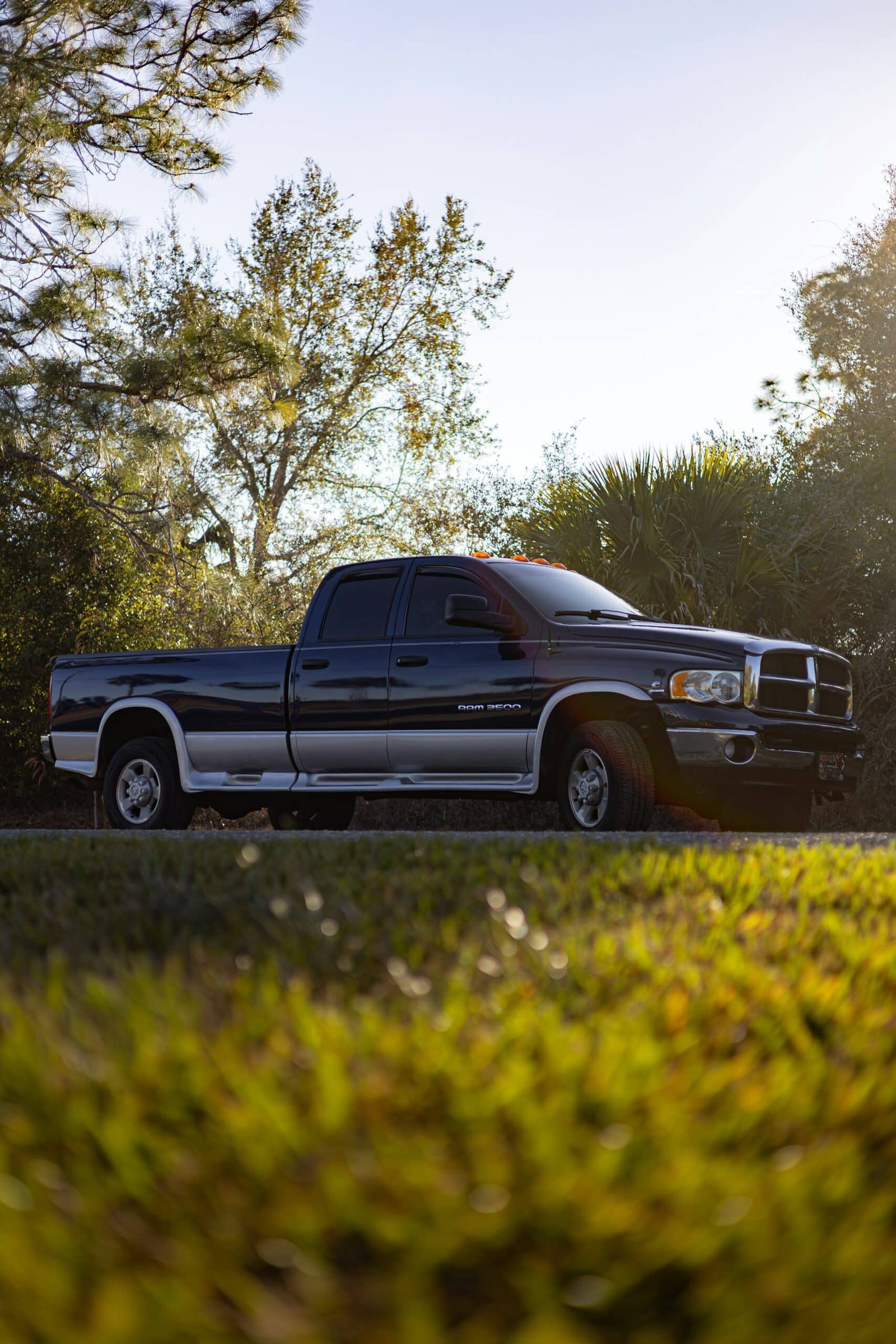
You can feel the weight before you even glance at your mirrors. It’s that heavy, planted sensation that travels right up through the steering wheel, telling you exactly what’s happening behind you.
Here in Oklahoma City, where powerful crosswinds sweep across the open plains and the traffic on I-35 never seems to sleep, hauling heavy loads requires a whole lot more than just hope. It demands a truck that was built to dominate the road.
The Ram 3500 stands as a true titan in this arena, offering capabilities that can turn what looks like a massive logistical challenge into just another routine drive.
Whether you’re pulling a cattle trailer out to the stockyards or dragging an excavator to a new job site, the first step toward getting there safely is truly understanding the limits of your rig.
key Notes
- The 2024 Ram 3500 can pull an incredible 37,090 lbs when equipped with the High-Output Cummins engine.
- To hit that jaw-dropping number, your truck needs to be a specific build; a regular cab, an 8-foot bed, and dual rear wheels.
- If you’re hauling more in the bed than you’re pulling behind, the 6.4L HEMI V8 actually offers a higher payload capacity at 7,590 lbs.
- For any trailer that weighs more than 18,000 lbs, you absolutely must use a fifth-wheel or gooseneck hitch for safety.
- The only way to know your truck’s true capacity is to check the sticker on the driver’s door jamb that’s the final word.
Unpacking the Ram 3500's Maximum Towing Power
That headline number is undeniably impressive. The Ram 3500 boasts a maximum towing capacity of up to 37,090 lbs, a figure that can move mountains. However, you can’t just walk onto any lot and pick a Ram 3500 that can pull that much. Achieving this specific rating requires a very precise configuration. First, you need the heart of the beast, the High-Output 6.7L Cummins Turbo Diesel I-6 engine. Then, you have to pair that engine with a regular cab, an 8-foot bed, and the all-important dual rear wheels (DRW). And finally, you’re not pulling this kind of weight from the bumper; a sturdy gooseneck or fifth-wheel hitch is mandatory.
You’ll also notice some variations between model years. While 37,090 lbs has been the benchmark for the 2022-2024 models, some factory literature for upcoming 2025-2026 models points to a slightly lower 36,610 lbs max diesel towing capacity. These little fluctuations often come down to evolving SAE J2807 testing standards and small tweaks to the frame. The only surefire way to know your truck’s true limit is to check the capacity label on the driver’s door jamb and cross-reference it with the official Ram towing guide for your specific VIN.
Understanding Fifth-Wheel and Gooseneck Towing
Ram’s engineering specifications are crystal clear on this, a fifth-wheel or gooseneck hitch is absolutely required for any trailer weighing over 18,000 lbs. A conventional bumper-pull hitch simply can’t safely manage the incredible leverage and weight of such heavy loads. Fifth-wheel and gooseneck hitches are mounted in the truck bed directly over the rear axle. This strategic placement distributes the trailer’s pin weight evenly across the truck’s frame, which gives you vastly improved stability and traction. This setup is what dramatically reduces the terrifying risk of trailer sway, giving you the control you need when a semi-truck barrels past you on a windy Oklahoma highway.
Ram 3500 Engine Towing and Payload Specs
The engine you choose truly defines the personality of your truck. In fact, it’s the single biggest factor in determining what your Ram 3500 is capable of. As a driver, you face a distinct trade-off here. The gas engine is a workhorse that maximizes your payload capacity and saves you money upfront. The diesel engine costs more, but it delivers the kind of raw, earth-moving torque needed to get any job done.
The 6.4L HEMI V8
The standard gas engine is a tried-and-true workhorse. The 6.4L HEMI V8 pumps out a respectable 405 horsepower and 429 lb-ft of torque. While it doesn’t have the low-end grunt of its diesel sibling, it still offers a very capable maximum gas towing capacity of up to 18,210 lbs. Its real advantage, however, lies in what you can carry in the bed. Because the gas engine block is significantly lighter than the massive diesel version, it eats up less of the truck’s Gross Vehicle Weight Rating (GVWR). The result is a best-in-class maximum gas payload of up to 7,590 lbs. If your daily grind involves hauling heavy pallets of sod or concrete in the bed rather than pulling a colossal trailer, the HEMI is your smartest option.
The High-Output 6.7L Cummins Turbo Diesel
This engine was purpose-built for one thing, heavy hauling. The High-Output 6.7L Cummins Turbo Diesel churns out an astonishing 1,075 lb-ft of torque. That massive twisting force is what enables the peak diesel towing capacity of up to 37,090 lbs. There is a catch, though. This legendary diesel engine is made of heavy iron. All that extra weight on the front axle naturally reduces how much weight you can carry in the bed. The maximum payload for this configuration drops to around 6,050 lbs. Essentially, you sacrifice some in-bed hauling capacity to gain world-class pulling power.
- Maximum towing capacity is 37,090 lbs with the High Output Cummins and a dually setup
- Maximum torque reaches 1,075 lb ft
- Maximum payload is 6,050 lbs with the diesel engine and 7,590 lbs with the gas engine

Dually versus Single Rear Wheel
You can get a Ram 3500 with either a single rear wheel (SRW) or a dual rear wheel (DRW) setup. While the SRW configurations can handle surprisingly heavy loads, the absolute maximum towing capacities belong exclusively to the DRW “dually” trucks. The primary benefit you get from having dual rear wheels is rock-solid stability. Those four rear tires create a massive contact patch with the road surface. This increased friction helps prevent the trailer from pushing the truck sideways during sharp turns or in gusty crosswinds. If you plan to regularly tow large RVs, horse trailers, or heavy equipment, the unshakable stability of a dually is more than worth the trade-off of having wider hips and needing to be a bit more careful when parking.
Why Your Truck's Weight Limit Matters
Payload is often the forgotten number that gets even experienced drivers into trouble. Your truck’s payload is the total amount of weight it can safely carry in its cab and bed. This number includes you, your passengers, your fuel, all your tools, and, crucially, the trailer’s pin weight. A trailer’s tongue weight (which is usually 10-15% of the total for a bumper-pull) or its pin weight (15-25% for fifth-wheels) subtracts directly from your available payload capacity.
Think about it, a heavy fifth-wheel can easily drop 4,000 lbs of pin weight right onto your rear axle. If you have a diesel truck with a 6,050 lb payload limit, that leaves you with only 2,050 lbs for all your passengers and cargo. It’s surprisingly easy to exceed your payload limit long before you even get close to the 37,090 lbs max tow rating. You should always calculate your loaded weights to stay safe, legal, and in control.
Ram's Smart Towing and Hauling Technology
Having raw power is useless if you can’t control it. Ram offers a suite of brilliant technology that makes towing heavy loads significantly safer and easier. The available Auto-Level Rear Air Suspension, for instance, is a complete game-changer. It features a Bed Lowering Mode that conveniently drops the rear suspension, allowing you to back under a trailer with ease before airing back up to perfectly level the load. This advanced system also does a much better job of isolating the frame from road imperfections than standard leaf springs.
Competitors like the Ford F-350 just don’t offer a comparable bed-lowering air suspension feature. On top of that, Ram offers a class-leading available 50-gallon fuel tank on its long-bed crew cab models. When you’re only getting 9 miles per gallon while towing a heavy camper, that extra range is a blessing that keeps you on the highway and away from trying to maneuver your rig through cramped fuel stops.
A Towing Titan Through The Years
The engineers at Ram have been consistently pushing the envelope over the last decade. Since 2018, the Ram 3500’s towing capability has skyrocketed by over 5,000 lbs, thanks to the use of stronger steel frames and major transmission upgrades. A 2018 Ram 3500, for example, maxed out at around 31,210 lbs. The big redesign in 2019 pushed that number to an impressive 35,100 lbs. By 2021, the truck hit the 37,100 lbs mark. The current 2024 models are holding steady at that powerful 37,090 lbs figure. So, if you’re shopping for a used truck, it’s vital to pay close attention to the model year. A truck from 2018 simply cannot legally or safely haul what a 2024 model can.
Towing versus Ford, Chevy, and GMC
The heavy-duty truck market is a fierce battleground where every pound counts. Ford, Chevy, and GMC all put up some very competitive numbers. The Ford F-350 Super Duty sometimes claims a higher maximum tow rating of 40,000 lbs, though that requires a highly specific configuration. The Chevrolet Silverado 3500HD and GMC Sierra 3500HD typically hover around the 36,000 lbs mark with their powerful 6.6L Duramax Diesel. While Ford might flash a bigger number on paper, the Ram 3500 often comes out ahead in real-world performance. The Cummins inline-six engine delivers its power with a different torque curve than the V8 diesels of its rivals, which often makes it feel more settled and confident with a heavy load behind it.
How to Read Official Ram Towing Charts
Remember that brochures are marketing tools, but towing charts are engineering documents. To find the exact capacity of a specific truck, you absolutely must consult Ram’s official towing capacity guides. These charts break down capabilities by cab style, bed length, drivetrain (4×2 vs. 4×4), axle ratio, and engine. A truck with a 3.73 axle ratio will always tow less than one with a 4.10 axle ratio. But the most accurate payload rating for your specific truck will always be found on the sticker inside the driver’s door jamb. And never, ever exceed the Gross Combined Weight Rating (GCWR), which is the maximum allowable weight of your truck, your trailer, and everything in them combined.
Every single mile you drive with a heavy load behind you is a test of your equipment. And while a Ram 3500 gives you a powerful upper hand, the road can be unpredictable. Tires can fail, engines can overheat, and muddy shoulders can trap even the biggest rigs. When you find yourself stuck on the side of the road here in the Oklahoma City area, Five Star Towing is your reliable solution. We understand heavy-duty hauling because we live and breathe it every single day. Give us a call for professional towing and roadside assistance that will get you back in motion and on with your day.
Frequently Asked Questions
The absolute most a 2024 Ram 3500 can pull is an incredible 37,090 lbs. But keep in mind, this number isn't universal; it's specifically for a regular cab, 4x2 model equipped with the powerful High-Output 6.7L Cummins Turbo Diesel engine and the Max Tow package. Without that exact setup, your towing limit will be lower.
This capacity firmly places the Ram 3500 among the top performers in the heavy-duty class (Ram Trucks, 2024).
What this means for you is that if you need to do some extreme hauling, you have to choose your truck's options very carefully, as a standard crew cab diesel won't be able to hit that peak number.
For sheer towing capability, the High-Output 6.7L Cummins Turbo Diesel is the undisputed champion.
It generates a massive 1,075 lb-ft of torque, which is the raw force required to get a heavy load moving from a dead stop.
While the gas engine is certainly capable, the diesel provides the low-end power you really need for confidently towing heavy fifth-wheels or construction equipment.
Automotive reviews consistently praise the Cummins as a top-tier hauling engine because of its legendary longevity and smooth torque delivery (Car and Driver, 2024).
For any serious towing, the diesel option gives you a significant performance advantage over its gas alternative.
A Ram 3500 equipped with the 6.4L HEMI V8 can comfortably tow up to 18,210 lbs. This engine produces 410 horsepower and 429 lb-ft of torque.
Even though it tows less than the diesel, its secret weapon is a higher payload capacity, simply because the engine itself is lighter.
This makes the gas V8 an excellent choice for things like slide-in truck campers or for jobs that require hauling very heavy cargo in the bed rather than pulling extremely heavy trailers (Ram Towing Guide, 2024).
If you have any plans to tow near the truck's maximum capacity or haul large, heavy fifth-wheels, then a dual rear wheel (DRW) truck isn't just a good idea, it's necessary.
The dual wheels give the truck a wider, more stable stance and double the tire contact with the road, which dramatically increases stability in crosswinds and reduces dangerous trailer sway.
Single rear wheel (SRW) trucks are very capable, but they just don't have the lateral stability required for the absolute heaviest loads (Riverbend CDJR, 2025).
The bottom line is that safety and stability should be your priority; if you tow heavy and often, the dually is the much safer platform.
The payload capacity really depends on the engine and trim level, topping out at an impressive 7,680 lbs for gas models.
The diesel models, despite having higher tow ratings, actually have lower payload ratings (around 6,570 lbs).
This is because the heavy diesel engine itself uses up more of the truck's gross weight allowance.
Knowing your specific payload is absolutely critical because the pin weight from your trailer counts directly against this limit (Ram Trucks, 2024).
You have to factor in your passengers, fuel, and all your gear to make sure you don't overload the axles.
The Ram 3500's 37,090 lb capacity is extremely competitive, although the Ford F-350 does claim a slightly higher maximum rating of up to 40,000 lbs in very specific configurations.
However, Ram often earns high praise for its comfortable ride quality and the unique torque characteristics of its Cummins engine.
Comparison tests often suggest that while Ford may win on the spec sheet, the real-world experience of towing in a Ram is frequently smoother and more confidence-inspiring, especially with the available air suspension (Waldorf Dodge, 2024).
The best advice is to test drive both with a heavy load to see which one feels better for your specific needs.
The main difference between the two comes down to the rear suspension and their legal weight ratings.
The Ram 2500 uses coil springs, which give it a smoother ride, but it has a lower GVWR and its towing maxes out at around 20,000 lbs.
The Ram 3500, on the other hand, uses heavy-duty leaf springs (or the available air suspension) and a reinforced frame to handle loads up to 37,090 lbs. If your trailer weighs more than 20,000 lbs, you legally need the Ram 3500 (Patriot CDJR Tulsa, 2024).
Think of it this way, the 3500 is a dedicated work truck, while the 2500 is a fantastic bridge between a daily driver and a serious hauler.
Absolutely. A properly equipped Ram 3500 can easily and safely pull a 20,000 lb fifth-wheel.
In fact, even the standard-output Cummins diesel is rated well above this weight.
However, it's crucial that you have the correct hitch installed and that your payload capacity can handle the pin weight, which would be around 4,000 lbs for a 20k trailer.
Always consult the Ram Towing Guide to make sure you match the right axle ratio and engine to this specific load (Ram Trucks Towing Guide).
The towing capacity has grown dramatically over the years, jumping from around 31,210 lbs back in 2018 to the current 37,090 lbs in 2024.
This impressive increase is thanks to the use of stronger steel in the frames, improved transmission gearing, and higher torque output from the Cummins engine.
Anyone looking at used trucks must check the specs for that specific year, as a 2019 model will have very different limits than a 2024 model (Ram Body Builder, 2019).
This rapid evolution really highlights how fast engineering is moving in the heavy-duty truck world.
The only 100% accurate source for your specific truck's capabilities is the sticker located on the driver's side door jamb.
This label lists the Gross Vehicle Weight Rating (GVWR) and payload that is specific to your VIN, taking into account all the factory options your truck was built with.
You should also reference the official Ram Towing Guide online, which lets you look up specs by your VIN or configuration.
Relying on general brochures can be dangerous because they always list the "maximum possible" numbers, not necessarily what your specific truck can actually do (Ram Trucks, 2024).