
It’s a sound every Oklahoma driver knows and dreads. The high-pitched whine of tires spinning uselessly in the mud. Your engine roars, dirt flies everywhere, but your truck stubbornly refuses to budge. You’re stranded. At that moment, your simple drive has just turned into a recovery mission. Whether you’re bogged down in the slick red clay of a job site or slid deep into a ditch during a winter freeze, knowing when to give up on the gas pedal and start winching is what turns a ruined day into a quick escape.
Key Notes
- The passion for off-roading is a major force driving the winch market, which is on track to become an $800 million industry by 2033.
- Getting the winching angles and capacity right can mean the difference between self-rescue and a phone call, potentially reducing the need for tow trucks by 70%.
- It’s not all about play, construction and industrial sites are serious users, making up 30% of all winch applications.
- Electric winches are the popular choice for the light vehicle market, while powerful hydraulic options are the workhorses for heavy commercial needs.
- Modern wireless and IoT technology is making vehicle recovery safer than ever while also helping your equipment last longer.
The Most Common Reasons Your Vehicle Needs Winching
Winching is the solution for those moments when raw horsepower just isn’t enough. It’s all about applying a steady, controlled force to pull a heavy, dead weight when your tires have absolutely no traction. It’s no surprise that the automotive winch system industry is expanding so quickly, growing from $2.68 billion in 2024 to an expected $2.83 billion in 2025. This isn’t just a random spike, it directly reflects the booming popularity of off-road recreation, a community projected to spend $800 million on their passion by 2033.
- Off-Road Recovery is the classic scenario everyone pictures. Adventurous drivers find themselves in deep mud, stuck in sand traps, or navigating rock crawls where their wheels just can’t find anything to grip.
- On seriously steep hills, a winch acts as your safety line, preventing a vehicle from dangerously sliding backward or even rolling over while trying to climb.
- Construction site extraction happens all the time, heavy equipment sinks into soft, unfinished ground. A good winch can recover skid steers and work trucks without the long wait for a specialized heavy wrecker to arrive.
Off-Road Recovery
This part of the market is seeing explosive growth for a simple reason, more drivers are joyfully leaving the pavement behind. When you’re stuck in two feet of thick, heavy mud, you’re going to need an immense amount of force to get free. A solid rule of thumb is that a vehicle in that situation needs a winch with at least an 8,000-pound capacity just to break the powerful suction of the mud.
Safety is everything in these situations, so following basic off-road safety tips is essential before you even think about applying tension to the line. You also have to understand the right winch angle for the recovery. By keeping the angle under 45 degrees, you make sure the cable winds onto the spool correctly and you avoid putting dangerous stress on the winch’s mounting points. Using a winch properly in these scenarios can reduce calls to tow trucks by an incredible 70%. It’s this desire for self-reliance that’s fueling the 3% compound annual growth rate for truck and SUV winches.
Construction and Industrial Sites
On a construction site, winches are more than just rescue tools, they are instruments of precision. Skilled operators use them to hoist materials into tight spaces where a large crane could never fit. If you were to look at all the ways winches are used, 40% is for off-road fun, but a huge 30% is dedicated strictly to the demanding tasks of construction and industry. This work requires equipment that can pull heavy loads over and over again without breaking a sweat or overheating. Beyond construction, winches are also essential for vehicle recovery, and understanding how off-road recovery works shows how they are used in those situations.
Marine, Agriculture, and Emergency Services
For farmers and first responders, winches are all about speed and utility. In the agricultural world, winches are essential for recovering expensive machinery stuck in difficult terrain, a daily reality in places with vast rural landscapes like Australia, New Zealand, and right here on the plains of Oklahoma. In the marine world, winches make the tough job of pulling boats onto trailers against a strong current look easy. And for emergency services, a trustworthy winch can be the most critical tool during a rescue operation where every single second is precious.
Electric versus Hydraulic Winches
To get the job done, you need the right kind of power. The choice really comes down to whether you want to pull power from your vehicle’s battery or its power steering pump. Here’s a look at how they compare.
Hydraulic Winches
- Can run all day long without overheating; built to be incredibly durable.
- The vehicle’s engine has to be running for it to work; installation can be complicated.
- Easily handles 20,000+ lbs.
- Professional recovery vehicles and heavy-duty work trucks that demand constant power.
Electric Winches
- Simple to install; can operate even if the engine is off; tons of options available.
- Can drain your battery fast; might overheat during very long, strenuous pulls.
- Typically around 10,000 lbs.
- Everyday passenger cars, SUVs, light trucks, and anyone who enjoys recreational off-roading.
Hydraulic Winches
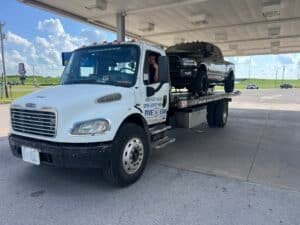
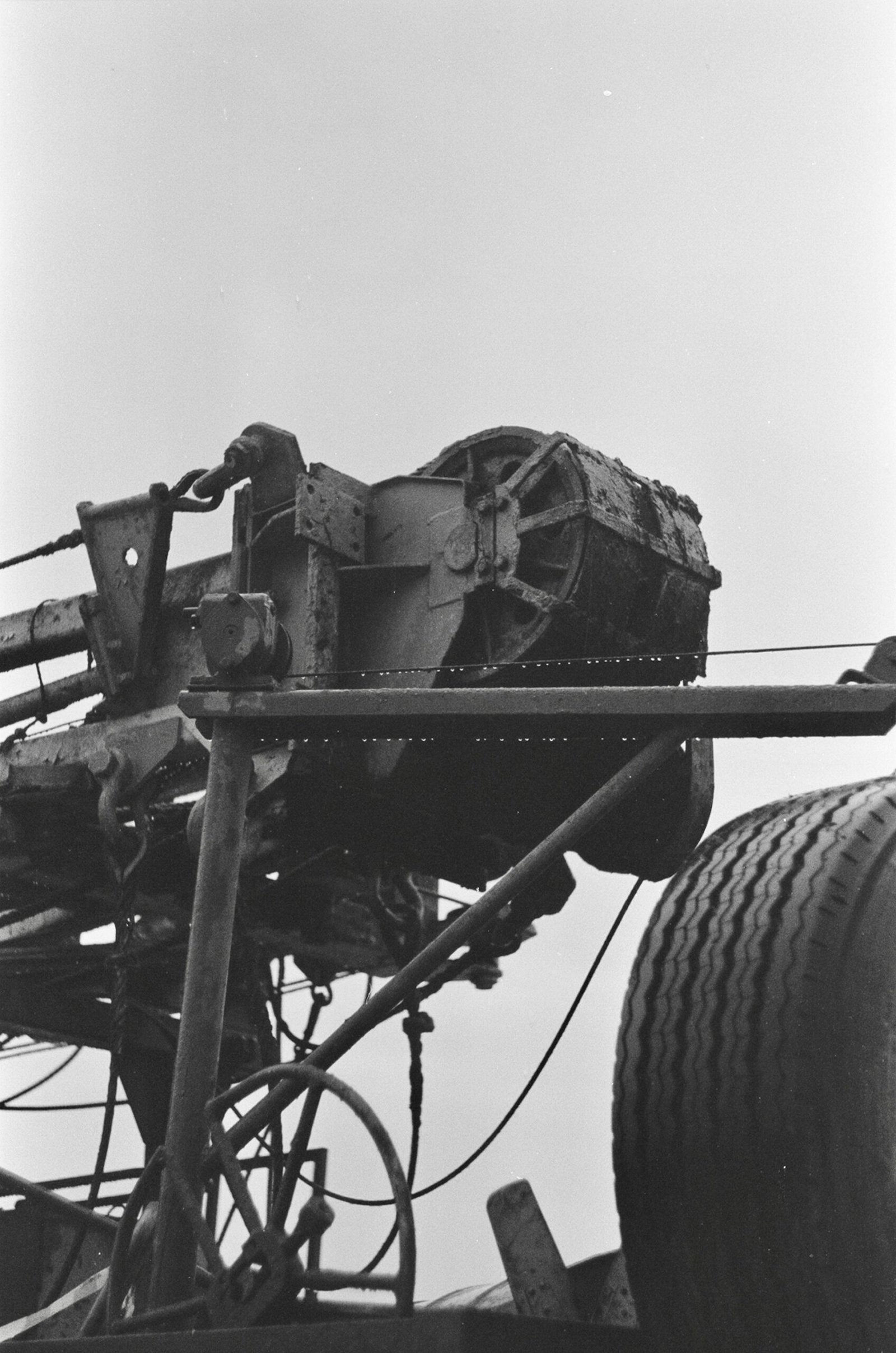
These powerful units are the go-to standard for commercial wreckers service, like the ones we operate here at Five Star Towing. They get their strength from the vehicle’s power steering pump or a separate, dedicated hydraulic system. Over the long haul, they are incredibly economical because they are built to last and won’t burn out under pressure. They are the perfect choice for any load that tops 20,000 pounds. The trade-off is that they do require more maintenance, with regular checks needed for fluid lines and pumps to keep them in top shape.
Electric Winches
For most Jeep and truck owners around OKC, electric models are the way to go. They’re straightforward to bolt on and don’t ask for much maintenance. Since they run off the vehicle’s battery system, they are perfectly suited for the short, intense pulls needed to get out of a tight spot, typically handling loads around 10,000 pounds. It’s no wonder North America leads the world in demand for these winches, given how many trucks and SUVs we have on our roads.
Top Automotive Winch Brands Dominating the Market
When you’re stuck miles from the closest paved road, the quality of your gear truly matters.
- Warn Industries, widely considered the leader of the pack. Their products, like the Warn VR EVO 10, are specifically engineered to pull ATVs and trucks out of the deepest mud pits.
- Superwinch is respected for their versatile and reliable recovery gear.
- Ramsey Winch is a trusted name and a staple in demanding industrial applications.
- Smittybilt is a popular brand that offers great, accessible options for the weekend off-roader.
- Mile Marker Industries are famous for their tough-as-nails hydraulic winches, which are trusted by the military.
- T-MAX, Westin Automotive, Pierce, VortexDirect, TJM Australia are other key players in the industry, each offering their own specialized recovery solutions.
Why Truck and SUV Winches are More Popular Than Ever
The thrill of recreational driving is what’s really fueling the global market for winches. More and more people are outfitting vehicles like the Ford Bronco and Jeep Wrangler for adventures that take them far off the grid. The sales numbers tell the story loud and clear. The market value for truck and SUV winches was already at $93.1 million in 2024. It’s expected to climb to $96.8 million in 2025 and is projected to hit an impressive $121 million by 2032. That’s a steady growth rate of 3.0% per year, driven almost entirely by the love for 4×4 vehicles.
Innovations Driving the Market Forward
The gear itself is getting smarter, stronger, and better all the time. Innovators like Warn Industries and Superwinch are constantly pushing the limits, with consumer-grade winches that can now pull up to 12,000 pounds. Plus, new wireless remotes are a game-changer for safety, allowing you to stand a safe distance away during a tricky recovery, keeping you far from the “snap zone” in the rare event that a cable fails.
Smart Winch Technology for Safer Recovery
The next ten years are going to completely change how we think about recovering a vehicle. Between 2025 and 2030, the industry’s main focus will be on perfecting wireless controls and making motors more efficient. Then, from 2030 to 2035, full IoT integration will likely become the new standard, connecting the winch directly to your vehicle’s onboard computer for seamless operation.
How Wireless Controls and IoT are Revolutionizing Rescues
Wireless controls are already making a huge difference, cutting down recovery time by as much as 50%. You also use about 80% less physical effort because you’re no longer wrestling with tangled cables or standing in the mud just to flip a switch. The next step, IoT integration, will monitor things like motor temperature and battery life in real time. This kind of smart thermal management can extend a winch’s runtime by 30% by preventing the motor from burning itself out before the job is done.
A Global Look at the Booming Electric Winch Market
When you look at the worldwide picture, electric winches are clearly winning the race. The market was valued at an impressive $1.26 billion in 2025 and is projected to more than double to $2.53 billion by 2035. That’s a strong and steady growth rate of 7.2% each year. For anyone who likes the numbers, the formula used for these projections is Growth = (End Value / Start Value)^(1/n) – 1.
Winch Demand is Highest
Where China is leading the pack with a 7.4% growth rate, fueled by massive infrastructure projects and a booming mining industry.
The USA is showing strong growth at 6.5%, driven by our deep-rooted off-roading culture and the constant needs of the logistics industry.
Germany is growing steadily at 6.2%, with a strong focus on high standards for emergency recovery equipment.
Australia-NZ is seeing 5.5% growth, driven by the harsh outback terrains and the essential needs of their agricultural sector.
Whether you find yourself stuck on the shoulder of I-35 or buried deep in the mud near Lake Draper, you need a solution that works right away. While owning your own winch is a fantastic step toward self-reliance, some situations just require professional winch-out service. At Five Star Towing, we have the right equipment to handle any recovery, from a family sedan to heavy commercial machinery. Don’t risk injuring yourself or damaging your vehicle with improper rigging. Call the local experts who know Oklahoma roads and terrain better than anyone.
Frequently Asked Questions
Simply put, a vehicle winch is a powerful tool designed to pull your vehicle free when it’s stuck and can't move on its own.
It uses a motor (either electric or hydraulic) to wind a strong cable around a drum. This creates an incredible amount of pulling force to drag a very heavy object.
This amazing tool converts the rotational energy of the motor into straight-line pulling power, allowing you to rescue vehicles from mud, snow, or steep hills where the tires have no traction at all.
This is backed up by the pros at Warn Industries in their "Winching Techniques" guides and confirmed in publications like Off-Road Magazine.
The golden rule is to take your vehicle’s Gross Vehicle Weight Rating (GVWR) and multiply it by 1.5 to find your minimum pulling power.
If your truck has a GVWR of 6,000 pounds, you'll want a winch with at least a 9,000-pound capacity.
Always aim higher. Opting for a 10,000 or 12,000-pound winch gives you a safety buffer, ensuring the motor won’t struggle or overheat on those especially tough pulls where deep mud creates powerful suction.
You can find this same advice from the pros at Superwinch and in the pages of the Four Wheeler Network's sizing guides.
The main difference comes down to their power source and how long they can work without a break.
Electric winches draw their power from your vehicle's battery, while hydraulic winches tap into the power steering pump or a separate hydraulic system.
Electric is your best bet for occasional, short pulls, like what you'd encounter during recreational off-roading. Hydraulic is the champion for continuous, heavy-duty work on commercial tow trucks because it's built to run all day without overheating.
This is well-documented by specialists like Mile Marker Industries and trade publications like Work Truck Online.
Absolutely! A winch is an incredibly effective tool for getting unstuck from deep snow.
Snow, much like mud, creates a low-friction surface where tires just can't get a grip. A winch provides the steady, external force needed to pull the vehicle onto solid ground.
Just make sure you have a very solid anchor point. A sturdy tree (protected with a tree-saver strap) or another vehicle works well. Buried anchors can often pull loose in deep, soft snow.
Trusted organizations like AAA and specialty magazines like Overland Journal offer great guides on snow recovery.
Winching alone is possible, but it definitely comes with more risks than working as part of a team.
You have to juggle the remote control, guide the cable, and potentially steer the vehicle all at the same time.
Always use a winch dampener, a heavy blanket, jacket, or specially made weight, draped over the cable. This will absorb the energy and prevent a dangerous whip-back if the line were to snap. A wireless remote is practically essential for solo operations, as it lets you stand clear of the danger zone.
Safety organizations like OSHA and industry leaders like Warn Industries provide detailed guidelines on safe winching.
The two biggest mistakes we see are ignoring the pull angle and forgetting to use a line dampener.
Pulling at an angle sharper than 15 degrees can cause the cable to bunch up on one side of the drum, which can crush the line and damage the winch itself.
Not using a line dampener is a huge safety risk. If a steel cable under thousands of pounds of tension snaps, it can whip back with enough force to cause lethal injury to anyone nearby. These dangers highlight some of the risks involved in winch recovery and why proper technique matters.
You'll see these warnings repeated in articles from Off-Road.com and in safety guides from companies like ARB 4x4 Accessories.
You need enough power to overcome two things: the weight of your vehicle and the resistance from whatever you're stuck in.
A vehicle buried in deep, thick mud can effectively weigh twice its actual weight because of the incredible suction force.
Don't just rely on the winch's maximum rated capacity, which applies only to the first layer of cable on the drum. The winch's pulling power decreases with each layer of cable. To get maximum power, you should pull out as much line as is safely possible.
Ramsey Winch offers excellent explanations on understanding line pull, and publications like Popular Mechanics have great articles on how winches work.
Warn Industries, Superwinch, and Smittybilt are consistently ranked among the top choices for off-roaders.
Warn is widely seen as the premium, gold-standard brand for performance and reliability. Smittybilt is a favorite for offering great performance at a more budget-friendly price point.
Sticking with a reputable brand means you'll have access to replacement parts and a valid warranty, which is something that generic, no-name imported winches often can't promise.
You'll see these names recommended in reviews from major outlets like Car and Driver and in head-to-head comparisons by enthusiast sites like Trail4R.
Yes, in almost all cases, you'll need a winch-ready bumper or a heavy-duty mounting plate.
The plastic factory bumpers on most trucks and SUVs simply aren't designed to handle the thousands of pounds of force a winch generates during a pull. They will break.
Invest in a steel bumper or mounting system that is specifically designed to bolt directly to your vehicle's frame. This ensures the immense load is distributed safely and effectively.
Brands like Westin Automotive provide detailed guides on winch mounts, and you can find great firsthand advice on enthusiast forums like the Jeep Gladiator Forum.
The two most important things are to regularly inspect your cable and run the motor every so often to keep everything in good working order.
Periodically, you should unspool the entire cable and then carefully respool it under a bit of tension (around 500 pounds is good).
This simple step prevents the outer layers of the cable from getting pinched and buried within the lower layers, which can badly damage the line. It's also smart to keep all the electrical connections clean and free of corrosion to ensure the motor gets all the power it needs.
You can find detailed instructions in the maintenance manual from brands like T-MAX Winches or in articles from publications like 4WD Action.
No, you should never use a standard vehicle winch for vertical lifting. They are not hoists.
Vehicle winches are designed for pulling and use a dynamic braking system meant to handle the rolling resistance of a vehicle. Hoists, on the other hand, are built with special locking brakes designed to safely suspend a load in the air.
Trying to use a recovery winch as a hoist is incredibly risky. If the motor were to stop or the brake were to fail, the suspended load would come crashing down instantly.
This is a critical safety standard outlined by organizations like ANSI/ASME and reinforced by industrial experts like the Crosby Group.
At a minimum, you should always have a pair of heavy leather gloves and a line dampener.
Steel cables can develop small, sharp burrs that can easily slice through unprotected skin. Even synthetic ropes can cause severe friction burns if they run through your hands.
Always wear eye protection to guard against flying debris, and maintain a safe distance from the line during a pull, at least 1.5 times the length of the extended cable.
You can find great safety checklists in publications like Family Handyman and from official sources like OSHA's Personal Protective Equipment standards.