
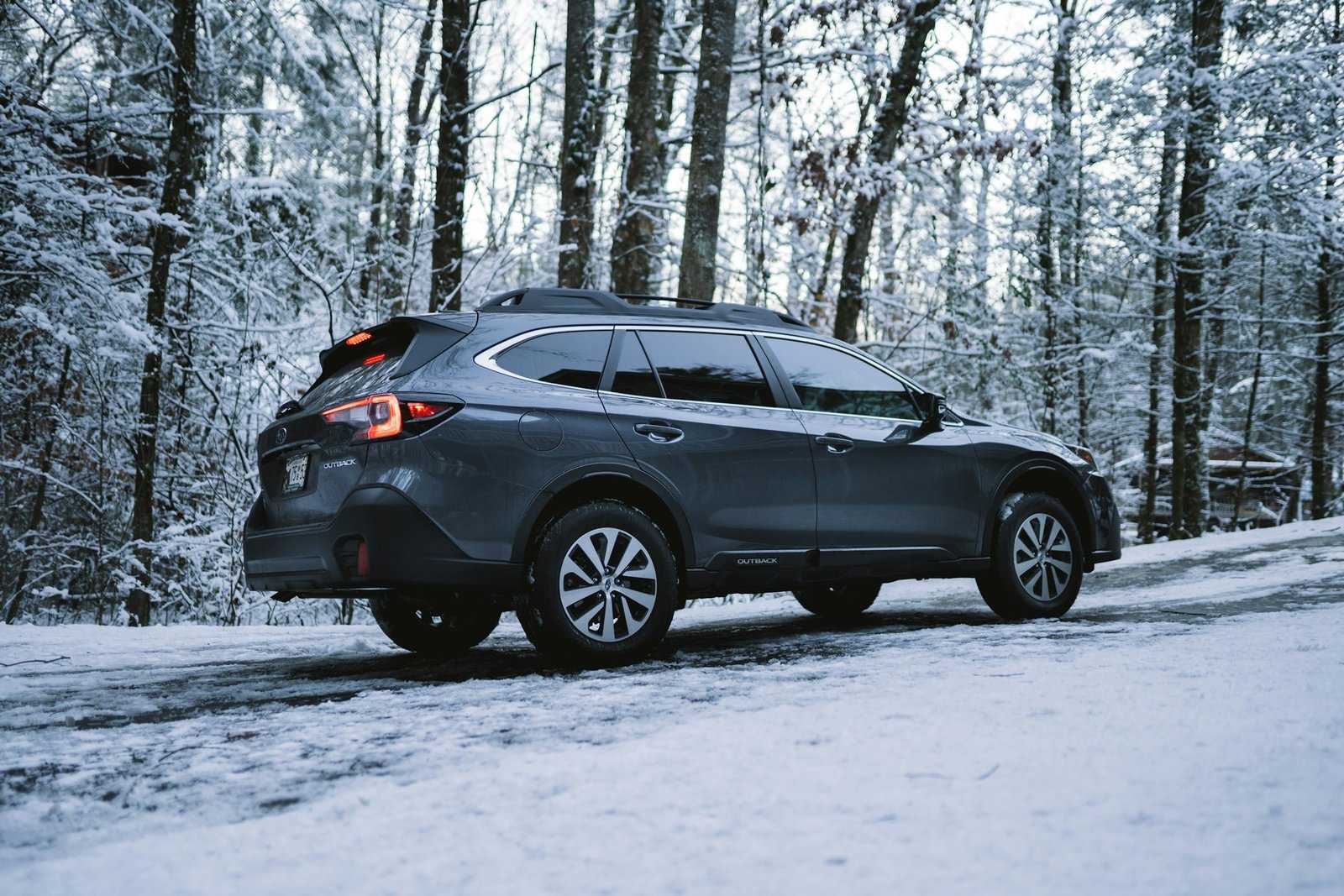
You’ve packed the camper, hitched it up, and loaded the family into your Subaru Outback. The open road is calling your name, but a little question starts to creep in; can your car really handle this load? The Subaru Outback has earned its reputation for being a do-it-all vehicle, blending the smooth comfort of a wagon with the rugged spirit of an SUV.
A huge part of that appeal is its towing ability, which makes it a trusted companion for weekend warriors and adventurous families. Knowing exactly what your specific Outback can pull is what separates a seamless, memory-making trip from a stressful roadside headache.
Key Points
- Your Outback’s towing power comes in two flavors. A solid 2,700 pounds or a beefier 3,500 pounds, and the difference depends entirely on which engine is under the hood.
- If you want to hit that maximum 3,500-pound rating, you’ll need a model with the lively 2.4L turbocharged engine, which you’ll find in the XT and Wilderness trims.
- The standard 2.5L engine still gives you a very capable 2,700-pound capacity, which is perfect for lighter loads like a jet ski trailer or a small utility trailer for weekend projects.
- For your safety and peace of mind, always think in terms of “gross trailer weight” that means the trailer plus all your cargo, fluids, and gear and aim to stay 10–15% below your car’s maximum limit.
What Can You Actually Tow With a Subaru Outback?
The best way to understand the Outback’s capabilities is to picture it in the real world. Your specific model is the deciding factor in whether you’re hauling a pair of jet skis for a day on the lake or towing a small camper for a mountain getaway. The most critical rule is to match your fully loaded trailer’s weight to your Outback’s tow rating. It’s easy to get fixated on the “dry weight” a manufacturer lists for a trailer, but you have to account for the added weight of everything you put in it; your gear, your supplies, and even the water in the tanks. As a smart rule of thumb, always give yourself a 10–15% safety buffer below the maximum rating. This simple step helps preserve your vehicle’s performance and braking power, giving you one less thing to worry about on the highway.
Towing with the 3,500-lb Capacity (2.4L Turbo Models)
With the maximum 3,500-pound rating, an Outback truly transforms into a serious adventure machine. You can confidently pull that 17-foot camper you’ve been dreaming of, a fully-loaded 5×8 enclosed trailer, or popular lightweight RVs like a Forest River R-Pod. This kind of power puts the Outback well ahead of many compact SUVs that, according to comparisons from McLaughlin Subaru, often struggle to pull more than 1,500 pounds. It gives you the freedom to bring along more substantial gear without having to upgrade to a massive truck or SUV.
Towing with the 2,700-lb Capacity (2.5L Models)
The standard 2,700-pound towing capacity is more than enough muscle for a wide range of everyday tasks and weekend fun. It can comfortably handle a small pop-up camper for a spontaneous getaway. You can also pull a small utility trailer piled high with mulch for a landscaping project or hook up one or two jet skis on a lightweight trailer for a day at the lake. This rating makes the base Outback a wonderfully practical choice for everyday hauling and smaller-scale recreational adventures.
2.4L Turbo versus 2.5L
The Subaru Outback’s towing capacity can swing from 2,700 to 3,500 pounds, and the secret sauce is the engine you’ve got under the hood. If you see yourself towing on a regular basis, you’ll want to prioritize the 2.4L turbo engine for its extra 800 pounds of pulling power and its significantly higher torque. Both engine options come paired with a smooth Lineartronic CVT and Subaru’s legendary Symmetrical All-Wheel Drive. This dynamic duo provides fantastic traction when you’re towing on wet roads, gravel paths, or even light off-road trails. Just remember, the tow rating only applies when your vehicle is “properly equipped,” meaning the right hitch and wiring are correctly installed.
2.4L Turbocharged SUBARU BOXER 4-cylinder
This is the powerhouse engine for those who need maximum capability from their Outback. It unlocks the full towing capacity of 3,500 pounds. Pumping out 260 horsepower and a hefty 277 lb-ft of torque, this engine makes towing heavier loads feel almost effortless. That impressive torque is a real game-changer when you’re accelerating from a stoplight or climbing a steep hill with a trailer in tow.
2.5L SUBARU BOXER 4-cylinder
The trusty standard 2.5L engine provides a towing capacity of 2,700 pounds. It produces a solid 182 horsepower and 176 lb-ft of torque, making it a great match for lighter trailers. It’s incredibly important not to push past this 2,700-pound limit on a 2.5L model. Doing so can put dangerous strain on the engine, transmission, and braking systems, turning your trip into an unsafe situation.
Subaru Outback Towing Capacity by Trim Level
The engine you get, and therefore your towing capacity, is directly linked to the trim level you choose. So, if you have plans to tow anything that gets close to that 3,000–3,500 pound range, you need to focus your search specifically on an XT or Wilderness trim. The standard rating across most of the lineup is a capable 2,700 pounds, with the higher 3,500-pound capacity held in reserve for the premium, turbocharged trims. This is a crucial distinction to keep in mind when you’re comparing models, like the latest 2025 Subaru Outback.
Trims with 3,500-lb Towing Capacity (2.4L Turbo Engine)
For the ultimate in pulling power, you’ll need to set your sights on one of the following trims, all of which come standard with the mighty 2.4L turbo engine. These models are built for bigger adventures and heavier gear.
- Outback Onyx Edition XT
- Outback Wilderness
- Outback Limited XT
- Outback Touring XT
Trims with 2,700-lb Towing Capacity (2.5L Engine)
The reliable 2,700-pound rating is found on the trims that come equipped with the non-turbocharged 2.5L engine. These models are the perfect partners for everyday utility and light recreational towing.
- Outback Base
- Outback Premium
- Outback Limited
- Outback Touring
The Outback Wilderness
For those who like their adventures to start where the pavement ends, the Outback Wilderness is the ultimate trim. It comes standard with the 2.4L turbo engine, giving you the full 3,500-pound towing capacity right out of the box. But its talents don’t stop there. This model boasts an off-road-tuned suspension, extra ground clearance for tackling rough terrain, and unique roof rails with a staggering 700-pound static roof capacity perfect for a rooftop tent. As Subaru’s own marketing materials love to point out, this means the Wilderness can tow a small camper while carrying kayaks or other bulky gear on the roof, making it an unbelievably versatile adventure crossover.
How the Outback's Towing Stacks Up Against Rivals
The Outback’s 3,500-pound maximum towing capacity gives it a serious edge in its class. It’s simply better prepared for towing campers, small boats, and loaded utility trailers than many of its compact crossover competitors. When you choose an Outback XT or Wilderness, you’re not just getting that 3,500-pound rating; you’re also getting the standard Symmetrical All-Wheel Drive, a combination that some rivals force you to pay extra for through expensive optional packages.
Subaru Outback versus Toyota RAV4
Most versions of the Toyota RAV4 can only muster about 1,500 pounds of towing capacity. While their specialized Adventure and TRD Off-Road trims can pull up to 3,500 pounds, they often come with a price tag that’s similar to or even higher than the Outback XT, as noted by Baldwin Subaru in their head-to-head comparisons. The Outback makes this powerful capability available across more of its high-end trims.
Subaru Outback versus Honda CR-V
When it comes to towing, this isn’t even a fair fight. The Honda CR-V maxes out with a towing capacity of just 1,500 pounds. That’s far below the Outback’s base rating of 2,700 pounds and less than half of its 3,500-pound maximum. For anyone who needs to pull more than a tiny utility trailer, the Outback is the undeniable winner.
Subaru Outback versus Hyundai Santa Fe
Let’s look at a comparable Hyundai Santa Fe from the 2021 model year. Its base towing capacity is 2,000 pounds. Once again, this falls short of the Outback’s standard 2,700-pound rating. The Outback simply offers a higher starting point for towing, making even its base models more capable for light-duty hauling right from the get-go.
What Does 'When Properly Equipped' Mean for Your Outback?
You’ll see that little phrase, “when properly equipped,” pop up next to towing figures all the time. It’s an important fine print you can’t ignore. It means your vehicle must have the right towing hardware installed, which is often an optional add-on. To safely and legally achieve the 2,700-pound or 3,500-pound towing capacity, you need to make sure your Outback has a Class II or appropriately rated trailer hitch. It also needs the correct 7-pin or 4-pin wiring to power your trailer’s lights and, if it has them, its brakes. Opting for dealer-installed Subaru hitches is always a smart move, as they are specifically engineered to work in harmony with your vehicle’s frame and cooling systems. Try to avoid relying on generic aftermarket parts without first confirming their ratings perfectly match your vehicle’s official tow figure.
Payload, Cargo, and Roof Capacity
Thinking about towing means thinking about the whole weight picture, and payload and roof load are just as critical as what you’re pulling. All the weight from your passengers, the luggage inside the vehicle, and the trailer’s tongue weight adds up and counts against your vehicle’s overall limits. The Outback helps out by offering a generous cargo volume of 32.6 cubic feet behind the rear seats, which expands to a massive 75.6 cubic feet with the seats folded down, according to Elk Grove Subaru. Its 109 cubic feet of passenger volume also feels roomier than competitors like the Toyota RAV4, which offers 98.9 cubic feet. The standard roof crossbars can support up to 176 pounds in motion, while the specialized roof system on the Wilderness trim is rated for an incredible 700 pounds of static load when you’re parked.
Finding the Right Tow Vehicle
For the Subaru faithful who need serious towing power but don’t want to jump into a three-row SUV, the Outback XT or Wilderness is the hands-down strongest choice. It perfectly occupies that sweet spot between the smaller Forester and Crosstrek and the much larger Ascent, offering an ideal blend of comfortable daily drivability and heavy-duty hauling power.
Subaru Outback (2,700–3,500 lbs) versus Forester (1,500–3,000 lbs)
The standard Subaru Forester is rated to tow just 1,500 pounds. Even the rugged Forester Wilderness trim, while more capable, tops out at 3,000 pounds, still 500 pounds less than what the most powerful Outback can handle. As detailed in Subaru’s official comparisons, the Outback consistently brings more towing capacity to the table.
Subaru Outback (2,700–3,500 lbs) versus Crosstrek (1,500 lbs)
The hugely popular Subaru Crosstrek is a fantastic compact SUV, but it simply wasn’t built for heavy hauling. Its towing capacity is limited to 1,500 pounds across every single trim. This is significantly less than even the base model Outback, making the Outback the far superior choice for anyone with towing needs beyond a very small trailer.
Subaru Outback (2,700–3,500 lbs) versus Ascent (up to 5,000 lbs)
If your adventures require you to tow more than 3,500 pounds, then the three-row Subaru Ascent is the necessary upgrade. It’s the brand’s undisputed towing champion, offering up to a mighty 5,000 pounds of capacity when properly equipped. Mitchell Subaru’s model comparison guide rightfully identifies it as the go-to vehicle for families with larger boats or travel trailers.
Best Practices for Safe Towing with Your Subaru Outback
The Outback’s Symmetrical All-Wheel Drive and wonderfully balanced chassis provide remarkably stable and confidence-inspiring handling when you’re towing within its 2,700 or 3,500-pound rating. Sticking to these official limits isn’t just a suggestion; it’s essential for maintaining control and braking performance, especially on wet or uneven roads. Pushing past the manufacturer’s rating isn’t just risky, it’s a danger to you, your family, and everyone else on the road.
Safe Towing Checklist
To help make every trip a safe one, run through these key points before you hit the road. Following this simple pre-trip ritual will help protect your vehicle, your trailer, and your precious cargo.
- Always know your fully loaded trailer weight. Don’t guess! Use a vehicle scale at a truck stop or weigh station to confirm you’re below your Outback’s 2,700 or 3,500-pound rating.
- Get the tongue weight right. This should be about 10–15% of your total trailer weight and must not be more than the rating stamped right on your trailer hitch.
- Use trailer brakes for any significant load. Check your local laws, as they are often required for trailers over a certain weight.
- Check your tire pressure on both the Outback and the trailer before you pull out. Proper inflation is absolutely critical for stability and safety.
- Give yourself extra space. Your vehicle will need much more room to slow down and stop with a heavy load pushing from behind.
The Subaru Outback is a remarkably capable vehicle, built for people who refuse to choose between everyday comfort and weekend adventure. With the right engine and the right equipment, it can confidently pull everything from a small boat to a family-sized camper. But even the most prepared adventurer can run into unexpected trouble. A flat tire, a sudden mechanical issue, or a misjudged turn can bring your journey to a grinding halt.
That’s where we come in. Here at Five Star Towing, we know the roads in and around Oklahoma City like the back of our hand. We’re experts at handling vehicles just like yours, whether you’re hooked up to a trailer or just driving to work. If you find yourself in a tight spot, don’t waste a moment worrying. Give Five Star Towing a call. We’ll get there quickly to provide professional, friendly towing and roadside assistance, getting you and your vehicle to safety so you can get back on the road to your next adventure.
Frequently Asked Questions
Let's get straight to the big number, the absolute maximum towing capacity for a Subaru Outback is 3,500 pounds. However, this figure is only achievable on models that are equipped with the 2.4L turbocharged SUBARU BOXER engine.
If your Outback has the standard 2.5L non-turbo engine, you are limited to 2,700 pounds. It's absolutely critical to know which engine your vehicle has before you try to tow a heavy load, as exceeding the limit can cause serious damage and create an unsafe driving situation.
To unlock that impressive 3,500-pound towing capacity, you'll need to choose a specific trim level that comes standard with the 2.4L turbocharged engine. Your options are the Outback Onyx Edition XT, Wilderness, Limited XT, and Touring XT.
As John Kennedy Subaru clearly explains in their towing guide, the "XT" and "Wilderness" names are your key indicators that you're looking at the more powerful engine and, as a result, the higher tow rating. Standard trims without those labels will have the lower 2,700-pound capacity.
Absolutely! A Subaru Outback can tow many different types of campers, but the camper's fully-loaded weight is the ultimate deciding factor.
An Outback with the 3,500-pound capacity (the XT and Wilderness models) can easily handle a wide variety of small-to-medium-sized campers, like teardrop trailers, pop-up campers, and even some smaller travel trailers such as the popular Forest River R-Pod.
An Outback with the 2,700-pound capacity is better suited for smaller pop-ups and the lightest teardrops. Always, always check the camper's gross vehicle weight rating (GVWR) to make sure it's safely under your Outback's limit.
Yes, a Subaru Outback makes a great vehicle for towing small to medium-sized boats. A model with the 3,500-pound rating can comfortably pull a typical 16-18 foot aluminum fishing boat, a small ski boat, or a trailer with a pair of jet skis.
The standard 2,700-pound capacity is plenty for smaller fishing boats, jon boats, or a single jet ski. Just remember that you have to account for the total weight of the boat, the trailer, the engine, fuel, and all the gear you've stashed on board.
Yes, to safely reach the maximum towing capacity, your Outback must be "properly equipped." In simple terms, this means it needs a factory-installed or equivalent Class II trailer hitch and the correct trailer wiring harness (usually a 4-pin or 7-pin connector).
While Subaru doesn't sell a single all-in-one "towing package," these essential components can be installed by your dealer. Using a genuine Subaru hitch is highly recommended because it's engineered specifically to work with the Outback's chassis and to ensure the cooling system performs as it should under load.
Generally speaking, the Subaru Outback offers a higher towing capacity than the Toyota RAV4. Most RAV4 models are limited to just 1,500 pounds, which is a lot less than the Outback's starting point of 2,700 pounds.
While Toyota does offer Adventure and TRD Off-Road RAV4 trims that can match the Outback's max of 3,500 pounds, the Outback makes this capability available across more of its premium trims.
Plus, all Outbacks come with standard all-wheel drive, a feature that's often an extra-cost option on competitors. Colonial Subaru often points this out as a key advantage for the Outback.
The Subaru Outback consistently has a higher towing capacity than the Subaru Forester. A standard Forester is rated for 1,500 pounds, and while the more rugged Forester Wilderness can tow up to 3,000 pounds, that still falls short of the Outback's 3,500-pound max.
For buyers who know they need to tow more than 3,000 pounds, the Outback XT or Wilderness is the clear choice within the Subaru family, a fact confirmed by Subaru's own brand comparisons.
The tongue weight isn't a single fixed number; it's a ratio. For safe towing, it should be 10-15% of your total loaded trailer weight.
So, for an Outback with a 3,500-pound limit, your ideal tongue weight would be between 350 and 525 pounds. For the 2,700-pound limit, it's 270 to 405 pounds.
You must also double-check that this weight doesn't exceed the limit stamped on the trailer hitch itself, which is often around 350 pounds for the factory-installed hitches.
Interestingly, no. The Subaru Outback Wilderness does not have a higher towing capacity than the other turbocharged Outback models; it shares the same maximum rating of 3,500 pounds.
What makes the Wilderness special is that it's specifically optimized for towing in more challenging, adventurous conditions.
It comes with a revised final-drive ratio for better low-end pulling power, an enhanced cooling system, and an off-road-tuned suspension with more ground clearance, making it the most rugged and durable Outback for towing off the beaten path.
No, and this is a critical safety point. The 2.5L engine absolutely cannot tow 3,500 pounds. Its maximum towing capacity is strictly limited to 2,700 pounds. Trying to pull 3,500 pounds with the 2.5L engine would severely overwork the engine, transmission, and brakes.
This could lead to catastrophic mechanical failure and would create a highly dangerous situation on the road. The 3,500-pound rating belongs exclusively to the 2.4L turbocharged engine.
The Subaru Outback first gained its 3,500-pound tow rating with the launch of its sixth generation, starting with the 2020 model year.
This was the year Subaru brought back a turbo, introducing the 2.4L turbocharged engine option in the Onyx Edition XT, Limited XT, and Touring XT trims.
Before 2020, the previous-generation Outback with its six-cylinder engine option offered a capacity of 2,700-3,000 pounds.
The payload capacity of a Subaru Outback, which is the total weight it can carry, typically falls in the range of 1,000 to 1,200 pounds, depending on the specific trim and any optional equipment installed.
Remember, "payload" includes the weight of all your passengers, any cargo inside the vehicle, and the trailer's tongue weight.
It's important to manage this carefully, as a heavy trailer with a 350-pound tongue weight will use up a good chunk of your available payload before you even load a single suitcase.
Yes, the Subaru Outback is an excellent vehicle for towing, as long as you stay within its specified limits. Its standard Symmetrical All-Wheel Drive, long wheelbase, and well-balanced chassis create a stable and confident towing platform.
The 3,500-pound capacity of the XT and Wilderness models makes it one of the most capable towing vehicles in its entire class, out-pulling many of its direct competitors.
When it's equipped correctly and driven with care, it's a fantastic choice for towing campers, boats, and utility trailers.