
It’s a sound every rider dreads: the sudden, deafening silence of your engine cutting out on I-44 or the Kilpatrick Turnpike. No warning light can signal trouble quite as clearly. There you are, on the shoulder, with traffic blurring past you at seventy miles per hour, staring down at a machine that has suddenly become an immovable object.
The decision you make in the next few minutes could determine the safety of your bike and, more importantly, your own well-being.
It’s the classic rider’s debate: do you try to wrestle the bike into a friend’s pickup, or do you make the call to a professional? When you consider the physics of a 400-pound machine and the unforgiving reality of Oklahoma traffic, you realize just how critical that choice really is.
Main Points
- When it comes to stability, professional flatbed towing is in a league of its own compared to do-it-yourself strap methods.
- Trying to tow your motorcycle with too few or the wrong kind of straps dramatically increases the risk of dangerous fishtailing, especially in high winds.
- For truly safe transport, using a four-point tie-down system secured below the suspension isn’t just a suggestion it’s absolutely mandatory.
- While new driver-assistance technologies are helping to reduce accidents, good old-fashioned mechanical failures are still one of the top reasons riders need a tow.
- In the OKC metro area, Five Star Towing uses modern digital dispatch systems to help get to you faster, reducing your wait time on the side of the road.
The High Stakes of DIY Towing
From the moment your kickstand leaves the pavement, gravity starts working against you. A professional flatbed tow is hands-down the most secure way to move your bike, and here’s why: motorcycles have a high center of gravity, which makes them twice as unstable as a car when they’re just sitting still. This built-in instability means that even a small tip during transport can instantly lead to damaged handlebars, a dented gas tank, or cracked fairings. As the experts at Dirt Bike Magazine point out, you need proper preparation to fight back against these physics.
Too often, amateur attempts involve an open trailer and whatever ratchet straps are lying around in the garage. This setup is a recipe for trouble. Using DIY strap methods on an open trailer can increase the risk of fishtailing by as much as 50% in high winds, something we see all the time on the Oklahoma plains. Professional motorcycle towing services, on the other hand, have a system to reduce your risk. By using tools like GPS and digital dispatch technology, they can achieve 20-30% faster response times in places like Oklahoma City, which means you spend significantly less time exposed to the dangers of the highway.
The Gold Standard for Motorcycle Safety
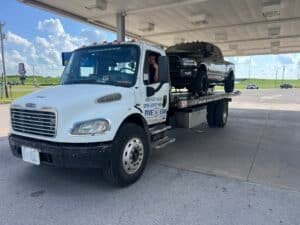
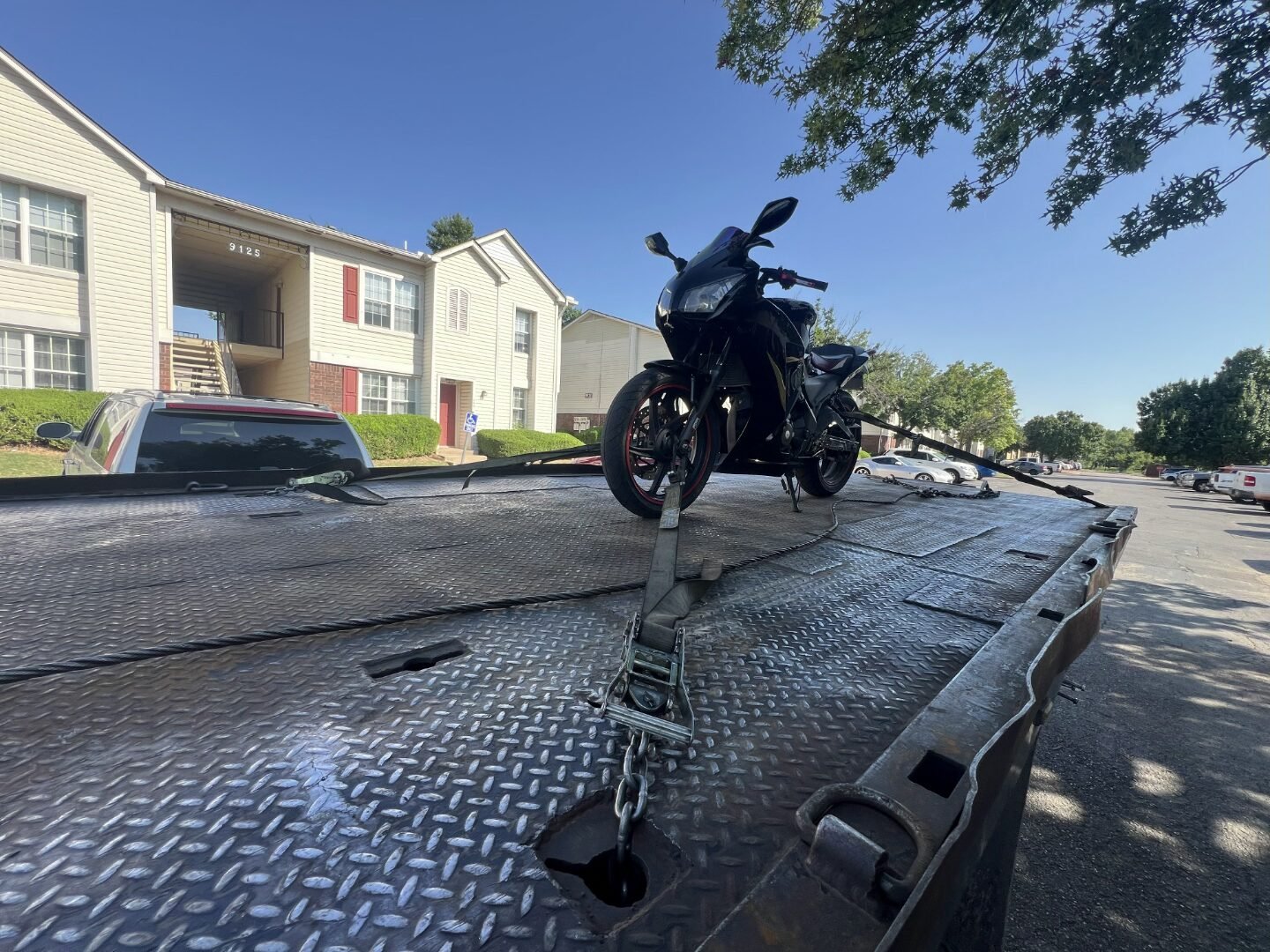
A flatbed truck offers total stability by making sure your motorcycle has zero contact with the road. Your entire bike rests safely on a solid, level platform, which completely removes the risk of hitting uneven pavement or jarring potholes along the way. No other method can really match this level of security.
For instance, a wheel-lift setup only provides about 70% of that stability and comes with a serious risk of scraping your undercarriage, which is a huge concern for sport bikes with low clearance. Open trailers are even less stable, at only around 50%, and they leave your bike completely exposed to rain, hail, and whatever debris gets kicked up from the road. Professionals get it right by using essential safety gear for motorcycle transport, including a minimum of four heavy-duty straps anchored below the suspension and wheel chocks to make sure the bike can’t roll forward or backward.
The Most Common (and Costly) DIY Towing Mistakes
Even the best intentions can lead to some seriously expensive repairs when riders try to haul their own bikes. One of the most common mistakes we see is using standard car straps instead of ratchet straps designed specifically for motorcycles. The hooks on car straps are usually too big for a bike’s frame, which can lead to slipping, dropping, or even crushing your fairings.
Another critical mistake is simply not using enough tie-downs. As the team at East Coast Towing often points out, if you don’t have enough tension, the bike is going to shift around while you’re driving. In fact, sudden stops in DIY towing setups are known to cause jackknifing in about 30% of cases, turning what should have been a simple transport job into an actual collision.
When to Call for a Motorcycle Tow Immediately
Rider pride can be a powerful thing, often tempting us to try and limp a damaged bike home. But there are certain situations where you absolutely have to swallow that pride and call for immediate professional help. Trying to ride a compromised motorcycle is incredibly unsafe; you’re dealing with serious balance issues and handling that can become unpredictable in a split second.
You need to make that call for help if you’re facing a major mechanical failure like a seized engine or a dead battery, if you’ve had a tire blowout on the highway, or for any kind of post-accident recovery. And while reports from Data Insights Market show that advanced safety tech like ADAS is expected to reduce these incidents by 10-15% by 2030, the number of mechanical and tire failures we see today is still very high.
Roadside Breakdowns and Accidents
When it comes down to it, roadside breakdowns are the single most common reason a tow truck gets dispatched. Think about it: a car with a flat tire or a minor engine issue can often limp over to the shoulder or the next exit ramp. A motorcycle just doesn’t have that luxury. You simply can’t safely steer a bike with a blown tire or a seized engine out of the flow of traffic.
Trying to push a disabled bike along the shoulder of a busy road is just asking for a catastrophe. Calling for a professional tow not only protects you from dangerous oncoming traffic but also prevents any further mechanical damage to your bike’s drivetrain. Knowing how long a tow truck takes can also help you plan while you wait for assistance.
Long-Distance Transport for Sales, Shows, or Touring
Moving a motorcycle across the state, or even across the country, involves a lot more logistical planning than just renting a trailer for the afternoon. Professional transport services offer a controlled, secure environment that is far superior to hauling your bike on an open trailer. It’s no surprise that the demand for these services is on the rise all over the world.
According to Data Insights Market, the global motorcycle transportation market is valued at $1.8 billion in 2025 and is projected to grow to an impressive $3 billion by 2033, with a compound annual growth rate of 6.5%. This trend really shows how much riders value making sure their machines arrive in perfect, showroom condition, whether it’s for a sale, a bike show, or a big touring event.
A Towing Method for Every Need
The type of equipment used to move your bike has a direct impact on the condition it’s in when it arrives at its destination. Flatbed trucks are consistently the top choice because they completely isolate your motorcycle from the road itself. While trailers are a common alternative for people doing their own hauling, you’ll find that most experts strongly advise against using wheel-lifts for motorcycle transport. That’s because wheel-lifts work by dragging the rear tire, which can risk serious transmission damage and put a lot of stress on the frame, especially on sport bikes.
Maximum Security for Any Motorcycle
One of the best things about flatbed trucks is that they can accommodate any type of bike you ride, from a heavy cruiser to a nimble sport bike. This method is absolutely essential for long-distance hauls or when you’re transporting a high-value motorcycle where you simply can’t accept the risk of rock chips or unnecessary tire wear.
The experts at Black Widow Pro emphasize that keeping the bike completely off the road surface is what provides the highest possible level of security. That tricky high center of gravity is managed using proper strapping techniques that compress the suspension just enough to make the bike one with the truck bed, keeping it stable and secure.
The Popular Choice for DIY Hauling
Let’s be honest, the market for open motorcycle trailers is still huge. Archive Market Research values this sector at a whopping $500 million in 2025, and it’s projected to grow at a rate of 6%. These trailers are affordable and easy to find, which makes them the go-to choice for things like weekend track days.
The big downside, however, is that they leave your bike completely exposed to the elements. Rain, salt, and all sorts of highway debris can hit your bike directly. Enclosed trailers are a growing part of this market, and they offer much better protection that’s similar to what you’d get with a professional transport, but they do require a much higher personal investment. And according to Wise Guy Reports, the overall global trailer market is set to keep growing at a rate of 5.6% from 2025 all the way to 2035.
How to Prepare Your Motorcycle for a Safe Haul
A little preparation can go a long way in preventing damage during transport. Here at Five Star Towing, we recommend a few key steps to make sure your bike is ready for the road, whether you’re waiting for one of our trucks or getting ready to load a trailer yourself. Pros like HitchDoc and Naperville Classic Towing also agree that a routine inspection is crucial before you secure the machine.
Pre-Tow Inspection and Fluid Management
- Make sure your fuel tank is no more than a quarter full. This helps prevent spills and lowers the fire risk.
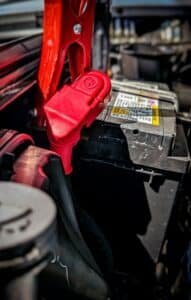
- For any long-distance transport, it’s a good idea to disconnect the battery terminal to keep it from draining.
- Give your tires a quick check to ensure they’re properly inflated. This will help prevent blowouts or rim damage while on the move.
- Take a moment to secure or completely remove any loose parts, like your saddlebags, GPS unit, or custom mirrors.
- Before anything gets loaded, be sure to document your bike’s current condition with a few quick photos on your phone.
Securing the Motorcycle Correctly
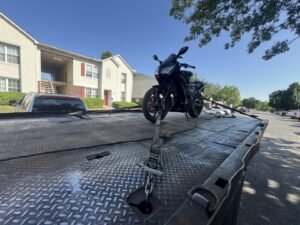
Once the bike is upright and you’re starting to secure it, make sure you retract the kickstand. If you leave the kickstand down, the pressure from the straps can cause it to punch a hole right through a trailer floor or even bend the stand itself. You’ll want to use a minimum of four sturdy ratchet straps. Attach them to solid points on the frame, ideally below the suspension or on the triple clamps. It’s also critical that the front wheel is sitting firmly in a wheel chock to keep the handlebars from turning. Trying to get by with only two straps is a bad idea; it increases the risk of the trailer fishtailing by as much as 75%.
The Business of Towing
The towing world is a massive logistical operation with some serious money behind it. A report from IBISWorld shows that the U.S. auto towing industry, which includes motorcycles, is an $11.3 billion market in 2025. On a global scale, the two-wheeler logistics market is even bigger; according to Amra Elma, it was valued at $111.85 billion in 2024 and is projected to skyrocket to $282.93 billion by 2032.
Even with a projected 15-25% drop in new motorcycle sales for 2025, the demand for transport isn’t going anywhere. The industry stays busy thanks to enthusiasts buying and selling vintage bikes and the constant need for tourism-related transport, with North America currently holding the biggest market share for trailers.
How Much Does Motorcycle Towing Cost?
So, how much should you expect to pay? A professional flatbed tow will typically run you somewhere between $150 and $300 for a standard local tow. The final price can be affected by factors like how far you need to go, the time of day, and the specific type of motorcycle you have. For a closer look at these factors, see this guide to motorcycle towing costs.
And while renting a trailer might seem cheaper at first glance, the potential cost of repairing damage from an improper tie-down job often makes calling a professional the more cost-effective choice in the long run. After all, professional services are proven to be twice as safe and about 20% faster, thanks to better technology and experienced operators.
Here at Five Star Towing, we’re always ready to help out our fellow riders across OKC. We get the specific needs of two-wheeled transport and have all the right equipment to get you and your bike home safe. Don’t risk your ride with a DIY fix gone wrong. Just give us a call when you need a lift.
Frequently Asked Questions
Without a doubt, professional flatbed towing is the safest method for transporting your motorcycle. Flatbed trucks give you a perfectly stable platform where your bike is secured with a four-point tie-down system and wheel chocks.
This setup ensures your bike stays upright and completely off the road for the whole trip. That means no wear and tear on your tires or transmission, and no damage from flying road debris.
When you choose a flatbed service, you're minimizing the risk of structural damage that can happen from too much suspension compression or from the bike making contact with the ground, which is common with wheel-lift methods.
On average, you can expect the cost for a professional motorcycle tow to be somewhere between $150 and $300 for local trips.
This price will vary depending on the total distance, what kind of motorcycle you have, and whether you need service during an emergency or after regular business hours.
Using specialized equipment like a flatbed might cost a little more than a standard wrecker, but the superior protection it offers is well worth it.
Honestly, investing in a professional tow is often much more cost-effective than having to pay for repairs caused by a DIY transport job or a rental trailer mishap gone wrong.
You should never tow a motorcycle with a standard wheel-lift tow truck unless it has a special adapter made for bikes.
These standard wheel-lifts are built for cars and can cause some serious damage to a motorcycle's frame, exhaust, and suspension by dragging its rear wheel along the pavement.
The best kind of "regular" tow truck for a bike is a flatbed, since it carries the entire vehicle safely above the road.
Always double-check that the towing company uses flatbeds or motorcycle-specific dollies to save yourself from costly mechanical repairs down the line.
Towing a motorcycle in a pickup truck can be safe, but only if you do it the right way with a proper ramp, a solid wheel chock, and the correct ratchet straps.
The bed of the truck needs to be long enough to fully support the bike, or you'll need to make sure the tailgate is reinforced to handle the weight.
The biggest risk of injury or dropping the bike comes during the loading and unloading phase, especially if you don't have a professional-grade ramp.
For heavier touring bikes or cruisers, the steep angle of most pickup ramps makes this method particularly dangerous for one person to try alone.
In most cases, it’s a good idea to ride in the cab of the tow truck with the driver. Staying with your vehicle means you can watch over the securing process and be there to sign off on the bike's condition when you get to your destination.
It also ensures you're right there to handle any payments or insurance paperwork on the spot.
If for some reason you can't stay with your bike, make sure you've thoroughly documented its pre-tow condition with plenty of photos in case you need to dispute any damage that might happen in transit.
Getting your bike ready for a tow mainly involves managing fluids and securing any loose items. You should aim to have the fuel tank at or below 1/4 full to reduce weight and fire risk.
For longer trips, disconnect the battery to keep it from draining.
Finally, remove any accessories like saddlebags or GPS units that could vibrate loose and fall off during the ride. Taking these few preparatory steps can prevent chemical spills and the loss of expensive custom parts.
On a flatbed truck, a motorcycle can be towed for virtually any distance. Since the bike is held stationary and has no contact with the road, there's really no limit to how far it can be transported safely.
However, if you're towing it with the rear wheel on the ground (which we strongly advise against), the distance is severely limited because of potential transmission lubrication problems.
For any cross-country move or long-distance haul, a flatbed or an enclosed transport is the only real option to keep your bike's mechanical parts in good shape.
Most standard motorcycle insurance policies offer optional roadside assistance that will cover towing costs. It's a good idea to check your policy's limits, as some will only cover a tow to the nearest repair shop instead of all the way back to your home.
If you're hiring a separate transport service for a long haul, make sure they carry enough cargo insurance to cover the full value of your bike.
Having the right coverage in place can save you from paying out-of-pocket for a single emergency tow, which can easily be over $200.
The main difference is how the bike is carried. Flatbed towing places your entire motorcycle securely on the truck's bed, while wheel-lift towing drags the bike by one of its wheels.
Flatbed is the industry gold standard for safety, providing 100% stability and protection.
Wheel-lift towing is almost never used for motorcycles because it poses a huge risk of scraping the fairings and seriously damaging the transmission if the drive wheel is the one spinning.
To be safe, always request a flatbed service to ensure your bike's frame and powertrain are completely protected during transport.
Yes, damage can definitely happen if the tow operator uses the wrong equipment or straps the bike down incorrectly.
Some common types of damage include bent handlebars from over-tightening straps, scratched paint from metal hooks, or a broken kickstand if it's left down during transport.
However, a professional service with real motorcycle experience knows how to avoid these risks by using soft straps, wheel chocks, and proper technique.
Choosing a reputable company like Five Star Towing ensures the operator knows exactly how to secure a bike without compressing the suspension to its breaking point.
The first thing you must do is get your bike as far onto the shoulder as you possibly can and then get off of it immediately. Your personal safety is the top priority, so stand well away from your bike and passing traffic.
If your battery still works, turn on your hazard lights. Never attempt to push the bike to the next exit if it means crossing lanes or walking in a high-speed traffic area. Calling a professional tow service right away is the only truly safe way to get your motorcycle out of that dangerous environment.
A great place to start is by searching online for local companies that specifically advertise "motorcycle towing" and "flatbed service" as part of their offerings. Once you have a few names, check their recent customer reviews and look for any mentions of how they handled motorcycles.
A general towing company might not have the specialized straps and chocks that are required to transport a two-wheeled vehicle safely.
Here in Oklahoma City, Five Star Towing is proud to offer specialized motorcycle transport with verified safety protocols.