
While visitors flock to Bricktown’s predictable attractions, locals slip away to a stretch of cracked asphalt that once carried dust bowl refugees and wide-eyed dreamers across America. This isn’t just another entertainment district with corporate chains and tourist traps. This is where Route 66’s gritty soul lives on, transformed into the coolest neighborhood nobody talks about until they’ve been there.
Main Insights
- Uptown 23rd spans historic Route 66 from I-235 to Pennsylvania Avenue, featuring preserved Art Deco architecture and restored neon signs
- Tower Theatre serves as the cultural anchor with live music, films, and events after a multi-million dollar renovation completed in 2017
- The district houses Oklahoma City’s highest concentration of locally-owned restaurants, from upscale dining at Cheever’s Cafe to street tacos at Big Truck Tacos
- The Rise adaptive reuse project offers unique boutique shopping including Craig’s Curious Emporium, Oklahoma’s self-proclaimed weirdest store
- Uptown Outside block parties close streets to traffic, creating pedestrian-friendly events with open containers and live entertainment
- Unlike tourist-heavy Bricktown, Uptown 23rd represents authentic Oklahoma City culture where locals actually spend their time
- Peak visiting times include weekend evenings and special events, with designated parking lots behind major venues recommended
The Historic Route 66 Strip That Became OKC's Coolest Neighborhood
NW 23rd Street stretches roughly 15 to 20 blocks from I-235 at Broadway all the way to Pennsylvania Avenue, tracing the original path of Route 66 that once carried cross-country travelers before interstates made this thoroughfare a relic of the past.
The Uptown 23rd District Association has pieced together how this corridor served as a lifeline for travelers heading west during the highway’s golden years, dotted with motor courts, diners, and service stations that welcomed road-weary families searching for a hot meal and a clean bed.
Economic decline hit this area like a sledgehammer in the late 20th century as interstate travel bypassed the historic route. Businesses shuttered their doors, neon signs flickered out for good, and the area became a ghost of its former self, a place people drove through quickly with their doors locked.
The transformation began creeping in around 2012-2015 when a handful of entrepreneurs and preservationists with more vision than sense recognized the potential hiding beneath the grime in the district’s authentic architecture and prime location near downtown Oklahoma City.
Art Deco Architecture and Neon Heritage
The district’s character springs from its preserved mid-20th century architecture, dominated by Art Deco influences and painstakingly restored neon signage that once beckoned weary travelers off the highway with promises of cold beer and comfortable beds.
The Gold Dome, a geodesic dome bank built in 1958 at 23rd and Classen, stands as the area’s most recognizable visual anchor and has become something of an unofficial mascot for the district’s commitment to preserving its architectural DNA. Wide sidewalks and tightly packed businesses create what the Uptown 23rd District Association calls one of Oklahoma City’s most pedestrian-friendly corridors.
This walkability marks a complete 180 from the car-centric culture of the original Route 66 era, actively encouraging visitors to park once and explore multiple venues on foot, something that would’ve seemed absurd to travelers in the 1950s who rarely left their vehicles except to sleep and eat.

Tower Theatre Anchors the District's Cultural Renaissance
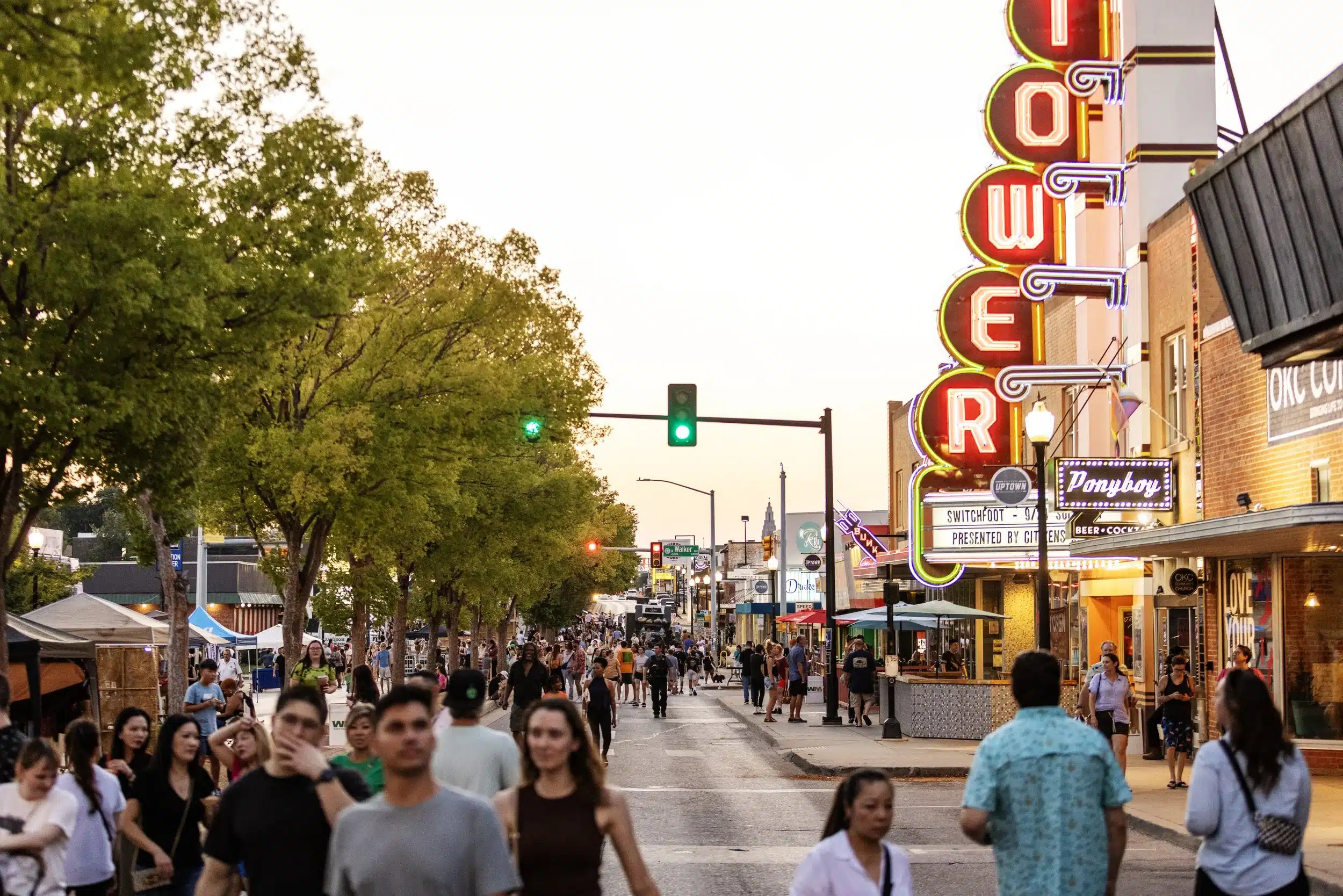
The Tower Theatre stands as the beating heart of Uptown 23rd, functioning simultaneously as a concert venue, movie theater, and community gathering space. Originally opened way back in 1937, this venue represents one of Oklahoma City’s last remaining original movie palaces, with a capacity that shifts between roughly 1,000 standing or 700 seated depending on how the event’s configured.
After sitting dormant for what felt like forever, the theatre underwent a multi-million dollar renovation and burst back to life fully in 2017, though its iconic neon sign was restored and lit up again in 2015 as a teaser of the building’s comeback.
The Oklahoman documented how this reopening triggered a domino effect among surrounding businesses, creating momentum that transformed the entire corridor from forgotten to fashionable.
Programming and Aesthetic Appeal
The interior blends raw industrial elements with restored 1930s glamour, creating an atmosphere that speaks to both music lovers and architecture nerds equally. Programming runs the gamut from touring rock bands to comedy performances, classic film screenings to local community gatherings, making the venue accessible to wildly different audiences throughout the week.
The theatre’s restoration preserved original architectural details while integrating modern sound and lighting systems necessary for contemporary performances. This marriage of historic preservation and modern functionality captures the district’s broader philosophy, honoring what came before while refusing to become a museum piece.
Oklahoma City's Densest Collection of Local Restaurants and Bars
Uptown 23rd boasts the highest density of locally-owned restaurants in Oklahoma City, spanning everything from white-tablecloth dining establishments to beloved dive bars where the bartender knows your name after two visits.
Many venues keep their doors open until 2:00 AM, cementing the area as the city’s go-to nightlife destination for folks seeking authentic local experiences over the sanitized familiarity of chain restaurants.
Cheever’s Cafe operates out of a historic family-owned flower shop building, preserving the original floral refrigerator as a one-of-a-kind wine case while serving upscale comfort food that’s earned praise from food critics across the region.
Big Truck Tacos caught national attention through Food Network coverage, with their Fifth Amendment taco becoming such a signature dish that food enthusiasts make pilgrimages from across the metro area just to try it.
Distinctive Venues and Signature Experiences
The Pump Bar occupies a converted vintage Texaco gas station, maintaining automotive-themed decor that honors the Route 66 heritage while pouring craft cocktails and local beers.
Guyutes elevates street food concepts with a rock-and-roll aesthetic that makes you feel like you’re eating in someone’s really cool garage, while Pizzeria Gusto introduced Oklahoma City’s first authentic Neapolitan pizza concept to considerable local fanfare.
Tucker’s Onion Burgers specializes in Oklahoma’s signature onion burger, a Depression-era invention born from necessity that has become a point of fierce regional pride.
The Bunker Club embraces Cold War and Atomic Era themes in its dive bar atmosphere, creating an immersive experience that reflects the area’s mid-century modern heritage. These establishments collectively create what food writers describe as a treasure hunt for unique dining experiences you simply can’t find anywhere else in the city.
The Rise and Boutique Shopping Experience
The Rise represents a textbook case of successful adaptive reuse, taking an old laundry facility and warehouse at 23rd and Walker and converting it into a micro-retail and dining hub.
This development focuses squarely on boutique shopping experiences centered around curiosities, vintage items, and locally-produced goods rather than trying to compete with the big-box retailers found in soulless suburban shopping centers.
Craig’s Curious Emporium has operated for over 40 years and earned its self-proclaimed title as Oklahoma City’s weirdest store, specializing in novelty items, eccentric gifts, and unusual collectibles that appeal to both tourists seeking authentic Oklahoma memorabilia and locals hunting for conversation pieces that’ll make their friends say “Where on earth did you find that?”
Local Artisans and Unique Retail
Blue Seven, located slightly north but culturally part of the district’s orbit, focuses on Oklahoma-branded apparel and modern gifts that celebrate regional identity without resorting to stereotypical tourist merchandise.
Urbane Home & Lifestyle caters to design-conscious shoppers with modern furniture and decor items carefully selected for quality and style rather than mass market appeal.
Shopping in Uptown 23rd gets described by regular visitors as genuine treasure hunting, where the goal involves discovering unique, weird, or locally-branded items you’d never stumble across through conventional retail channels.
This approach attracts customers who value authenticity and craftsmanship over the convenience and standardization that dominates modern shopping experiences.
Uptown Outside Block Parties and Street Art Scene
The Uptown Outside event periodically shuts down portions of 23rd Street to vehicular traffic, creating a pedestrian-only environment that allows open-container walking, food truck feasting, and live music performances.
The Oklahoma City Free Press has documented attendance in the thousands per event, transforming the normally car-friendly street into a massive block party that celebrates community culture in its rawest, most joyful form.
The district features significant street art installations that contribute to what social media users describe as highly Instagrammable aesthetics, though the murals existed long before Instagram made that a compliment. These artistic interventions create visual interest between businesses while reflecting the area’s creative community and artistic heritage.
Community Events and Family-Friendly Programming
Regular Beer Hop and Wine Walk events encourage exploration of multiple venues while building genuine connections between business owners and customers. These events maintain family-friendly atmospheres during daytime hours before naturally transitioning to more adult-centric party environments as evening settles in.
Parking presents real challenges during major events, with designated lots behind The Rise and Tower Theatre offering the most reliable options. The district’s walkability becomes a genuine asset once you’ve secured parking, as wide sidewalks and business density allow you to explore multiple venues without trudging back to your car parked three blocks away.
Where Locals Go Instead of Tourist Districts
Uptown 23rd occupies a distinct spot in Oklahoma City’s entertainment landscape, contrasting sharply with other popular districts. While Midtown offers polished urban experiences and Bricktown caters primarily to tourists clutching guidebooks, Uptown 23rd maintains an eclectic, independent, and authentically gritty-cool atmosphere that attracts locals seeking genuine Oklahoma City experiences.
The district represents a significant evolution from the drive-through culture of the original Route 66 era to today’s stay-and-play mentality. Visitors now come to linger over meals, explore on foot at their own pace, and have real conversations with local business owners rather than simply passing through on their way to somewhere supposedly more important.
Authentic Character and Historic Preservation
The interplay between historic brick buildings and vibrant modern murals creates visual tension while honoring both past and present. Preservation of original neon signs serves as a deliberate nod to Route 66’s car culture history while accommodating contemporary pedestrian-focused activities that would’ve seemed foreign to highway travelers.
This balance between preservation and innovation attracts residents who appreciate authentic character over manufactured entertainment experiences designed by committee. Local regulars frequently describe the area as “the real Oklahoma City” in contrast to more tourist-oriented destinations that prioritize broad appeal and predictability over local authenticity and occasional rough edges.
Best Times to Visit and Getting Around
Peak visiting times happen during Uptown Outside events and weekend evenings when most venues operate at full capacity and the street energy reaches fever pitch. The district handles pedestrian traffic well thanks to wide sidewalks and relatively compact business spacing, though parking availability takes a nosedive during major events and popular weekend nights.
Designated parking lots behind major venues offer your best bet, particularly the lots serving The Rise and Tower Theatre. Ride-share services provide smart alternatives during peak times when parking becomes either scarce or unreasonably expensive. TravelOK recommends showing up early for special events to lock down nearby parking and dodge the traffic snarl that inevitably develops.
Seasonal Considerations and Event Planning
Outdoor events and patio dining experiences depend heavily on Oklahoma’s notoriously fickle weather, with spring and fall offering optimal conditions for extended outdoor activities without sweating through your shirt or freezing your face off. Summer events often kick off later in the evening to dodge the brutal heat, while winter programming sensibly shifts toward indoor venues and heated spaces.
Connection to broader Oklahoma City cultural attractions makes Uptown 23rd an ideal piece of larger itineraries that might include downtown museums, the sobering Oklahoma City National Memorial, or other Route 66 historic sites scattered throughout the metropolitan area.
Planning Your Uptown 23rd Experience
Successful visits to Uptown 23rd depend on matching activities to personal preferences and how much time you’ve actually got. Brunch options include Cheever’s Cafe for elevated comfort food experiences that’ll make you reconsider what brunch can be, while daytime activities can focus on boutique shopping at The Rise or exploring street art installations sprinkled throughout the district.
Dinner date recommendations center around establishments that deliver both excellent food and atmospheric dining experiences worth lingering over. Cheever’s Cafe provides upscale ambiance in its converted flower shop setting, while Big Truck Tacos offers casual excellence that has earned national recognition through Food Network coverage.
Specific Actionable Recommendations
First-time visitors should prioritize signature experiences that capture the district’s unique character. The Chicken Fried Steak at Cheever’s Cafe represents Oklahoma comfort food elevated to fine dining standards, the kind of dish that makes you understand why people write poetry about food. The Fifth Amendment taco at Big Truck Tacos showcases the creative street food that has brought unexpected national attention to Oklahoma City’s culinary scene.
Late night entertainment options include live music at Tower Theatre, carefully crafted cocktails at The Pump Bar, or the distinctive atmosphere at Bunker Club where the Cold War theme somehow works perfectly. Integration with Route 66 tourism allows visitors to experience both the historic significance of the corridor and its contemporary renaissance within a single visit.
Community events calendars, maintained by the Uptown 23rd District Association, provide current information about seasonal highlights and special programming that might influence your timing decisions.
Frequently Asked Questions
Uptown 23rd represents Oklahoma City's premier locally-owned entertainment district located along the historic Route 66 corridor on NW 23rd Street. The area transformed from serious economic decline in the late 20th century to become the city's coolest neighborhood through a renaissance that started gaining momentum around 2012-2015.
The district spans roughly 15 to 20 blocks from I-235 to Pennsylvania Avenue, featuring the highest concentration of locally-owned restaurants, boutique shopping, and authentic nightlife in Oklahoma City.
According to the Uptown 23rd District Association, this transformation preserved the area's mid-20th century architectural character while creating a pedestrian-friendly environment that attracts locals seeking authentic experiences over tourist-oriented entertainment that feels manufactured and safe.
Uptown 23rd runs along NW 23rd Street, stretching primarily from I-235 at Broadway to Pennsylvania Avenue in central Oklahoma City. The district sits just northwest of downtown, making it easily accessible from major highways and putting it right in the middle of other popular Oklahoma City neighborhoods like Midtown and the Plaza District.
Key landmarks include the Gold Dome at 23rd and Classen, which serves as an impossible-to-miss visual anchor for the entire area, and the Tower Theatre, which anchors the cultural activities.
The location provides convenient access to both downtown attractions and suburban areas, positioning it as a central hub for Oklahoma City's local dining and entertainment scene rather than some out-of-the-way peripheral destination you need a treasure map to find.
Yes, NW 23rd Street follows the original alignment of historic Route 66 that once carried cross-country travelers before the interstate highway system made this route obsolete and slightly romantic.
Historic Hotels of America documentation shows this corridor served as a major thoroughfare for families heading west during Route 66's heyday, complete with motor courts, diners, and service stations designed to serve road-weary travelers dreaming of California.
The district honors this heritage through preserved neon signage, Art Deco architecture, and venues like The Pump Bar, which occupies a converted vintage Texaco gas station.
Today's stay-and-play culture contrasts dramatically with the original drive-through mentality of the Route 66 era, but the area maintains strong visual connections to its automotive heritage while serving contemporary pedestrian-focused activities that would've seemed bizarre to highway travelers.
Tower Theatre serves as the cultural heartbeat of Uptown 23rd, operating as a concert venue, movie theater, and community event space since its full reopening in 2017 after a multi-million dollar renovation that brought it back from the dead.
Originally opened way back in 1937, this venue represents one of Oklahoma City's last remaining original movie palaces, with capacity shifting between roughly 1,000 standing or 700 seated depending on how the event's set up.
The Oklahoman documented how the theatre's renovation catalyzed growth among surrounding businesses, creating a ripple effect that transformed the entire corridor from sketchy to sought-after. Programming includes touring rock bands, comedy performances, classic film screenings, and local community gatherings, with an interior aesthetic that mixes raw industrial elements with restored 1930s glamour that somehow works beautifully together.
The iconic neon sign was restored and lit back up in 2015, two years before the building's full reopening, serving as a teaser of the district's cultural renaissance.
Uptown 23rd houses Oklahoma City's highest density of locally-owned restaurants, spanning everything from upscale establishments to authentic dive bars that stay open until 2:00 AM for the night owls and service industry folks.
Cheever's Cafe operates from a historic family-owned flower shop building, preserving the original floral refrigerator as a wine case while serving elevated comfort food including their signature Chicken Fried Steak that'll ruin you for all other versions.
Big Truck Tacos gained national recognition through Food Network coverage, with their Fifth Amendment taco becoming such a must-try signature dish that people plan entire visits around it.
Other standout venues include The Pump Bar in a converted vintage Texaco station pouring craft cocktails, Guyutes for elevated street food with rock-and-roll vibes, Pizzeria Gusto as Oklahoma City's first legitimate Neapolitan pizza concept, Tucker's Onion Burgers specializing in Oklahoma's signature Depression-era creation that's become a point of regional pride, and Bunker Club offering Cold War-themed dive bar atmosphere that feels like stepping into a time capsule.
These establishments collectively create what food writers describe as treasure hunting for unique dining experiences you simply won't find anywhere else in the city.
The Rise represents a textbook case of successful adaptive reuse that converted an old laundry facility and warehouse at 23rd and Walker into a micro-retail and dining hub focused on boutique shopping experiences.
Rather than trying to compete with big-box retailers selling the same stuff you can find anywhere, The Rise specializes in curiosities, vintage items, and locally-produced goods that appeal to treasure hunters seeking unique finds with actual stories behind them.
The project exemplifies the district's approach to development, preserving existing architectural character while creating new economic opportunities for local entrepreneurs who couldn't afford traditional retail spaces.
The Rise also provides some of the area's most reliable parking options in its designated lots, making it a practical starting point for exploring the broader district on foot without worrying about your car getting towed.
This adaptive reuse strategy has become a model for other development projects throughout Uptown 23rd, demonstrating how historic buildings can be repurposed for contemporary commercial use while maintaining neighborhood character instead of demolishing everything and starting over.
Uptown Outside occurs periodically throughout the year as special block party events where portions of 23rd Street shut down to vehicular traffic, creating pedestrian-only environments for open-container walking, food truck feasting, and live music performances.
The Oklahoma City Free Press has documented attendance in the thousands per event, transforming the normally car-friendly street into massive community celebrations that bring together wildly different groups of people.
These events typically attract family-friendly crowds during daytime hours before naturally transitioning to more adult-centric party atmospheres as evening settles in and the kids go home.
Specific dates shift around by season and community calendar, with the Uptown 23rd District Association maintaining current scheduling information for residents and visitors planning their visits around these signature events.
Regular Beer Hop and Wine Walk events also occur throughout the year, encouraging exploration of multiple venues while building genuine connections between business owners and customers, though these maintain normal traffic patterns rather than full street closures that turn the whole area into a pedestrian playground.
Uptown 23rd maintains a solid reputation as a safe entertainment district, particularly during peak hours when foot traffic is heavy and venues are humming with activity.
The area's transformation from economic decline to premier entertainment destination has included improved lighting, increased pedestrian activity, and active business ownership that creates natural surveillance throughout the corridor. Lots of eyes on the street make everyone feel safer.
Wide sidewalks and compact business spacing allow visitors to move easily between venues while maintaining visibility and staying close to active establishments rather than wandering through sketchy gaps.
Like any urban entertainment district, standard safety precautions apply, particularly during late-night hours when alcohol consumption picks up and decision-making quality sometimes declines. The district's walkability becomes a genuine asset for safety, as visitors can explore multiple venues without returning to parking areas in less-trafficked zones where things feel sketchier.
Designated parking lots behind major venues like The Rise and Tower Theatre provide secure options that keep vehicles close to active, well-lit areas rather than dark side streets.
Parking in Uptown 23rd requires some strategic thinking, especially during weekend evenings and special events when demand significantly exceeds street-level availability and you'll be circling like a vulture.
Designated parking lots behind The Rise and Tower Theatre offer your most reliable options, providing secure spaces within reasonable walking distance of major venues and activities. These lots serve as smart starting points for exploring the broader district on foot, taking full advantage of the area's pedestrian-friendly design and compact business spacing.
Street parking exists but fills up faster than concert tickets during peak times, making early arrival absolutely essential for those preferring closer access to specific venues.
Ride-share services provide convenient alternatives during major events when parking becomes either scarce or unreasonably expensive, eliminating concerns about vehicle security and allowing full enjoyment of the district's nightlife offerings without worrying about driving home.
TravelOK recommends showing up early for special events and seriously considering ride-share options for weekend evening visits when parking demand peaks and frustration levels rise proportionally.
Craig's Curious Emporium operates as Oklahoma City's self-proclaimed weirdest store, specializing in novelty items, eccentric gifts, and unusual collectibles that have attracted curious customers for over 40 years.
Located right in the heart of the Uptown 23rd district, this establishment exemplifies the area's commitment to unique, locally-owned businesses that offer experiences you absolutely cannot get through conventional retail channels or online shopping algorithms.
The store caters to both tourists seeking authentic Oklahoma memorabilia that's actually interesting and locals hunting for conversation pieces, unusual gifts, or items that reflect personal eccentricity rather than bland mass market appeal.
Craig's represents the treasure hunting mentality that characterizes shopping throughout Uptown 23rd, where the goal involves discovering unique finds that make you smile rather than purchasing predictable merchandise you could find anywhere.
The remarkable longevity of Craig's business demonstrates the district's ability to support specialty retailers that prioritize character and authenticity over broad commercial appeal and playing it safe.
Many venues throughout Uptown 23rd keep their doors open until 2:00 AM, establishing the area as Oklahoma City's go-to nightlife destination for extended evening entertainment that doesn't end pathetically early.
This late-night availability distinguishes the district from other areas that close up shop earlier, creating genuine opportunities for bar hopping, extended dining experiences, and live music events that can accommodate diverse schedules including night shift workers and confirmed night owls.
The Pump Bar, Bunker Club, and other establishments designed specifically for evening entertainment typically operate on these extended schedules, particularly during weekend nights when demand for late-night activities peaks and nobody wants to go home yet.
Some venues adjust hours based on day of the week and special events, with weekends generally offering the most extensive late-night options when people aren't worried about work the next morning.
The concentration of venues maintaining late hours creates a critical mass of activity that sustains energy throughout the evening, allowing visitors to move between establishments while maintaining active street life and natural safety through pedestrian traffic rather than empty sidewalks that feel creepy.
The Gold Dome stands as a geodesic dome bank built in 1958 at the intersection of 23rd and Classen, serving as an impossible-to-miss visual anchor and unofficial symbol of the Uptown 23rd district.
Historic Hotels of America documentation identifies this structure as a prime example of mid-20th century modernist architecture that reflects the optimistic, space-age aesthetic popular during Route 66's heyday when Americans believed the future would be filled with flying cars and moon colonies.
The dome's distinctive golden exterior and geometric design make it one of Oklahoma City's most recognizable architectural landmarks, visible from multiple approaches to the district and frequently used as a reference point for giving directions.
Beyond its visual significance, the Gold Dome represents the district's commitment to preserving authentic mid-century architecture while accommodating contemporary development pressures that usually end with historic buildings getting demolished.
The structure has become a wildly popular photography subject and serves as a symbol of the area's successful balance between historic preservation and modern revitalization.
Uptown 23rd ranks among Oklahoma City's most pedestrian-friendly corridors according to the Uptown 23rd District Association, featuring wide sidewalks and compact business spacing that actively encourage exploration on foot rather than driving between venues like you're on some dystopian suburban errand run.
The district's walkability represents a complete reversal from the car-centric culture of the original Route 66 era, allowing visitors to park once and access multiple restaurants, bars, shops, and entertainment venues without returning to their vehicles parked who-knows-where.
This pedestrian-friendly design creates genuine opportunities for spontaneous discoveries, casual social interactions, and a more immersive experience of the neighborhood's character and atmosphere rather than viewing everything through a windshield.
The relatively flat terrain and well-maintained sidewalks accommodate diverse mobility levels without making anyone feel like they're attempting a mountain expedition, while street art installations and architectural details provide visual interest for walkers who actually pay attention to their surroundings.
During special events like Uptown Outside, the area's walkability becomes even more obvious as street closures create expanded pedestrian zones that demonstrate the district's potential for car-free entertainment experiences that actually work.
Uptown 23rd hosts diverse events throughout the year, anchored by the periodic Uptown Outside block parties that shut down portions of 23rd Street to create pedestrian-only environments with open-container policies, food trucks, and live music that turns the whole street into one big party.
The Oklahoma City Free Press has documented attendance in the thousands for these signature events, which smoothly transition from family-friendly daytime activities to adult-centric evening entertainment as the sun goes down and the kids head home.
Tower Theatre provides year-round programming including touring rock bands, comedy performances, classic film screenings, and community gatherings that serve as consistent cultural anchors for the district regardless of what else is happening.
Regular Beer Hop and Wine Walk events encourage venue exploration while building real connections between business owners and customers, maintaining normal traffic patterns while creating structured social activities that give people a reason to explore beyond their usual haunts.
The district also hosts seasonal celebrations, art walks that highlight street art installations, and live music performances at various venues that create ongoing entertainment options beyond major scheduled events.
The Uptown 23rd District Association maintains current event calendars that help visitors and residents plan participation in activities that actually match their interests and schedules rather than just showing up randomly.
Uptown 23rd contrasts sharply with Bricktown by prioritizing locally-owned businesses and authentic neighborhood character over tourist-oriented attractions and chain establishments that you could literally find anywhere.
While Bricktown caters primarily to visitors seeking predictable entertainment experiences designed not to offend anyone, Uptown 23rd attracts locals and discerning tourists who value independent restaurants, unique shopping, and genuine Oklahoma City culture that hasn't been focus-grouped to death.
The district maintains an eclectic, gritty-cool atmosphere that reflects organic development rather than planned entertainment zones designed by consultants, with venues that have evolved naturally to serve actual community needs rather than tourist expectations and Instagram opportunities.
Architectural character differs significantly, with Uptown 23rd preserving mid-20th century Art Deco and Route 66 heritage rather than Bricktown's renovated warehouse aesthetic that sometimes feels a bit manufactured. Pricing tends to be more accessible in Uptown 23rd, with local ownership creating diverse price points rather than the premium pricing common in tourist districts where they know they've got you cornered.
The pedestrian experience emphasizes genuine discovery and exploration rather than guided entertainment, encouraging visitors to engage with local business owners and actual community members rather than consuming manufactured experiences designed for maximum commercial efficiency.
Peak visiting times include weekend evenings when most venues operate at full capacity and street energy reaches those magic levels where everything feels alive and happening, though the district offers completely different experiences throughout the week depending on visitor preferences and activity goals.
Uptown Outside events represent special occasions that attract thousands of visitors and showcase the district's full community spirit in ways that regular nights simply can't match, requiring early arrival for parking and optimal positioning before the crowds descend.
Brunch hours provide opportunities to experience upscale dining at venues like Cheever's Cafe without evening crowds breathing down your neck, while afternoon visits allow relaxed exploration of boutique shopping at The Rise and street art installations sprinkled throughout the district without feeling rushed.
Late-night visits between 10 PM and 2 AM offer the most vibrant bar scene and live music opportunities, particularly at Tower Theatre and establishments specifically designed for evening entertainment rather than just staying open out of obligation.
Seasonal considerations include spring and fall as optimal times for outdoor events and patio dining without weather extremes ruining everything, while summer programming often shifts to later evening starts to dodge Oklahoma's brutal heat that makes afternoon activities feel like punishment.
TravelOK recommends checking the community events calendar maintained by the Uptown 23rd District Association before visiting to align trips with special programming that might significantly enhance the overall experience rather than just showing up and hoping for the best.
Driving Directions From Uptown Oklahoma City, Oklahoma City, OK, USA to 5-Star Towing OKC, 2800 SW 25th St, Oklahoma City, OK 73108, United States - 15 min (10.3 miles) via I-235 S and I-40 W
Uptown Oklahoma City, Oklahoma City, OK, USA
Get on I-235 S/US-77 S - 3 min (1.2 mi)
Drive along I-40 W. Take exit 148A from I-40 W - 8 min (7.3 mi)
Continue on S May Ave to your destination - 4 min (1.7 mi)
5-Star Towing OKC, 2800 SW 25th St, Oklahoma City, OK 73108, United States
We also offer towing and roadside assistance services near Uptown 23rd OKC. Learn more about the Asian District OKC.