
There’s no feeling quite like the stomach-dropping thud of seeing your bike on its side or the helpless frustration of being stranded on the shoulder of I-40. It’s a gut punch every rider dreads. Panic can bubble up fast, immediately followed by the frantic need to get your machine moved safely and without another scratch.
You pour your heart into that motorcycle, the paint, the chrome, the whole drivetrain and the last thing you want is a clumsy recovery attempt that causes more harm than the breakdown itself.
Whether you’re on a heavy cruiser or a nimble sportbike, knowing how to transport it the right way can keep a bad day from turning into a financial nightmare.
Key Points
- A flatbed tow is your bike’s best friend; it keeps the whole machine off the road, saving your drivetrain and tires from any wear and tear.
- Hauling your bike yourself with a trailer can save you money on frequent trips, but you’ll need to invest in some pricey equipment and have a vehicle that can handle the load.
- When it comes to accidents or roadside emergencies, calling a professional towing service is, without a doubt, the safest move you can make.
- Whatever you do, avoid towing your bike with two wheels on the ground. It’s a fast track to destroying your transmission and a serious safety risk.
Motorcycle Towing Explained
Flatbed versus Trailer
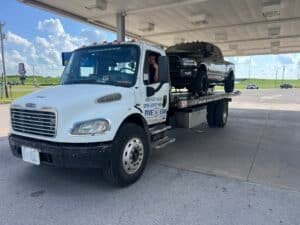
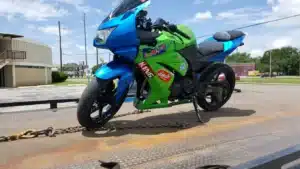
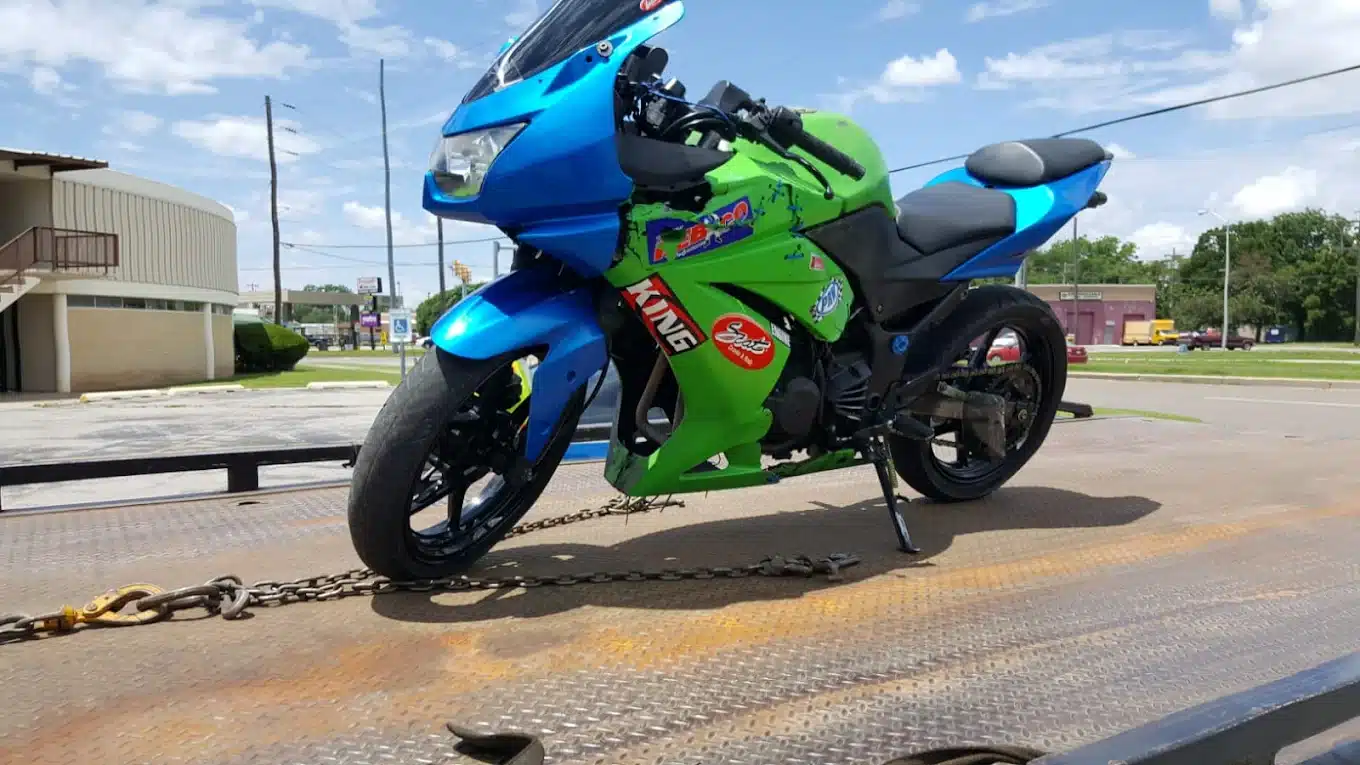
When it comes to moving your motorcycle, you really have two main paths, you can hire a professional with a flatbed truck, or you can haul it yourself with a trailer. Flatbed towing offers a level of safety that’s tough to beat, simply because it lifts your bike completely off the ground. This means zero wear on your tires and no stress on your chain or shaft drive, which is a huge deal on long hauls. And if you’ve been in an accident, this method becomes absolutely essential. Securing your bike’s frame and wheels to a solid, flat surface dramatically lowers the risk of it tipping or getting dragged, which could cause even more damage. In fact, when Fatehtowservice asked 500 riders, a solid 62% of them gave flatbed towing an “excellent” safety rating for accident recovery.
Of course, cost is where these two options really diverge. Calling a professional for a flatbed tow over a 50-mile distance will likely set you back somewhere between $300 and $500. That price tag includes a hookup fee that’s usually around $150, plus a mileage charge that can range from $150 to $350, depending on who you call. On the flip side, going the DIY route means a pretty hefty upfront investment. The gear for a proper trailer setup can cost anywhere from a cool $1,000 to a staggering $10,000. While your cost per trip plummets after that initial purchase, that’s a steep price to pay if you only need a tow once in a blue moon.
Why Professional Flatbed Towing is Often the Safest Choice
There’s a reason flatbed tow trucks now represent about a quarter of the entire tow market. People are realizing the importance of eliminating tire roll and properly securing a vehicle’s frame. This method gives your bike the most stable ride possible, which is why all-wheels-off-the-ground transport is seeing a 10% annual growth in some areas. While motorcycle-specific tows only make up about 5% of all requests meaning you might have to wait a bit longer for a specialist the peace of mind is worth it. Modern flatbeds with hydraulic tilt beds allow operators to load even the heaviest cruisers and touring bikes without that heart-stopping balancing act you have to do on steep, narrow ramps.
Here’s why so many riders are willing to put their trust in this method:
- Because the bike is completely stationary, there’s absolutely no wear on your tires, chain, or drive shaft.
- It provides the highest level of security, which is critical when a bike’s frame might be compromised after a crash.
- Professional operators come equipped with motorcycle-specific wheel chocks and padded decks designed to lock your bike in place securely.
- You’re looking at a higher cost for each use, typically a $150 hookup fee plus another $3–$7 for every mile.
- A big flatbed might have trouble getting to a bike that’s tucked away in a narrow alley or a remote, off-road spot.
Using a Motorcycle Trailer
Taking transport into your own hands can feel empowering, and for riders who haul their bikes often, it can lead to some serious savings. If you’re a track day regular, having your own trailer could save you around $450 a month on a 30-mile round-trip compared to calling a service every time. But this freedom comes with responsibility. You need a tow vehicle that’s up to the task and a good handle on federal and state towing laws. For instance, did you know that trailer brakes are required for a Gross Vehicle Weight Rating (GVWR) over 1,500 lbs, or that you might need a Commercial Driver’s License (CDL) if your whole rig weighs more than 26,000 lbs?
The kind of trailer you choose also makes a huge difference. Open trailers are light and budget-friendly, but they leave your bike exposed to rain, hail, and whatever debris gets kicked up on the highway. Enclosed trailers are like a mobile garage, which is why 55% of sportbike riders prefer them for events, but they’re heavier and can create a lot of wind drag. You also have to be honest about your own skills. AmeriFreight found that 28% of riders switched back to professional services after a bad DIY experience, usually involving tie-downs that came loose or a scary mishap while loading.
When to Call a Pro versus When to Tow It Yourself
Scenarios Demanding a Professional Flatbed Tow Truck
When you’re in a real roadside emergency, calling a professional is the only move that makes sense. If you find yourself stuck on the shoulder of the Turner Turnpike, your personal safety is far more important than saving a few bucks. Services like AAA or local experts offer a safety net that a DIY setup just can’t provide in a high-stress situation. Professional transport is also the smart choice for long-distance, single-bike hauls of over 200 miles. At that point, the wear and tear on your own vehicle and the pure exhaustion of towing a trailer for hours start to outweigh the cost of shipping. In busy urban areas like OKC, a pro can often get to you in under 30 minutes, getting you and your bike off a dangerous roadside quickly. This is also the go-to method for moving priceless vintage motorcycles to a dealership or into winter storage, ensuring there’s zero chance of damage during transit.
When a DIY Trailer Makes More Sense
For the dedicated enthusiast, owning a trailer just makes sense. If you’re constantly taking your bike to track days, motocross events, or group rides in another state, a trailer will pay for itself in no time. It’s also the best solution when you need to haul more than one bike at a time, something a standard flatbed can’t always do safely. And for those of us in places with real winters, using an enclosed trailer to move your bike to a storage unit from November to April is a great way to protect it from corrosive road salt and damp air.
Debunking Common Motorcycle Towing Myths
There’s a lot of bad information floating around the riding community that can lead to some very expensive mistakes. Let’s clear the air and separate fact from fiction so your bike gets where it’s going in one piece. One of the biggest myths is that any kind of towing will damage your motorcycle. The truth is, a professional flatbed tow completely eliminates road contact, which means there’s no way for it to harm your tires or drivetrain. As the folks at Dirt Bike Magazine often say, using the right method and proper preparation makes all the difference.
Another common worry is that tie-down straps are guaranteed to scratch your bike’s paint or chrome. Not so. Professionals use high-quality soft straps and padded protectors made specifically to secure a bike without leaving a single mark on its finish. But perhaps the most dangerous myth of all is that two-wheel towing is a decent alternative. Towing a motorcycle with its rear wheel on the pavement is a terrible idea. It puts a ton of unnecessary wear on your tire and can completely wreck your transmission, since the output shaft is spinning like crazy without any lubrication from the engine. When it comes to a stable, safe ride, flatbed transport is the only way to go.
The Best Trailers and Tow Vehicles
Choosing the Right Vehicle to Tow Your Motorcycle
First things first, your tow vehicle has to be rated to handle the combined weight of your trailer and your motorcycle. Don’t just guess, always check the Gross Vehicle Weight Rating (GVWR) before you even think about hitching up.
Pickup trucks are the go-to for a reason. A Ford F-150, especially one with the 3.5L EcoBoost V6, can tow up to 13,200 lbs and often comes with the Pro Trailer Backup Assist feature, which is an absolute lifesaver if you’re new to towing. The Chevrolet Silverado 1500 gives it a run for its money with a 13,300 lb capacity from its 6.2L V8 and includes Trailer Sway Control for added stability. Meanwhile, the RAM 1500 is known for a smoother ride, and its 5.7L HEMI V8 eTorque engine can pull up to 12,750 lbs. For the Toyota fans, the Tundra can handle up to 10,200 lbs and has a dedicated Tow/Haul Mode that helps the transmission manage shifts more effectively.
Don’t count out SUVs and vans, either. The Ford Expedition is a beast in the SUV class with a 9,300 lb capacity, followed closely by the GMC Yukon at 8,500 lbs and the Chevrolet Suburban at 8,300 lbs. If you’re more of a van person, the Nissan NV Cargo with its 5.6L V8 can pull a hefty 9,400 lbs, while the Ford Transit and Mercedes-Benz Sprinter offer capacities between 5,000 to 7,500 lbs more than enough for almost any motorcycle trailer setup.
Selecting the Best Motorcycle Trailer or Hitch Carrier
Having the right equipment is half the battle. The team at MaxBuilt Trailers always recommends finding a trailer that’s a good match for your specific vehicle’s capabilities. Some brands, like Zpro No-Ramp-Needed Trailers, are ingeniously engineered for easy, safe loading, taking away the fear of dropping your bike while pushing it up a steep ramp. Kendon Stand-Up Trailers are a favorite for riders who are tight on garage space, as they fold up neatly for storage. If you’re looking for something that will last a lifetime, Featherlite and Aluma Trailers use aluminum construction, which resists rust and keeps the weight down.
Hitch-mounted carriers can be a great option for lighter bikes, as long as your vehicle can handle the tongue weight. Black Widow Pro makes the popular AMC-400, which is perfect for dirt bikes and scooters up to 400 lbs with tires up to 5.5 inches wide. For beefier street bikes, their Black Widow MCC-600 can support up to 600 lbs and tires up to 8 inches wide. Just remember, these carriers require a sturdy 2-inch Class III or Class IV hitch, which can typically support a tongue weight between 350 and 1,200 lbs.
The Business of Motorcycle Towing
Believe it or not, the U.S. towing industry is a huge business, with over 68,000 companies bringing in more than $8 billion in revenue each year. While flatbed trucks make up about 25% of that market, specialized motorcycle towing is a small but growing corner of it. This growth is being fueled by more and more people getting into riding, as well as an aging rider population that might be more inclined to call for help than to try and fix a problem on the side of the road. Right now, service calls for motorcycles account for about 5% of all tow requests across the country, which shows there’s a real need for operators who know how to handle a two-wheeled recovery.
Here at Five Star Towing in OKC, we get it your motorcycle isn’t just a machine; it’s a huge part of your life. Whether you need an emergency rescue on the Kilpatrick Turnpike or a scheduled transport to your favorite shop, our flatbed operators have the right gear and the right attitude to make sure your ride arrives looking as good as it did when they picked it up. Don’t risk a DIY disaster, give the experts who will treat your bike like it’s their own a call.
Frequently Asked Questions
The cost to tow a motorcycle can change depending on how far you're going and the company you call. As a rule of thumb, you can expect to pay a "hookup" fee somewhere between $75 and $150, plus a rate of $3 to $7 for every mile you travel.
So, for a standard 50-mile tow, you're likely looking at a total bill between $300 and $500.
These prices are also shaped by the kind of truck that's used. Flatbed towing is the gold standard for motorcycles, and it often costs a bit more than standard wheel-lift towing because it requires special gear like soft straps and wheel chocks.
As the experts at Fatehtowservice point out, paying for a professional flatbed ensures your bike is completely secure, which easily justifies the extra cost compared to cheaper, riskier methods.
If you haul your bike all the time, those single tow fees can add up to more than the cost of just buying your own trailer. But for a one-time emergency, that service fee is a small price to pay compared to the potential repair bills from a DIY haul gone wrong.
Hands down, the safest way to move a motorcycle is on a professional flatbed tow truck that's decked out with motorcycle-specific tie-downs and wheel chocks. This method lifts your bike completely off the asphalt, protecting it from road vibrations and saving your drivetrain from any wear.
The safety numbers back this up. A survey mentioned by Fatehtowservice showed that 62% of riders believe flatbed safety is "excellent," especially after an accident where the bike’s frame might have been weakened. The flat, stable surface of the truck bed keeps the bike from tipping or swaying, which is always a risk on an open trailer.
At the end of the day, keeping your bike still and upright is the best way to prevent damage. A trained professional knows how to secure the frame without cranking down on the suspension so hard that it causes problems, a common mistake for those new to towing.
Yes, you absolutely can tow a motorcycle with a car, but only if the car is rated to handle the weight and has a properly installed hitch. Most modern sedans can easily manage a lightweight motorcycle trailer with a single bike, since the total weight is often under 1,500 lbs.
The key is to check your car's manual for its Gross Vehicle Weight Rating (GVWR) and specific towing limit. As the folks at MaxBuilt Trailers will tell you, going over these limits can seriously mess with your car's ability to brake and handle safely. You'll most likely need a Class I or Class II hitch installed on a standard car.
While it's possible, towing with a smaller vehicle means you need to be extra careful. A car's shorter wheelbase can make the trailer more prone to swaying, especially when it's windy or you're cruising at highway speeds.
Yes, it's incredibly bad for your bike to tow it with the rear wheel on the ground. When you do this, you're forcing the transmission's output shaft to spin without the engine running, which means the oil pump isn't circulating any lubricant.
Think of it like sprinting on a treadmill that's turned off; it's a recipe for disaster. This lack of lubrication can lead to catastrophic transmission failure and cause internal parts to overheat. On top of that, as Dirt Bike Magazine points out, this method chews up your rear tire for no reason and is far less stable than putting the whole bike on a flatbed.
If you absolutely have to use a system that leaves a wheel down, like a tow dolly, you're supposed to disconnect the drive chain or driveshaft first. That's a messy, time-consuming job that's not practical for a roadside emergency.
You don't technically need a trailer built only for motorcycles, but using one is a whole lot safer and easier than trying to make a standard utility trailer work. Motorcycle-specific trailers, like the ones made by Zpro or Kendon, come with features like built-in wheel chocks and lower loading ramps that make a world of difference.
You can use a regular utility trailer, but you’ll need to add proper tie-down points and a good wheel chock to keep the front wheel straight. However, the team at Zpro Trailers makes a great point, specialized trailers are often designed so that one person can load a bike by themselves, which drastically reduces the risk of dropping it.
Trying to use a generic trailer without these features is asking for trouble, as the bike is much more likely to shift or fall during the trip. Plus, the suspension on motorcycle trailers is often tuned to provide a smoother ride for your bike than the stiff suspension on a general-purpose utility trailer.
The best setup is a combination of high-quality ratchet straps and soft loops (also called "soft ties"). The ratchet straps let you compress the suspension just enough to keep the bike firmly in place, while the soft loops go around your handlebars or frame, preventing the metal hooks of the straps from scratching anything.
Don't even think about using standard rope or bungee cords. They can stretch and snap, or come loose when the trailer hits a bump, leaving your bike unsecured. The experts at Dirt Bike Magazine recommend always checking the Working Load Limit (WLL) on your straps to make sure they're rated for well over the weight of your motorcycle.
Using the wrong straps is one of the top causes of damage during transport. Soft ties help distribute the tension evenly, so you don't end up bending your handlebars or crushing sensitive cables and brake lines.
Loading a motorcycle by yourself safely requires either a very wide ramp or a trailer specifically designed for ride-on loading. The safest way is to use the engine's power in the "friction zone" (gently engaging the clutch) to walk the bike up the ramp while you walk alongside it, always keeping a hand on the front brake.
Some trailers, like the "No-Ramp" models from Zpro, make life even easier by lowering the entire trailer bed to the ground. This lets you just ride or push the bike on without having to fight gravity, which completely removes the scary balancing act on a narrow ramp.
Whatever you do, never try to ride a motorcycle up a narrow ramp unless you're a seasoned off-road pro. The risk of stalling, losing your balance, or slipping off the side is incredibly high and often ends with an injury and a damaged bike.
Yes, AAA does offer motorcycle towing, but it's usually part of their upgraded membership plans, like AAA Plus or AAA Premier. The basic membership typically only covers cars and other four-wheeled vehicles.
The coverage details can vary from one region to another. For example, AAA Plus often gives you up to 100 miles of towing, which can be a real lifesaver for riders who love to travel long distances. As AmeriFreight notes, having a membership like this is often the most affordable insurance you can get for breakdown situations.
It's always a good idea to check the fine print of your specific policy before you hit the road. Some regions might have rules about the types of motorcycles they'll cover, or a motorcycle tow might count as one of your limited service calls for the year.
While a flatbed is by far the safest option, damage can still happen if the operator doesn't know what they're doing.
The biggest risks are using improper tie-down points that could bend handlebars or crush fairings, or scratching the bike while loading it if the ramp angle is too steep.
However, a true professional operator will have all the right equipment to avoid these problems. Fatehtowservice points out that hydraulic tilt beds make the loading angle much gentler, and padded decks keep the bike from sliding around.
Ultimately, it all comes down to the operator's skill. An experienced tow truck driver knows how to compress the suspension just enough to hold the bike securely without blowing out the fork seals, ensuring your ride gets there in the exact same condition it was in when they found it.
A motorcycle trailer is a separate, wheeled vehicle that you tow behind your car. A hitch carrier, on the other hand, is a rack that attaches directly to your vehicle's hitch receiver and holds the motorcycle completely off the ground.
Trailers are great because they can carry heavier bikes or even multiple bikes at once, but they take more skill to back up and maneuver. Hitch carriers, like the Black Widow MCC-600, are wonderfully compact and easy to store, but they're limited by your vehicle's tongue weight capacity, which usually maxes out around 400-600 lbs.
The experts at Black Widow Pro explain that hitch carriers are perfect for dirt bikes and lighter sportbikes, but they generally aren't a good fit for heavy cruisers or touring bikes because of the weight and the amount of stress they put on the vehicle's frame.
The price of a motorcycle trailer can be all over the map, from around $1,000 for a basic open utility trailer to over $10,000 for a top-of-the-line enclosed aluminum model. A really good, specialized trailer from a brand like Kendon or Zpro will typically land you in the $2,500 to $4,500 range.
The cost really comes down to features and materials. Enclosed trailers are pricier, but they give you protection from the weather and an extra layer of security against theft. As the team at Zpro Trailers notes, investing in a trailer with a lower loading angle or a hydraulic lift will add to the cost, but it also dramatically reduces the effort and risk involved in loading your bike.
You can often find used trailers for less, but be sure to give them a thorough inspection to check the wheel bearings, tires, and wiring carefully. The cost of maintaining an older trailer can sometimes close the price gap between used and new pretty quickly.
You don't always need a giant truck to tow a single motorcycle trailer. A mid-size truck or even a capable SUV is often more than enough. A single bike on a lightweight trailer usually weighs less than 1,500 lbs, which is well within the towing range of many crossovers.
However, if you're planning to haul a big enclosed trailer with a couple of bikes inside, you'll almost certainly need a half-ton truck like a Ford F-150 or Chevy Silverado. These vehicles have towing capacities that can exceed 10,000 lbs.
The best advice from MaxBuilt Trailers is to look up the specific tow rating for your vehicle's exact configuration (engine, axle ratio, etc.). Never just guess exceeding your vehicle's limit is dangerous for you, your bike, and everyone else on the road.
Yes, you can certainly tow a motorcycle in the rain on an open trailer. After all, bikes are built to be ridden in wet weather. However, it's good to remember that the spray kicked up from the road at highway speeds is much more powerful and gritty than just falling rain, and it can force dirt into all sorts of nooks and crannies.
To give your bike a little extra protection, you might want to cover any vulnerable electronics or exposed air intakes. Some riders use a full motorcycle cover, but the folks at Dirt Bike Magazine warn that these can flap around violently in the wind, which can scuff the paint or act like a sail and make the trailer unstable.
If you know you'll be towing often in bad weather, an enclosed trailer is a much better long-term solution. It keeps your bike completely clean and dry, protecting it from the corrosive road salts and grime that come with driving in the rain or snow.