
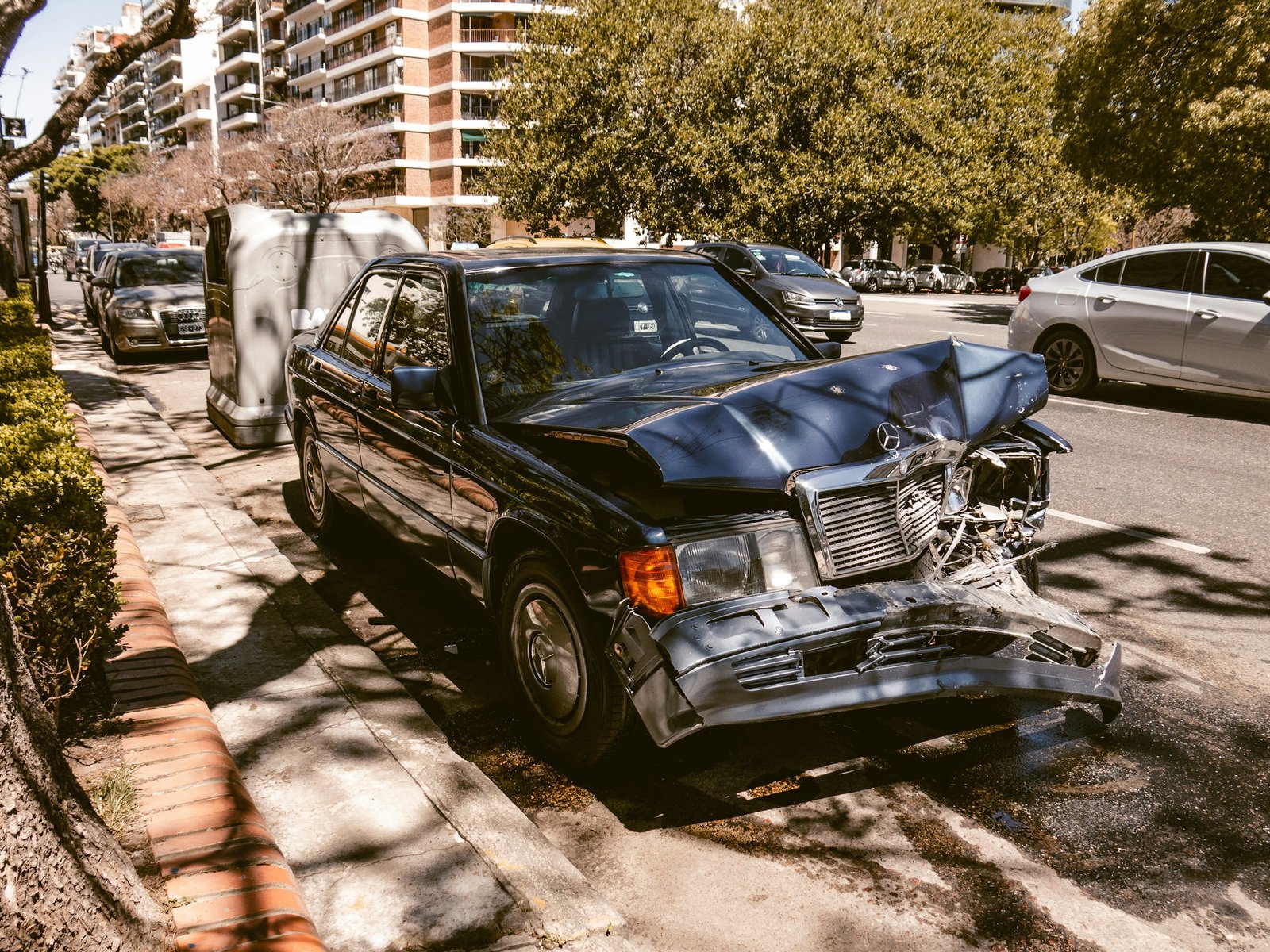
The sickening crunch of twisting steel and shattering glass is followed by an eerie silence. In the chaotic aftermath of a collision, your first instinct is to take a personal inventory, you check your arms and legs, you scan your passengers’ faces, and you let out a shaky sigh of relief. You survived. But the danger is far from over. The moments immediately following an accident on Oklahoma City’s roads can be even more perilous than the crash itself.
While you’re trying to process what happened and assess the damage, traffic continues to fly by, and other drivers may not see your disabled vehicle until it’s terrifyingly too late. This guide is designed to cut through the confusion and fear, offering clear, precise actions you can take to secure the scene and keep everyone alive.
Key Notes
- The real danger often begins after the initial impact, as secondary incidents account for a staggering number of traffic deaths, highlighting why securing the scene is paramount.
- The single most effective thing you can do to prevent further injury or another collision is to move your vehicle to a safe spot, if at all possible.
- Making yourself and your vehicle visible is non-negotiable. High-visibility gear and properly placed warning devices are essential tools for alerting oncoming drivers to the hazard ahead.
- People outside of a vehicle are incredibly vulnerable after a crash. Pedestrians, cyclists, and others require immediate shielding and protection from ongoing traffic.
Why 40% of Roadway Fatalities Happen After the Initial Crash
We tend to think of the crash itself as the main event, the terrifying climax. But the data tells a different, more chilling story. Securing the crash scene is absolutely critical because an estimated 40% of roadway fatalities involve people who survived the initial collision only to be injured or killed in the moments that followed. This statistic from the NHTSA paints a sobering picture, surviving the impact is only half the battle. If you could see this data visualized, it would show a stark split 60% of people dying in the initial crash versus a shocking 40% who die in the aftermath. These secondary incidents, which often involve a person being struck by another vehicle, happen when the hazards of a crash scene aren’t managed correctly and quickly.
Thankfully, safety measures are improving across the country. U.S. motor vehicle fatalities saw a promising drop of 8.2% in the first half of 2025, falling to 17,140 from 18,680 during the same period in 2024. The fatality rate for every 100 million miles driven also fell by 8.6% to 1.06. This marks the lowest mid-year rate since 2014, a hopeful sign even as Americans drove 12.1 billion more miles. These numbers suggest that safer post-crash behaviors and dedicated national safety efforts are beginning to make a real difference.
The NHTSA’s Safe System Approach is a major force behind this progress. Their Post-Crash Care Summit in August 2024 focused specifically on improving survivability. They’re rolling out initiatives like better communication systems for EMS and establishing evidence-based guidelines for prehospital blood transfusions. A key part of their ambitious goal, a 66% reduction in fatalities by 2040 is implementing advanced traffic incident management training. When drivers here in OKC understand these risks and know what to do, they become a vital part of this positive national trend.
Critical Steps to Take Immediately After a Collision
Adrenaline is coursing through your veins and panic feels natural, but right now, movement is mandatory. Your absolute top priority is getting yourself and your passengers to a safe location. Staying put in a stationary car on a live roadway is like gambling with your life. If the car still runs, get it off the road. Pull over to the shoulder, or if you can’t, get out of the vehicle and move a safe distance away. The risk is highest on busy roads, statistics show that 26% of fatal crashes involving parked or working vehicles happen on minor arterials, and another 22% occur on principal arterials. On these major roads, higher speeds can increase the risk of being struck by two to three times.
Data from high-traffic states like California, which sees an average of 1,370 crashes every single day, suggests moving at least 200 feet away from the scene if you can. This distance creates a crucial buffer zone against potential chain-reaction collisions. Proactive safety measures like this have helped contribute to a nationwide decline in fatalities for 10 straight quarters through 2025. In the first nine months of 2024 alone, estimated traffic deaths dropped by 4.4% to 29,135, down from 30,490 in the same period of 2023.
Step-by-Step Guide to Relocating Your Vehicle Safely
Minimizing your exposure to live traffic isn’t about luck, it requires a calm, calculated approach. Follow these steps to get yourself and your vehicle to safety:
- First thing’s first, hit your hazard lights. This is the universal signal that you’re in distress and immediately starts alerting other drivers.
- Before you even think about moving the car, do a quick check on yourself and your passengers for any obvious injuries.
- If your vehicle is still drivable and you’re not on a high-speed highway, carefully move it to the shoulder or the nearest safe spot off the road.
- If you’re on a hill or a curve on an arterial road, try to find a location that’s uphill or to the side to give oncoming traffic the best possible view of you.
- Always prioritize people over property. If the car is too damaged to move, get everyone out and far away from the road.
Tools and Techniques That Save Lives
After a crash, visibility is your most powerful defense against a secondary collision. You have to make your presence known to oncoming traffic, and you have to do it instantly. As soon as you are in a safe spot, deploy reflective triangles, flares, or other warning devices. Wearing high-visibility gear, like an ANSI Class 2 vest, dramatically increases the chances that other drivers will see you in time to react safely. Highly effective tools include things like 3M reflective triangles, which can be seen from up to 1,000 feet away, and Orion road flares, which are visible for up to two miles. Your goal should be to get these devices placed within 60 seconds of stopping to establish a safety zone.
Where you place these warnings is just as important as using them. On a straight, flat road, place one warning device about 10 feet behind your vehicle, a second one 100 feet behind that, and a third one 200 feet from the car. This graduated spacing creates a clear path that guides traffic safely away from your vehicle. If you’re on a hill or a curve, you’ll need to place the devices even further back to give oncoming drivers more time to see them and adjust their speed.
Technology is also playing a bigger role in supporting these manual safety efforts. The NHTSA is actively promoting modern solutions like advanced vehicle lighting and even Unmanned Aerial Systems (UAS), or drones, to monitor crash scenes from above. These tools help reduce near-misses by giving first responders a bird’s-eye view of traffic flow. In 2025, a total of $171 million in grants was distributed across 19 states to improve crash data systems. This investment helps authorities analyze crash patterns and develop smarter, more effective response strategies for everyone.
From Vulnerable Road Users to First Responders
The chaos of a crash scene presents an extreme risk to anyone who isn’t protected inside a vehicle. Vulnerable road users, pedestrians, cyclists, and motorcyclists are tragically often the victims of secondary impacts. In California alone, between 2024 and 2025, there were 12,085 pedestrian casualties, including 950 deaths. Cyclists accounted for 9,852 injuries, and motorcyclist casualties tragically reached 12,156. Looking at the national picture, motorcycle fatalities rose 2% in 2023 to 6,218. If you are ever in a crash involving a cyclist or a pedestrian, your priority is to use your vehicle, cones, or flares to create a physical shield around them until help can arrive.
First responders depend on advanced Traffic Incident Management training to reduce the number of struck-by incidents, but bystanders have a role to play, too. Call 911 immediately. Keep a safe distance from the scene unless it is absolutely safe to offer aid. And never, ever engage with a reckless driver. Reckless behavior only adds to the chaos of a scene. In California in 2024, speeding was a factor in 77,822 accidents, 26% of which were fatal. Reckless driving led to 2,251 fatalities. By keeping a cool head and staying out of the flow of traffic, you protect not only yourself but also the professionals who are working to clear the wreck and help the injured.
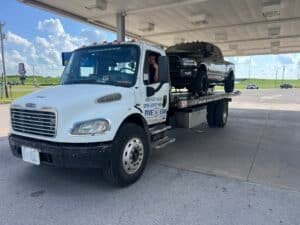
When the dust settles and everyone is safe, you need a partner who understands the urgency and stress of the situation. Five Star Towing provides rapid, professional accident recovery service and roadside assistance across Oklahoma City. We handle the heavy lifting so you can focus on what matters most, recovering. Trust Five Star Towing to clear the scene safely and help get you home.
Frequently Asked Questions
Your absolute first priority is to stop your vehicle and immediately turn on your hazard lights. This acts as a universal distress signal, alerting other drivers that your car is a stationary obstacle and helping to prevent a secondary collision right in those first few critical moments.
Quickly check yourself and your passengers for any injuries. If everyone seems okay and the car can still be driven, your next move is to get it to the shoulder or another safe location away from the flow of traffic. The Federal Highway Administration strongly advocates for this "Steer It, Clear It" approach because it dramatically reduces traffic jams and the risk of another crash.
Once you are out of harm's way, call 911. Be ready to provide your exact location and details about the crash. Staying inside a vehicle stopped in a live lane is incredibly dangerous; if you can't move the car, get everyone out and to a safe distance like behind a guardrail before you make the call.
Absolutely. If the damage appears minor and no one has serious injuries, you should move your vehicle out of the way of traffic as quickly as possible. Most states, including Oklahoma, have laws that require drivers to clear their disabled vehicles from the roadway to prevent dangerous traffic backups and secondary accidents.
Leaving a car sitting in a live lane of traffic is an open invitation for a high-speed rear-end collision. According to the Federal Highway Administration, for every single minute a travel lane is blocked, the chance of a secondary crash increases by 2.8%. Moving your vehicle is the best way to stop this compounding risk.
It's natural to worry about "messing up the scene," but your safety and the safety of others always come first. If you can do it quickly and safely, snap a few photos of the vehicle positions with your phone before you move them. But don't linger in the roadway. Police and insurance adjusters are skilled at determining fault from vehicle damage and witness statements even after the cars have been moved.
Switch on your hazard lights immediately. If your engine and electrical system are still working, keep your headlights and taillights on. Just be mindful that your high beams aren't blinding oncoming traffic if your car is facing the wrong way.
This is what they're for. Place reflective triangles or road flares behind your vehicle to give oncoming drivers an early warning. The standard recommended spacing is one at 10 feet, a second at 100 feet, and a third at 200 feet behind your car. NHTSA guidelines stress that these devices are crucial in low-light conditions where a disabled vehicle can easily blend into the darkness.
If you have a roadside emergency kit, now is the time to put on that reflective vest (look for ANSI Class 2 or higher). If you don't have a vest, it's safest to stay off the road entirely. A person in dark clothing at night is practically invisible to a driver until it's far too late.
Your kit should start with items to make you seen and heard. Road flares or LED warning lights, reflective triangles, and a high-visibility vest. A portable phone charger or power bank is also a modern essential to ensure you can stay in contact with 911 and roadside assistance.
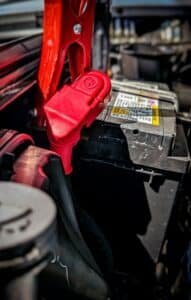
A well-stocked first-aid kit can handle minor injuries while you wait for help. It's also wise to have jumper cables, a tire pressure gauge, and a good flashlight with extra batteries. The National Safety Council recommends these items to help you safely manage common breakdown situations.
You never know how long you might be waiting. Pack a blanket, some non-perishable food like energy bars, and a few bottles of water. In extreme heat or cold, or during a long wait for a tow truck in a remote area, these simple items can protect you from exposure and dehydration.
As a general rule, safety experts recommend moving at least 200 feet away from the actual crash scene. This distance helps protect you from the possibility of flying debris or another vehicle losing control and careening into the original crash zone.
Distance isn't the only factor; putting something solid between you and the traffic is even better. Try to position yourself behind a physical barrier like a guardrail, a concrete divider, or up an embankment. Never stand directly in front of or behind your disabled vehicle, a secondary impact could easily crush you between the cars.
Always face the oncoming traffic. Even when you're standing well off the road, keeping your eyes on the approaching vehicles gives you precious seconds to react if a distracted or impaired driver swerves in your direction.
Yes, it is absolutely illegal. Leaving the scene of any accident that involves property damage or injury is against the law in every state. You are legally required to stop, check if anyone is hurt, and exchange essential information. Fleeing the scene is considered a "hit and run" and comes with serious legal consequences.
Even for a minor "fender bender," leaving the scene can lead to fines and a suspended license. If someone was injured in the crash, the charge can quickly escalate to a felony. The Insurance Information Institute stresses that staying at the scene is the best way to protect yourself both legally and financially.
In many places, you're also required to report the accident to the police if the damage appears to be over a certain amount (often between $500 and $1,000). Leaving without filing a required report is another violation of the law.
You'll need to exchange full names, phone numbers, addresses, the names of your insurance companies, and your policy numbers. This is the basic information required to start an insurance claim.
Be sure to get the other driver’s license plate number, driver’s license number, and the make, model, and color of their vehicle. The easiest and most accurate way to do this is often to just take a clear photo of their documents, if they are comfortable with that.
While you won't "exchange" this, you should also make your own notes about the exact location of the accident, the time of day, and the weather conditions. It's very important to avoid discussing who was at fault or apologizing, as these statements can unfortunately be used against you later in the claims process.
Call 911 immediately if anyone is injured or killed, if there's a fire, or if the crash is blocking a major roadway and creating an immediate and serious hazard. 911 should be reserved for life-threatening emergencies or active dangers, such as if you suspect the other driver is intoxicated.
Use the non-emergency police line for minor accidents where there are no injuries, the vehicles have been moved off the road, and there is no immediate danger to the public. This helps keep the 911 lines open for the most critical incidents.
Rules can differ by city. Some police departments want a report for every accident, while others will only respond if there are injuries. However, calling the non-emergency line is always a good idea, as it allows the dispatcher to make the professional judgment call on whether an officer is needed to help with the information exchange or direct traffic.
Without a doubt, the greatest risk is being struck by another vehicle. Passing drivers are often distracted by the wreckage, a phenomenon known as "rubbernecking" which can easily lead to them rear-ending slowed traffic or swerving into pedestrians or emergency responders on the shoulder.
A wrecked car can be a source of many dangers. Leaking fuel, battery acid, and the chemicals from deployed airbags all pose fire and chemical risks. A hot engine combined with flammable fluids is a recipe for ignition. If you smell gas or see smoke, get away from the vehicles immediately.
The ground around a crash can be treacherous. Broken glass, sharp pieces of twisted metal, and slick fluids like oil or antifreeze on the pavement can easily cause injuries to people walking around the scene. These risks are made even worse by poor lighting or bad weather, which is why visibility is such a key factor in survival.
Your desire to help is admirable, but don't become a victim yourself. Only stop if you can do so safely, well away from the flow of traffic, without creating another hazard. Park your vehicle far ahead of the crash scene and turn on your own hazard lights.
Call 911 right away. Give them a clear and calm description of the location and the situation. Never assume that someone else has already called for help.
If you have first-aid training, you can offer assistance to the injured. If not, your best role is to provide comfort and reassurance. Crucially, do not attempt to move an injured person unless there is an immediate, life-threatening danger like a fire. Moving someone with a potential spinal injury could cause permanent paralysis.
A secondary crash is any accident that happens as a direct consequence of an earlier, initial incident. This includes cars hitting debris from the first crash, colliding with the disabled vehicles themselves, or the chain-reaction pileups that occur when traffic suddenly slows or stops.
The best way to prevent these is through proactive scene management. This means moving the initial vehicles out of the travel lanes whenever possible and setting up early warnings like flares, cones, or triangles to give approaching drivers plenty of time to recognize the hazard and slow down safely.
If you are a driver passing by a crash, you also have a role in preventing secondary crashes. Stay focused on your driving, resist the urge to slow down and stare at the wreck (rubbernecking), and always obey the "Move Over" law, which requires you to change lanes to give emergency vehicles and responders a safe buffer.
The moment you realize you have a problem, try to coast your vehicle off the highway. If you can't make it to an exit, aim for the right shoulder. Try to avoid stopping on the left shoulder, as it's right next to the fastest lane of traffic.
If your car dies and you're stranded in a travel lane, stay inside your vehicle with your seatbelt securely fastened and your hazard lights on. As terrifying as it feels, you are much safer inside a metal structure designed to withstand an impact than you are standing exposed on a busy highway.
Make sure your hazard lights are flashing. Call roadside assistance, or if you are in a dangerous position like a live lane, call 911. If you have one, tying a white cloth to your antenna or hanging it from your window is a classic distress signal that can alert police patrols to your situation.