
Your motorcycle just died on the highway at midnight, rain starting to fall. The tow truck driver quotes you $400 for what should be a simple 15-mile haul to your mechanic. You’re stuck, vulnerable, and wondering if you’re getting ripped off. You probably are.
Most riders discover towing costs the hard way – during their worst moments. The industry preys on desperation, piling on fees you never saw coming. Smart riders prepare differently.
Key Takeaways
- Base motorcycle towing costs range from $75-$125 hook-up fee plus $3-$6 per mile
- Emergency and after-hours service adds $50-$150 surcharge to standard rates
- Flatbed towing costs more but prevents transmission damage on shaft and belt-drive bikes
- AAA Plus RV or AMA membership at $49-$130 annually beats single tow costs
- DIY trailer rental costs $15-$30 daily versus $200+ professional towing fees
- Hidden recovery fees can double your bill for off-road or damaged motorcycles
- Proper documentation and company vetting prevents damage disputes and overcharges
Average Motorcycle Towing Fees Across the United States
Motorcycle towing operates on a two-part pricing structure that catches most riders off guard. The hook-up fee covers the truck’s arrival and bike loading – expect to shell out between $75 and $125 according to CostHelper data. This charge hits you regardless of how far you need to go.Per-mile rates stack on top of that base fee. Companies typically charge $3 to $6 per mile for loaded transport. Here’s your formula: Base Fee + (Miles x Rate). So a 10-mile tow with a $100 hook-up fee at $4 per mile runs you $140 total.
Standard local towing under 10 miles costs $125 to $200 according to J.D. Power research. Long-distance hauls over 100 miles easily push past $500 to $600. Most companies slap on minimum charges around $100, making short-distance tows particularly brutal per mile.
Cost Comparison Table
Here’s how real-world pricing shakes out using average $4 per mile rates:
A 5-mile tow hits $120 total ($100 base + $20 mileage). Twenty miles runs you $180 ($100 + $80). Fifty miles climbs to $300 ($100 + $200). These numbers assume loaded miles only – the actual distance your bike travels.
Some companies charge for deadhead miles (empty truck travel to reach you) in rural areas. Urban markets with fierce competition typically stick to loaded-mile pricing. Always nail down which mileage structure applies before you give the green light.
Hidden Fees That Double Your Motorcycle Towing Bill
After-hours emergencies trigger the biggest cost surprises. Towing between 8:00 PM and 7:00 AM, weekends, or holidays tacks on $50 to $150 surcharges. Some companies jack up their per-mile rate by 25% to 50% instead of flat fees.
Recovery versus standard towing creates another expensive trap. If your bike’s sitting in a ditch, down an embankment, or won’t roll because of damage, you’re paying for recovery service. Labor charges run $100 to $250 per hour for winch operations and complex extractions. This gets expensive in a hurry.
Rural breakdowns face deadhead mile charges when tow trucks travel serious distances empty to reach you. Companies defend these fees by pointing to fuel costs and driver time. Urban areas rarely see deadhead charges because of shorter response distances.

Standard Breakdown versus Accident Recovery Scenarios
Simple roadside mechanical failures qualify as standard towing – bike loads normally and wheels roll freely. Recovery kicks in for off-road situations, collision damage preventing wheel movement, or any scenario requiring winching equipment.
Labor time charges pile up fast during complex extractions. Expect hourly rates for scenarios involving multiple vehicles, debris removal, or challenging terrain access. Equipment usage fees add costs for specialized winching, lighting, or safety gear deployment.
Why Flatbed Towing Costs More
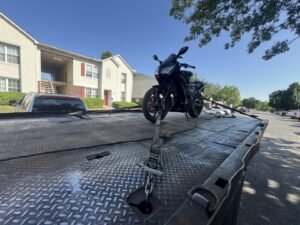
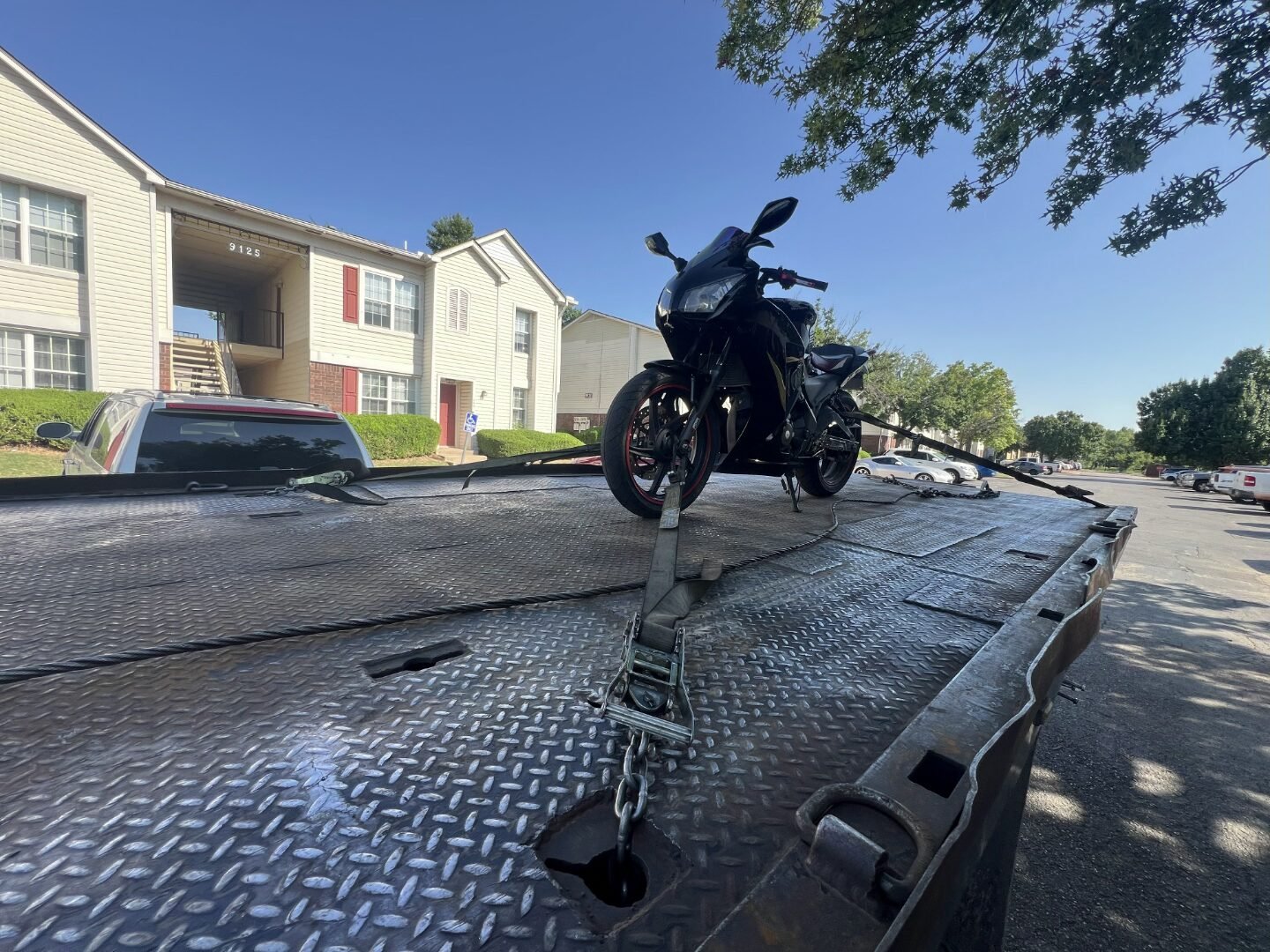
Flatbed transport represents the gold standard for motorcycle towing. Your entire bike lifts onto the truck bed and straps down securely. This method eliminates transmission wear, tire scrubbing, and drivetrain stress completely.
Motorcycle trailers offer similar protection through specialized enclosed or open configurations. Professional operators rarely carry these because of storage and maintenance costs. Flatbeds remain more practical for most towing companies.
Two-wheel towing cradles lift the front wheel while the rear tire rolls on pavement. This method works for short distances but risks transmission damage on shaft-drive and belt-drive motorcycles. Chain-drive bikes handle two-wheel towing better, though tire wear still happens. Flatbeds cut transmission risk to 0% according to motorcycle manufacturer guidelines.
Essential Equipment for Professional Operators
Soft straps prevent chrome scratching and paint damage during tie-down. Quality operators use ratchet straps exclusively – bungee cords don’t have adequate holding power for highway speeds. Wheel chocks stabilize front tire positioning on flatbeds.
Drivetrain protection matters for chain and shaft drive systems. Proper operators secure chains to prevent stretching and protect exposed drive components. Belt-drive motorcycles need extra care around pulley systems and exposed belts.
Roadside Assistance Memberships
Annual memberships cost less than single emergency tows, making them smart financial protection. AAA requires Plus RV or Premier plans for motorcycle coverage in most regions – standard AAA covers cars only. Plus RV membership runs approximately $100 to $130 annually according to AAA membership pricing.
AMA (American Motorcyclist Association) includes roadside assistance with auto-renewal membership at $49 per year. Coverage provides up to 35 miles of free towing to qualified repair facilities. This distance handles most urban breakdown scenarios effectively.
Insurance add-ons through Progressive, Geico, and Allstate offer towing coverage for $10 to $30 yearly additions to existing policies. These programs typically match AMA’s 35-mile coverage limits. Check policy details for motorcycle-specific language – some exclude bikes from standard auto coverage.
Membership versus Out-of-Pocket Costs
Single emergency tows justify annual membership costs immediately. AMA membership at $49 yearly pays for itself with one 15-mile breakdown. AAA Plus RV at $120 annually breaks even with one moderate emergency.
Coverage limitations restrict towing to nearest qualified repair facilities – not your preferred shop across town. Better World Club, National Motor Club, and AMA offer similar distance caps around 35 miles free, then charge standard rates beyond.
DIY Motorcycle Transport
U-Haul motorcycle trailers provide the most common DIY solution. Built-in wheel chocks and loading ramps simplify bike securing. Rental costs approximately $15 to $30 per day for local use according to U-Haul rental rates.
Hitch carriers work for lighter bikes under 500 to 600 pounds – perfect for dirt bikes and small dual sports. Quality carriers cost $100 to $300, eliminating ongoing rental fees. Your vehicle needs proper hitch receiver and light wiring connections.
Required vehicle specifications matter for safe transport. Check your car’s tow rating against motorcycle weight plus trailer. Most mid-size SUVs handle motorcycle trailer combinations easily. Compact cars struggle with heavier touring bikes.
Essential DIY Equipment and Vehicle Requirements
Canyon Dancer Bar Harness protects handlebars and controls during tie-down. This system distributes strap pressure across frame points instead of delicate components. Ancra Tie-Downs and Harbor Freight Haul-Master options provide budget-friendly securing solutions.
Vehicle tow rating considerations become critical for heavy motorcycles. Full-dress touring bikes approach 900 pounds loaded. Add trailer weight, and many compact vehicles exceed safe towing capacity. Verify your vehicle’s specifications before committing to DIY transport.
Frequently Asked Questions
Motorcycle towing typically runs between $3 to $6 per mile according to CostHelper industry data, with most companies charging around $4 per mile for standard service. This rate applies only to loaded miles – the actual distance your motorcycle travels on the truck.
Where you break down significantly impacts per-mile rates, with urban markets generally offering lower costs because of competition density. Rural areas often charge premium rates thanks to longer response times and limited service options.
The per-mile rate doesn't include the mandatory hook-up fee ranging from $75 to $125, making short-distance tows disproportionately expensive. Always request total cost estimates including both base fees and mileage charges before authorizing service.
The national average hook-up fee ranges between $75 and $125 according to J.D. Power towing cost research, representing the base charge for truck dispatch and motorcycle loading regardless of distance traveled.
This fee covers driver time, fuel costs for reaching your location, and equipment setup for safe bike loading. Companies justify higher hook-up fees in markets with longer average response distances or premium service levels.
Hook-up fees often represent the largest cost component for short-distance tows under 10 miles. Smart riders negotiate total pricing upfront rather than accepting quoted per-mile rates that exclude substantial base charges.
AAA motorcycle coverage requires Plus RV or Premier membership plans in most regions, as standard AAA membership typically excludes motorcycles from roadside assistance benefits according to AAA membership guidelines.
Plus RV membership costs approximately $120 annually and provides motorcycle towing up to specified mileage limits, usually matching standard auto coverage distances. Premier plans offer extended coverage distances and enhanced service options.
Regional variations in AAA motorcycle policies create confusion among riders. Contact your local AAA office directly to confirm motorcycle coverage availability and specific plan requirements in your service area before counting on membership benefits.
Standard motorcycle towing involves loading a functional bike with rolling wheels onto transport equipment, while recovery requires extracting damaged or stuck motorcycles from difficult positions using specialized equipment and labor.
Recovery situations include bikes in ditches, down embankments, or damaged to the point where wheels won't roll freely. These scenarios trigger hourly labor charges ranging from $100 to $250 according to industry recovery pricing, plus equipment usage fees.
Recovery costs can easily double or triple standard towing bills because of time-intensive extraction work. Always clarify whether your situation qualifies as standard towing or recovery before authorizing service to avoid billing surprises.
After-hours surcharges represent the most common hidden fee, adding $50 to $150 to standard rates for service between 8:00 PM and 7:00 AM or during weekends and holidays according to emergency towing industry pricing.
Deadhead miles in rural areas create unexpected charges when tow trucks travel significant empty distances to reach breakdown locations. Some companies add fuel surcharges, storage fees for overnight bike holding, or gate fees at secured facilities.
Recovery labor charges apply when bikes require winching or extraction from off-road positions, potentially adding hundreds in hourly fees. Always request detailed cost breakdowns including all potential surcharges before authorizing any towing service.
Flatbed towing eliminates transmission wear and tire scrubbing completely by lifting the entire motorcycle onto the truck bed, making it essential for shaft-drive and belt-drive bikes according to manufacturer maintenance guidelines.
Two-wheel towing cradles that leave rear wheels rolling can damage transmissions and create uneven tire wear, particularly on long-distance hauls. The modest flatbed premium prevents costly drivetrain repairs that far exceed additional towing costs.
Flatbed transport also reduces road debris damage, weather exposure, and securing difficulties compared to wheel-down alternatives. Professional operators prefer flatbeds for valuable motorcycles because of superior protection and reduced liability exposure.
Regular pickup trucks can tow motorcycles safely using appropriate equipment like ramps, wheel chocks, and proper tie-down systems, provided the bike's weight stays within the truck's payload capacity.
Essential equipment includes soft straps to prevent finish damage, ratchet tie-downs for secure attachment, and wheel chocks to prevent rolling. Canyon Dancer bar harnesses distribute securing forces away from delicate handlebars and controls.
Vehicle payload ratings become critical for heavy touring motorcycles approaching 800-900 pounds loaded. Verify your truck's capacity against motorcycle weight plus securing equipment before attempting DIY transport to maintain safe handling characteristics.
Equipment verification ensures proper motorcycle handling capability – specifically ask about motorcycle cradles, wheel chocks, and soft strap availability rather than assuming standard car towing equipment will work.
Insurance coverage questions should address cargo protection for scratches, drops, or transport damage since standard auto towing policies may exclude motorcycles or limit coverage amounts significantly.
Pricing transparency requires detailed breakdowns including hook-up fees, per-mile rates, potential surcharges for after-hours service, and any additional charges for recovery work or specialized equipment usage.
Most standard motorcycle insurance policies exclude towing coverage unless specifically purchased as an additional rider or add-on feature according to insurance industry standards for motorcycle policies.
Progressive, Geico, and Allstate offer towing coverage add-ons for approximately $10 to $30 annually, typically providing 35-mile coverage limits to qualified repair facilities. These add-ons often cost less than standalone roadside assistance memberships.
Coverage limitations and exclusions vary significantly between insurers and policy types. Review your specific policy documents or contact your agent directly to confirm towing benefit availability rather than assuming coverage exists.
AMA (American Motorcyclist Association) roadside assistance costs $49 annually with auto-renewal membership according to AMA membership pricing, providing up to 35 miles of free motorcycle towing to qualified repair facilities.
This membership includes additional benefits beyond towing such as advocacy for motorcycle rights, discounts on motorcycle-related products, and access to riding events and safety courses throughout the United States.
AMA coverage operates through a network of motorcycle-familiar towing operators who understand proper bike handling techniques. The 35-mile limit covers most urban breakdown scenarios effectively while remaining cost-competitive with other assistance programs.
U-Haul motorcycle trailer rental at approximately $15 to $30 daily represents the most cost-effective transport method for capable riders with appropriate tow vehicles according to U-Haul rental rate data.
Motorcycle hitch carriers priced between $100 to $300 eliminate ongoing rental costs for lighter bikes under 600 pounds, making them ideal for dirt bike and small street bike owners with multiple transport needs.
DIY transport requires proper equipment including tie-downs, wheel chocks, and securing systems, plus verification that your vehicle meets towing capacity requirements for safe operation with motorcycle and trailer combination weights.
After-hours towing typically incurs surcharges ranging from $50 to $150 for service between 8:00 PM and 7:00 AM, weekends, or holidays according to emergency towing industry pricing standards.
Some companies implement percentage-based increases of 25% to 50% on standard rates rather than flat surcharges, potentially creating higher costs for long-distance emergency tows during premium time periods.
Holiday surcharges often exceed standard after-hours fees, particularly during major holidays when driver availability decreases significantly. Always confirm total pricing including all applicable surcharges before authorizing emergency service.
Two-wheel towing with rear wheels rolling can damage shaft-drive and belt-drive motorcycle transmissions because of internal component movement without proper lubrication circulation according to motorcycle manufacturer service guidelines.
Chain-drive motorcycles handle two-wheel towing better since drive components aren't directly connected to wheel rotation, though extended distances still create rear tire wear and potential chain stretch issues.
Flatbed transport eliminates transmission risk completely by lifting the entire motorcycle, making it the preferred method for valuable bikes or long-distance towing regardless of drive system configuration.
Photo documentation should include overall motorcycle condition, existing damage, mileage reading, and specific areas prone to transport damage such as mirrors, fairings, and exhaust components before releasing your bike to towing operators.
Written agreements detailing pickup location, destination address, estimated costs including potential surcharges, and insurance coverage limits protect against disputes and ensure clear service expectations between all parties.
Contact information for the towing company, driver identification, and estimated arrival times at destination help track your motorcycle's progress and provide accountability throughout the transport process.
Most motorcycle roadside assistance programs provide 35 miles of free towing according to AMA and insurance industry standards, with charges applying for additional distance beyond covered limits.
AAA Plus RV and Premier memberships offer varying free mileage allowances depending on membership level and regional service policies. Coverage typically extends to the nearest qualified repair facility rather than the rider's preferred destination.
Distance limitations reflect cost control measures by assistance providers while covering most urban breakdown scenarios effectively. Rural riders may exceed free mileage limits more frequently because of greater distances between service facilities.
Loaded miles represent the actual distance your motorcycle travels on the tow truck from pickup to destination, forming the basis for standard per-mile pricing calculations in most towing contracts.
Deadhead miles describe empty truck travel from the towing company's location to your breakdown site, which some operators charge additionally in rural areas because of extended response distances and fuel costs.
Urban markets typically absorb deadhead costs thanks to shorter average response times and competitive pricing pressure. Rural operators more commonly charge deadhead miles as separate line items because of longer travel distances to reach customers.
Motorcycle-specific equipment includes loading ramps rated for your bike's weight, wheel chocks to prevent rolling, and soft tie-down straps designed to protect painted surfaces and chrome components from scratching damage.
Canyon Dancer bar harnesses distribute securing forces across frame mounting points rather than handlebars, preventing damage to controls and steering components during transport. Quality ratchet straps provide superior holding power compared to bungee cord alternatives.
Vehicle requirements include adequate towing capacity for motorcycle and trailer combination weight, proper hitch receiver installation, and electrical connections for trailer lighting systems required by law in most jurisdictions.
Motorcycle hitch carriers typically support 500 to 600 pounds according to manufacturer specifications, making them suitable for dirt bikes, small street bikes, and lightweight dual-sport motorcycles but inadequate for heavy touring bikes.
Vehicle hitch ratings must exceed carrier weight plus motorcycle weight for safe operation. Class III hitches rated for 3,500+ pounds provide adequate capacity for maximum carrier loads, while lighter hitches risk failure or vehicle damage.
Loading and unloading heavy motorcycles on hitch carriers requires careful technique and potentially additional assistance because of height and angle challenges compared to ground-level trailer loading configurations.