
Imagine this, you’re standing on the shoulder of I-35 or I-40 right here in Oklahoma City, listening to traffic zoom by while your own vehicle is stubbornly still. That sinking feeling of a breakdown gets a whole lot worse if you’re behind the wheel of something bigger than a standard car.
It is easy to think that a tow truck is a tow truck, but that simple mistake can lead to a lot of wasted time and even serious damage to your vehicle. After all, a Ford Fiesta needs a completely different kind of help than a fully loaded cement mixer or a forty-foot RV.
Taking a moment to understand the kind of muscle needed to move heavy machinery is the key to calling the right professionals the first time. At Five Star Towing, we know that trying to move a heavy load with the wrong equipment is not just a bad idea; it is downright dangerous.
Key Points
- Your everyday cars, small SUVs, and other vehicles under 5,000 pounds are typically handled by light-duty tow trucks.
- When you’re dealing with something big, with a Gross Vehicle Weight Rating (GVWR) over 26,000 pounds, you’ve officially entered the world of heavy-duty towing.
- For the really tough jobs, like messy accident scenes, rotator trucks are the heroes, capable of lifting more than 75,000 pounds.
- If you want to keep your vehicle in pristine condition during a tow, a flatbed is the way to go. It offers the best protection by lifting all four wheels completely off the road.
- Thinking of towing something yourself? Do not overlook the hitch. Choosing the right one is crucial, and for big loads up to 20,000 pounds, you’ll need a Class V hitch.
Is Your Vehicle Too Big for a Standard Tow Truck?
Think about the calls a dispatch center gets all day long; most of them involve regular passenger cars. Light-duty tow trucks are designed for just these common situations. They’re built to handle vehicles that weigh less than 5,000 pounds, which covers your daily commuters, motorcycles, and smaller SUVs. Towing operators use these trucks for routine problems like changing a flat tire, bringing you some gas, or getting a car out of a fire lane. This equipment is nimble and can easily navigate tight city streets and parking lots.
But when you get into heavy-duty towing, you’re playing in a completely different league. This level of service is for vehicles with a Gross Vehicle Weight Rating (GVWR) that tops 26,000 pounds. The machinery here has to be able to handle immense loads, sometimes up to 80,000 pounds or even more. We’re talking about the big stuff; semi-trucks, city buses, massive RVs, and heavy construction equipment. As the pros at Elite Towing point out, while a light-duty truck is perfect for a 3,000-pound sedan, a commercial semi-truck often requires a massive rotator with a lifting capacity of over 75,000 pounds. Trying to move a heavy load with an undersized truck is not just risky; you’re setting the stage for a catastrophic failure.
- Towing a small boat usually requires a truck with an average capacity of 5,000 to 7,500 lbs.
- A large camper often demands a towing capacity somewhere between 5,000 and 10,000+ lbs.
Critical Situations That Demand a Heavy-Duty Towing Expert
There are some situations where calling in a heavy-duty expert is not just a good idea, it is the only option. While you’ll most often see them helping out with commercial tractor-trailers, their capabilities extend far beyond that. A major accident recovery often involves clearing tangled wreckage from multiple lanes of traffic or carefully uprighting an overturned bus. These scenes demand more than just raw power; they require a deep understanding of physics to make sure no further damage occurs.
Specialized towing is also a crucial support for many industries. Moving heavy construction equipment or agricultural machinery from one site to another calls for trailers and power units specifically designed for extreme weights. Millennium Towing notes that specialty towing is also vital for rescuing vehicles from remote, off-road locations or even pulling them out of water.
These recoveries are not simple tows; they are more like complex engineering problems. You need a team that arrives with the right specialized equipment to keep their operators, and the public, safe.
Matching the Right Tow Truck to the Job
The towing industry is not a one-size-fits-all business. It relies on a diverse arsenal of trucks, where each tool is designed for a specific mechanical purpose. Take integrated tow trucks, for example, which combine a powerful boom and a wheel-lift into one solid unit.
These stable giants are perfect for towing buses and RVs that weigh up to 50,000 pounds. For loads that are bigger than standard legal dimensions, like tractor-trailers or large boats, operators bring out the oversized tow trucks.
The Rotator Wrecker
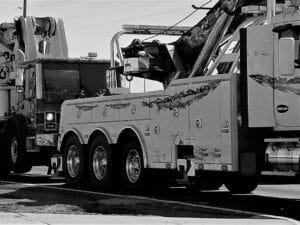
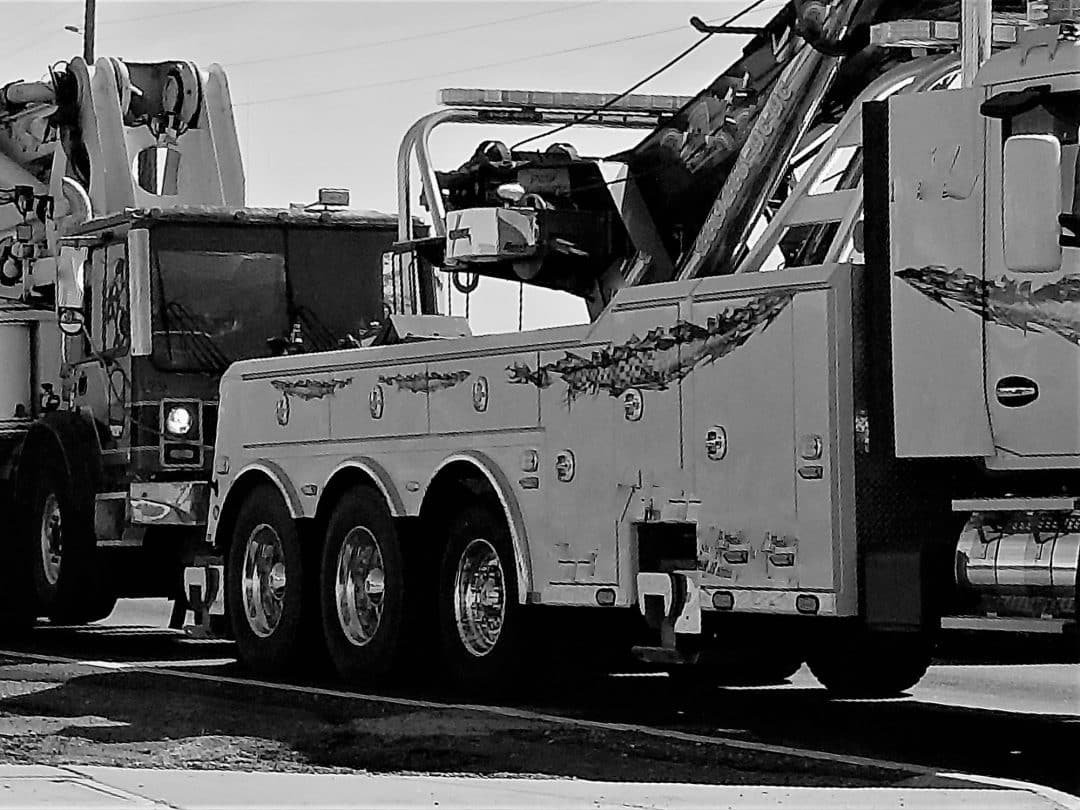
The rotator wrecker is the undisputed heavyweight champion of the towing fleet. These incredible trucks are equipped with a hydraulic boom that can rotate a full 360 degrees, and they boast a lifting capacity that can exceed 75,000 pounds. This full rotation means the operator can park the truck in a safe, stable position and let the boom do the work at an angle to recover a vehicle. They are absolutely essential for complex crash scenes with multiple vehicles involved. The operator uses a combination of winches and jacks to lift and move wreckage with the precision of a surgeon. My Tee Products calls these the most versatile and powerful tools for difficult recoveries where a standard wrecker just cannot get the right leverage.
Flatbed Towing
If you want to treat your vehicle with kid gloves, flatbed trucks offer the safest method of transport. These trucks have a hydraulic platform that lowers all the way to the ground, allowing the operator to simply drive or winch the disabled vehicle onto the bed. Once it is safely secured, the bed raises back to a horizontal position for the ride. This method keeps all four wheels off the pavement, which means no extra wear and tear on your vehicle’s transmission or tires.
While Prime Insurance notes that flatbeds need more room to operate and cost more to run, the protection they provide is unmatched. They are the go-to choice for transporting luxury cars, vehicles that have been totaled, low-clearance sports cars, and All-Wheel Drive (AWD) vehicles that cannot be towed with their wheels spinning.
Boom trucks serve a slightly different, but equally important, role. They feature a hydraulic arm that can reach out to recover vehicles from tricky spots like ditches or embankments. They are the perfect solution for off-road recoveries where the vehicle is not on a flat, easily accessible surface.
A Look at Top Truck Capacities
When it comes to serious towing, the roar of a diesel engine is the sound of pure power, and these engines dominate the heavy towing market because of their massive torque. In the consumer heavy-duty truck market, the current leader is the Ford F-450 Super Duty. It is an absolute beast, featuring a 6.7L diesel engine that gives it a gooseneck towing capacity of 40,000 lbs.
The Ram 3500 is not far behind, capable of pulling 37,090 lbs, while the Chevrolet Silverado 3500HD and GMC Sierra 3500HD can both handle a hefty 36,000 lbs. MotorTrend ranks these titans based on their sheer ability to move mountains day in and day out.
Electric vehicles are starting to enter the arena, though they come with some limitations. The GMC Hummer EV is leading the charge in this segment with a towing capacity of 12,000 lbs. The Rivian R1T and Tesla Cybertruck are both capable of handling around 11,000 lbs.
As Shaw GMC points out, while EVs offer incredibly impressive instant torque, range anxiety becomes a serious factor under a heavy load. You can practically watch the battery performance drop when towing heavy trailers, which is why diesel remains the undisputed king for long-haul heavy lifting.
Towing Your Boat, Camper, or RV
Getting ready for a weekend at the lake or a cross-country RV trip? Moving your cherished personal assets requires a bit of preparation. Towing a boat, motorhome, or camper is about more than just hooking it up to a ball hitch.
Kelley Blue Book strongly advises that the hitch class on your vehicle determines what you can safely pull. A Class III hitch, for instance, can handle up to 8,000 lbs, which is suitable for many midsize loads.
But if you’re hauling heavy fifth-wheels or horse trailers, you’re moving into Class V territory, which can support up to 20,000 lbs. A small fishing boat might only need 5,000 to 7,500 lbs of capacity, but a fully loaded camper can easily push past 10,000 lbs.
If your personal truck or SUV does not have the right hitch rating or enough engine torque, you’re gambling with transmission failure or a complete loss of braking control. In these cases, hiring a professional service with the right rig is the smartest way to prevent damage to your property and keep everyone on the road safe.
If you find yourself stuck on the side of an Oklahoma City road with a heavy load, do not leave it to chance. Five Star Towing has the fleet and the expertise to handle everything from a family sedan to a fully loaded tractor-trailer. Trust the local experts to get you safely back on your way.
Frequently Asked Questions
It really comes down to size and strength. Light-duty tow trucks are designed for vehicles under 5,000 pounds, like your standard passenger cars and small SUVs. Heavy-duty trucks take over when a vehicle's Gross Vehicle Weight Rating (GVWR) is over 26,000 pounds, think semi-trucks, buses, and other large machinery.
Light-duty trucks usually use a simple wheel-lift or flatbed to transport a vehicle. Heavy-duty units are built differently, with powerful diesel engines, reinforced frames, and specialized equipment like rotators that can lift 75,000 pounds or more to handle extreme loads.
You'll see light-duty trucks handling everyday consumer breakdowns and taking care of illegally parked cars. Heavy-duty towing is reserved for commercial transport, moving industrial equipment, and clearing major accident scenes.
A flatbed is the best choice when you want to protect your vehicle. By lifting the entire car or truck off the ground, you avoid accumulating extra mileage and prevent potential damage to the transmission, which is especially critical for All-Wheel Drive (AWD) systems.
They are often the only safe option for vehicles that are too damaged to roll or for low-clearance sports cars that would get scraped up by a traditional dolly. The hydraulic platform can lower completely to the ground, creating a gentle loading angle.
This method also eliminates the risk of a towed vehicle swaying or getting hit by road debris, which is why it is the standard for transporting brand-new cars to dealerships.
Think of rotators as the special forces of the towing world. They are brought in for major multi-vehicle accidents or any situation where a simple, straight pull is not possible.
The truck's most impressive feature is a hydraulic boom that can rotate in a full circle. This allows the operator to park the truck in a safe, stable spot and swing the boom over to lift a vehicle out of a ditch, off an embankment, or from another lane of traffic.
With lifting capacities that can exceed 75,000 pounds, they are the go-to tool for uprighting an overturned tractor-trailer or recovering heavy industrial equipment.
These machines are built to handle staggering amounts of weight. High-end heavy-duty wreckers and rotators are engineered to manage loads of 80,000 pounds or more, which covers fully loaded semi-trucks and heavy industrial machinery.
The exact towing capacity depends on the truck's specific design. A standard heavy-duty integrated truck might handle around 50,000 pounds, while a specialized rotator can easily push past the 75,000-pound mark.
Skilled operators always calculate the weight of the vehicle they're recovering against their wrecker's capacity to ensure there is no risk of tipping or mechanical failure during the lift.
Absolutely, but you need the right tool for the job. Towing an RV or a bus requires an integrated tow truck, which combines a boom and a wheel-lift for the extra stability needed to handle such long, heavy vehicles.
Large Class A motorhomes and city buses can weigh anywhere from 30,000 to 50,000 pounds. A standard light-duty truck simply cannot move them safely.
These big vehicles also need special care, like having the driveshaft disconnected or using specialized axle lifts, to prevent any damage to the transmission while being towed.
It all depends on the severity of the accident. A minor fender-bender involving a couple of sedans can be handled by a standard flatbed or wheel-lift truck. But for a major pileup involving commercial vehicles, you'll need the power of heavy-duty wreckers and rotators.
Highway patrol's top priority is to clear the lanes and get traffic moving again. Rotators are often requested because their ability to lift and move wreckage is much faster than using standard cranes or winches.
Recoveries on the highway are dangerous, so they require trucks equipped with high-visibility lighting and operators who are trained in traffic management to prevent any secondary accidents.
Yes, and this is important. Most EV manufacturers strongly recommend or even require flatbed towing. You cannot tow an EV with its drive wheels on the ground, because the electric motors can actually generate power and potentially overheat the sensitive electronics.
EVs are also much heavier than their gas-powered counterparts because of the large battery packs. A tow operator has to make sure their flatbed is rated to handle the extra weight of a vehicle like a Hummer EV or a Rivian truck.
And if you're thinking of using an EV to tow something else, be aware that its range will drop dramatically. This means even the recovery vehicle itself must be chosen carefully if it happens to be electric.
Off-road recovery is the process of retrieving a vehicle that has gone off the pavement. Boom trucks are essential for these jobs because they have an extendable arm that can reach into ditches or down steep slopes.
The truck also needs to have extremely powerful winches and very long cables to pull a stuck vehicle back to solid ground, all while the tow truck itself remains on a stable surface.
This service is for getting vehicles out of mud, snow, sand, or even water. It requires operators who have a deep understanding of soil stability and resistance to do the job safely.
You'll know you need a specialty service if your situation is anything but ordinary. If you're driving a vehicle over 10,000 pounds, a boat with a wide hull, or a low-clearance sports car, you'll need more than a standard tow.
The location also matters. If your vehicle is stuck in a parking garage with low ceilings or deep in a muddy field, a standard truck would not be able to reach you.
If you're transporting things like construction machinery, forklifts, or heavy generators, you'll need a flatbed with heavy-duty tie-down ratings to secure the load properly.
Using the wrong truck is a recipe for disaster. Towing a car with the wrong set of wheels on the ground can completely destroy its transmission or All-Wheel Drive differential.
Trying to use a light-duty truck for a heavy load can cause the tow truck's own suspension to collapse, its brakes to fail, or its hitch to snap right off.
An overloaded tow truck is dangerously unstable. It can sway, fishtail, or even jackknife, which poses a serious threat to every other driver on the road.
Definitely. Motorcycles need special care and are best transported on a flatbed tow truck or a specialized trailer that is equipped with wheel chocks to hold the bike steady.
You cannot use a standard hook-and-chain truck for a motorcycle. The bike must be kept upright and carefully strapped down with soft ties to avoid scratching the handlebars or bodywork.
Some services even use enclosed trucks with lift gates, which is a great option for protecting high-value bikes from bad weather and road debris during transport.
A boom truck is all about reach. It features a hydraulic arm that is used to lift vehicles out of places a truck cannot simply drive to, like deep ditches, culverts, or over guardrails.
Unlike a flatbed, which is designed for transporting a vehicle, a boom truck is mainly a recovery tool. Its job is to get the vehicle back onto a surface where it can be safely towed away.
While powerful rotator trucks can swing their booms in a full circle, standard boom trucks usually have a fixed, rear-facing boom. This makes them very strong but less flexible in tight spaces.