
A Run-Down Amusement Park Ride Sits Idle on Santa Monica Pier, Headed for the Scrap Heap. But One Person Sees Something Different Where Everyone Else Sees Junk Metal. That Person Hits “Buy It Now” on eBay for $132,000 and Completely Transforms Oklahoma City Forever.
Main Points
- Wheeler District showcases the historic Santa Monica Pier Ferris Wheel, snagged on eBay back in 2008 for $132,000 and then renovated for well over $1 million
- Oklahoma’s very first 100% geothermal neighborhood provides 30-40% energy savings when compared to traditional HVAC systems
- This 150-acre development converts a former airpark into a walkable New Urbanist community featuring mixed-use housing
- Local businesses like The Big Friendly brewery and Taco Nation create a five-minute city where folks can walk to their daily needs
- Wheeler Criterium brings major weekly cycling races every Tuesday night when the weather’s warm
- Front porch culture and low-traffic streets support a Free Range Kids philosophy for safe family living
- Strategic placemaking demonstrated people would cross the Oklahoma River even before any houses went up.
The eBay Purchase That Got Everyone Talking
Wheeler District’s story kicks off with Hollywood magic and entrepreneurial guts. Blair Humphreys bought the Santa Monica Pier Ferris Wheel on eBay back in 2008 for roughly $132,000. This wasn’t just some carnival ride – it had shown up in famous films like Titanic and Forrest Gump.
That purchase price was only the start. Humphreys and his crew poured over $1 million into renovation before getting it installed. Every single component needed checking, fixing, or replacing after spending years breathing in that Pacific Ocean salt air.
Getting a 100-foot Ferris wheel from California to Oklahoma took specialized transportation and serious engineering know-how. The logistics by themselves ran hundreds of thousands of dollars. But this gutsy move generated immediate buzz and showed everyone that Wheeler District was going to be something totally different from your typical Oklahoma development.
The renovated wheel opened its doors in 2016 as Oklahoma’s first permanent Ferris wheel. Its 30,000 LED lights brighten up the Oklahoma River every evening, creating a glowing landmark you can spot from downtown OKC. People riding it get sweeping views of the city skyline and the river valley from air-conditioned gondolas.
This purchase showed Humphreys’ dedication to authentic placemaking instead of boring cookie-cutter development. The Ferris wheel proved people would cross the river to check out the south bank before even one house was finished. It made Wheeler an entertainment spot and visual centerpiece for the whole district.
Oklahoma's First 100% Geothermal Neighborhood Revolution
Wheeler District breaks new ground for sustainable living as Oklahoma’s first 100% geothermal community. Every single home runs on geothermal heat pumps for heating and cooling, generating 30-40% energy savings versus traditional HVAC systems.
The geothermal system draws on the earth’s steady underground temperature of about 55-60 degrees. Heat pumps pull out warmth when it’s cold and push excess heat back down when it’s hot. This process takes way less electricity than your standard heating and cooling systems.
People living here talk about seriously lower utility bills all year long. The system runs quietly without those noisy outdoor units or ductwork headaches you get with traditional systems. Environmental perks include smaller carbon footprints and less strain on the electrical grid when everyone’s cranking their AC.
Installing it costs more up front, but those long-term savings balance out the investment pretty quickly – usually within a few years. The community-wide setup creates cost advantages you just can’t get with individual installations. Shared infrastructure cuts down per-unit costs while making everything more efficient across the development.
Revolutionary Three-Story Shop Homes Concept
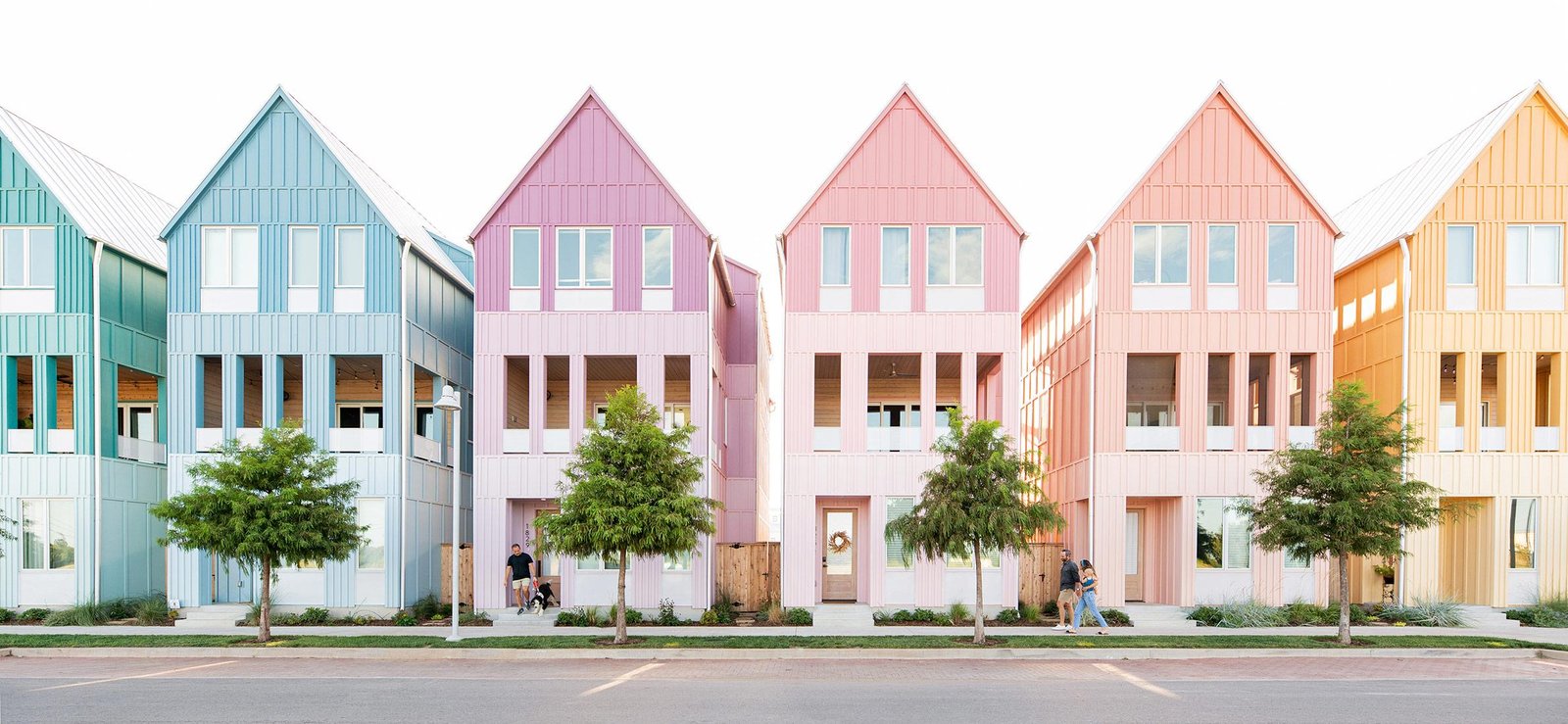
Wheeler District brings Oklahoma its first look at shop homes – three-story mixed-use buildings that put ground-floor commercial space together with upper-floor residential units. This European-style concept creates live-work situations within walking distance of home.
Ground floors fit retail shops, professional offices, or creative studios. Residents live right above their businesses or rent space to other entrepreneurs. Garages sit in back alleys, keeping the streets focused on pedestrians instead of cars.
These shop homes bring in rental income while cutting commute times down to zero. Small business owners can keep an eye on their operations easily while still maintaining work-life balance. The design encourages entrepreneurship and naturally creates foot traffic for neighboring businesses.
New Urbanist Community Built on a Former Downtown Airpark
Downtown Airpark ran from 1947 to 2005 on 150 acres along the Oklahoma River’s south bank. Small planes used the spot for business trips and recreational flying. When the airport shut down, it created prime real estate for urban infill development.
Humphreys Capital saw the site’s potential for linking south Oklahoma City with the downtown core. The location offered river access, closeness to downtown, and enough space for comprehensive community planning.
New Urbanist principles shape Wheeler District’s design. Dense, walkable neighborhoods take the place of suburban sprawl. Mixed-use zoning blends residential, commercial, and recreational spaces. Wide sidewalks, small setbacks, and required front porches get pedestrian activity going and encourage neighbors to interact.
The development stands in sharp contrast to typical Oklahoma housing patterns. Most suburban developments put car access first with prominent driveways and garage-forward architecture. Wheeler puts the focus on pedestrian experiences with houses sitting close to tree-lined streets.
Timeline from Airport Closure to Community Launch
Downtown Airpark closed for good in 2005 after serving the Oklahoma City area for almost six decades. Humphreys Capital started planning the Wheeler District transformation right after it closed.
The Ferris wheel going up in 2016 marked the project’s public debut. Residential construction kicked off shortly after that with the first homes wrapping up in 2017. Commercial spaces opened at the same time to support the growing residential population.
Phase one development keeps moving forward with new housing types and more businesses opening all the time. The master plan sees several more phases expanding the community’s footprint along the river corridor.

Local Business Haven
Wheeler District puts local entrepreneurs first over national chains. This strategy creates unique dining and shopping experiences you just can’t get in chain-dominated developments. Mixed-use integration plants businesses right inside residential blocks for maximum walkability.
The Big Friendly anchors the district’s social scene with craft beer and open-air seating looking out over the river. Taco Nation grew from a food truck into a permanent Baja-style taco shop. Akai brings high-end Japanese cuisine including fresh sushi and creative cocktails.
Clarity Coffee provides specialty roasting and espresso drinks for the caffeine-loving community. Terminal Commons works as a co-working space and gathering spot for remote workers and entrepreneurs. These businesses create job opportunities while taking care of residents’ daily needs.
Commercial spaces rent at competitive rates to help emerging businesses get going. Property management works straight with entrepreneurs to customize spaces for specific operations. This collaborative approach brings in innovative concepts while keeping the neighborhood character intact.
Five-Minute City Philosophy in Practice
Wheeler District lives out the five-minute city concept where residents can walk to coffee, dinner, or drinks right in their immediate neighborhood. Daily necessities sit within short walking distances instead of requiring car trips to suburban shopping centers.
Commercial spaces blend seamlessly into residential areas through thoughtful design and flexible zoning. Residents can grab morning coffee, hold business meetings, enjoy dinner, and catch evening events without ever leaving their neighborhood.
This walkability cuts transportation costs while improving quality of life. Kids can safely walk to nearby businesses while learning independence. Elderly residents keep their mobility longer when services cluster within walking distance.
Wheeler Criterium
Every Tuesday night when the weather’s warm, Wheeler District hosts the Wheeler Criterium – a major weekly cycling race pulling in professional and amateur cyclists from all over the region. The event creates a community festival vibe with food trucks, families, and competitive racing.
Criterium racing means multiple laps around a closed street circuit. Wheeler’s wide, smooth streets give ideal conditions for high-speed racing while spectators get great viewing from sidewalks and restaurants. Categories work for everyone from beginners to elite competitors.
The event draws hundreds of participants and spectators every week. Local businesses get a boost from increased foot traffic and longer evening hours. The races put Wheeler on the map as Oklahoma’s cycling capital while building community identity around active lifestyles.
Direct connections to OKC’s trail system give access to 13+ miles of paved paths along the Oklahoma River. A pedestrian bridge links Wheeler to downtown and the north shore trail network. Residents can cycle to work downtown or enjoy recreational rides along the river.
Active Lifestyle Community Amenities
Wheeler District’s amenities support active outdoor living all year round. A community pool looks out over the Oklahoma River with cabanas and social areas for residents and guests. Pool memberships come with access to fitness facilities and organized activities.
Hammock parks provide chill-out spaces with river views and mature trees. Fire pits create gathering spots for evening hangouts during cooler months. Direct river access works for kayaking, rowing, and fishing activities.
The district’s flat terrain and low-traffic streets make walking and cycling for transportation feel natural, not just recreation. Bike storage and maintenance stations support car-free living options that are getting more popular among younger residents.
Family-Friendly Living with Free Range Kids Philosophy
Wheeler District’s design creates safe environments where kids can explore on their own. Low-traffic streets with great visibility let parents embrace Free Range Kids philosophy – encouraging independence while keeping reasonable supervision.
Front porch culture naturally boosts neighborhood watch capabilities. Residents spend time outdoors where they can see street activity and chat with neighbors. This creates informal safety networks that help families throughout the community.
The difference from typical suburban developments really stands out. Most neighborhoods put driveways and garage access first over pedestrian experiences. Wheeler’s pedestrian-focused streetscape design gets children playing outside while parents keep visual contact.
Street design includes wide sidewalks, minimal car traffic, and plenty of lighting for evening activities. Pocket parks give safe play areas within walking distance of every home. The compact neighborhood scale lets children gradually build geographic awareness and independence.
Sustainable Development Model for Urban Oklahoma
Wheeler District’s geothermal grid shows environmental innovation leadership for Oklahoma development. The system cuts utility bills and carbon footprints at the same time while proving renewable energy works in the region’s climate.
Energy-efficient design standards apply to all new construction no matter what price point. Homes include better insulation, efficient windows, and smart home technology for tracking energy consumption. These features reduce environmental impact while putting money back in residents’ pockets.
The district gets high walkability scores compared to typical Oklahoma developments through density and mixed-use design. Residents can knock out daily tasks without driving, cutting transportation emissions and cleaning up air quality.
Promoting bike culture through infrastructure and events gets residents choosing cycling over driving for short trips. The community’s compact design makes this practical instead of idealistic for most residents.
Investment and Growth in South OKC River Development
Wheeler District’s urban infill project brings new life to previously vacant land while connecting the south bank with downtown’s economic corridor. Property values climb as the community establishes itself as Oklahoma City’s top walkable neighborhood.
The master plan sees long-term expansion of the river district concept. Future phases will toss in more housing options, commercial spaces, and recreational amenities. This growth strategy creates appreciation potential for early investors and residents.
Working together with broader Oklahoma City riverfront development initiatives multiplies Wheeler’s impact. The district works as a model for sustainable urban development that other Oklahoma cities are looking at and adapting for their own projects.
Frequently Asked Questions
Wheeler District sits on the south bank of the Oklahoma River right across from downtown Oklahoma City. The community takes up 150 acres on the former Downtown Airpark site that ran from 1947 to 2005. You'll find the district east of the river's bend where it curves toward the southeast, giving excellent views of the downtown skyline from most spots within the neighborhood.
The location gives convenient access to Interstate 35 and Interstate 40 while keeping a quiet residential feel. A pedestrian bridge connects Wheeler straight to downtown and the north shore trail system. The positioning creates an urban vibe while keeping the benefits of riverfront living away from downtown traffic and noise.
Housing costs in Wheeler District swing pretty widely based on home type and size. Cottages and townhomes typically start around $300,000-400,000, while bigger single-family estates can go past $600,000. Three-story shop homes command premium pricing because of their commercial income potential and unique design features.
Rental options include apartments above commercial spaces and traditional residential units. Monthly rents generally run from $1,200-2,500 depending on size and amenities. The geothermal heating and cooling systems cut utility costs by 30-40% compared to traditional HVAC systems, helping balance out higher housing costs through energy savings.
Property taxes and homeowners association fees add to monthly housing expenses. Still, the walkable lifestyle cuts transportation costs since lots of residents can walk or bike to work downtown, getting rid of parking fees and reducing vehicle maintenance expenses.
The Wheeler Ferris Wheel originally ran on Santa Monica Pier in California before Blair Humphreys bought it on eBay in 2008 for roughly $132,000. This historic wheel showed up in major Hollywood films including Titanic and Forrest Gump during its decades operating beside the Pacific Ocean.
Humphreys dropped over $1 million into restoration before installing the wheel at Wheeler District. The renovation process needed complete mechanical overhaul, structural reinforcement, and aesthetic improvements after years of salt air exposure. Getting it from California to Oklahoma alone cost hundreds of thousands of dollars because of the wheel's size and complexity.
The 100-foot tall structure now features 30,000 LED lights and air-conditioned gondolas giving sweeping views of downtown Oklahoma City and the Oklahoma River. It opened to the public in 2016 as Oklahoma's first permanent Ferris wheel and works as the district's visual anchor and main tourist attraction.
Every home in Wheeler District uses geothermal heat pumps for heating and cooling, making it Oklahoma's first 100% geothermal residential community. The system taps into the earth's steady underground temperature of about 55-60 degrees Fahrenheit to give efficient climate control year-round.
Geothermal heat pumps pull warmth from the ground during winter and move excess heat back into the earth during summer. This process takes way less electricity than conventional heating and cooling systems because it moves heat around rather than creating it through combustion or electric resistance.
The community-wide approach creates cost advantages you just can't get with individual installations. Shared infrastructure cuts per-unit costs while making everything more efficient across the development. Installing it costs more initially, but residents typically get their investment back through utility savings within 5-7 years while enjoying quieter operation and less maintenance compared to traditional HVAC systems.
Wheeler District residents typically save 30-40% on energy bills compared to traditional HVAC systems. These savings come from geothermal heat pumps' better efficiency in Oklahoma's climate conditions. The systems move heat around rather than create it, taking less electricity than conventional heating and air conditioning.
Annual savings vary based on home size, usage patterns, and energy prices, but most residents report drops of $1,000-2,000 per year on utility bills. The systems run more efficiently during extreme weather when traditional systems work hardest and eat up the most energy.
Extra benefits include steady indoor temperatures, better humidity control, and getting rid of outdoor units that need regular maintenance. The quiet operation and longer equipment lifespan add even more value for homeowners choosing geothermal systems over conventional alternatives.
Wheeler District features carefully picked local businesses instead of national chains. The Big Friendly works as the community's social hub with craft beer, food, and open-air seating overlooking the Oklahoma River. Taco Nation grew from a food truck into a permanent Baja-style taco shop serving fresh Mexican cuisine.
Akai brings upscale Japanese dining including fresh sushi, creative cocktails, and traditional dishes. Clarity Coffee runs a specialty roasting facility and café serving espresso drinks and light meals. Terminal Commons functions as a co-working space and community gathering place for remote workers and entrepreneurs.
More businesses keep opening as the community grows, with priority going to local entrepreneurs and unique concepts. Mixed-use buildings blend retail and dining into residential blocks, creating walkable access to daily amenities within the five-minute city philosophy that guides Wheeler's development strategy.
The Wheeler Criterium happens every Tuesday evening during warm months, typically from April through October depending on weather conditions. Racing kicks off at sunset with multiple categories working for cyclists from beginners to elite professionals competing for prizes and bragging rights.
Criterium racing means multiple laps around a closed street circuit within Wheeler District's wide, smooth streets. The format creates exciting spectator experiences with high-speed racing visible from sidewalks, restaurants, and residential balconies throughout the course.
The weekly event pulls in hundreds of participants and spectators from across the Oklahoma City metro area. Local businesses stretch their hours and food trucks provide dining options during race nights. The consistent schedule builds community around cycling culture while making Wheeler Oklahoma's top cycling destination.
Wheeler District offers different housing options including cottages, townhomes, single-family estates, and innovative three-story shop homes. Cottages provide compact living with efficient layouts and required front porches encouraging neighbor interaction. Townhomes offer more space while keeping the community's density and walkability goals.
Single-family estates provide traditional suburban-style living within the walkable urban format. These bigger homes include private yards while keeping small setbacks that keep houses close to the street for pedestrian engagement.
Three-story shop homes represent the most unique option, putting ground-floor commercial space together with upper-floor residential units. These mixed-use buildings let residents live above their businesses or generate rental income from commercial tenants. All housing types include geothermal heating and cooling systems and follow energy-efficient design standards no matter what size or price point.
The pedestrian bridge provides the most direct route from downtown to Wheeler District for walkers and cyclists. Drivers can reach Wheeler through several routes including Robinson Avenue south across the river, then east to the district entrance. The drive typically takes 5-10 minutes depending on traffic and parking availability.
Public transportation options include bus routes serving the south side of Oklahoma City, though service frequency might be limited compared to downtown routes. Lots of residents use ride-sharing services for trips needing vehicles, particularly for grocery shopping or appointments outside walking distance.
The district's location offers convenient access to Interstate 35 and Interstate 40 for regional travel while staying separate from highway noise and traffic. This positioning creates urban convenience without the downsides of downtown living for residents who occasionally need vehicle access.
Wheeler District lives out a Free Range Kids philosophy with design features supporting child independence and safety. Low-traffic streets with great visibility give parents comfortable supervision levels while children explore their neighborhood freely. Wide sidewalks, minimal car traffic, and plenty of lighting create secure environments for walking and playing.
Front porch culture boosts natural surveillance as residents spend time outdoors where they can watch street activity and interact with neighbors. This creates informal safety networks helping families throughout the community. The compact neighborhood scale helps children gradually build geographic awareness and independence.
Pocket parks provide safe play areas within walking distance of every home. The community pool offers supervised activities and social opportunities for families. Lots of parents appreciate being able to walk children to nearby businesses and activities rather than needing car seats and vehicle transportation for every outing.
Downtown Airpark ran from 1947 to 2005 on 150 acres along the Oklahoma River's south bank. Small aircraft used the facility for business trips, recreational flying, and flight training. The airport served Oklahoma City's aviation community for almost six decades before closing permanently in 2005.
The airpark's location provided convenient access to downtown Oklahoma City while keeping adequate space for aircraft operations. Hangars, runways, and support facilities took up most of the site during its operational years. The facility added to Oklahoma City's aviation heritage alongside other local airports and aerospace industries.
After closing, the site sat vacant for several years before Humphreys Capital saw its potential for urban development. The location offered river access, closeness to downtown, and enough space for comprehensive community planning. Wheeler District's development started in earnest following the Ferris wheel installation in 2016, transforming the former airpark into Oklahoma's most innovative neighborhood.
Blair Humphreys and Humphreys Capital led Wheeler District's development as a New Urbanist community putting walkability and mixed-use design first. Humphreys' vision stood against suburban sprawl with density and connectivity, creating Oklahoma City's first truly walkable neighborhood in decades.
Construction kicked off following the Ferris wheel installation in 2016, which worked as both marketing tool and proof of concept for the district's unique character. Residential construction started right after the wheel's opening with the first homes wrapping up in 2017. Commercial spaces opened at the same time to support the growing residential population.
The development follows a master plan seeing several phases expanding the community's footprint along the river corridor. Humphreys Capital keeps overseeing construction while sticking to the community's commitment to local businesses, sustainable design, and pedestrian-friendly infrastructure that makes Wheeler different from conventional Oklahoma developments.
Wheeler District's geothermal systems, walkable design, and local business focus create a unique living experience you can't find anywhere else in Oklahoma City. The community's New Urbanist principles put pedestrian experiences first over car-centric design typical in Oklahoma development.
Historic neighborhoods like Mesta Park and Heritage Hills offer charm and character but don't have Wheeler's modern amenities and energy efficiency. Suburban developments provide space and privacy but need vehicle dependency for daily activities. Wheeler combines urban convenience with sustainable living practices and community connectivity.
The district's commitment to local businesses over national chains creates authentic dining and shopping experiences. Weekly events like the Wheeler Criterium build community identity around active lifestyles. The innovative shop home concept provides live-work opportunities you won't find in traditional residential developments, attracting entrepreneurs and creative professionals looking for integrated lifestyle options.
Wheeler District connects straight to OKC's trail system providing access to 13+ miles of paved paths along the Oklahoma River. The trails work for walking, running, cycling, and rollerblading while offering scenic views of the river and city skyline. Multiple access points throughout the district make trail use convenient for all residents.
The Oklahoma River offers kayaking, rowing, and fishing opportunities with launch points accessible from Wheeler District. The community pool overlooks the river with cabanas and social areas for swimming and relaxation. Hammock parks provide quiet spaces for reading and conversation under mature trees.
Fire pits create gathering spots for evening socializing during cooler months. The district's design encourages outdoor living with wide sidewalks, pocket parks, and front porch culture promoting active lifestyles. Regular events like the Wheeler Criterium bicycle races build community around outdoor activities while making Wheeler Oklahoma's cycling capital.
Driving Directions From Wheeler District, Runway Blvd, Oklahoma City, OK 73109 to 5-Star Towing OKC, 2730, 2800 SW 25th St, Oklahoma City, OK 73108 - 8 min (2.7 miles) via SW 22nd St and SW 25th St
Wheeler District, Runway Blvd, Oklahoma City, OK 73109
Take SW 17th St to S Western Ave - 1 min (0.2 mi)
Turn right onto S Western Ave - 47 sec (0.4 mi)
Turn right onto SW 22nd St - 3 min (1.0 mi)
Drive along SW 25th St - 3 min (1.1 mi)
Turn left, Destination will be on the right - 57 sec (407 ft)
5-Star Towing OKC, 2730, 2800 SW 25th St, Oklahoma City, OK 73108
We also offer towing and roadside assistance near Wheeler District, OKC. Learn more about Gatewood UCD, OKC.