
Living 20 miles south of Oklahoma City, Norman offers something you don’t find everywhere these days: genuine college town character without giving up suburban comforts or solid career prospects. This city of 129,600 people has figured out how to balance the University of Oklahoma’s lively campus atmosphere with what families actually need, good schools, homes they can afford, and stable jobs.
Key Takeaways
- Norman sits 20 miles south of downtown Oklahoma City via I-35, giving you an easy commute while keeping its own unique vibe
- University of Oklahoma’s 32,000 students bring economic stability and year-round energy to the community
- Housing typically runs $245,000-$260,000 median, with everyday costs running 10-15% lower than the national average
- Norman Public Schools consistently rank among Oklahoma’s best districts with Blue Ribbon awards
- The National Weather Center houses federal agencies, putting Norman on the map internationally for meteorology research
- Annual festivals like Norman Music Festival bring in 60,000+ people, showcasing a thriving arts scene
- You get small-town feel with big-city perks and job opportunities
Third-Largest City in Oklahoma Offers College Town Culture Just 20 Miles from OKC
Norman serves as Cleveland County’s seat and Oklahoma’s third-largest city. The current population hovers around 129,600 people, spread across 189 square miles of suburban neighborhoods and university campus. The city keeps growing steadily, about 1-1.5% each year, thanks to both expanding university enrollment and people spilling over from the Oklahoma City metro area.
Interstate 35 gives you a straight shot to downtown Oklahoma City, usually about 25-30 minutes when traffic’s busy. This setup lets residents tap into OKC’s job market while enjoying cheaper housing and a community that feels distinctly its own.
Norman technically belongs to the Oklahoma City Metropolitan Statistical Area, but it’s managed to hold onto its college town soul through the university’s influence and local decision-making.
Families often pick Norman for exactly this double benefit: career options in the state capital paired with suburban comforts and standout schools. The city’s got plenty of room to keep growing without feeling cramped, and local zoning keeps neighborhoods feeling like themselves while making space for new development.

University of Oklahoma Transforms Norman Into Oklahoma's Premier College Town
32,000 Students Drive Economic Stability and Cultural Vibrancy
The University of Oklahoma, which got its start back in 1890, forms Norman’s economic backbone with roughly 32,000 students enrolled. This flagship school provides steady money flowing in that shields the city from the ups and downs of Oklahoma’s oil and gas industry that hit other towns hard. Just what students spend alone pumps millions into the local economy, rent, food, entertainment, shopping, you name it.
The university’s research work, especially in weather science and energy, pulls in federal dollars and partnerships with private companies. Jobs for faculty and staff add even more economic security beyond what you’d typically see in a college town. Graduate programs and research projects have put Norman on the international radar, making it matter beyond just the region.
Having students around all year keeps businesses running even in summer when lots of college towns see things slow way down. University events, conferences, and sports bring visitors in throughout the school year, keeping hotels and restaurants busy.
Sooner Football Culture Dominates Fall Social Calendar
Gaylord Family-Oklahoma Memorial Stadium holds over 80,000 people and completely transforms Norman every fall weekend. Sooner football, now playing in the SEC conference, creates an electric buzz that spreads through the whole city on game days. Local businesses say fall football weekends are their busiest time of year, restaurants, bars, and shops all benefit from the crowds rolling in.
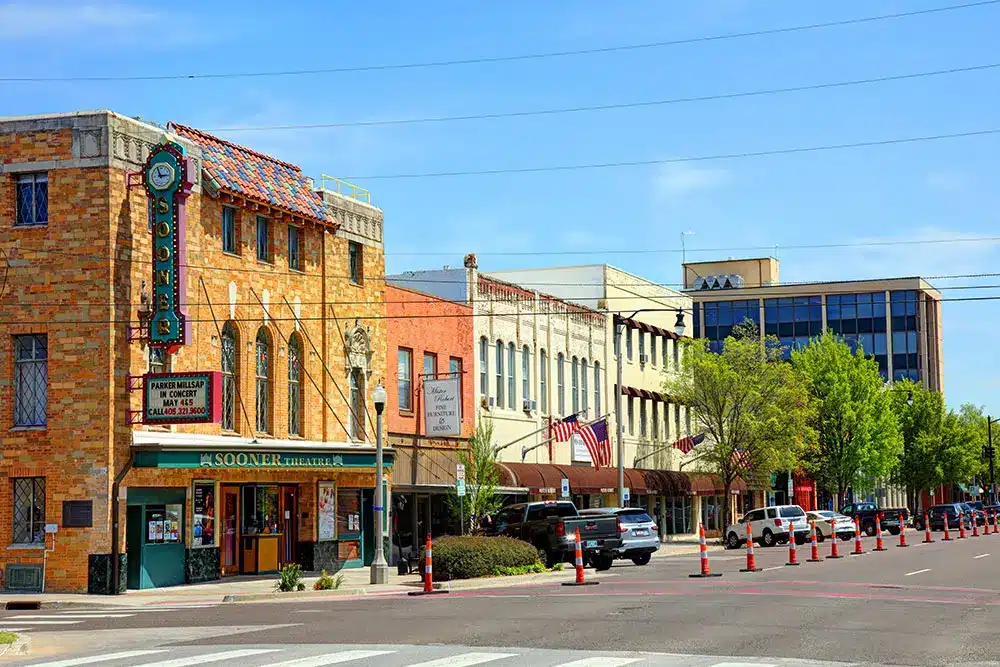
The historic Campus Corner district is where everything happens socially, packed with bars, restaurants, and shops you can walk to from campus. This area stays lively year-round but hits peak excitement during football season. You’ll find everything from laid-back sports bars to nicer dining spots, so there’s something for everyone.
“Sooner Magic” means more than just winning games, it’s part of the community’s identity that brings together longtime residents, current students, and recent grads. Game day traditions create shared memories that connect all the different groups of people living in Norman.
"Weather Capital of the World" Creates Unique High-Tech Job Market
National Weather Center Houses Critical Federal Agencies
Norman’s National Weather Center (NWC) is home to the Storm Prediction Center (SPC) and National Severe Storms Laboratory (NSSL), creating an unusual concentration of weather expertise. Having NOAA here has put Norman on the map internationally as a weather research hub, drawing scientists and researchers from all over the world.
This cluster of federal agencies creates high-tech job opportunities you rarely see in cities Norman’s size. Meteorologists, atmospheric scientists, computer experts, and support staff can build careers combining cutting-edge research with real-world applications. The work happening at the weather center directly affects how severe weather gets forecast across the entire United States.
Research partnerships between the National Weather Center and University of Oklahoma open up even more opportunities for grad students and professors. These collaborations often spark new technology, startup companies, and private contracts that help the local economy grow beyond typical university town limits.
Diversified Economy Beyond University Employment
Norman Regional Health System is a major employer, providing healthcare throughout Cleveland County and surrounding areas. This medical center offers career paths from nursing and tech jobs to office work and specialized medical positions. Healthcare jobs provide economic stability that doesn’t depend on university or federal budgets.
Johnson Controls runs manufacturing operations in Norman, making automotive parts and employing skilled workers in technical roles. The USPS National Center for Employee Development trains postal workers from across the country, bringing federal jobs and training money to the community.
Moore-Norman Technology Center supports workforce development through skilled trade training programs. These CareerTech programs prepare workers for local manufacturing, healthcare, and technical jobs while offering continuing education for people wanting to advance their careers. Unemployment rates running lower than national averages show how well this economic diversity is working.
Housing Market Balances Affordability with Quality School District Demand
Norman’s median home prices fall somewhere between $245,000-$260,000, sitting above Oklahoma’s state average but below what you’d pay nationally. With a cost of living index between 85-90 (versus 100 nationally), you’re looking at 10-15% savings on day-to-day expenses. These numbers attract families wanting suburban comfort without big-city prices.
The rental market reflects steady university demand, with median rents running $950-$1,100 monthly. Student housing drives rental property investment, creating opportunities for real estate investors who want reliable tenants. Off-campus housing ranges from apartments near Campus Corner to single-family homes in established neighborhoods.
Central and East Norman have historic homes with character near campus at lower prices. These areas appeal to young professionals, university employees, and investors targeting student renters. West and Northwest Norman feature newer subdivisions like Brookhaven and Carrington Ward, drawing families who want modern features and bigger yards.
Investment properties do well thanks to student renter demand and a growing number of commuters. Rental properties close to campus get premium prices during the school year, while family neighborhoods serve Oklahoma City commuters looking for cheaper housing.
Norman Public Schools Attract Families with Top-Rated Education System
Norman Public Schools consistently rank among Oklahoma’s best districts, teaching roughly 15,000 students from elementary through high school. Blue Ribbon Schools recognition proves the educational excellence that draws families from throughout the Oklahoma City metro. Strong academics often drive housing decisions for parents who put their kids’ education first.
Two main high schools create the “Crosstown Clash” rivalry between Norman High and Norman North, generating community buzz similar to university sports. This healthy competition keeps school spirit alive while making sure both schools get enough resources and attention from district leadership.
Moore-Norman Technology Center provides dual-enrollment options letting high school students earn college credit and industry certifications. Adult CareerTech programs serve people needing continuing education for skill building and career switches. These programs directly feed skilled workers into local businesses, supporting economic growth.
District investment in technology, facilities, and teacher training keeps the district competitive with surrounding school systems. Teacher retention rates beat state averages, providing educational consistency that helps student success and community stability.
"City of Festivals" Showcases World-Class Museums and Vibrant Arts Scene
University Museums House Internationally Significant Collections
The Sam Noble Oklahoma Museum of Natural History features the “Clash of the Titans” exhibit with the world’s largest Apatosaurus skull among massive paleontology collections. This museum draws visitors from across the country and provides learning resources for students and researchers. Interactive exhibits make complicated science concepts easy to understand for everyone.
The Fred Jones Jr. Museum of Art holds the Weitzenhoffer Collection, displaying works by Van Gogh, Monet, and Renoir among other French Impressionist masters. This collection represents one of the most important art holdings at any public university in the United States. Regular changing exhibitions bring both contemporary and historical works to Norman audiences.
Both museums function as community resources beyond their university connections, offering public programs, educational workshops, and cultural events. These places boost Norman’s cultural reputation and provide amenities you typically only find in much bigger cities.
Annual Festivals Draw Tens of Thousands of Visitors
Norman Music Festival (NMF) brings in 60,000-80,000 people each April as a free independent music festival with local and national artists playing across multiple venues. This event spotlights Norman’s music scene while helping local businesses through visitor spending. The festival’s growth shows the city’s cultural investment and community support.
Medieval Fair has been going strong for over 40 years as one of Oklahoma’s oldest festivals, turning Reaves Park into a Renaissance marketplace each spring. This family event combines fun, education, and community tradition while drawing visitors from throughout the region.
Norman Arts Council coordinates year-round cultural programming including gallery shows, theater productions, and community arts projects. Historic venues like the Sooner Theatre and The Depot (a converted train station) provide performance spaces that keep Norman’s cultural scene running.
Life in Tornado Alley Means Weather Awareness with World-Class Warning Systems
Norman sits right in the heart of Tornado Alley, with peak severe weather hitting during April and May. Average July highs reach 93°F while January lows drop to 26°F, with mild winters that sometimes bring ice storms that mess up roads and power. Fall brings the nicest weather with comfortable temperatures and lower humidity.
Having the National Weather Center right here gives Norman residents some of the world’s most advanced early-warning systems. Local weather experts access real-time data and cutting-edge forecasting technology that often gives longer heads-up for dangerous weather. This advantage helps residents prepare for bad conditions.
Weather awareness becomes second nature for Norman residents, who learn to watch conditions during spring and keep emergency supplies on hand. Despite tornado risks, expert forecasting and community readiness keep actual danger manageable. Most residents consider weather threats something they can handle given the warning systems and community support available.
Strategic Location Offers Small-Town Feel with Big-City Access
The Interstate 35 corridor gives direct connections to Oklahoma City’s job market and keeps going south to Texas, helping both daily commuters and regional business travelers. This highway setup lets Norman residents access big-city stuff while keeping their suburban community feel.
Suburban growth accommodates overflow from Oklahoma City metro as families look for bigger homes, better schools, and lower costs without giving up career opportunities. Norman’s city services and community groups maintain a distinct identity separate from the state capital’s urban scene.
The way the city’s laid out works for both university community needs and commuter family preferences through different neighborhoods and development styles. Easy access to OKC perks includes professional sports, cultural events, and specialized shopping while keeping Norman’s college town vibe and community scale.
Frequently Asked Questions
Norman is mainly known as home to the University of Oklahoma and its powerhouse Sooner football program, now playing in the SEC conference. The city earned the nickname "Weather Capital of the World" by housing the National Weather Center, Storm Prediction Center, and National Severe Storms Laboratory, putting it on the international map for weather research and severe storm forecasting.
The mix of university culture and federal weather research creates something unique among Oklahoma cities. Norman also has a reputation for quality education through its Blue Ribbon-recognized school district and vibrant arts scene including world-class museums and annual festivals like Norman Music Festival.
Beyond these headline features, Norman works as Oklahoma's top college town while serving as a suburban option for Oklahoma City metro families wanting lower costs and better schools.
Norman sits exactly 20 miles south of downtown Oklahoma City via Interstate 35, usually taking 25-30 minutes during rush hour. This distance makes Norman perfect for people working in OKC who prefer suburban living with cheaper housing and better schools.
The I-35 corridor gives direct access without dealing with city traffic until you reach downtown areas. Most Norman residents find the commute totally manageable, especially compared to suburban commutes in bigger metro areas. Public transportation options are pretty limited though, so you'll need a car for regular commuting.
Multiple entry points from I-35 serve different Norman neighborhoods, letting commuters pick routes based on where they live and where they're headed in Oklahoma City.
Norman consistently ranks among Oklahoma's most desirable communities because of its mix of economic stability, educational excellence, and cultural perks. The University of Oklahoma provides an economic foundation that protects Norman from the oil and gas industry ups and downs hitting other Oklahoma cities, while creating year-round cultural programs and entertainment.
Families especially appreciate Norman Public Schools' Blue Ribbon recognition and consistent top rankings within Oklahoma. The district's academic performance attracts residents from throughout the metro area who put their kids' education first. Plus, Norman's cost of living runs 10-15% below national averages while offering big-city amenities.
Weather considerations include spring tornado season, but having the National Weather Center here provides world-class early warning systems. Most residents adapt to weather awareness as part of normal seasonal routines without it really affecting their lifestyle.
Norman's cost of living index ranges between 85-90 compared to the national average of 100, creating real savings of 10-15% on everyday expenses. Housing represents the biggest savings area, with median home prices between $245,000-$260,000 sitting below national medians while offering quality construction and nice neighborhoods.
Utilities, groceries, and services cost way less than major metro areas, though slightly more than rural Oklahoma communities. Restaurant and entertainment costs reflect college town pricing with options from budget-friendly to upscale dining. Having the university here ensures competitive pricing for many services targeting students.
Transportation costs stay moderate thanks to reasonable gas prices and manageable commute distances, though you'll need a vehicle given limited public transportation. Overall, Norman gives you metropolitan amenities at substantially lower costs than similar college towns nationwide.
Current median home prices in Norman range between $245,000-$260,000, sitting above Oklahoma's state average but below national medians. Prices vary quite a bit depending on neighborhood location, with Central and East Norman offering historic homes starting around $180,000-$220,000, while newer West and Northwest subdivisions like Brookhaven and Carrington Ward run $280,000-$350,000.
Rental markets reflect steady university demand with median monthly rents running $950-$1,100. Student-focused housing near Campus Corner gets premium pricing, while family neighborhoods offer more competitive rates for long-term residents. Investment properties do well thanks to consistent student renters.
Property taxes stay reasonable compared to other college towns, and appreciation rates track regional economic growth rather than crazy speculation. First-time homebuyers often find Norman accessible compared to Oklahoma City metro alternatives, especially when you factor in school quality and community perks.
West and Northwest Norman feature the newest development with neighborhoods like Brookhaven, Carrington Ward, and Stone Creek offering modern homes, bigger lots, and family amenities. These areas attract Oklahoma City commuters and university professionals wanting contemporary housing with excellent school access.
Central Norman provides historic character near downtown and Campus Corner, appealing to young professionals, university staff, and students who prefer walkable neighborhoods. These areas offer architectural variety and mature trees at more accessible prices.
East Norman presents affordable housing including starter homes and rentals popular with students and first-time buyers. The area keeps convenient campus access while offering room to grow for expanding families. Each neighborhood has its own distinct character while keeping access to Norman's educational and cultural perks.
Norman maintains lower crime rates than Oklahoma City and most metro areas of similar size. University of Oklahoma campus police, Norman Police Department, and Cleveland County Sheriff's Office provide overlapping coverage that boosts community safety. The college town environment creates natural activity and visibility that discourages criminal behavior.
Property crimes happen at rates typical for college communities, often involving theft and vandalism targeting students around campus areas. Violent crime stays significantly below national averages, with most incidents involving domestic situations or alcohol-related fights rather than random crime.
Weather safety requires seasonal awareness because Norman's in Tornado Alley, but having the National Weather Center here provides world-class early warning systems. Emergency preparedness and community weather awareness help residents manage severe weather risks effectively.
University of Oklahoma campus offers year-round cultural programming including plays, concerts, lectures, and sports beyond football. The Sam Noble Museum of Natural History and Fred Jones Jr. Museum of Art provide world-class exhibitions and educational programs open to community members.
Campus Corner historic district serves as Norman's entertainment hub with restaurants, bars, and shops creating vibrant nightlife and dining. Annual events like Norman Music Festival, Medieval Fair, and university homecoming create community celebrations bringing residents together across all ages.
Outdoor recreation includes numerous parks, walking trails, and Lake Thunderbird State Park offering boating, fishing, and camping. Norman's location gives easy access to Oklahoma City's pro sports teams, cultural events, and specialized entertainment while keeping that small-town community feel.
Norman Public Schools consistently rank among Oklahoma's top districts with Blue Ribbon Schools recognition showing educational excellence. The district serves roughly 15,000 students from elementary through high school with academic performance that attracts families throughout the Oklahoma City metro area.
Two main high schools, Norman High and Norman North, keep up a healthy rivalry while making sure both schools get enough resources and attention. Advanced Placement classes, dual enrollment through Moore-Norman Technology Center, and strong extracurricular programs provide well-rounded educational opportunities.
Teacher retention rates beat state averages, and district investment in technology, facilities, and professional development keeps the competitive edge over surrounding school systems. These factors consistently influence housing decisions for families who prioritize their kids' education.
Norman experiences typical Southern Plains weather with hot summers averaging 93°F in July and mild winters with January lows around 26°F. Spring brings the most challenging weather during April and May tornado season, requiring seasonal awareness and emergency prep from residents.
Fall provides the nicest conditions with comfortable temperatures, lower humidity, and minimal severe weather threats. Winter ice storms occasionally impact roads and power, though extended cold snaps are uncommon. Annual precipitation averages around 36 inches, keeping landscapes green and supporting farming.
Having the National Weather Center here gives residents exceptional forecasting accuracy and early warning systems for severe weather. Most residents develop weather awareness as part of normal seasonal routines without major lifestyle restrictions.
Norman sits right in Tornado Alley with the spring severe weather season typically running from April through May. Cleveland County sees tornado activity several times per year, though direct hits on Norman itself stay relatively rare due to statistical probability rather than any geographic protection.
Having the National Weather Center, Storm Prediction Center, and National Severe Storms Laboratory here gives Norman residents world-class early warning systems and forecasting accuracy. Local weather experts access real-time data and cutting-edge technology that often provides extended heads-up for severe weather.
Residents develop weather awareness and keep emergency supplies as standard practice. Despite tornado risks, expert forecasting, community prep programs, and early warning systems minimize actual danger for informed residents who follow safety protocols.
University of Oklahoma serves as the biggest single employer with faculty, staff, research, and office positions across multiple areas. The National Weather Center employs meteorologists, atmospheric scientists, computer experts, and support staff in federal jobs with competitive benefits and job security.
Norman Regional Health System provides healthcare jobs from nursing and technical roles to office work and specialized medical positions. Johnson Controls operates manufacturing facilities making automotive parts and employing skilled technical workers. The USPS National Center for Employee Development brings federal training jobs and contracted services.
Local service industries, retail shops, and professional services support both university and residential populations. Moore-Norman Technology Center provides workforce training that connects local workers with available jobs across these diverse fields.
Norman definitely fits the college town profile with University of Oklahoma's 32,000 students making up roughly 25% of the total city population. Students drive the local economy through housing, dining, entertainment, and shopping while creating cultural energy through events, activities, and youthful buzz.
The academic calendar influences city rhythms with more activity during school terms and quieter summer periods, though year-round grad programs and research keep consistent population. Campus Corner historic district works as the social and business center connecting university and community interests.
However, Norman goes beyond typical college town limitations through economic diversity including federal weather agencies, healthcare systems, and manufacturing. This broader economic base provides stability and attracts non-university residents wanting quality schools and suburban comforts.
West and Northwest Norman neighborhoods like Brookhaven and Carrington Ward offer the easiest I-35 access for Oklahoma City commuters while providing newer homes and family perks. These areas feature modern subdivisions with bigger lots and excellent school access.
Central Norman provides historic character and shorter commutes to downtown Oklahoma City via direct I-35 access. These neighborhoods offer architectural variety and established communities at more accessible prices while keeping convenient highway access.
Think about morning commute patterns when picking specific neighborhoods, since some areas require getting through city traffic before reaching I-35. Most Norman residents find the 25-30 minute commute totally manageable, especially given housing cost savings and school quality benefits compared to Oklahoma City alternatives.
University of Oklahoma gained national recognition through its Sooner football program, now playing in the SEC conference after decades dominating the Big 12. The athletic program's success, particularly "Sooner Magic" football culture, creates community identity reaching far beyond campus.
Academically, OU works as Oklahoma's flagship research university with particular strength in meteorology, energy research, and liberal arts programs. The university's research status attracts federal funding and keeps partnerships with the National Weather Center, boosting Norman's reputation as a scientific research hub.
Founded way back in 1890, the university combines traditional college experience with cutting-edge research facilities. Notable alumni span politics, business, entertainment, and athletics, creating networking opportunities and national recognition benefiting both students and the broader Norman community.
Norman covers 189 square miles with a current population around 129,600 residents, making it Oklahoma's third-largest city. The substantial land area supports continued growth without feeling crowded while fitting both university facilities and suburban neighborhoods.
The layout includes distinct neighborhoods ranging from historic central areas to modern suburban subdivisions, plus extensive university campus and recreational facilities. Population density stays comfortable for suburban living while supporting urban amenities and services.
Annual growth rates of 1-1.5% reflect steady expansion driven by university enrollment, Oklahoma City metro overflow, and economic development. Zoning policies keep neighborhood character while fitting in new homes and businesses across the city's substantial footprint.
Norman's job market benefits from economic diversity beyond typical college town limits. University of Oklahoma provides educational, research, and office jobs, while the National Weather Center offers federal positions in meteorology and atmospheric sciences rarely found in cities of Norman's size.
Healthcare jobs through Norman Regional Health System provide stability independent of university or federal budgets. Manufacturing positions at Johnson Controls and skilled trades opportunities through Moore-Norman Technology Center create different career paths for various education levels.
Lower unemployment rates compared to national averages reflect economic stability and job availability. Service industries supporting both university and residential populations create additional job opportunities, while closeness to Oklahoma City expands job market access for commuting residents.
Norman's restaurant scene reflects college town diversity with options from budget-friendly student favorites to upscale dining spots. Campus Corner historic district packs in many popular restaurants and bars within walking distance of university facilities, creating vibrant dining and nightlife.
Local spots range from traditional Oklahoma barbecue and Mexican food to international options including Vietnamese, Indian, and Mediterranean restaurants. Chain restaurants provide familiar choices, while locally-owned places offer unique dining experiences often featuring regional ingredients and college town vibe.
University events and football season drive seasonal swings in restaurant activity, with game day crowds creating peak busy periods. Year-round student population keeps restaurants running during summer months when many college towns see dining spots close.
Norman Music Festival (NMF) represents the city's biggest annual event, bringing in 60,000-80,000 people each April as a free independent music festival. The event features local and national artists performing across multiple venues throughout downtown Norman, spotlighting the community's music scene while helping local businesses.
Medieval Fair celebrates over 40 years as one of Oklahoma's oldest festivals, turning Reaves Park into a Renaissance marketplace each spring. This family event combines educational programming with entertainment, showing Norman's commitment to community traditions and cultural celebration.
University of Oklahoma provides additional programming through homecoming celebrations, cultural events, and sports that create festival-like vibes throughout the school year. Norman Arts Council coordinates ongoing cultural programming including gallery shows and theater productions supplementing major annual festivals.
Norman's cost of living beats rural Oklahoma communities but stays way below national averages and major metro areas. Housing costs run higher than smaller Oklahoma towns because of university demand and quality school district attraction, but provide value through amenities and location perks.
Compared to Oklahoma City, Norman offers cheaper housing while keeping access to metro job markets and amenities. Tulsa presents similar pricing in some areas, though Norman's university influence creates unique market dynamics particularly in rental housing and entertainment.
The 10-15% cost savings compared to national averages, combined with quality schools, cultural perks, and economic stability, create a value proposition attracting residents throughout the region wanting suburban comfort without metro price pressures.
Driving Directions From Norman, Oklahoma to 5-Star Towing OKC, 2800 SW 25th St, Oklahoma City, OK 73108 - 26 min (20.8 miles) via I-35 N and I-240 W
Norman, Oklahoma
Get on I-35 N - 9 min (4.9 mi)
Continue on I-35 N. Take I-240 W/OK-3 W to SW 29th St in Oklahoma City. Take exit 118 from I-44 E - 15 min (15.2 mi)
Continue on SW 29th St to your destination - 3 min (0.7 mi)
5-Star Towing OKC, 2800 SW 25th St, Oklahoma City, OK 73108
We also offer towing and roadside assistance services in Norman, Oklahoma. Learn more about Moore OK.