

Main Takeaways
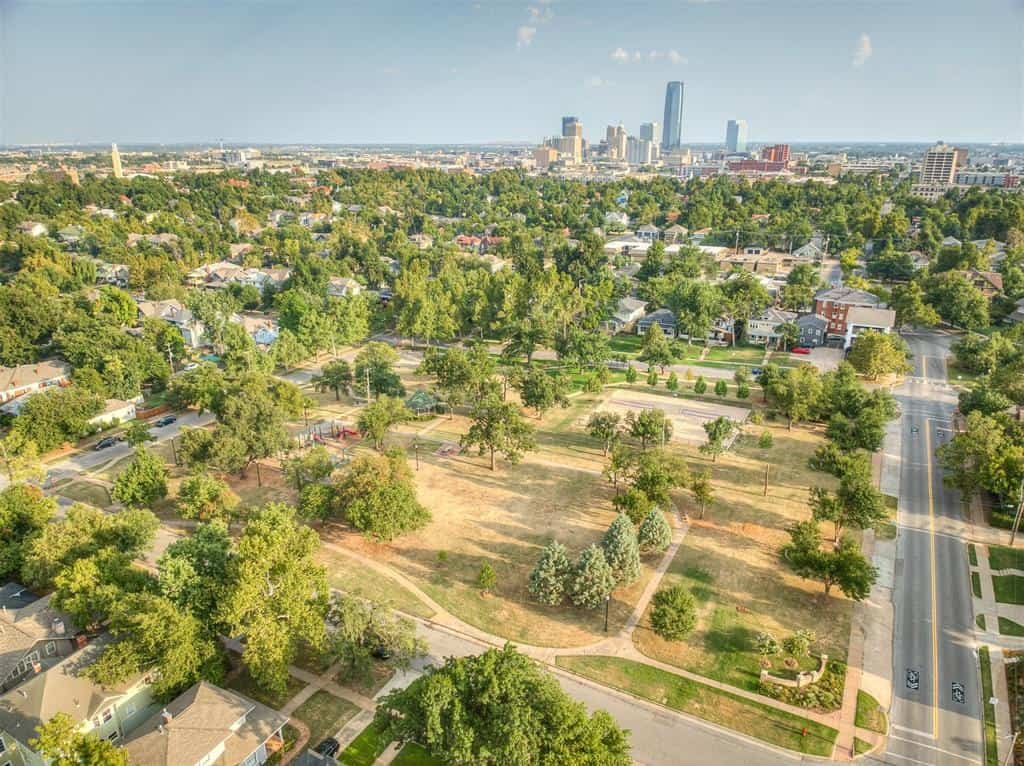
- Mesta Park is located 1.5 miles north of downtown OKC, stretching from NW 16th to 22nd Streets between Walker and Western Avenues
- Historic home prices typically range from $500,000 to over $900,000, with preservation guidelines requiring approval for any exterior alterations
- The area showcases Prairie School and Craftsman architecture built between 1906-1930, recognized on the National Register of Historic Places
- Wilson Arts Integration Elementary serves as a community anchor, situated in the central Perle Mesta Park alongside a gazebo and recreational amenities
- The annual Mesta Festa and Holiday Home Tour draw thousands of attendees while generating funds for neighborhood enhancements
- Residents walk easily to both Uptown 23rd and Midtown’s dining scenes while enjoying peaceful residential streets
- Comprehensive sidewalks and OKC Streetcar connections make this among the city’s most pedestrian-friendly areas
Prime Location in OKC's Urban Core
Mesta Park claims enviable territory in Oklahoma City’s Inner Loop, running from NW 16th Street up to NW 22nd Street, with North Walker Avenue marking the eastern edge and North Western Avenue defining the west side. This prime spot puts you a mere 1.5 miles from the Central Business District.
Sitting just north of Midtown and west of Heritage Hills, the neighborhood occupies an ideal position in OKC’s urban landscape. Downtown dinner plans turn into pleasant evening strolls, or you can hop the OKC Streetcar from stops along NW 23rd or NW 13th/Robinson. Not many Oklahoma City neighborhoods deliver this kind of accessibility while keeping their residential serenity intact.
Walkability That Actually Works
Oklahoma City doesn’t exactly have a reputation for being pedestrian-friendly, but Mesta Park completely defies expectations. The 1902 grid design incorporated sidewalks along both sides of every street, something you won’t find in most of OKC’s sprawling, car-focused neighborhoods. Towering Sycamores and Elms form leafy canopies overhead, making those Oklahoma summer walks actually pleasant.
Homes maintain consistent setbacks throughout, preserving that early 1900s neighborhood feel you’d typically only find in older East Coast cities. This thoughtful design creates a genuinely walkable environment. You’ll routinely see residents strolling to restaurants, grabbing coffee, or catching shows in the neighboring districts.
The Million-Dollar Real Estate Market in a Historic Setting
Mesta Park sits at the upper end of Oklahoma City’s housing market, with most homes spanning between 1,800 and 3,500 square feet. Original, unrenovated properties rarely come available, but when they do, expect starting prices around $300,000. Completely restored historic beauties consistently command between $500,000 and $900,000.
Price per square foot runs significantly higher than the metro average. During the mid-20th century urban downturn, numerous properties got carved up into apartments. Over the past twenty years, patient investors have been methodically converting these back to single-family residences, often doubling their money in the process.
Competition stays intense because there’s only so much space to go around. The historic district contains roughly 400 homes total. When a good property hits the market, multiple offers typically roll in within days. Some buyers don’t even schedule walkthroughs, the neighborhood’s reputation speaks for itself.
Move-in ready renovated homes fetch top dollar because most buyers crave that historic character without the headaches of old-house restoration. Savvy investors keep hunting for the handful of remaining fixer-uppers that promise substantial returns.
From Perle Mesta to National Historic Recognition
The area started life as “University Addition” in 1902, developed by William Skirvin (whose name you’ll recognize from the famous hotel). Most construction happened between 1906 and 1930, creating the architectural harmony you see today. Epworth University, which eventually became Oklahoma City University, originally called this neighborhood home before pulling up stakes.
Perle Mesta, Skirvin’s daughter, evolved from local real estate heiress into Washington D.C.’s most powerful social connector. TIME Magazine put her on the cover with the memorable nickname “Hostess with the Mostess.” Her famous gatherings brought together foreign diplomats, senators, and cabinet members throughout the Truman years.
The Oklahoma Historical Society traces how Mesta’s national profile transformed her father’s neighborhood from local development into a prestigious address with genuine cachet. The National Register of Historic Places took notice in 1983. Oklahoma City added its own Historic Preservation District designation in 1994.
This double recognition delivers both prestige and legal safeguards. Property values benefit from the historic reputation while preservation standards ensure the architectural character endures for generations ahead.
Strict Preservation Rules You Must Know Before Buying
Prairie School and Craftsman Bungalow designs define Mesta Park’s visual identity. You’ll spot characteristic elements like generous covered porches, standalone garages, multi-story construction, and uniform property lines. Most homes date to before 1930, creating remarkable architectural consistency.
The Historic Preservation Commission oversees all exterior changes through detailed requirements. You can’t simply swap out windows, update siding, change roofing, or add fencing without getting approval first. Every exterior modification needs a Certificate of Appropriateness before you start any work.
These regulations protect everyone’s investment but definitely limit your renovation freedom. Smart buyers build HP Commission requirements into their purchasing decisions and budget planning from day one. Approved materials and historically appropriate designs typically run more expensive than standard big-box options.
Compared to the grand estates in neighboring Heritage Hills, Mesta Park homes reflect more approachable, though still upscale, middle-class residences from the early 1900s. This creates a distinct market personality, refined comfort without the showiness.
Community Life Centered Around Perle Mesta Park
Perle Mesta Park forms the neighborhood’s beating heart at NW 18th and Shartel, offering a charming gazebo, volleyball courts, and playground areas. Wilson Arts Integration Elementary calls the park home, making it a major attraction for families wanting quality public education within OKC’s system.
Wilson Elementary’s Arts Integration focus makes it stand out among Oklahoma City public schools. Kids get specialized instruction blending traditional academics with creative arts programming. Plenty of families deliberately choose Mesta Park specifically for Wilson Elementary access.
The “Front Porch Culture” flourishes here unlike anywhere else in contemporary Oklahoma City. Those substantial architectural porches naturally encourage evening neighbor-to-neighbor visiting. You’ll regularly spot residents chatting across property lines or gathering for spontaneous after-work conversations.
This community warmth reflects both the pedestrian-friendly layout and the shared commitment to historic preservation. The Mesta Park Neighborhood Association (MPNA) organizes activities and maintains shared spaces through volunteer energy and special event fundraising.

Annual Events That Define the Neighborhood Spirit
Mesta Festa dominates the autumn social calendar, usually happening in September right in Perle Mesta Park. This beloved festival pulls in thousands for beer gardens, live performances, and pop-up markets showcasing local artists and food vendors. Family-friendly activities ensure everyone from toddlers to grandparents finds something fun.
The Holiday Home Tour in December opens up the neighborhood’s architectural gems for public viewing. Residents welcome ticketed visitors into their lovingly restored historic homes, displaying successful preservation efforts and impressive interior designs. Architecture buffs drive in from across the region for this rare behind-the-scenes access.
Both events create essential revenue for the Mesta Park Neighborhood Association. Proceeds fund park upkeep, common area improvements, and better lighting throughout the historic district. This community-supported model lightens the municipal load while keeping neighborhood standards high.
Mesta Festa particularly boosts surrounding businesses economically. Visitors discover Uptown 23rd and Midtown restaurants during the festival, frequently becoming repeat customers long afterward.
Walking Distance to OKC's Best Dining and Entertainment
The Uptown 23rd District runs along Mesta Park’s northern boundary, packing in dining and nightlife within easy walking range. Big Truck Tacos, Pizzeria Gusto, and Tucker’s Onion Burgers barely scratch the surface of available options. Residents routinely walk to dinner without ever starting the car.
Midtown hugs the southern edge, celebrated for creative food halls, independent shops, and vibrant nightlife. The Hall’s Pizza Kitchen, McNellie’s Public House, and Elemental Coffee offer diverse choices. Both districts keep adding new restaurants and bars seemingly every month.
Mesta Park sticks with strict residential zoning, preventing the commercial creep that’s changed other urban neighborhoods. This strikes the perfect balance, tranquil residential blocks with entertainment hubs literally just across the street.
The strategic position between two of Oklahoma City’s hottest commercial zones significantly boosts property values. Buyers gladly pay premiums for walkable dining and entertainment access while keeping that peaceful residential atmosphere.
Frequently Asked Questions
Homes in Mesta Park typically sell between $500,000 and over $900,000 when fully renovated, with the rare unrenovated property starting around $300,000. Price per square foot runs well above Oklahoma City metro averages thanks to historic designation, prime urban location, and tight inventory. Most homes measure between 1,800 and 3,500 square feet and were constructed during the 1906-1930 building boom.
The competitive market reflects the district's compact size, only about 400 homes total according to the Mesta Park Neighborhood Association. Many properties got divided into apartments during mid-century urban decline and have been carefully restored to single-family status over the past twenty years, delivering substantial appreciation for patient investors.
Turnkey renovated properties command premium pricing because buyers want historic charm without renovation headaches, while the few remaining unrenovated homes offer significant appreciation potential for those willing to navigate the Historic Preservation Commission's detailed guidelines.
Mesta Park ranks among Oklahoma City's safest areas thanks to tight community bonds, an active neighborhood association, and strategic urban positioning. The "Front Porch Culture" creates organic neighborhood watch conditions, with residents regularly socializing outdoors and maintaining natural surveillance of street activity. The grid layout with sidewalks on both street sides enhances visibility and pedestrian safety.
The Mesta Park Neighborhood Association runs safety programs and maintains upgraded lighting throughout the historic district using revenue from annual events like Mesta Festa and the Holiday Home Tour. The neighborhood's proximity to major roads ensures quick emergency service response while preserving quiet residential character.
Property values exceeding $500,000 generally correlate with lower crime, and the Historic Preservation District status attracts residents with long-term investment mindsets who actively maintain their properties and engage in community oversight.
Prairie School and Craftsman Bungalow styles dominate Mesta Park's architectural landscape, with most construction occurring between 1906 and 1930. Defining features include expansive covered front porches, detached garages, multi-story designs, and uniform street setbacks that create striking visual harmony throughout the district.
Mature Sycamores and Elms provide established tree canopies complementing the early 20th-century aesthetic. The 1983 National Register of Historic Places listing recognized the architectural significance of these predominantly Prairie School and Craftsman homes, which represent the upper-middle class family residences of early Oklahoma City growth.
Unlike the imposing mansions in neighboring Heritage Hills, Mesta Park homes showcase more modest yet still refined middle-class architecture from the territorial and early statehood eras.
The Oklahoma Historical Society documents how the original 1902 "University Addition" platting by William Skirvin established the foundation for this cohesive architectural character, with most construction following consistent design principles that the Historic Preservation Commission now safeguards through detailed exterior modification guidelines.
Renovating homes in Mesta Park requires Historic Preservation Commission approval through a Certificate of Appropriateness for all exterior changes. The HP Commission enforces detailed standards regarding windows, siding, roofing materials, and fencing to preserve the neighborhood's architectural character. Interior renovations generally don't need special approval unless they alter the home's exterior appearance.
The City of Oklahoma City Planning Department offers comprehensive Historic Preservation Guidelines specifying approved materials and design approaches, which often cost more than standard home improvement supplies. Savvy buyers factor these requirements into their purchase decisions and renovation budgets, understanding that compliance protects both individual property values and neighborhood character.
Many successful projects have transformed former multi-family apartments back into single-family homes over the past two decades, often doubling property values while preserving historic elements. The process demands patience and thorough planning, but the investment typically delivers substantial returns given the neighborhood's premium pricing and limited housing stock.
Wilson Arts Integration Elementary anchors education in Mesta Park, situated right in the central Perle Mesta Park at NW 18th and Shartel. Wilson's Arts Integration approach makes it distinctive among Oklahoma City public schools, offering specialized instruction combining traditional academics with creative arts programming. Many families specifically target Mesta Park for guaranteed access to this unique educational option.
The school's park location creates a genuine community hub where families connect for school functions, playground time, and neighborhood association gatherings. This arrangement strengthens the close-knit community feel that defines Mesta Park's residential character and adds to its appeal among families with school-aged kids.
For middle and high school, students typically attend nearby OKC public schools or private institutions across the metro, with many families selecting the well-regarded schools serving the urban core's educated population.
Mesta Park stands out as one of Oklahoma City's most walkable neighborhoods thanks to its 1902 grid design with complete sidewalk infrastructure on both street sides. This pedestrian-friendly layout is unusual in OKC's typically car-focused development patterns. Mature tree canopies from towering Sycamores and Elms provide natural shade making walks comfortable even during Oklahoma's hot summers.
The strategic spot between Uptown 23rd District and Midtown means residents can walk to dozens of restaurants, coffee shops, and entertainment venues without driving. The OKC Streetcar adds connectivity with nearby stops on NW 23rd or NW 13th/Robinson for downtown access. Consistent property setbacks preserve the early 20th-century streetscape that encourages pedestrian activity.
The Mesta Park Neighborhood Association maintains this walkable infrastructure through community fundraising and volunteer work, keeping sidewalks, lighting, and common areas in excellent shape for daily use by residents who genuinely embrace the walking lifestyle.
Mesta Park honors Perle Mesta, daughter of Oklahoma City developer William Skirvin, who became one of Washington D.C.'s most powerful political hostesses during the Truman presidency. Originally platted as "University Addition" in 1902 by Skirvin, the neighborhood shifted from its educational ties with Epworth University (now Oklahoma City University) to celebrate Perle Mesta's extraordinary social and political influence.
TIME Magazine featured Perle Mesta on their cover, dubbing her the "Hostess with the Mostess" for legendary gatherings that united foreign diplomats, senators, and cabinet members. The Oklahoma Historical Society documents how her prominence elevated her father's neighborhood development from local real estate venture to nationally recognized address, contributing to the area's prestige and eventual historic designation.
The evolution from "University Addition" to Mesta Park mirrors the neighborhood's transformation from educational anchor to residential showpiece, with the 1983 National Register of Historic Places recognition cementing Perle Mesta's enduring legacy in Oklahoma City's urban development story.
Mesta Festa serves as the neighborhood's signature annual celebration, typically held each September in Perle Mesta Park. This fall festival draws thousands for beer gardens, live music, and pop-up vendors featuring local artists, food trucks, and family activities. The event generates critical funding for the Mesta Park Neighborhood Association to maintain the park, common areas, and enhanced lighting throughout the historic district.
The Holiday Home Tour in December offers exclusive glimpses into the neighborhood's architectural treasures, with residents opening their restored historic homes for ticketed public viewing. Architecture enthusiasts travel from across the region to see successful preservation work and interior design accomplishments highlighting the area's commitment to historic character.
Both events demonstrate the robust community investment model reducing municipal burden while maintaining neighborhood standards. Revenue from these activities directly funds infrastructure improvements and creates economic benefits for surrounding Uptown 23rd and Midtown businesses as visitors discover the adjacent dining and entertainment districts.
The Uptown 23rd District borders Mesta Park's northern edge with concentrated dining including Big Truck Tacos, Pizzeria Gusto, and Tucker's Onion Burgers within easy walking distance. This restaurant strip keeps expanding with new concepts regularly opening along the NW 23rd Street corridor. Residents routinely walk to dinner without needing their cars, taking full advantage of the complete sidewalk network.
Midtown borders the southern edge, featuring innovative dining spots like The Hall's Pizza Kitchen, McNellie's Public House, and Elemental Coffee. This entertainment district emphasizes local ownership and creative food concepts attracting diners from throughout the Oklahoma City metro. Options span from casual coffee shops to upscale dinner destinations.
The strategic position between these two bustling commercial districts provides unprecedented restaurant access while Mesta Park maintains strict residential zoning preventing commercial encroachment. This balance creates significant property value premiums for walkable access to dozens of dining choices while preserving quiet residential character.
Mesta Park sits just 1.5 miles north of Oklahoma City's Central Business District, positioned in the urban core's "Inner Loop" between major downtown employment centers and suburban areas. This proximity provides quick commutes while maintaining the peaceful residential atmosphere defining the historic neighborhood character.
The OKC Streetcar system links the neighborhood to downtown with stops on nearby NW 23rd or NW 13th/Robinson, offering car-free transportation for residents working in the Central Business District. The strategic location also provides easy access to major OKC thoroughfares while avoiding the traffic congestion affecting more distant suburban communities.
Residents regularly walk or bike downtown for entertainment, dining, and cultural events, with the grid street layout and complete sidewalk infrastructure supporting pedestrian and cycling connectivity that's uncommon in Oklahoma City's typically car-dependent urban design.
Mesta Park's boundaries run from NW 16th Street on the south to NW 22nd Street on the north, with North Walker Avenue forming the eastern edge and North Western Avenue the western border. These well-defined boundaries create a compact historic district containing approximately 400 homes within the urban core's "Inner Loop" position. The small geographic footprint contributes to the close-knit community atmosphere and competitive real estate market.
The neighborhood sits directly north of Midtown and west of Heritage Hills, creating strategic access to Oklahoma City's most vibrant commercial and cultural districts. The original 1902 "University Addition" platting by William Skirvin established these boundaries around Epworth University's original site, which later became the foundation for the current residential character.
Both the 1983 National Register of Historic Places listing and the 1994 local Historic Preservation District designation recognize these specific boundaries, providing legal protection for architectural integrity while supporting property values through historic prestige and development limitations.
Parking in Mesta Park follows early 20th-century residential patterns with detached garages and on-street parking throughout the grid street layout. Most homes include original detached garages, though some have been renovated or expanded during decades of restoration work. The wide residential streets offer ample on-street parking for residents and guests without the crowded conditions found in denser urban areas.
The uniform setbacks and mature tree canopies create attractive streetscapes accommodating parking without compromising the pedestrian-friendly atmosphere. During annual events like Mesta Festa and the Holiday Home Tour, temporary parking adjustments may apply, but the Mesta Park Neighborhood Association coordinates these activities to minimize resident disruption.
The walkable design reduces parking demand since residents easily walk to Uptown 23rd and Midtown dining and entertainment spots. OKC Streetcar access also provides car-free downtown options, reducing the parking pressure affecting less connected neighborhoods.
The Mesta Park Neighborhood Association (MPNA) serves as the community organization coordinating activities, maintaining common areas, and advocating for resident interests throughout the historic district. The association manages revenue from annual events like Mesta Festa and the Holiday Home Tour to fund park maintenance, enhanced lighting, and infrastructure improvements exceeding standard municipal services.
MPNA facilitates the close-knit community atmosphere through organized social activities, safety programs, and preservation advocacy protecting the neighborhood's historic character and property values. The association collaborates closely with Oklahoma City's Historic Preservation Commission ensuring renovation projects maintain architectural integrity while supporting homeowner investment.
Membership typically includes most neighborhood residents who engage in decision-making through regular meetings held in Perle Mesta Park's community facilities. This active participation model creates the strong community investment distinguishing Mesta Park from typical residential areas and contributing to its premium property values.
Obtaining a Certificate of Appropriateness involves submitting detailed plans to Oklahoma City's Historic Preservation Commission for any exterior modifications to homes in Mesta Park. The City of Oklahoma City Planning Department provides specific Historic Preservation Guidelines detailing approved materials, design elements, and application procedures. All window replacements, siding changes, roofing modifications, and fence installations need prior approval.
The application process typically includes architectural drawings, material specifications, and sometimes neighborhood notification depending on proposed changes' scope. The HP Commission meets regularly to review applications, with approval timelines varying based on project complexity and guideline compliance. Professional consultation from architects experienced in historic preservation often streamlines the approval process.
Smart property owners review the Historic Preservation Guidelines early in planning stages and budget for approved materials that often cost more than standard options. The investment in proper compliance protects both individual property values and maintains the neighborhood's historic integrity supporting the premium real estate market.
Mesta Park features more approachable, yet still upscale, middle-class family homes from the early 1900s compared to the grand estates characterizing neighboring Heritage Hills. While both neighborhoods earned National Register of Historic Places recognition, Mesta Park's Prairie School and Craftsman Bungalow architecture reflects a different economic tier of early Oklahoma City development, creating distinct market dynamics and community character.
The Mesta Park Neighborhood Association documents how the original "University Addition" attracted professional families and middle management rather than the oil barons and business tycoons who built Heritage Hills mansions. This produces more intimate neighborhood scale, stronger community bonds, and generally more accessible entry points into historic district living, though prices still range from $500,000 to over $900,000.
Mesta Park's strategic position between Uptown 23rd and Midtown provides superior walkable access to dining and entertainment compared to Heritage Hills' more isolated location. The central Perle Mesta Park with Wilson Elementary creates a community hub differing from Heritage Hills' more dispersed residential pattern.
Perle Mesta Park anchors the neighborhood's green space at NW 18th and Shartel, featuring a classic gazebo, volleyball courts, playground equipment, and open lawn areas for community gatherings. The park houses Wilson Arts Integration Elementary and hosts major annual events like Mesta Festa plus various neighborhood association activities throughout the year.
Mature tree canopies from large Sycamores and Elms line residential streets, creating natural shade and enhancing the pedestrian experience throughout the historic district. These established trees contribute significantly to the neighborhood's character and property values while providing environmental benefits complementing the early 20th-century architectural design.
The Mesta Park Neighborhood Association maintains these green spaces through community fundraising and volunteer efforts, ensuring the central park and street trees receive care exceeding standard municipal services. This community investment model preserves the neighborhood's distinctive landscape character while supporting the premium real estate market.
The OKC Streetcar system provides primary public transportation connections with stops on nearby NW 23rd or NW 13th/Robinson offering direct downtown access. This connectivity allows residents to commute car-free to the Central Business District, sitting just 1.5 miles south of neighborhood boundaries. The streetcar also connects to other urban districts and entertainment venues throughout Oklahoma City's core.
Regular bus service along major thoroughfares including NW 23rd Street and Western Avenue provides additional public transit options for residents without vehicles. The grid street layout with complete sidewalk infrastructure supports easy walking access to these transit stops from anywhere within the neighborhood.
The strategic urban core location reduces public transportation dependence for many daily activities since residents can walk to dining, shopping, and entertainment in adjacent Uptown 23rd and Midtown districts. This combination of walkability and transit access creates transportation flexibility uncommon in typically car-dependent Oklahoma City.
The Mesta Park real estate market remains highly competitive due to limited inventory within the small historic district boundaries containing only about 400 total homes. Quality properties typically attract multiple offers within days of listing, with buyers sometimes purchasing sight unseen based on the neighborhood's reputation and consistent property values between $500,000 and over $900,000.
The combination of National Register of Historic Places designation, strict preservation standards, and prime urban location creates sustained demand exceeding supply. Many properties underwent restoration from multi-family apartments back to single-family homes over the past two decades, reducing available inventory while increasing average property values significantly above Oklahoma City metro averages.
Smart buyers often partner with agents specializing in historic properties who understand Historic Preservation Commission requirements affecting renovation potential. The investment typically delivers substantial returns given the neighborhood's premium pricing, walkable urban amenities, and continued appreciation potential in Oklahoma City's limited historic housing inventory.
Driving Directions From Mesta Park, Oklahoma City, OK to 5-Star Towing OKC, 2800 SW 25th St, Oklahoma City, OK 73108 - 17 min (5.4 miles) via N Classen Blvd
Mesta Park, Oklahoma City, OK
Follow N Dewey Ave to NW 13th St - 2 min (0.5 mi)
Drive along N Classen Blvd, Exchange Ave, S Pennsylvania Ave and SW 25th St - 13 min (4.9 mi)
Turn left
Destination will be on the right - 57 sec (407 ft)
5-Star Towing OKC, 2800 SW 25th St, Oklahoma City, OK 73108
We also offer towing and roadside assistance services near Mesta Park, OKC. Learn more about our next location Wheeler District OKC.