

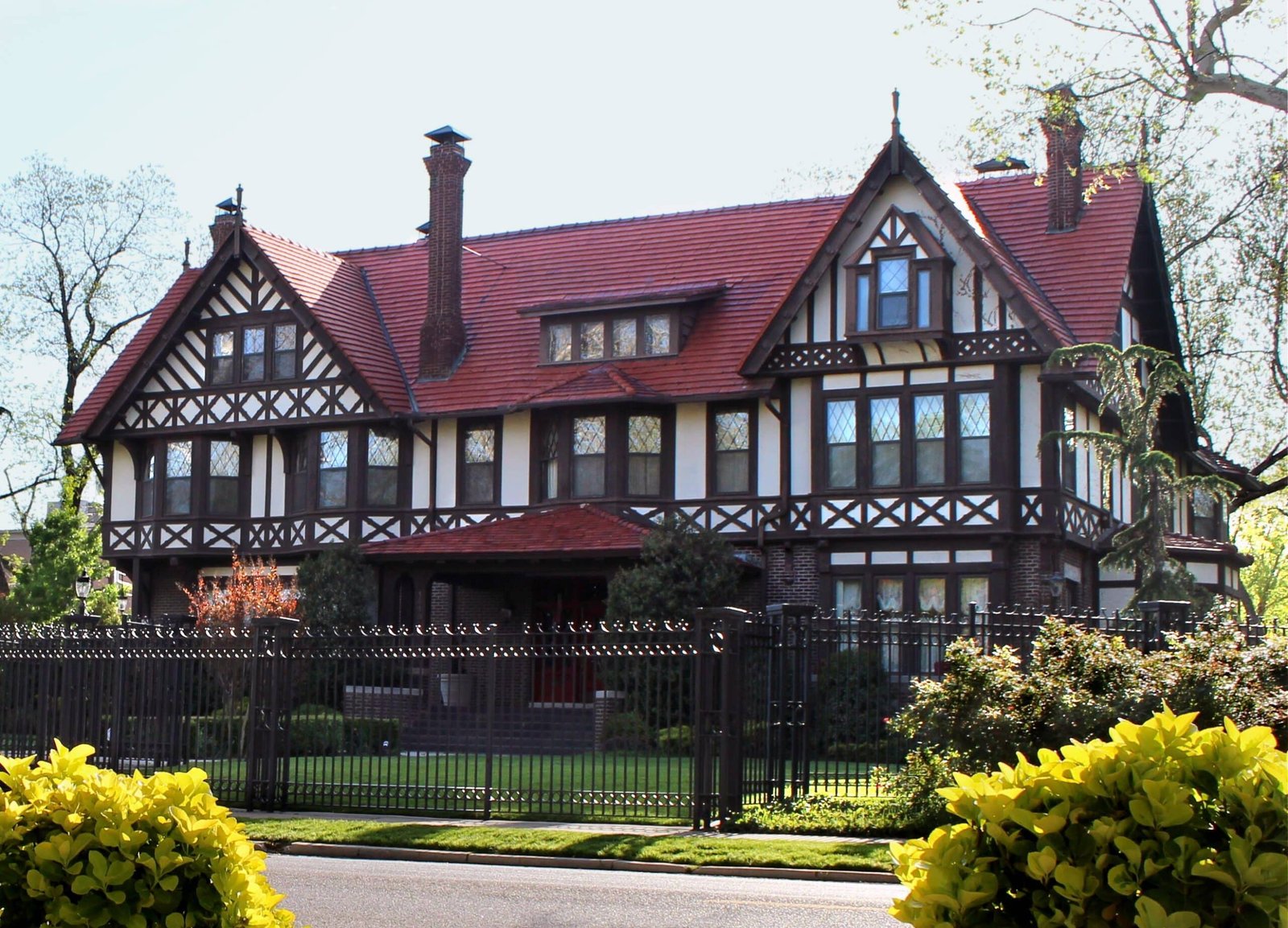
The oil boom transformed Oklahoma City in the early 1900s, creating instant fortunes and sending wealthy residents fleeing north from downtown’s dusty streets. They discovered elevated ground perfect for grand estates, a place where oil barons, bankers, and civic leaders could build mansions that matched their newfound prosperity.
This neighborhood, originally platted as Highland Park, would eventually become Heritage Hills, Oklahoma City’s most prestigious address and its first historic preservation district.
Key Insights
- Heritage Hills earned its designation as Oklahoma City’s first Historic Preservation District on January 21, 1969
- The neighborhood showcases diverse architectural styles including Neoclassical, Tudor Revival, and Prairie School mansions constructed during the 1900-1930 oil boom
- Home prices span from $500,000 for smaller properties to over $2.5 million for luxury estates
- Residents enjoy walkable access to Midtown and Uptown 23rd dining and entertainment districts
- The annual Heritage Hills Home Tour functions as a major fundraiser and community gathering
- Wilson Arts Integration Elementary School draws young families to urban core living
- Historic preservation requirements regulate exterior renovations to preserve architectural integrity
Oklahoma City's First Historic Preservation District Established in 1969
Heritage Hills secured its protected status after a fierce battle in the 1960s. Commercial developers threatened to tear down historic mansions for office buildings and parking lots. Residents organized, pushed back, and won designation as Oklahoma City’s first Historic Preservation District on January 21, 1969, according to the Heritage Hills Historical Preservation, Inc.
Anton Classen played a vital role in the original development, helping transform Highland Park into an exclusive enclave for the city’s elite. These homes were built before Oklahoma achieved statehood in 1907 or immediately after during the oil boom period. The neighborhood housed civic leaders, oil barons, and bankers who shaped early Oklahoma City during its most prosperous years.
Living here means accepting strict oversight from the Historical Preservation Commission. Exterior renovations require approval, windows, roofs, paint colors all fall under scrutiny. These covenants protect the neighborhood’s architectural integrity but add layers of complexity to homeownership. The preservation fight created the emotional foundation that still defines Heritage Hills today.
Early Development Timeline and Oil Boom Era
Development reached its peak between 1900-1930 during Oklahoma’s oil boom years. Wealthy residents chose this elevated location specifically to escape the “low bottoms” of early Oklahoma City’s downtown core. The timing wasn’t random, oil money flowed freely, and successful businessmen wanted homes that reflected their status. These weren’t modest prairie houses but grand declarations of wealth and sophistication that rivaled anything found in established eastern cities.
Strategic Location North of Downtown Oklahoma City
Heritage Hills occupies prime real estate just north of downtown in Oklahoma City’s urban core. The boundaries stretch from NW 13th Street south to NW 21st or 22nd Street north, with North Robinson Avenue forming the eastern border and North Walker Avenue the western edge. This positioning sets it apart from nearby Mesta Park to the west while connecting it to major commercial districts.
The elevated topography was a major draw for early residents. While downtown Oklahoma City sat in relatively flat terrain, Heritage Hills offered slightly higher ground, a natural advantage that provided better drainage and views. This elevation contrasts sharply with the surrounding suburbs’ flat plains, explaining why the city’s founders specifically chose this spot for their grand homes.
Walkability distinguishes Heritage Hills in a notoriously car-dependent city. Residents can stroll to coffee shops, restaurants, and streetcar stops in Midtown. The neighborhood functions as a bridge between Midtown’s commercial energy and the Uptown 23rd District’s entertainment options.
Proximity to Major Districts
The location offers easy access to three distinct commercial areas. Midtown brings upscale dining and shopping within walking distance. The Uptown 23rd District delivers entertainment venues and casual restaurants. Automobile Alley adds another dining and nightlife option to the east. This positioning allows residents to enjoy urban amenities while maintaining the quiet, residential character of their historic streets.
Architectural Diversity and Historic Mansions
Heritage Hills showcases architectural styles rarely found elsewhere in Oklahoma in such concentration. Primary styles include Neoclassical, Tudor Revival, Prairie School, Colonial Revival, Craftsman, and Georgian Revival. The neighborhood features mature tree canopies that arch over streets, creating natural tunnels of shade. Sidewalks and original carriage houses, many converted to apartments or guest suites, add to the historic character.
Housing stock ranges from massive mansions to more modest Craftsman homes, though “modest” here means 2,500 square feet or larger. Irregular setbacks and diverse architectural styles create a unique streetscape that feels organic rather than planned. Each block offers visual surprises and architectural discoveries.
The Overholser Mansion at 405 NW 15th Street stands as the neighborhood’s crown jewel. Built in 1903 by Henry Overholser, known as “The Father of OKC,” this French Chateau-style mansion now operates as a museum run by Preservation Oklahoma. Public tours reveal the Gilded Age lifestyle of Oklahoma’s early elite.
The Hales Mansion at 1521 N Hudson Avenue presents another architectural marvel. Built in 1916 with renovations completed in 1939, locals call it the “Second Vatican” due to its massive stone exterior and imposing size. This mansion represents the grandeur that oil wealth could achieve in early 20th century Oklahoma.
Exclusive Real Estate Market with High Property Values
Heritage Hills ranks among the most expensive and exclusive neighborhoods in the Oklahoma City metro area. Low inventory keeps demand high, homes rarely hit the open market, often selling through pocket listings or word-of-mouth referrals. Price ranges start around $500,000 for smaller properties needing work and climb past $2.5 million for luxury estates.
Home sizes generally span from 2,500 square feet to over 8,000 square feet. Price per square foot runs significantly higher than Oklahoma City’s average, reflecting both the historic premium and prime location. Properties represent stable investments compared to new construction suburbs, with strong appreciation potential backed by irreplaceable historic character.
Ownership costs extend beyond the purchase price. These century-old homes require specialized maintenance, slate roofs, original plumbing systems, and lead paint mitigation. Heating and cooling costs run higher due to older insulation standards in historic structures. Buyers should budget accordingly for ongoing preservation needs.
Historic Tax Credits and Renovation Incentives
Historic Tax Credit opportunities exist for buyers planning major renovations. These financial incentives offset some restoration costs while encouraging proper preservation techniques. The choice between turnkey properties and fixer-uppers depends on budget and renovation goals. Working with contractors experienced in historic preservation becomes essential for major projects.
Community Events and the Famous Annual Home Tour
The Heritage Hills Annual Historic Home Tour attracts visitors from across Oklahoma City, typically held each fall. This major event allows the public to tour private residences while serving as the primary fundraiser for neighborhood beautification, security, and park maintenance. The tour showcases the neighborhood’s architectural diversity and generates community pride.
Heritage Hills Historical Preservation, Inc. (HHHPI) maintains an active neighborhood association that coordinates events and advocacy efforts. Winans Park serves as a central gathering spot within the neighborhood boundaries, hosting community events and providing green space for residents.
Porch culture thrives here in ways uncommon in modern suburbs. Large front porches encourage social interaction and sidewalk conversations. Unlike newer developments with privacy fences and backyard-focused designs, Heritage Hills promotes community connection through its historic street-oriented architecture.
Wilson Arts Integration Elementary School operates as a highly rated public institution within the historic district. This school represents one of the few urban public schools in Oklahoma City that actively draws young families to the urban core specifically for education quality. The school’s reputation becomes a major factor in attracting families who might otherwise choose suburban alternatives.
Walkable Access to Midtown and Uptown 23rd Dining
Heritage Hills maintains strict residential zoning while bordering major commercial districts. This positioning provides restaurant and entertainment access without compromising the neighborhood’s quiet character. Residents enjoy multiple dining options within walking distance.
South access leads to Midtown destinations like Stella Modern Italian, McNellie’s Public House, and Elemental Coffee. North access opens Uptown 23rd options including Big Truck Tacos, Cheever’s Cafe, and the historic Tower Theatre. East access connects to Automobile Alley venues like Broadway 10, Hideaway Pizza, and Iguana Mexican Grill.
St. Anthony Hospital employs many residents and provides major healthcare access nearby. The OKC Streetcar loop connects Midtown to Bricktown and Scissortail Park, offering car-free transportation to downtown entertainment venues. Residents can walk to concerts at Tower Theatre or dinner at Cheever’s while their neighborhood remains traffic-calmed and peaceful.
Transportation and Connectivity
Streetcar access eliminates the need for driving to downtown entertainment districts. Multiple commercial areas within walking distance reduce car dependency for daily needs. The strategic location maintains residential tranquility despite extensive urban amenities. This combination of accessibility and privacy explains much of Heritage Hills’ enduring appeal and premium pricing.
Frequently Asked Questions
Heritage Hills earned designation as Oklahoma City's first Historic Preservation District on January 21, 1969, making it a trailblazer in urban conservation efforts according to Heritage Hills Historical Preservation, Inc. The neighborhood represents the earliest example of organized historic preservation in the city, establishing precedents for protecting architectural heritage.
The district contains homes built during Oklahoma's oil boom period from 1900-1930, many constructed before Oklahoma achieved statehood in 1907.
These mansions housed the city's founding elite, oil barons, bankers, and civic leaders who shaped early Oklahoma City during its most transformative era. Anton Classen's development work helped establish the area as the premier residential district for wealthy residents.
The preservation battle itself created lasting significance beyond the architecture. When commercial developers threatened to demolish historic mansions for office buildings and parking lots in the 1960s, residents organized a successful fight that became a model for other neighborhoods.
This grassroots preservation effort demonstrated that communities could protect their historic character against development pressure, inspiring similar movements across Oklahoma City.
Current home prices in Heritage Hills range from approximately $500,000 for smaller properties requiring renovation to over $2.5 million for fully restored luxury estates. The price per square foot runs significantly higher than Oklahoma City's average, reflecting both the historic premium and prime location near downtown and major commercial districts.
Home sizes typically span from 2,500 square feet to over 8,000 square feet, with most properties falling between 3,500-6,000 square feet. The low inventory keeps demand high, homes rarely appear on the open market, often selling through pocket listings or word-of-mouth referrals among real estate professionals specializing in historic properties.
Ownership costs extend beyond the purchase price due to the age and historic nature of these homes. Buyers should budget for specialized maintenance including slate roof repairs, original plumbing system updates, and potential lead paint mitigation. Higher heating and cooling costs result from older insulation standards, though Historic Tax Credits can offset major renovation expenses for qualified projects.
Heritage Hills showcases six primary architectural styles concentrated in one neighborhood: Neoclassical, Tudor Revival, Prairie School, Colonial Revival, Craftsman, and Georgian Revival. This diversity creates a unique streetscape rarely found elsewhere in Oklahoma, reflecting the wealth and sophistication of early 20th century oil boom prosperity.
Neoclassical mansions feature grand columns and symmetrical facades, while Tudor Revival homes display distinctive half-timbering and steep-pitched roofs. Prairie School architecture, influenced by Frank Lloyd Wright's movement, emphasizes horizontal lines and natural materials. Colonial Revival properties echo American colonial architecture with formal symmetry and traditional details.
The neighborhood's mature tree canopies arch over streets, creating natural shade tunnels that complement the varied architectural styles. Original carriage houses, many converted to apartments or guest suites, add historical authenticity. Irregular setbacks and diverse building styles create an organic streetscape that feels authentically developed over time rather than master-planned, contributing to the neighborhood's distinctive character and visual appeal.
The Overholser Mansion at 405 NW 15th Street operates as a public museum run by Preservation Oklahoma, offering guided tours that showcase Gilded Age lifestyle and early Oklahoma City history. Built in 1903 by Henry Overholser, known as "The Father of OKC," this French Chateau-style mansion serves as the neighborhood's most significant historical landmark.
Preservation Oklahoma maintains the mansion as an educational resource, providing scheduled tours that reveal how Oklahoma's oil wealth translated into sophisticated domestic architecture. The mansion's interior preserves period furnishings and architectural details that illustrate the lifestyle of Oklahoma City's founding elite during the territorial and early statehood periods.
Tour schedules and ticket information are available through Preservation Oklahoma's official channels. The mansion tours complement the annual Heritage Hills Home Tour, which allows public access to private residences each fall.
Together, these touring opportunities provide comprehensive insight into the neighborhood's architectural heritage and the historical significance of Oklahoma City's first wealthy residential district.
Heritage Hills boundaries run from NW 13th Street on the south to NW 21st or 22nd Street on the north, with North Robinson Avenue forming the eastern border and North Walker Avenue marking the western edge. These boundaries encompass the original Highland Park plat and subsequent additions developed during the oil boom period.
The neighborhood sits just north of downtown Oklahoma City in the urban core, positioned strategically between major commercial districts. This location distinguishes Heritage Hills from nearby Mesta Park to the west while connecting residents to Midtown shopping and dining districts to the south and the Uptown 23rd entertainment area to the north.
The elevated topography within these boundaries provided the original selling point for wealthy residents seeking to escape downtown's "low bottoms." This higher ground offers better drainage and views compared to the surrounding flat plains, explaining why early city founders specifically chose this location for their grand estates.
The defined boundaries help maintain the neighborhood's historic character while providing clear guidelines for preservation oversight.
Heritage Hills offers exceptional walkability for Oklahoma City standards, with easy pedestrian access to three major commercial districts: Midtown to the south, Uptown 23rd to the north, and Automobile Alley to the east. Residents can walk to restaurants, coffee shops, and entertainment venues while maintaining the quiet residential character of their historic streets.
The OKC Streetcar system provides car-free transportation connections from nearby Midtown to downtown's Bricktown entertainment district and Scissortail Park. This public transit option allows residents to access downtown venues, Thunder basketball games, and cultural events without driving, unusual for Oklahoma City's typically car-dependent urban environment.
Strategic positioning allows residents to walk to venues like Tower Theatre for concerts, Cheever's Cafe for dinner, or Elemental Coffee for morning routines. The neighborhood serves as a bridge between commercial energy and residential tranquility, offering urban amenities within walking distance while preserving the historic character that makes Heritage Hills distinctive. This walkability factor contributes significantly to property values and neighborhood appeal.
Wilson Arts Integration Elementary School operates within the Heritage Hills historic district as a highly rated public institution that actively attracts young families to urban core living. According to school district information, Wilson represents one of the few urban public schools in Oklahoma City that draws families specifically for education quality rather than convenience.
The school's arts integration curriculum and academic performance create a significant factor in neighborhood demographics, bringing families who might otherwise choose suburban alternatives. This educational option helps maintain neighborhood vitality by attracting residents across different age groups rather than becoming exclusively oriented toward empty nesters or retirees.
Middle and high school options typically involve Oklahoma City Public Schools district choices or private institutions throughout the metro area. The presence of a quality elementary school within walking distance provides a foundation that many urban neighborhoods lack, contributing to Heritage Hills' appeal for families seeking historic charm without sacrificing educational opportunities. This educational component supports property values and community stability.
The Heritage Hills Annual Historic Home Tour typically occurs each fall, serving as both a major community event and the primary fundraiser for neighborhood improvements. Heritage Hills Historical Preservation, Inc. organizes this tour, which allows public access to private residences and showcases the neighborhood's architectural diversity.
The tour generates funds for neighborhood beautification projects, security initiatives, and park maintenance at Winans Park. This community-driven approach to funding neighborhood improvements demonstrates the active engagement of residents in maintaining their historic district's character and appeal.
Specific dates and participating homes change annually, with information available through Heritage Hills Historical Preservation, Inc. and local media coverage. The tour attracts visitors from across the Oklahoma City metro area, providing economic benefits to local businesses while raising awareness about historic preservation efforts.
Advanced ticket sales often occur, reflecting the tour's popularity among architecture enthusiasts and Oklahoma City residents interested in the city's historic heritage.
Heritage Hills residents enjoy walkable access to three distinct dining districts offering diverse culinary options. Midtown provides upscale choices like Stella Modern Italian and McNellie's Public House, along with Elemental Coffee for daily caffeine needs. These establishments represent Oklahoma City's growing reputation for sophisticated dining within historic urban settings.
Uptown 23rd offers casual and eclectic options including Big Truck Tacos, Cheever's Cafe, and dining near the historic Tower Theatre. This district emphasizes local character and community-oriented establishments that reflect Oklahoma City's authentic culture rather than chain restaurants common in suburban areas.
Automobile Alley to the east provides additional choices like Broadway 10, Hideaway Pizza, and Iguana Mexican Grill. The variety of dining options within walking distance reduces car dependency while offering residents choices for different occasions and price points.
This restaurant accessibility contributes to the neighborhood's urban lifestyle appeal and supports the walkability that distinguishes Heritage Hills from typical Oklahoma City residential areas.
The Historical Preservation Commission oversees all exterior renovations in Heritage Hills, requiring approval for changes to windows, roofs, paint colors, and other visible modifications. These strict covenants protect the neighborhood's architectural integrity but add complexity and potential costs to homeownership projects.
Renovation restrictions exist to maintain the historic character that justifies the neighborhood's preserved status and premium property values. Changes must comply with preservation standards appropriate to each home's architectural style and historical period. This oversight prevents inappropriate modernizations that could damage the district's cohesive historic character.
Historic Tax Credits provide financial incentives for major preservation projects, offsetting some of the additional costs associated with historically appropriate materials and methods. Buyers should budget for specialized contractors experienced in historic preservation techniques.
Working with professionals familiar with the approval process and preservation standards becomes essential for successful renovation projects that meet both homeowner goals and district requirements.
Heritage Hills properties rarely appear on the open market due to high demand and low inventory, with many sales occurring through pocket listings or word-of-mouth referrals among real estate professionals specializing in historic properties. Working with agents experienced in the neighborhood becomes essential for identifying available properties.
Buyers should prepare for prices ranging from $500,000 for properties needing renovation to over $2.5 million for luxury estates. Financing considerations include potential Historic Tax Credits for major renovation projects and higher insurance costs associated with century-old homes. Pre-approval helps in competitive situations where multiple buyers pursue limited inventory.
Professional inspections become particularly important due to the age and historic nature of these homes. Buyers should engage inspectors experienced with historic properties who understand original construction methods, potential lead paint issues, and the condition of heritage systems like slate roofing and original plumbing. Understanding renovation restrictions and preservation requirements before purchase prevents costly surprises during ownership.
The Heritage Hills Historical Preservation Commission serves as the regulatory body overseeing exterior modifications to homes within the historic district, ensuring that renovations maintain architectural integrity and historic character. This commission reviews applications for changes to windows, roofing materials, paint colors, and other visible alterations.
The commission operates under guidelines established when Heritage Hills received its historic district designation in 1969, making it Oklahoma City's first such preservation effort. Commission decisions protect property values by maintaining the cohesive historic character that distinguishes the neighborhood and justifies premium pricing.
Property owners must submit detailed plans for exterior modifications and receive approval before beginning work. The review process considers historical appropriateness, architectural compatibility, and preservation standards specific to each home's style and period.
While this oversight adds steps to renovation projects, it protects the neighborhood character that makes Heritage Hills unique and maintains the investment value that attracts quality residents to the historic district.
Most Heritage Hills homes include original driveways and many feature converted carriage houses that provide additional parking or guest accommodations. The neighborhood's pre-automobile design means parking solutions vary by property, with some homes offering more spaces than others depending on lot size and historical modifications.
Street parking availability depends on specific blocks and varies throughout the neighborhood. The historic street design wasn't planned for modern car density, though the area's walkability reduces parking pressure compared to suburban neighborhoods where residents depend entirely on vehicles for transportation needs.
Many properties include detached garages or carriage houses that have been converted to guest suites or apartments, providing both parking solutions and potential rental income.
The neighborhood's elevated property values often justify parking improvements, and many owners have added appropriate parking solutions that comply with historic preservation guidelines while meeting modern transportation needs.
Winans Park serves as the central community gathering space within Heritage Hills boundaries, providing green space for neighborhood events and recreational activities. Heritage Hills Historical Preservation, Inc. uses funds from the annual home tour to maintain and improve this park as a focal point for community life.
The park hosts community events and serves as an informal meeting place for neighbors, supporting the porch culture and social interaction that characterizes Heritage Hills lifestyle. This green space provides a contrast to the urban density while maintaining the neighborhood's walkable character.
Beyond Winans Park, the neighborhood's mature tree canopies and historic landscaping create park-like atmospheres along residential streets. Many properties feature substantial landscaping and gardens that contribute to the overall green character, while the tree-lined streets provide natural shade and aesthetic appeal that complements the historic architecture and enhances the pedestrian experience.
Heritage Hills represents Oklahoma City's most prestigious historic neighborhood, distinguished by architectural diversity, preservation standards, and premium property values that exceed most other residential areas. The concentration of historic mansions and oil boom-era architecture creates character unmatched elsewhere in the metro area.
Walkability sets Heritage Hills apart in a typically car-dependent city, with access to multiple commercial districts within walking distance. Most Oklahoma City neighborhoods require driving for dining, shopping, and entertainment, while Heritage Hills residents can walk to restaurants, coffee shops, and cultural venues while maintaining quiet residential streets.
Property values reflect this distinction, with Heritage Hills commanding significantly higher prices per square foot than comparable neighborhoods.
The combination of historic character, urban amenities, preservation protections, and architectural significance creates investment stability rare in Oklahoma City real estate. While other neighborhoods may offer newer construction or larger lots, Heritage Hills provides irreplaceable historic authenticity and urban sophistication.
Heritage Hills maintains lower crime rates compared to many Oklahoma City neighborhoods, benefiting from active neighborhood association oversight, higher property values, and community engagement through Heritage Hills Historical Preservation, Inc. The neighborhood's walkability and porch culture create natural surveillance that deters criminal activity.
The area's proximity to downtown Oklahoma City requires normal urban precautions, though the residential character and community involvement provide additional security. Annual home tour funds support security initiatives and neighborhood watch programs that maintain safety standards appropriate for the premium property values.
Property crimes remain the primary concern as with most urban neighborhoods, though the active community and Historic District status create additional oversight that benefits security.
The neighborhood's elevated property values attract residents invested in maintaining community standards, contributing to an environment where neighbors know each other and participate in informal security through social interaction and community engagement.
Rental opportunities in Heritage Hills typically involve converted carriage houses, guest suites, or occasionally entire historic homes, rather than traditional apartment complexes. Many property owners have converted original carriage houses into rental units that provide income while preserving historic character.
These rental properties often command premium prices reflecting the neighborhood's desirability, historic character, and prime location near downtown and commercial districts. Renters gain access to Heritage Hills lifestyle and walkability without the ownership responsibilities and preservation requirements that affect homeowners.
Availability remains limited due to the neighborhood's small size and high demand. Rental opportunities often circulate through word-of-mouth or specialized real estate professionals familiar with the historic district.
The converted carriage houses and guest suites provide unique rental experiences unavailable in standard apartment complexes, often featuring historic architectural details and private outdoor spaces.
Anton Classen played a pivotal role in developing Heritage Hills during the early 1900s oil boom, helping transform the original Highland Park plat into an exclusive residential district for Oklahoma City's emerging elite. His development efforts coincided with Oklahoma's territorial period and early statehood, when oil wealth created new opportunities for sophisticated residential development.
Classen's vision aligned with wealthy residents' desires to escape downtown Oklahoma City's "low bottoms" for elevated ground that offered better drainage, views, and separation from commercial activity. His development work established the foundation for what would become the state's most concentrated collection of high-style architecture.
The timing of Classen's development efforts proved crucial, occurring during Oklahoma's peak oil boom years from 1900-1930. This period generated the wealth necessary to support grand mansion construction and attracted residents with the resources and motivation to create lasting architectural statements. Classen's development laid the groundwork for the neighborhood's eventual historic preservation designation and continued prestige.
Oklahoma City University sits approximately 3-4 miles southwest of Heritage Hills, accessible by car through surface streets or major thoroughfares like NW 23rd Street. The distance makes daily commuting practical for university faculty, staff, or students, though public transportation options remain limited.
The university's location in the Midtown area means Heritage Hills residents can access campus relatively easily while enjoying the historic character and urban amenities their neighborhood provides. This proximity creates opportunities for university community members to live in Oklahoma City's most prestigious historic district.
Some university faculty and administrators choose Heritage Hills for its combination of historic character, walkable urban lifestyle, and reasonable commuting distance to campus.
The neighborhood's elevated property values and preservation requirements attract residents who appreciate both educational environments and historic preservation, creating some natural connection between the university community and Heritage Hills residents.
Heritage Hills and Mesta Park represent distinct but adjacent historic neighborhoods with different characteristics, price points, and architectural focuses. Heritage Hills commands higher property values and features more elaborate mansions from the oil boom era, while Mesta Park offers historic character at generally more accessible price points.
Architectural styles differ between the neighborhoods, with Heritage Hills showcasing more high-style examples of Neoclassical, Tudor Revival, and other formal architectural movements. Mesta Park features historic homes with character but generally less elaborate than Heritage Hills' oil baron mansions.
The preservation oversight and community organization also distinguish the neighborhoods. Heritage Hills' status as Oklahoma City's first Historic Preservation District creates stricter renovation controls and more formal preservation processes.
Both neighborhoods offer walkability and urban character, but Heritage Hills' premium positioning and architectural significance create different lifestyle and investment characteristics that appeal to distinct buyer demographics.
Driving Directions From Heritage Hills, Oklahoma City, OK to 5-Star Towing OKC, 2800 SW 25th St, Oklahoma City, OK 73108 - 16 min (5.3 miles) via N Classen Blvd
Heritage Hills, Oklahoma City, OK
Follow N Hudson Ave to NW 13th St - 1 min (0.2 mi)
Drive along N Classen Blvd, Exchange Ave, S Pennsylvania Ave and SW 25th St - 13 min (5.1 mi)
Turn left, Destination will be on the right - 57 sec (407 ft)
5-Star Towing OKC, 2800 SW 25th St, Oklahoma City, OK 73108
We also offer towing and roadside assistance services near Heritage Hills in OKC. Learn more about Mesta Park OKC.