
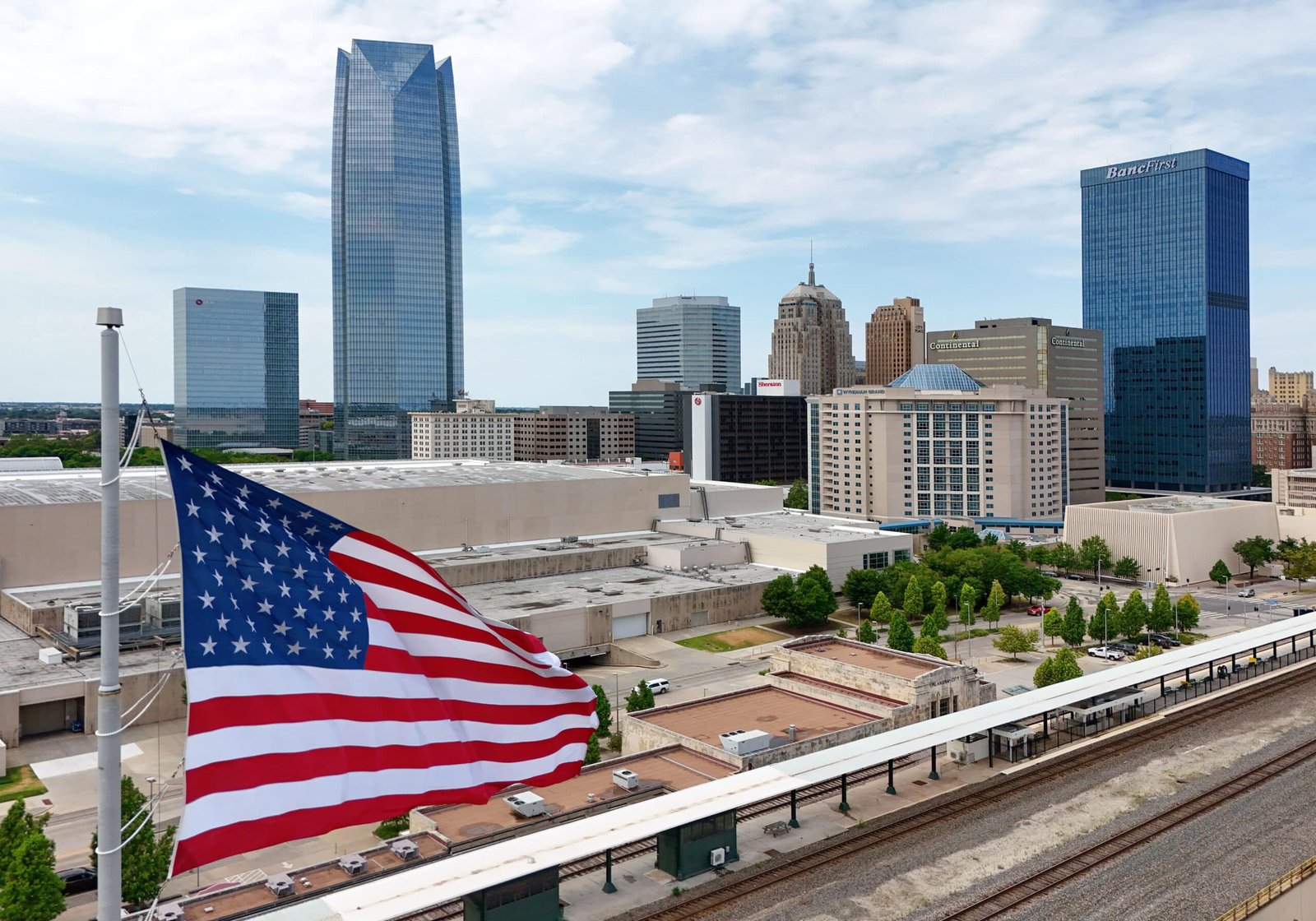
Thirty years back, downtown Oklahoma City looked like a ghost town once the workday ended. Empty sidewalks stretched between forgotten buildings while people from the suburbs rushed off to shopping malls and strip centers. These days, families wander through a 70-acre downtown park, couples enjoy dinner 844 feet up in the sky, and Thunder fans pack the bars past midnight. This incredible transformation didn’t just happen on its own, it took the biggest city investment plan America has ever seen.
Main Takeaways
- MAPS projects stand as America’s most remarkable urban comeback story, using debt-free funding to pour $1.75+ billion into the city over thirty years
- Six unique neighborhoods each bring their own vibe from the jazz roots of Deep Deuce to family fun in Bricktown
- Scissortail Park and Myriad Gardens give you 70+ acres of downtown green space linked by the stunning Skydance Bridge
- Pro sports arenas and world-class spots pull in millions of people to what used to be a deserted downtown
- A connected streetcar network ties all the neighborhoods together for just $1 a ride, making it easy to explore without a car
- Food choices span from old-school steakhouses to the state’s tallest restaurant 844 feet off the ground
- This comeback drives the economy for the Greater Oklahoma City metro area’s 1.44 million residents.
The 30-Year Investment Plan Behind the Comeback
MAPS (Metropolitan Area Projects) kicked off in 1993 as one of America’s boldest downtown revival projects. This funding approach uses a temporary penny sales tax to gather cash up front before construction starts, which means zero debt for taxpayers. This strategy looks nothing like what most cities do, they stick taxpayers with decades of bond payments and piling interest.
Think about downtown before MAPS, old-timers remember it as “dead after 5:00 PM”, then look at today’s buzzing round-the-clock energy. MAPS 3 put $777 million toward projects wrapped up between 2009-2019, and MAPS 4 got the green light from voters in 2019 for another $978 million in upgrades. Latest additions include the Omni Hotel, the bigger Convention Center, and the showpiece Scissortail Park.
From Empty Streets to Non-Stop Energy
This smart investment plan spreads across three decades of thoughtfully planned upgrades. The timeline shows steady wins. MAPS 1 tackled basic infrastructure and sports facilities, MAPS 2 focused on schools, MAPS 3 brought parks and public transit, and MAPS 4 keeps adding lifestyle improvements.
Downtown now powers the economy for the Greater Oklahoma City metro area’s 1.44+ million people. City reports show the central business district creates billions in yearly economic activity, backed by residential growth that jumped over 300% in some areas between 2000-2020.
Six Unique Neighborhoods That Shape Downtown's Personality

Bricktown - The Family-Friendly Entertainment Center
This old warehouse area turned into Oklahoma City’s top family entertainment spot. The Bricktown Canal brings Water Taxi rides that show off the historic red-brick warehouse buildings while connecting restaurants, shops, and fun spots. Sheridan Avenue runs through as the main street in this walker-friendly neighborhood.
Bricktown purposely keeps a tourist-welcoming feel with recognizable restaurant names, gift shops, and family activities. The area works because it owns its job as the first stop for people checking out downtown Oklahoma City.
Automobile Alley - Tech Hub with Vintage Neon
Broadway Avenue’s famous neon signs light up what locals used to call “Dealer’s Row.” This strip once held every big car dealership in town, creating a row of Art Deco showrooms and repair shops. Today, tech firms and retail shops fill restored buildings while keeping the special neon signs that give the area its character.
The feel mixes trendy retail with modern tech offices, building a corridor that seems both old and new at once. Young workers flock to Automobile Alley’s coffee spots, boutiques, and eateries that honor the area’s car history through their design and names.
Deep Deuce - From Jazz Hub to Upscale Homes
2nd Street runs through what was once the beating heart of Black culture and jazz in Oklahoma City. Back in the 1920s and 1930s, Deep Deuce rivaled Kansas City as a jazz hotspot, launching legendary musicians and hosting shows that drew crowds from all over. Writer Ralph Ellison grew up here, pulling inspiration for his books from the lively cultural scene.
Today’s residents live in upscale urban spots, converted historic buildings and fresh construction that respects the area’s cultural story. Deep Deuce manages to balance its jazz past with modern living spaces, creating a place where history adds to rather than limits today’s lifestyle.
Midtown, Arts District, and Film Row
These three connected areas each keep their own cultural personality while staying totally walkable. Midtown bridges downtown’s business center and historic neighborhoods to the north, featuring local shops and tree-lined streets that feel more like a neighborhood than a tourist zone.
The Arts District centers on the Civic Center Music Hall and Oklahoma City Museum of Art, creating a cultural hub for locals and visitors alike. Film Row got its name as an old movie distribution center and now holds creative companies, ad agencies, and restaurants in converted warehouse buildings.
World-Class Spots and a 70-Acre Downtown Paradise

Scissortail Park - Oklahoma City's Pride and Joy
This huge downtown oasis covers 70 acres split into Upper and Lower parts connected by the Skydance Bridge. The bridge works as both a landmark sculpture inspired by Oklahoma’s state bird, the Scissortail Flycatcher, and a pathway. Families use the park all year for festivals, concerts, activities, and daily workouts.
The park design weaves native Oklahoma plants with modern features like performance stages, playgrounds, and walking paths. Upper Scissortail Park links right to the Myriad Gardens, creating one continuous green space through downtown’s heart.
Myriad Botanical Gardens and Crystal Bridge
The Crystal Bridge Tropical Conservatory stretches 224 feet and protects over 750 types of plants from around the globe. This temperature-controlled space gives you tropical experiences year-round, no matter what Oklahoma’s weather throws at you. The Myriad Gardens around it offer seasonal draws including the loved Devon Ice Rink in winter and Pumpkinville through fall.
Families visit the gardens throughout the year for learning programs, seasonal events, and just relaxing in a downtown green space that matches what you’d find in bigger cities.
Oklahoma City National Memorial & Museum
This meaningful site remembers the 168 people killed in the 1995 Alfred P. Murrah Federal Building bombing. The outdoor Symbolic Memorial stays open 24 hours every single day with free entry for everyone. The design includes 168 empty bronze chairs for each victim and the Gates of Time marking 9:01 and 9:03 AM.
The indoor museum needs separate tickets and gives detailed exhibits about the bombing, rescue work, and healing journey. Many people choose to visit the outdoor memorial’s reflecting pool and peaceful space without going through the museum.
Oklahoma City Museum of Art
The museum holds one of the world’s biggest collections of Dale Chihuly glass art, showing the artist’s famous blown glass sculptures in a permanent display. Located in the Arts District, the museum stands as the main cultural spot for visual arts in central Oklahoma. Regular changing exhibits add to the permanent collection, so people visiting again find new things each time.
Pro Sports and Top Entertainment Spots
Paycom Center - Where the NBA Thunder Plays
This downtown arena holds about 18,203 people for basketball and serves as home for the NBA’s Oklahoma City Thunder. The building sits right in the business district, letting fans walk between games and restaurants or bars.
During playoffs, the “Thunder Up” energy spills from the arena into Thunder Alley and nearby businesses. Local bars and restaurants plan watch parties and pre-game celebrations that turn several city blocks into one big sports venue.
Chickasaw Bricktown Ballpark and Civic Center Music Hall
“The Brick” opened in 1998 and seats roughly 9,000 fans for Oklahoma City Comets games. The team plays as the Triple-A farm club of the Los Angeles Dodgers, bringing professional baseball to a retro-style stadium. Baseball magazines regularly call the ballpark one of America’s best minor league venues.
The Civic Center Music Hall works as the main performing arts center for touring Broadway shows and Oklahoma City Philharmonic concerts. The space’s sound quality and views create an intimate feel despite holding thousands of people.
Easy Transportation Connecting Every Neighborhood
OKC Streetcar System
The modern streetcar covers 4.9 miles of track with 22 stops throughout downtown. Single rides run $1.00, and 24-hour passes give you unlimited trips for $3.00. The system runs two main lines, the Downtown Loop connecting the business area with nearby neighborhoods, and the Bricktown Loop hitting entertainment spots.
Regular service links Bricktown, Automobile Alley, Midtown, and the Arts District without needing transfers or extra fees. The Oklahoma City Convention & Visitors Bureau says visitors use the streetcar heavily for sightseeing and getting between hotels and attractions.
The Underground and Other Ways to Get Around
The Underground gives you a climate-controlled tunnel system running about one mile under downtown’s office towers and parking garages. Business folks use these tunnels a lot during bad weather, and the tunnels also show rotating art displays. The Spokies bike-share program offers another way to get around. Stations all over downtown give you bikes for quick trips between neighborhoods or attractions.
From Old-Time Steakhouses to Sky-High Dining
Upscale Eating with City Views
Vast sits on the 49th floor of Devon Energy Center, making it Oklahoma’s highest restaurant at 844 feet up. The restaurant offers fixed-price menus with sweeping views of the city and surrounding plains. Reservations usually need advance booking, especially for sunset dinner times.
Rooftop bars keep popping up throughout Midtown and downtown, taking advantage of Oklahoma’s nice weather and dramatic sky views that stretch forever.
Historic Spots and Craft Beer Scene
Mickey Mantle’s Steakhouse in Bricktown honors the Oklahoma-born baseball legend while serving top-quality steaks in a sports-themed setting. Cattlemen’s Steakhouse, sitting in historic Stockyards City next to downtown, captures essential Oklahoma City culture with its 100+ year history of feeding ranchers and oil workers.
Bricktown Brewery started Oklahoma’s craft beer scene as the state’s first microbrewery before 2018 law changes opened up brewing across the state. The restaurant keeps its pioneer status while pouring both classic and creative beer styles.
Entertainment Dining and Cultural Spots
The Jones Assembly works as both a restaurant and big concert venue in Film Row, bringing in national touring bands while serving dinner in the same room. This mixed concept creates high-energy dining that’s nothing like traditional fancy restaurants elsewhere downtown.
The space’s industrial look reflects Film Row’s warehouse roots while giving you modern sound systems and lighting for both eating and entertainment.
Planning Your Downtown Oklahoma City Visit
Best Times to Check Out Each Area
Spring and fall bring the best weather for outdoor spots like Scissortail Park and streetcar rides, with temps typically between 60-80 degrees. Summer heat can push past 100 degrees, making indoor attractions like the Crystal Bridge Conservatory and Underground tunnels more comfortable picks.
Bricktown stays busy all week, while the Arts District sees the most people during weekend shows and First Friday art walks. Deep Deuce mostly serves as a living area with quieter evenings compared to entertainment-focused spots.
Getting Around and Connecting Neighborhoods
The streetcar gives you the easiest way to hit multiple areas in one day. A 24-hour pass lets you ride as much as you want between attractions while skipping downtown parking fees that usually run $5-15 daily in most spots.
Walking between major attractions rarely takes more than 10-15 minutes, making the whole downtown easy to cover on foot. The Underground tunnel system connects several parking garages with office buildings and hotels, giving you climate-controlled walking during extreme weather.
Frequently Asked Questions
MAPS (Metropolitan Area Projects) represents America's most successful downtown revival funding approach, using temporary penny sales taxes to collect money before building anything. This debt-free method contrasts with traditional city financing that loads up taxpayers with decades of bond payments and interest charges. City reports show MAPS 1 (1993), MAPS 3 ($777 million), and MAPS 4 ($978 million) have collectively poured over $1.75 billion into improvements over thirty years.
The transformation works through voter approval for each MAPS round, making sure the community supports it before projects start. Each program focuses on specific upgrades: MAPS 1 handled basic infrastructure and sports venues, MAPS 3 delivered parks and transit, while MAPS 4 keeps expanding lifestyle features like more parks and mental health facilities.
The effects reach beyond downtown boundaries, creating an economic powerhouse for the Greater Oklahoma City metro area's 1.44 million people. The Oklahoma City Convention & Visitors Bureau documents how downtown now creates billions in yearly economic activity compared to the mostly empty business district that existed before MAPS started.
First-timers should begin with Bricktown for its packed entertainment options and tourist-friendly setup including the canal with Water Taxi service. This area gives you the best introduction to downtown's transformation while offering family activities, restaurants, and the Chickasaw Bricktown Ballpark for baseball.
Scissortail Park should be your second must-see, showing off the 70-acre downtown paradise that proves MAPS investment success. The park connects to Myriad Gardens through the eye-catching Skydance Bridge, letting you experience both major green spaces in one walk. The Oklahoma City Convention & Visitors Bureau suggests timing this visit during daylight to fully appreciate the landscape design and downtown skyline views.
Smart planning should include the Oklahoma City National Memorial & Museum for its historical importance and the Arts District for cultural experiences. The memorial's outdoor parts stay open 24/7 without entry fees, while museum tickets give you deeper learning experiences. Automobile Alley and Deep Deuce offer more local vibes that reward people staying several days or wanting residential neighborhood feels.
Single streetcar rides run $1.00, while 24-hour unlimited passes give you access for $3.00, making it super affordable compared to other city transit systems. EMBARK OKC operates the 4.9-mile track serving 22 stops with two main lines: the Downtown Loop connecting business areas with nearby neighborhoods, and the Bricktown Loop focused on entertainment zones.
You can pay with exact cash, mobile apps, or passes bought at station machines throughout the system. The Oklahoma City Convention & Visitors Bureau reports most visitors pick 24-hour passes for convenience and savings when checking out multiple areas in one day.
Smart route planning maximizes value by using the streetcar to connect major attractions without parking fees that typically cost $5-15 daily in downtown spots. The system runs regular schedules all week, with longer hours during special events like Thunder games or downtown festivals that boost ridership.
Vast sits on the 49th floor of Devon Energy Center at 844 feet up, making it Oklahoma's highest dining spot with sweeping city views and fixed-price menus needing advance reservations. Mickey Mantle's Steakhouse in Bricktown honors the Oklahoma-born baseball star while serving premium steaks in a sports-themed setting loved by families and baseball fans.
Historic places include Cattlemen's Steakhouse in neighboring Stockyards City, representing over 100 years of Oklahoma dining culture with real steakhouse traditions from the cattle and oil boom days. Bricktown Brewery pioneered Oklahoma's craft beer scene as the state's first microbrewery, pouring both classic and experimental beer styles alongside American food.
Modern choices like The Jones Assembly mix dining with live entertainment in Film Row's converted warehouses, hosting national touring acts while serving dinner. This combined restaurant-venue concept creates high-energy experiences that contrast with traditional fine dining places, showing downtown's diverse food scene that spans from historic to cutting-edge spots.
Downtown Oklahoma City keeps strong public safety through more police presence, better lighting, and active street life that continues into evening hours, particularly in entertainment areas like Bricktown and zones around Thunder games. The Greater Oklahoma City Chamber reports downtown crime rates have dropped significantly since MAPS-funded revival brought more residents and visitors to previously vacant areas.
Well-lit zones include the entire streetcar route, major attractions like Scissortail Park (though park hours change by season), and entertainment areas where businesses stay open evenings. The Underground tunnel system gives you climate-controlled walking connecting parking garages with hotels and office buildings, though these tunnels mainly serve business hours rather than late-night use.
Smart safety steps include staying within the central entertainment and business areas where foot traffic stays steady, using the streetcar for getting between neighborhoods after dark, and following standard city precautions like staying aware of your surroundings. The Oklahoma City Convention & Visitors Bureau notes most visitor safety worries relate to extreme weather rather than crime, particularly during tornado seasons or ice storms.
Scissortail Park covers 70 acres split into Upper and Lower sections connected by the stunning Skydance Bridge, creating Oklahoma City's biggest downtown green space and a centerpiece of the MAPS 3 investment program. The park design weaves native Oklahoma plants with modern features including performance stages, playgrounds, walking paths, and open areas for festivals and community events throughout the year.
Things to do range from daily activities like jogging and playground fun to major festivals and concerts that can hold thousands of people. The City of Oklahoma City schedules regular programs including fitness classes, cultural events, and seasonal celebrations that use the park's flexible spaces and stage facilities.
Smart park planning connects directly to Myriad Gardens through walking paths, creating an unbroken green corridor through downtown's heart. The Skydance Bridge serves two purposes as both a working pedestrian crossing and a landmark sculpture inspired by Oklahoma's state bird, the Scissortail Flycatcher, making it a popular photography spot and symbol of the city's investment in public art and infrastructure.
The outdoor Oklahoma City National Memorial stays open 24 hours every day, all year with totally free entry for everyone, featuring the 168 empty bronze chairs representing bombing victims and the Gates of Time marking 9:01 and 9:03 AM. The Oklahoman reports the outdoor memorial parts include the reflecting pool, Survivor Tree, and various symbolic elements designed for quiet thinking and remembrance.
The indoor Oklahoma City National Memorial & Museum needs separate admission tickets and runs on scheduled hours with detailed exhibits about the 1995 bombing, rescue work, and community healing process. Museum tickets provide learning experiences through artifacts, testimonies, and interactive displays that add to but stay separate from the outdoor memorial experience.
Planning tips include understanding the difference between free outdoor access and ticketed museum experiences, allowing enough time for both parts if wanted, and respecting the solemn nature of the site regardless of which areas you choose to visit. Many people find the outdoor memorial's peaceful atmosphere and symbolic design provide meaningful experiences without needing museum admission.
Downtown parking strategies vary by where you're going and your budget, with daily rates typically $5-15 in most spots, while some premium locations near major events or attractions can hit $20-25 for special occasions like Thunder games. The Underground tunnel system connects several parking garages with office buildings and hotels, giving climate-controlled access during extreme weather.
Streetcar access cuts parking needs by letting you park once and use the $3 daily pass system to visit multiple areas without moving your car. Popular parking spots include structures near the Paycom Center for Thunder games, Bricktown garages for entertainment district access, and Arts District lots for museum and performing arts visits.
Money-saving strategies include parking in less central spots and using the streetcar for transportation, picking hotels with included parking when staying downtown, or using ride-sharing services for evening entertainment when parking fees peak during special events. The Oklahoma City Convention & Visitors Bureau provides updated parking maps and rate info for people planning extended downtown stays.
Bricktown purposely keeps a tourist-friendly, family-welcoming atmosphere with recognizable restaurant chains, souvenir shops, and entertainment spots designed for visitors rather than local residents, contrasting with other areas that blend visitor attractions with homes and businesses. The old warehouse district features the Bricktown Canal with Water Taxi service, historic red-brick buildings, and Sheridan Avenue as the main walking street.
Other neighborhoods serve more specialized roles: Automobile Alley works as a tech and retail corridor with famous neon lighting, Deep Deuce provides upscale residential living with jazz history, and the Arts District centers on cultural spots like the Oklahoma City Museum of Art and Civic Center Music Hall. Each keeps distinct building styles and target audiences.
Smart visiting approaches recognize Bricktown's role as the starting point for downtown exploration, offering the biggest concentration of visitor services and tourist features, while other areas reward deeper exploration for their authentic local character. The Oklahoma City Convention & Visitors Bureau notes most visitors start in Bricktown before discovering the more specialized attractions and atmospheres available in nearby neighborhoods.
A thorough downtown Oklahoma City experience needs 2-3 full days to visit all major attractions without rushing, though you can see highlights in one packed day using the streetcar for efficient travel between neighborhoods. Major attractions include Scissortail Park, Myriad Gardens with Crystal Bridge, Oklahoma City National Memorial & Museum, Oklahoma City Museum of Art, and neighborhood-specific experiences in Bricktown, Automobile Alley, and Deep Deuce.
Time needs vary by interest levels: the outdoor memorial can be experienced in 30-45 minutes while the indoor museum adds 2-3 hours, Scissortail Park and Myriad Gardens combine for 2-4 hours depending on activities, and each neighborhood needs 1-2 hours for walking and basic exploration. The Oklahoma City Convention & Visitors Bureau suggests planning extra time during special events, Thunder games, or festival seasons when crowds affect movement between attractions.
Smart touring strategies include using the 24-hour streetcar pass ($3) for transportation, starting with outdoor attractions during good weather, and grouping indoor attractions during extreme temperatures. Evening activities like dining, entertainment venues, or Thunder games can extend daily schedules while giving different perspectives on downtown's nighttime atmosphere and lighting displays.
The Skydance Bridge works as both a working pedestrian crossing and a landmark sculpture inspired by Oklahoma's state bird, the Scissortail Flycatcher, connecting the Upper and Lower sections of the 70-acre Scissortail Park. The bridge's artistic design weaves the bird's distinctive tail feathers into its architectural structure, creating a visual symbol of Oklahoma identity that's visible from throughout downtown.
Practical benefits include providing safe pedestrian access across Interstate 40 while connecting Scissortail Park to the broader downtown area, removing barriers between the park and other attractions. The City of Oklahoma City designed the bridge as part of the MAPS 3 program to serve both transportation and artistic purposes, making it one of downtown's most photographed landmarks.
Cultural importance extends beyond transportation, representing Oklahoma City's commitment to public art and infrastructure that reflects regional identity. The bridge design process involved community input and artistic teamwork to ensure the final structure honored the state bird while providing practical benefits for park visitors and downtown walkers. Its prominence in marketing materials and social media shows how working infrastructure can boost civic pride and tourism appeal.
Downtown Oklahoma City offers multiple hotel choices ranging from luxury places like the Omni Hotel (completed as part of MAPS 3) to boutique properties and national chains, providing convenient access to all major attractions and neighborhoods within walking distance or short streetcar rides. The Omni Hotel connects directly to the Convention Center and sits next to Scissortail Park, representing the newest luxury choice in the downtown core.
Hotel features typically include parking packages, concierge services familiar with local attractions, and dining options that add to rather than compete with downtown's restaurant scene. The Oklahoma City Convention & Visitors Bureau keeps updated lists of downtown hotels with seasonal rates and package deals that include attraction tickets or dining credits.
Smart location thinking includes picking hotels near the streetcar route for easy transportation, closeness to specific attractions based on personal interests, and parking availability if driving between Oklahoma City and other destinations. Downtown hotels provide the most complete access to walking tours, entertainment venues, and nightlife while removing the need for transportation between hotels and major attractions.
The Underground provides a climate-controlled pedestrian tunnel network covering about one mile beneath downtown's office towers and parking garages, designed mainly for business professionals during extreme weather but accessible to visitors exploring connected buildings. The system features rotating art displays and connects major office buildings, hotels, and parking structures without needing surface street navigation.
Practical uses include providing shelter during Oklahoma's severe weather events like ice storms, tornadoes, or extreme heat, while also serving as an interesting architectural feature showing downtown's infrastructure investment. Business professionals use the tunnels heavily during winter and summer when surface temperatures make outdoor walking uncomfortable.
Entry points include major hotels, office buildings, and parking garages throughout the business district, though the system mainly operates during business hours rather than providing round-the-clock access. The Oklahoma City Convention & Visitors Bureau notes that while the Underground offers unique experiences for visitors interested in city infrastructure, most tourist activities happen above ground where attractions, restaurants, and entertainment venues keep street-level access.
Spring (March-May) and fall (September-November) provide the best weather for outdoor activities with temperatures typically between 60-80 degrees, making walking tours, park visits, and streetcar rides most comfortable while avoiding Oklahoma's extreme summer heat and occasional winter ice storms. The Oklahoma City Convention & Visitors Bureau reports peak tourist seasons during these mild weather periods when outdoor attractions like Scissortail Park and canal boat rides work under ideal conditions.
Summer visits (June-August) need planning around high temperatures that often exceed 100 degrees, making indoor attractions like the Crystal Bridge Conservatory, Underground tunnel system, and air-conditioned venues more appealing during midday hours. Evening activities become more practical during summer when temperatures cool and outdoor dining or entertainment venues provide comfortable experiences.
Winter thinking (December-February) includes occasional ice storms that can affect transportation and outdoor activities, though indoor attractions stay fully accessible and crowds drop significantly. Special events like Thunder basketball season (October-April), holiday celebrations, and seasonal programming at venues like Devon Ice Rink can make winter visits rewarding for people prioritizing specific activities over outdoor exploration.
Thunder tickets are available through the team's official website, Paycom Center box office, and authorized ticket sellers, with pricing varying significantly between regular season games and playoff matchups when demand shoots up dramatically. The NBA team's "Thunder Up" culture extends beyond the 18,203-seat arena into surrounding Thunder Alley and downtown bars, creating a citywide celebration during playoff seasons.
The vibe intensifies during competitive games when fans pack nearby restaurants and bars before tip-off, with many places offering watch parties and Thunder-themed deals. The team's connection to Oklahoma City identity runs deeper than typical sports fandom, representing civic pride in the city's ability to support major league professional sports after the MAPS-funded arena construction.
Game day strategies include showing up early to experience pre-game activities in Thunder Alley and surrounding entertainment areas, using the streetcar to avoid parking challenges near the arena, and planning post-game activities since many downtown venues extend hours during home games. The Greater Oklahoma City Chamber reports Thunder games create significant economic activity throughout downtown, making game nights among the most energetic experiences available in the city.
Automobile Alley's identity comes from its historic role as "Dealer's Row" where every major car dealership occupied Art Deco showrooms along Broadway Avenue, creating a corridor of automotive commerce that defined Oklahoma City's relationship with car culture throughout the mid-1900s. The neighborhood's famous neon signs represent real historical elements rather than tourist recreations, preserving the visual character that made this area distinctive.
Today's businesses include tech companies, retail stores, and restaurants that occupy restored automobile showrooms and service centers while keeping the architectural elements that reflect the area's automotive heritage. The vibe mixes professional tech workers with retail customers and dining patrons, creating a corridor that feels both historic and cutting-edge.
Preservation work focuses on keeping neon signs, Art Deco architectural details, and the area's linear character along Broadway Avenue, setting it apart from the warehouse architecture of Bricktown, residential character of Deep Deuce, or cultural focus of the Arts District. Automobile Alley represents successful reuse that honors historical identity while welcoming modern business needs and urban density.
Multiple tour options explore downtown Oklahoma City including walking tours, trolley services, and specialized experiences focusing on MAPS projects, architectural history, or cultural attractions, though self-guided exploration using the streetcar gives you flexibility and saves money for independent travelers. The Oklahoma City Convention & Visitors Bureau coordinates with local tour companies to provide updated schedules and booking info for people preferring structured experiences.
Self-guided options include the streetcar system's natural touring route connecting all major neighborhoods and attractions, downloadable walking tour maps highlighting historical markers and architectural features, and mobile apps providing audio commentary for specific landmarks. The 4.9-mile streetcar network works as an informal tour system with stops at every major attraction for $3 daily access.
Specialized tours may focus on Oklahoma City National Memorial education, architectural preservation examples, or MAPS project impacts on urban development, appealing to people with specific interests in history, urban planning, or cultural development. Many hotels and visitor centers provide tour suggestions based on guest interests, physical abilities, and available time for downtown exploration.
Driving Directions From Downtown Oklahoma City, Oklahoma City, OK to 5-Star Towing OKC, 2800 SW 25th St, Oklahoma City, OK 73108 - 11 min (6.9 miles) via I-40 W
Downtown Oklahoma City, Oklahoma City, OK
Get on I-235 S from N Walnut Ave - 2 min (0.5 mi)
Drive along I-40 W. Take exit 148A from I-40 W - 6 min (4.7 mi)
Continue on S May Ave to your destination - 4 min (1.7 mi)
5-Star Towing OKC, 2800 SW 25th St, Oklahoma City, OK 73108.
We also offer towing and roadside assistance services in Plaza District, OKC.