
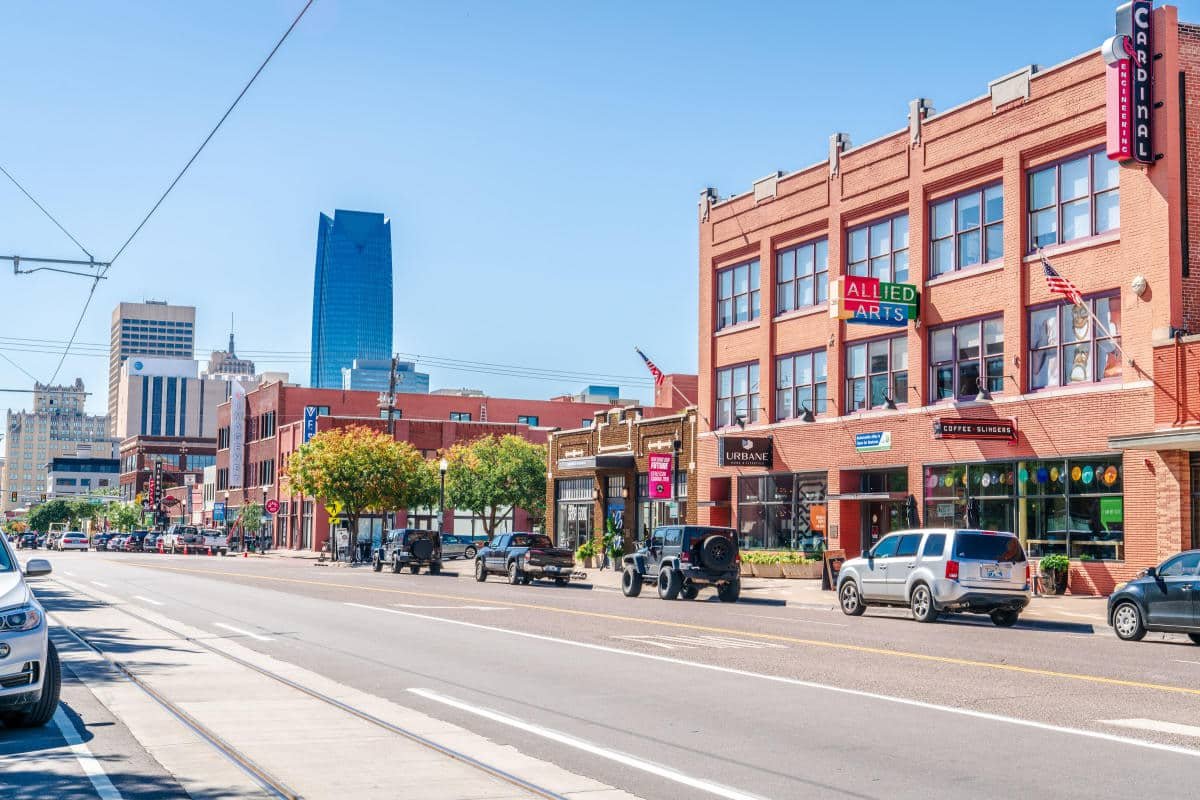
Broadway Avenue hums with electric energy on a crisp December evening, strings of LED lights cascading down century-old brick facades like illuminated waterfalls. You’re standing in what was once Oklahoma City’s automotive heartbeat, where Buick showrooms and Ford assembly plants defined commerce in the 1920s. Today, these same buildings pulse with craft cocktails, immersive art installations, and boutique shopping that draws visitors from across the Southwest.
Key Takeaways
- Historic automotive district spanning NW 4th to NW 13th Street along North Broadway Avenue
- Features 52 original auto dealerships from the 1920s converted into modern venues
- Home to famous Lights on Broadway winter display with 180,000+ LED lights
- Accessible via OKC Streetcar with stops at Broadway & 4th and Broadway & 10th
- Houses Factory Obscura’s interactive art experiences and Oklahoma Contemporary Arts Center
- Monthly Auto Alley Shop Hop events encourage late-night shopping and community engagement
- Walkable district connecting downtown’s Central Business District to Midtown and Deep Deuce
How Oklahoma City's Historic Car District Became Today's Hottest Neighborhood
Automobile Alley earned its name honestly. During the roaring 1920s boom, this stretch of North Broadway Avenue housed 52 of Oklahoma City’s first 59 automobile dealerships. Picture gleaming Buicks positioned behind massive commercial glass windows, Ford Model T’s rolling off nearby assembly lines, and neon signs advertising the latest automotive innovations.
The district’s distinctive brick buildings featured wide commercial bays specifically designed to showcase vehicles, with high ceilings and open floor plans that maximized display space.
These architectural features proved perfect for adaptive reuse decades later. Developers preserved the industrial skeleton while converting service bays into loft apartments and showrooms into modern offices.
The original neon signs remain illuminated, maintaining the vintage aesthetic that gives Automobile Alley its character. Commercial brick structures with their characteristic wide bays now house everything from upscale restaurants to artist studios, creating a seamless blend of preservation and innovation.
Architectural Heritage Drives Modern Appeal
The 1920s architecture tells a story of American automotive optimism. Large commercial glass windows that once displayed gleaming automobiles now frame trendy restaurants and boutique storefronts. Exposed brick walls and soaring ceilings create dramatic backdrops for contemporary businesses while honoring the district’s industrial past.
This adaptive reuse concept extends throughout the entire corridor from NW 4th Street to NW 13th Street. Each building maintains its original character while serving modern purposes, proving that historic preservation and urban development can coexist successfully.
Where Historic Brick Buildings House Oklahoma City's Most Innovative Dining Scene
Food defines much of Automobile Alley’s current identity. The district balances upscale dining with casual breakfast spots, creating options for business lunches and weekend hangouts alike.
Broadway 10 Bar & Chophouse exemplifies this transformation, utilizing the vast open floor plan of the historic Buick building to create an upscale steakhouse experience. The restaurant’s design celebrates the automotive heritage while delivering contemporary fine dining.
Hatch Early Mood Food attracts weekend crowds with their popular breakfast and brunch offerings. You might need to wait a bit during peak hours, but the quality makes it worthwhile. For variety under one roof, Parlor OKC operates as a food hall where multiple chefs and mixologists offer burger, pizza, and Asian fusion concepts alongside craft cocktails.
Local Favorites and Oklahoma Traditions
Hideaway Pizza represents Oklahoma dining tradition with their famous “Paradise Pie,” while Sidecar Barley & Wine Bar draws whiskey enthusiasts to their extensive selection and outdoor patios. Coffee Slingers pioneered the district’s craft coffee movement, roasting beans locally and setting the standard for the area’s caffeine culture.
The dining scene emphasizes farm-to-table ingredients and craft cocktails, appealing to both locals seeking familiar comfort and visitors wanting authentic Oklahoma flavors. These establishments transformed former auto service bays into intimate dining spaces while preserving the industrial aesthetic that makes each meal feel like a step back in time.
Over 180,000 LED Lights Transform Historic Buildings Into Oklahoma's Premier Winter Wonderland
Lights on Broadway transforms Automobile Alley into Oklahoma’s most spectacular holiday display. Running from late November through early January, this installation features 180,000 to 200,000 colorful LED lights arranged in vertical strands that create curtain effects across entire building facades.
Unlike traditional tree wrappings, these lights drape the historic brick structures like illuminated fabric, emphasizing the architectural lines while adding contemporary brilliance. The lighting display coincides with regular community events that extend engagement beyond the holiday season.
Auto Alley Shop Hop happens on the third Thursday of every month, when shops stay open until 8:00 PM and sidewalk entertainment creates a festival atmosphere. These monthly events encourage late-night shopping with special retail promotions and live performances.
Community Events Build Year-Round Appeal
Shop Hops represent the district’s commitment to community engagement. Local businesses coordinate special promotions, artists showcase their work on sidewalks, and musicians perform throughout the corridor. These events create the best opportunities for locals to experience Automobile Alley’s full personality while supporting independent businesses.
The combination of monthly Shop Hops and the annual Lights on Broadway display establishes Automobile Alley as a year-round destination rather than a seasonal attraction. Visitors discover that the historic architecture provides stunning backdrops whether illuminated by holiday lights or bathed in natural sunlight.
Independent Boutiques and Conscious Commerce Define the Local Shopping Experience
Automobile Alley’s shopping scene deliberately excludes big-box chains in favor of local, independent business owners. This curation creates a unique retail environment focused on sustainable goods, vintage clothing, and lifestyle boutiques that reflect Oklahoma values and creativity. Plenty Mercantile exemplifies this approach with sustainable goods, eco-friendly gifts, and a rooftop venue for community events.
Shop Good combines fashion with philanthropy, offering hand-printed tees and ethically sourced clothing while donating portions of sales to local charities. Common Dear empowers women and LGBTQ+ artists through their colorful, inclusive gift shop that celebrates diversity and creativity. Johnny and June specializes in vintage clothing and decor, appealing to shoppers seeking authentic pieces with history.
High Ceilings and Artful Displays Create Shopping Theater
The shopping aesthetic leverages the district’s architectural advantages. High ceilings and exposed brick walls provide dramatic backdrops for artful merchandise displays. These spaces feel more like galleries than traditional retail stores, encouraging browsing and discovery rather than rushed transactions.
This conscientious consumer approach extends throughout the district, where sustainability and charitable causes influence business practices. Shoppers appreciate supporting local artisans and entrepreneurs while finding unique items unavailable in conventional retail environments.
Factory Obscura's Mix-Tape and Interactive Art Experiences Redefine Gallery Culture
Automobile Alley distinguishes itself from standard gallery districts through immersive art experiences that invite participation rather than passive observation. Factory Obscura leads this movement with their permanent exhibition Mix-Tape, a 6,000-square-foot interactive experience celebrating 1980s mixtape nostalgia. Visitors can touch, crawl through, and listen to art installations designed to engage multiple senses simultaneously.
Oklahoma Contemporary Arts Center anchors the northern tip of the district with free exhibitions featuring rotating modern art displays. The center’s contemporary architecture contrasts beautifully with Automobile Alley’s historic brick buildings while maintaining the area’s commitment to artistic innovation. Door in the Alley adds intrigue with its speakeasy-style retail and curiosity shop entrance.
Street Art and Murals Create Outdoor Galleries
Beyond indoor venues, outdoor murals and public art installations transform Automobile Alley’s sidewalks into photography destinations. These works celebrate both the district’s automotive heritage and contemporary Oklahoma culture, creating Instagram-worthy backdrops that attract younger visitors while educating them about local history.
The contrast between hands-on Factory Obscura experiences and contemplative Oklahoma Contemporary exhibitions ensures art lovers find experiences matching their preferences. This variety reinforces Automobile Alley’s reputation as a cultural destination that appeals to diverse tastes and interests.
OKC Streetcar and Downtown Loop Make Car-Free Exploration Simple
Automobile Alley’s location directly north of Central Business District creates convenient access via multiple transportation options. The OKC Streetcar operates on the Downtown Loop with specific stops at Broadway & 4th and Broadway & 10th, allowing visitors to park once and explore multiple districts without driving between destinations.
This highly walkable district serves as a connector between Midtown to the west and Deep Deuce to the south and east. The streetcar enables seamless movement between Automobile Alley and popular destinations like Bricktown, making it easy to experience Oklahoma City’s diverse neighborhoods in a single visit.
Parking Strategy Enhances the Experience
Street parking is available but metered throughout the district. Parking garages provide better options for longer stays, especially during events like Shop Hops or when visiting multiple restaurants and shops. The walkable design means parking once serves all your Automobile Alley activities.
The public transit connectivity transforms potential parking challenges into opportunities for car-free exploration. Visitors discover that leaving their vehicles behind enhances the experience by encouraging walking, which reveals architectural details and street art easily missed when driving.
Frequently Asked Questions
Automobile Alley is a historic district along North Broadway Avenue that served as Oklahoma City's primary automotive hub during the 1920s, housing 52 of the city's first 59 car dealerships.
The district features distinctive brick buildings with large commercial windows originally designed to showcase vehicles, now transformed into a vibrant neighborhood with restaurants, shops, art galleries, and entertainment venues.
The area spans roughly from NW 4th Street to NW 13th Street and maintains its vintage character through preserved neon signs and adaptive reuse of automotive buildings.
The district represents one of Oklahoma City's most successful urban revitalization projects, demonstrating how historic preservation can create modern economic value.
Original showrooms and service bays have been converted into lofts, offices, restaurants, and retail spaces while maintaining the industrial architectural elements that give the area its distinctive character. This transformation has created a unique neighborhood that honors its automotive heritage while serving contemporary urban needs.
Automobile Alley occupies the stretch of North Broadway Avenue from approximately NW 4th Street to NW 13th Street, positioned directly north of Oklahoma City's Central Business District.
This strategic location makes it easily accessible from downtown and serves as a connector between Midtown to the west and Deep Deuce to the south and east. The district's proximity to major downtown attractions makes it an ideal destination for visitors exploring multiple Oklahoma City neighborhoods.
The area benefits from excellent walkability and public transportation access through the OKC Streetcar system, which operates on the Downtown Loop with specific stops at Broadway & 4th and Broadway & 10th.
This connectivity allows visitors to park once and explore multiple districts without needing to drive between destinations. Street parking is available throughout the district but metered, while several parking garages provide convenient options for longer visits.
Broadway 10 Bar & Chophouse stands out as the district's premier upscale dining destination, utilizing the vast open floor plan of the historic Buick building to create an elegant steakhouse experience.
Hatch Early Mood Food draws weekend crowds with exceptional breakfast and brunch offerings, though you might encounter some wait times on busy weekends. Parlor OKC operates as a food hall featuring multiple chefs and mixologists offering diverse concepts including burgers, pizza, and Asian fusion alongside craft cocktails.
Traditional Oklahoma favorites include Hideaway Pizza, famous for their "Paradise Pie," and Sidecar Barley & Wine Bar, which attracts whiskey enthusiasts with an extensive selection and appealing outdoor patios.
Coffee Slingers represents the district's pioneering craft coffee culture, roasting beans locally and maintaining high quality standards. The dining scene emphasizes farm-to-table ingredients and craft cocktails, creating options suitable for both business lunches and casual group gatherings.
Lights on Broadway illuminates Automobile Alley from late November through early January each year, transforming the historic district into Oklahoma's most spectacular holiday display. The installation features between 180,000 and 200,000 colorful LED lights arranged in vertical strands that create dramatic curtain effects across entire building facades.
Unlike traditional holiday decorations wrapped around trees, these lights drape the brick structures like illuminated fabric, emphasizing architectural lines while adding contemporary brilliance.
The lighting display coordinates with regular community events that extend engagement beyond the holiday season, including the monthly Auto Alley Shop Hop occurring on the third Thursday of every month.
During these events, shops stay open until 8:00 PM and feature sidewalk entertainment, special retail promotions, and live performances that create a festival atmosphere throughout the district.
The OKC Streetcar provides convenient access to Automobile Alley through the Downtown Loop system, with designated stops at Broadway & 4th and Broadway & 10th that serve the district's northern and southern boundaries.
This public transit option allows visitors to park once in downtown Oklahoma City and explore multiple neighborhoods without driving between destinations. The streetcar operates regularly throughout the day and connects Automobile Alley to popular destinations like Bricktown and other downtown attractions.
The district's location directly north of the Central Business District makes it highly walkable and easily accessible from downtown hotels and attractions.
Visitors can combine streetcar transportation with walking to experience the full character of the historic neighborhood, including street art, architectural details, and outdoor installations that are best appreciated on foot. This transportation strategy eliminates parking concerns while encouraging deeper exploration of the district's unique features.
Factory Obscura is an artist collective that creates immersive art experiences, distinguished from traditional galleries by encouraging visitor participation rather than passive observation.
Their permanent exhibition, Mix-Tape, spans 6,000 square feet and celebrates 1980s mixtape nostalgia through interactive installations that visitors can touch, crawl through, and listen to while experiencing art through multiple senses. The space transforms the conventional gallery model into an adventure playground for adults and children alike.
The experience contrasts with other Automobile Alley art venues like Oklahoma Contemporary Arts Center, which offers more traditional exhibitions with rotating modern art displays and contemporary architecture.
Factory Obscura's hands-on approach appeals to visitors seeking unique photo opportunities and memorable experiences that go beyond viewing art from a distance. The installation regularly updates elements to maintain freshness for repeat visitors while preserving core experiences that define the Mix-Tape concept.
Street parking is available throughout Automobile Alley but operates on a metered system that requires payment during business hours. For longer visits, especially during events like the monthly Auto Alley Shop Hop or when planning to visit multiple restaurants and shops, parking garages provide more convenient and often more economical options.
The district's compact, walkable design means parking once serves all your activities within the area. Several parking facilities serve the district, and the walkable layout encourages leaving your vehicle in one location while exploring on foot.
This approach enhances the experience by allowing visitors to notice architectural details, street art, and outdoor installations that might be missed when driving between destinations. During special events like Lights on Broadway, arriving early or using public transportation through the OKC Streetcar system helps avoid parking challenges during peak attendance periods.
Automobile Alley's shopping scene exclusively features local, independent businesses rather than national chains, creating a curated retail environment focused on unique finds and conscious commerce.
Plenty Mercantile specializes in sustainable goods and eco-friendly gifts while maintaining a rooftop venue for community events. Shop Good combines fashion with philanthropy through hand-printed tees and ethically sourced clothing, donating portions of sales to local charities.
Common Dear operates as a colorful, inclusive gift shop that empowers women and LGBTQ+ artists, while Johnny and June focuses on vintage clothing and home decor for shoppers seeking authentic pieces with history.
The shopping aesthetic leverages the district's architectural advantages, with high ceilings and exposed brick walls creating dramatic backdrops for artful merchandise displays that feel more like gallery exhibitions than traditional retail environments.
Auto Alley Shop Hop happens on the third Thursday of every month, creating regular opportunities for community engagement and extended shopping experiences.
During these events, participating shops stay open until 8:00 PM instead of their usual closing times, and the district features sidewalk entertainment, live music performances, and special retail promotions that create a festival atmosphere throughout the corridor.
These monthly events represent the best times for locals and visitors to experience Automobile Alley's full personality while supporting independent businesses.
The Shop Hop format encourages browsing multiple stores, discovering new businesses, and interacting with shop owners and local artists who often showcase their work during these evening events. The consistent monthly schedule allows visitors to plan return trips and experience the district's evolving retail landscape.
Automobile Alley earned its name during Oklahoma City's 1920s economic boom, when this stretch of North Broadway Avenue housed 52 of the city's first 59 automobile dealerships. The district featured gleaming Buick showrooms, Ford assembly plants, and innovative neon signage that advertised the latest automotive technologies to eager consumers.
The area's distinctive brick buildings were specifically designed with wide commercial bays, high ceilings, and large glass windows to maximize vehicle display space and attract potential buyers. The district's decline began as automobile sales moved to suburban locations, leaving many historic buildings vacant or underutilized for decades.
Urban revitalization efforts beginning in the late 20th century recognized the architectural value and strategic location of these structures, leading to successful adaptive reuse projects that converted showrooms into restaurants, service bays into loft apartments, and the entire district into a vibrant mixed-use neighborhood that honors its automotive heritage while serving contemporary urban needs.
Automobile Alley is highly walkable, spanning a compact area from NW 4th Street to NW 13th Street along North Broadway Avenue that allows visitors to experience restaurants, shops, art galleries, and entertainment venues without needing transportation between destinations.
The district's design encourages pedestrian exploration, with wide sidewalks, street art installations, and architectural details that reward walking over driving. This walkability is enhanced by the area's flat terrain and grid layout that makes navigation simple and intuitive.
The pedestrian-friendly environment connects seamlessly with Oklahoma City's broader walkable infrastructure, including access to the OKC Streetcar system and proximity to downtown attractions.
Visitors discover that walking reveals details easily missed when driving, including preserved neon signs, outdoor murals, and the architectural elements that give each building its unique character. The walkable design also supports the district's community events like monthly Shop Hops, where pedestrian traffic creates the social atmosphere that makes these gatherings successful.
Oklahoma Contemporary Arts Center anchors the northern tip of Automobile Alley with free exhibitions featuring rotating displays of modern and contemporary art in a purpose-built facility that contrasts beautifully with the district's historic brick architecture.
Factory Obscura offers a completely different experience through immersive, interactive installations like their permanent Mix-Tape exhibition, which encourages visitors to touch, explore, and participate rather than simply observe artwork from a distance.
The district also features numerous outdoor art installations and murals that transform sidewalks and building walls into open-air galleries suitable for photography and casual appreciation.
Door in the Alley adds intrigue with its speakeasy-style retail space that doubles as a curiosity shop and artistic venue. This variety ensures art enthusiasts find experiences matching their preferences, from contemplative gallery spaces to hands-on adventures that redefine traditional gallery culture.
Factory Obscura Mix-Tape operates as a ticketed experience, though specific pricing information varies based on timing, group size, and special promotions. The 6,000-square-foot interactive installation represents a significant investment in immersive art technology and ongoing maintenance, which is reflected in admission costs that support the artist collective's continued operations and facility improvements.
Advance ticket purchase is recommended, especially during peak periods like weekends and holiday seasons. The experience provides significant value through its unique, hands-on approach to art appreciation that differs from traditional gallery visits.
Visitors can spend extended time exploring different installations, taking photographs, and engaging with the 1980s mixtape theme through multiple interactive elements. Group discounts and special event pricing may be available, and the experience often coordinates with other Automobile Alley businesses to create package deals during events like the monthly Auto Alley Shop Hop.
Automobile Alley's location directly north of Oklahoma City's Central Business District provides convenient access to numerous downtown hotels within walking distance or a short streetcar ride.
The district's connectivity through the OKC Streetcar system makes it easily accessible from accommodations throughout the downtown core, including business hotels, boutique properties, and extended-stay facilities that serve both leisure and business travelers.
Visitors staying in downtown Oklahoma City can reach Automobile Alley via the streetcar stops at Broadway & 4th and Broadway & 10th, making hotel location less critical than choosing accommodations that provide convenient access to the broader downtown area.
The district's evening entertainment options, including restaurants and nightlife venues, make it particularly appealing for visitors staying downtown who want to experience Oklahoma City's cultural attractions without extensive travel between their hotel and entertainment destinations.
Lights on Broadway is completely free to view and enjoy, making it one of Oklahoma City's most accessible holiday attractions during its run from late November through early January.
The 180,000 to 200,000 LED lights create dramatic displays across historic building facades that can be appreciated from public sidewalks, requiring no admission fees or advance reservations. Visitors can walk the entire district at their own pace and photograph the installations without any cost restrictions.
The free access extends to the enhanced experience during monthly Auto Alley Shop Hops that occur throughout the lighting season, when shops stay open late and sidewalk entertainment adds to the festive atmosphere.
Parking is the only potential cost, though visitors can use the OKC Streetcar system to access the display from downtown parking areas or hotels. The combination of spectacular visual impact and zero admission cost makes Lights on Broadway one of Oklahoma's premier holiday traditions that appeals to families, photographers, and anyone seeking beautiful seasonal displays.
Driving Directions From Automobile Alley, Oklahoma City, OK to 5-Star Towing OKC, 2800 SW 25th St, Oklahoma City, OK 73108 - 12 min (7.1 miles) via I-40 W
Automobile Alley Oklahoma City, OK
Get on I-235 S from N Oklahoma Ave - 3 min (0.7 mi)
Take I-40 W to S Agnew Ave. Take exit 148A from I-40 W - 5 min (4.1 mi)
Continue on S Agnew Ave to your destination - 6 min (2.2 mi)
5-Star Towing OKC, 2800 SW 25th St, Oklahoma City, OK 73108
We also offer towing and roadside assistance near Automobile alley, OKC. Learn more about Nichols Hills OKC.