

Ba Luong clutched his family’s life savings, $300 in crumpled bills, as he stepped off the plane in Oklahoma City. The year was 1975. The Fall of Saigon had forced him and thousands of other Vietnamese refugees to flee their homeland with nothing but hope and the clothes on their backs.
Today, that same stretch of land along Classen Boulevard has blossomed into one of America’s most vibrant Asian cultural districts, generating millions in revenue and drawing food enthusiasts from every corner of the country.
Key Takeaways
- The Asian District was born in 1975 when Vietnamese refugees made Classen Boulevard their new home after escaping the Fall of Saigon
- Super Cao Nguyen has been the district’s heartbeat since 1979, stocking products from more than 60 countries across the globe
- You’ll find the area stretching roughly from NW 23rd to NW 30th Street along Classen Boulevard, sitting just 2 miles north of downtown
- Authentic pho restaurants and dim sum spots have made this Oklahoma’s undisputed champion for Asian cuisine
- The Gold Dome and Milk Bottle Grocery offer picture-perfect moments along this legendary Route 66 corridor
- Lunar New Year celebrations bring thousands together each year for cultural festivals and mesmerizing lion dances
- What started as a refugee settlement has transformed into Oklahoma’s beating heart of Asian-American culture
From Refugee Haven to Culinary Destination
Catholic charities were the first to swing their doors wide open. Religious organizations throughout Oklahoma City took Vietnamese families under their wing, families who were running from the chaos of 1975. The state’s wallet-friendly living costs and weather that felt like home drew them in. These pioneering settlers gathered around NW 23rd Street and Classen Boulevard, creating what neighbors initially called “Little Saigon.”
Oklahoma City now boasts one of the highest Vietnamese populations per capita you’ll find anywhere in the United States. These families arrived with barely any English but brought an unstoppable determination to rebuild everything they’d lost. Those first refugees juggled multiple jobs in factories, restaurants, and small businesses, while keeping their cultural soul alive through food, language, and community get-togethers.
Building Community Through Commerce
The shift from just surviving to actually thriving didn’t happen overnight. Vietnamese entrepreneurs launched small restaurants serving pho to families who ached for home. Chinese, Filipino, Thai, and Japanese immigrants spotted the opportunity and followed suit, planting their own businesses right alongside them. City officials saw something special happening and officially christened the area as the “Asian District” to celebrate every community that called it home.
Economic necessity sparked creativity in ways nobody expected. Restaurant owners who couldn’t dream of affording prime downtown real estate discovered that strip malls along Classen Boulevard offered reasonable rent and attracted devoted customers hunting for genuine flavors. This practical mindset shaped the district’s unique personality – authentic hole-in-the-wall gems standing shoulder to shoulder with larger markets and specialty shops.
The Asian District Cultural Association now shepherds cultural preservation efforts and champions the area’s remarkable heritage. What kicked off as a desperate effort to recreate home has evolved into Oklahoma’s brightest example of immigrant entrepreneurship completely transforming a neighborhood’s DNA.
Where to Find OKC's Asian District
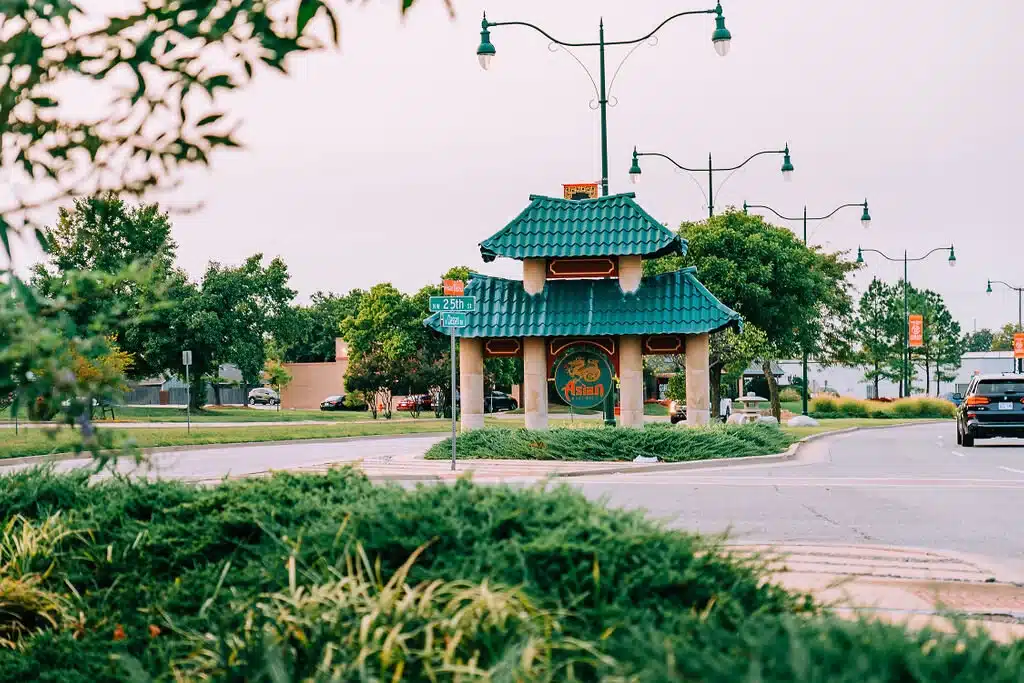
Head north on Classen Boulevard from downtown Oklahoma City, and the transformation smacks you in the face immediately. Bilingual street signs pop up around NW 23rd Street. Asian-inspired architecture replaces cookie-cutter strip mall design. The intoxicating aroma of star anise and lemongrass floats out from restaurant vents.
The district’s main boundaries run along Classen Boulevard between NW 23rd Street and NW 30th Street. This prime spot plants you roughly 2 miles north of Downtown OKC, keeping you within easy striking distance of major highways and hotel clusters. While the commercial heart pumps along Classen, businesses have spilled onto side streets and surrounding blocks.
Strategic Location Advantages
Location is everything, whether you’re a local or just passing through. The Asian District rubs shoulders with the trendy Paseo Arts District and Uptown 23rd entertainment corridor, forming a cultural triangle that pulls in all kinds of crowds. Route 66 heritage layers on another dimension of appeal – the legendary highway cuts straight through the district, reeling in road trippers and nostalgic travelers.
Parking won’t give you the headache that downtown dining usually does. Most restaurants and shops have their own parking lots or street parking right out front. Weekend lunch rushes can pack the popular spots, but you won’t spend forever circling blocks hunting for a space like you might in other cultural districts.
The walkability shifts depending on where you are. Super Cao Nguyen and the businesses clustered around it make for comfortable exploring on foot. Other places spread out over several blocks, so having wheels helps if you want to experience everything. Set aside at least 2-3 hours if you’re planning to shop, eat, and really soak it all in.
Super Cao Nguyen
Ba Luong opened Super Cao Nguyen’s doors in 1979, just four short years after touching down as a refugee. His family-run market started modestly but exploded as people caught wind of the hard-to-find ingredients and prices that didn’t hurt. Today, it towers as one of the biggest Asian supermarkets you’ll find anywhere in the Midwest.
The sheer size catches first-timers off guard. Aisles stretch back farther than your typical grocery store, crammed from floor to ceiling with goodies from over 60 countries. Fresh seafood tanks bubble near the entrance. Exotic produce overflows from refrigerated cases, dragon fruit, durian, fresh herbs that most Oklahoma stores have never even heard of.
Beyond Groceries
Professional chefs make pilgrimages from all over the metro searching for specific ingredients that don’t exist anywhere else. Home cooks stumble onto new flavors and techniques through the market’s mind-blowing selection. Live seafood gets prepped right there on-site, delivering freshness that chain stores can’t touch.
This market does so much more than sell groceries. Community members swing by to swap news, organize cultural events, and keep their heritage connections strong. Bulletin boards overflow with job postings, apartment listings, and cultural event announcements in multiple languages. Kids practice their native tongues while parents shop, creating this beautiful natural language preservation.
Super Cao Nguyen’s success proved specialized ethnic markets could absolutely thrive in Oklahoma. Other Asian grocers set up shop nearby, creating the kind of healthy competition that expanded options for everyone. Having all these markets concentrated in one area turned the district into a one-stop shop for Asian cooking fanatics and professional chefs hunting for the real deal.

The Ultimate Guide to Authentic Pho, Dim Sum, and Asian Cuisine in OKC
Strip malls along Classen Boulevard are hiding some of Oklahoma’s absolute best Asian restaurants. These humble locations put authentic flavors front and center over fancy decor, creating dining experiences that yank you thousands of miles away from the Great Plains.
Pho Lien Hoa runs cash-only but dishes out traditional beef noodle soup that goes toe-to-toe with anything in California’s Westminster district. The broth simmers for hours on end, building depth that instant knock-offs never dream of achieving.
Grand House Asian Bistro rolls out daily dim sum service, pushing carts loaded with har gow and siu mai between tables during those packed weekend lunch hours.
Diverse Culinary Landscape
Fung’s Kitchen zeroes in on live seafood preparation and authentic Chinese techniques that usually get watered down in American-Chinese restaurants. Lee’s Sandwiches brought Vietnamese banh mi culture to Oklahoma soil, serving crusty baguettes packed with cilantro, pickled vegetables, and your pick of proteins. VII Asian Bistro whips up fusion dishes that marry traditional techniques with presentations that look straight out of a magazine.
Lido Restaurant puts French-Vietnamese colonial influences on display through dishes that tell the story of Vietnam’s complicated culinary past. The menu bridges European techniques with Southeast Asian ingredients, creating flavors you simply won’t stumble across in your standard Vietnamese restaurant.
Boba tea culture is absolutely thriving throughout the district. Multiple shops dedicated to the craft serve bubble tea in dozens of flavors, from tried-and-true taro to whatever fruit’s in season. These spots create hangout spaces for younger Asian-Americans while pulling in non-Asian customers who want to see what all the fuss is about.
The concentration of restaurants keeps everyone on their toes with competition that maintains sky-high quality while keeping prices down to earth. Tons of places run lunch specials under $10, making authentic Asian cuisine available to diners watching their budget while never cutting corners on traditional preparation.
Instagram-Worthy Architecture
The Gold Dome commands the intersection of NW 23rd and Classen like some sort of alien spacecraft that decided to settle down. Built back in 1958 as a bank, this geodesic dome structure captures mid-century architectural optimism at its absolute peak. The building now hosts events and commercial tenants, creating this wild backdrop for photos of Vietnamese pho and Chinese dim sum.
Buckminster Fuller’s architectural fingerprints show up throughout the district in the most unexpected ways. The Milk Bottle Grocery adds Route 66 kitsch with its enormous milk bottle sculpture balanced on top of a triangular building. This collision of 1950s American futurism with traditional Asian markets creates visual contrasts you literally won’t find anywhere else in Oklahoma.
Cultural Art Integration
Murals showcasing Asian cultural themes splash across building walls throughout the district. Local artists weave traditional Asian motifs together with Oklahoma imagery, creating public art that reflects the community’s double identity. These pieces provide colorful photo ops while telling the stories of cultural adaptation and keeping traditions alive.
The architectural hodgepodge tells the district’s evolution story better than words ever could. Original 1950s strip mall construction now houses authentic Asian restaurants. Modern renovations slap traditional Asian design elements onto aging American commercial structures. The end result creates an authentic cultural landscape that grew organically instead of being dreamed up by urban planners.
Street art and building murals shift with the seasons, especially around big cultural celebrations. Lunar New Year brings temporary decorations and banners that completely transform how the district looks and feels. These additions create limited-time photography gold while pumping up cultural identity for everyone who lives here or visits.
Lunar New Year Celebrations and Cultural Festivals That Draw Thousands
Firecrackers explode at the crack of dawn on Lunar New Year morning, announcing the district’s biggest cultural celebration of the year. The Asian District Cultural Association pulls together festivities that typically land somewhere between January and February, depending on what the lunar calendar’s doing. These events rank among Oklahoma City’s most jam-packed cultural festivals.
Lion dances snake through crowds while martial arts demonstrations show off traditional fighting techniques that have been passed down through generations. Local restaurants roll out special menus loaded with traditional New Year dishes. Families dress up in cultural clothing while kids get red envelopes stuffed with lucky money. The celebration stretches across multiple days, with different activities scheduled throughout the whole festival period.
Year-Round Cultural Programming
The Asian District Cultural Association keeps the cultural flame burning way beyond the major festivals. Monthly events cover cooking classes, language instruction, and cultural education programs. These smaller gatherings keep community connections tight while introducing non-Asian residents to cultural traditions they might never experience otherwise.
Traditional medicine workshops, calligraphy classes, and martial arts instruction happen on a regular basis all year long. These programs serve everybody, older immigrants keeping their cultural practices alive while younger Asian-Americans reconnect with where they came from. Non-Asian participants get authentic cultural experiences that are rare as hen’s teeth in Oklahoma.
Community organization reaches way beyond cultural events into practical support that actually helps people. The association steps up with translation services, job placement help, and guidance through the maze of American bureaucracy. This all-in approach strengthens the district’s role as a cultural center while tackling real community challenges head-on.
Festival success pulls in visitors from neighboring states, pumping economic benefits into local businesses while improving the district’s reputation across the region. Hotels report booking spikes during major celebrations, and restaurants stretch their hours to handle the festival crowds. The economic ripple effect hammers home the district’s importance to Oklahoma City’s cultural tourism game plan.
Frequently Asked Questions
The Asian District flows primarily along Classen Boulevard between NW 23rd Street and NW 30th Street, sitting approximately 2 miles north of downtown Oklahoma City.
The commercial heart beats along Classen Boulevard with businesses branching out onto nearby side streets. According to Visit OKC, the district shares borders with the Paseo Arts District and Uptown 23rd entertainment areas, giving you quick access to multiple cultural hot spots.
You'll know you're there when you spot bilingual street signs, Asian-inspired architecture, and those distinctive restaurant smells floating through the air. The district's central position gives you smooth access from major highways including I-35, I-40, and I-44.
Pho Lien Hoa tops most local recommendations for authentic Vietnamese noodle soup, running cash-only with traditional preparation methods that build rich, complex broths that are different. VII Asian Bistro offers modern spins alongside classic preparations, while several other spots along Classen Boulevard serve up regional variations.
The Oklahoman's dining coverage consistently shouts out the district's pho quality compared to other metro locations. The density of restaurants creates competition that keeps standards through the roof, most places simmer their broths for 8-12 hours every single day. Lunch crowds hit their peak between 11 AM and 1 PM on weekends, so time your visit smart if you're eyeing the popular spots.
Super Cao Nguyen stands as the heavyweight champion but several smaller specialty stores operate all throughout the district. According to 405 Magazine, multiple markets carry country-specific products, Chinese herb shops, Filipino grocery sections, and Thai ingredient specialists. Super Cao Nguyen's size and 60-country product lineup make it the main attraction, but smaller stores bring specialized items and prices that keep things competitive.
Traditional medicine shops, Asian beauty supply stores, and import businesses add shopping variety beyond just groceries. Having all these markets bunched together lets you compare shop and snag ingredients that mainstream grocery chains don't even know exist.
Lunar New Year celebrations typically go down between late January and mid-February, with the exact dates shifting every year based on lunar calendar math. The Asian District Cultural Association orchestrates multi-day festivities packed with lion dances, martial arts demonstrations, and traditional food offerings.
TravelOK reports these events pull in thousands of visitors every year, making them some of Oklahoma City's most massive cultural celebrations. Festival activities blanket entire weekends, with different programs lined up throughout the celebration period.
Restaurants bust out special menus, and local businesses keep their doors open longer during the peak celebration days. Keep your eyes on the Asian District Cultural Association's announcements for specific yearly dates and what's scheduled.
Several spots run cash-only operations, particularly smaller family-owned restaurants like Pho Lien Hoa that stick with traditional payment methods. However, bigger restaurants and markets including Super Cao Nguyen take credit cards and electronic payments no problem.
The Oklahoman's restaurant reviews frequently call out payment policies for specific establishments. Bringing cash guarantees you can hit up all the dining options, especially those hole-in-the-wall spots that serve up the most authentic experiences.
ATMs are scattered throughout the district, but having cash ready eliminates any potential letdowns. Many cash-only restaurants post signs clearly, and prices stay remarkably affordable compared to places that take cards.
"Little Saigon" was the original nickname for the Vietnamese refugee settlement that took root in 1975 following the Fall of Saigon. The official "Asian District" label came down the pike later to recognize the expanding diversity of Asian communities including Chinese, Filipino, Thai, and Japanese residents and businesses.
According to the Oklahoma Historical Society, the name shift reflected how the area evolved from a primarily Vietnamese refugee community into a multicultural Asian commercial district. Both names still float around, but "Asian District" shows up on official city signage and tourism materials. The broader name acknowledges all the Asian cultures represented while tipping its hat to the Vietnamese community's foundational role.
Catholic charities and religious organizations sponsored thousands of Vietnamese refugees following the Fall of Saigon in 1975, with Oklahoma City offering living costs that didn't break the bank and a climate that felt similar to Southeast Asia.
The Oklahoma Historical Society documents how religious sponsorship programs concentrated families around NW 23rd Street and Classen Boulevard. Initial settlement patterns reflected practical thinking, affordable housing, available jobs, and support networks already in place.
The state's landlocked location seemed like an odd match for Vietnamese refugees at first glance, but economic opportunities and a high concentration of sponsor organizations created natural community formation. Early settlers worked multiple jobs while launching businesses that served their cultural community, eventually drawing other Asian immigrants.
Pho remains the signature dish, with multiple restaurants offering regional takes on Vietnamese noodle soup featuring complex broths and fresh herbs that make all the difference. Dim sum at Grand House Asian Bistro delivers authentic Chinese small plates including har gow and siu mai.
According to 405 Magazine, banh mi sandwiches at Lee's Sandwiches offer French-Vietnamese fusion on crusty baguettes that'll change your sandwich game forever. Boba tea from specialized shops introduces you to bubble tea culture with dozens of flavor combinations to explore.
Fresh seafood preparation at Fung's Kitchen showcases live tank-to-table service you rarely stumble across elsewhere in Oklahoma. Traditional Vietnamese coffee provides an authentic beverage experience with condensed milk and strong arabica blends that pack a punch.
Most restaurants and shops have dedicated parking lots, with street parking lining Classen Boulevard and side streets. According to Visit OKC, parking headaches stay minimal compared to downtown dining areas.
Weekend lunch crowds at popular restaurants can fill lots up, but backup parking sits within walking distance. Super Cao Nguyen provides a massive parking area that handles market shoppers and serves nearby restaurants when things get busy.
Strip mall setups offer convenient parking straight in front of businesses. The district's layout prioritizes vehicle access, making it way more parking-friendly than those pedestrian-focused urban districts.
The district houses Chinese restaurants specializing in Cantonese and Szechuan preparations, Thai establishments offering authentic spice levels that don't mess around, Filipino restaurants serving traditional dishes, and Japanese establishments beyond your typical sushi offerings.
Fung's Kitchen represents authentic Chinese cooking with live seafood preparation, while various Thai restaurants provide curry and noodle dishes either adjusted for local tastes or maintaining traditional heat levels that'll test you.
According to The Oklahoman's coverage, fusion restaurants blend multiple Asian traditions with American influences in interesting ways. Korean establishments offer barbecue and fermented dishes. The diversity reflects how the district evolved beyond its Vietnamese roots into a comprehensive Asian culinary destination.
Several hotel options exist within 5-10 minutes of the district, with downtown Oklahoma City hotels providing smooth access via Classen Boulevard. The district's central location offers convenient access to major hotel chains along the I-35 and I-40 corridors.
Business travelers often bunk downtown and make the quick drive north to the district for meals. The area lacks dedicated boutique hotels, but proximity to major transportation routes provides tons of accommodation choices. Visitors planning multiple district visits often pick hotels near the Paseo Arts District or Uptown 23rd for walking access to multiple cultural attractions.
Most restaurants flip their signs to open for lunch between 11 AM and noon, with dinner service rolling until 9-10 PM on weekdays. Weekend hours often push later, particularly Friday and Saturday evenings when family dining hits its stride.
Some places close between lunch and dinner service, typically 2-5 PM. Super Cao Nguyen keeps longer retail hours, usually 8 AM to 9 PM every day. Holiday schedules bounce around, particularly during Lunar New Year when some businesses close for multi-day celebrations while others extend hours to handle festival crowds.
Calling ahead ensures you get accurate hours, especially for smaller family-owned spots that adjust schedules with the seasons.
Grand House Asian Bistro serves up daily dim sum with traditional cart service during weekend lunch hours, featuring authentic preparations including har gow, siu mai, and char siu bao.
According to local food reviews, the restaurant sticks to traditional dim sum preparation methods with everything made fresh daily. Weekend service provides the fullest selection and cart experience similar to what you'd find in major metropolitan dim sum houses. Weekday dim sum offers a tighter selection but maintains the same quality and authenticity.
The restaurant handles both experienced dim sum veterans and newcomers with English explanations of dishes. Reservations help during peak weekend hours when cart service creates popular dining experiences that pack the house.
The Gold Dome is a geodesic dome structure built back in 1958 as a bank, designed using Buckminster Fuller architectural principles and now serving as an event center at the intersection of NW 23rd and Classen Boulevard.
The building represents mid-century architectural optimism and futuristic design that creates this dramatic contrast with traditional Asian businesses surrounding it. According to architectural historians, the dome's gold anodized aluminum exterior creates a landmark you can spot from all over the district.
Its preservation shows Oklahoma City's commitment to architectural heritage while serving modern commercial needs. The building's space-age vibe provides Instagram-worthy backgrounds for food photography and cultural events, symbolizing how the district blends American mid-century design with Asian cultural traditions.
The Asian District sits approximately 2 miles north of downtown Oklahoma City, with driving time typically clocking in at 10-15 minutes depending on traffic conditions. Classen Boulevard provides direct north-south access from downtown's central business district straight to the Asian District's commercial corridor.
Public transportation options include city bus routes, though most visitors drive because of parking convenience and needing to haul grocery purchases from markets like Super Cao Nguyen.
The short distance makes the district totally accessible for downtown hotel guests seeking authentic Asian dining experiences. Route 66 heritage adds scenic value to the drive, passing through historically significant corridors that connect downtown to the district.
The Asian District Cultural Association coordinates monthly programming including cooking classes, language instruction, martial arts demonstrations, and traditional medicine workshops running all year long. Cultural events celebrate Mid-Autumn Festival, Dragon Boat Festival, and various national holidays from represented countries.
According to community calendars, calligraphy classes, traditional music performances, and cultural education programs happen on a regular basis. Restaurant-sponsored events include special menu celebrations and cooking demonstrations.
The association also provides practical services like translation help and job placement support. These ongoing activities keep cultural connections strong while introducing non-Asian residents to authentic cultural experiences beyond just the major festivals.
Oklahoma City's Asian District uniquely blends Vietnamese refugee heritage with mid-century American architecture, particularly the iconic Gold Dome and Route 66 corridor location.
Unlike coastal Asian districts that grew in established ethnic neighborhoods, OKC's district sprang up from religious charity sponsorship in an unlikely location. The Oklahoma Historical Society points out how the district's strip mall commercial format differs from those dense urban Chinatowns or Little Saigons.
The community's integration with Oklahoma cultural elements creates fusion experiences you can't get anywhere else. Plus, the district's role as a regional destination serves multiple states rather than just local populations, creating unique economic dynamics and cultural preservation challenges right here in America's heartland.
Driving Directions From Asian District, Oklahoma City, OK to 5-Star Towing OKC, 2800 SW 25th St, Oklahoma City, OK 73108 - 14 min (5.6 miles) via N Classen Blvd
Asian District, Oklahoma City, OK
Drive along N Classen Blvd, Exchange Ave, S Pennsylvania Ave and SW 25th St - 14 min (5.5 mi)
Turn left
Destination will be on the right - 57 sec (407 ft)
5-Star Towing OKC, 2800 SW 25th St, Oklahoma City, OK 73108
We also offer towing and roadside assistance services near Asian District OKC. Learn more about Edmond OK.