
Oklahoma City has a rhythm all its own, one that beats with the powerful legacy of the frontier. Standing on Northeast 63rd Street, you’ll find a massive structure that captures this pulse better than anywhere else.
Think of this building as a vault, one that holds all the grit, pain, and incredible beauty that forged the American West. When you step inside, you’re not just looking at exhibits, you’re walking into the very stories that shaped a nation, preserved not just in glass cases, but in the atmosphere itself.
Substance Summary
- Come face-to-face with the original 18-foot plaster masterpiece, “The End of the Trail,” and feel its emotional power.
- Step back in time as you walk through Prosperity Junction, a sprawling 14,000-square-foot indoor replica of a turn-of-the-century cattle town.
- Get lost in the defining Western art of masters like Frederic Remington and Charles M. Russell.
- Honor the legends in the Rodeo Hall of Fame and discover the rich heritage in galleries dedicated to Native American culture.
- Experience the West come alive by planning your trip around unforgettable signature events like the Chuck Wagon Festival or the prestigious Prix de West.
Witness an Icon of the American West
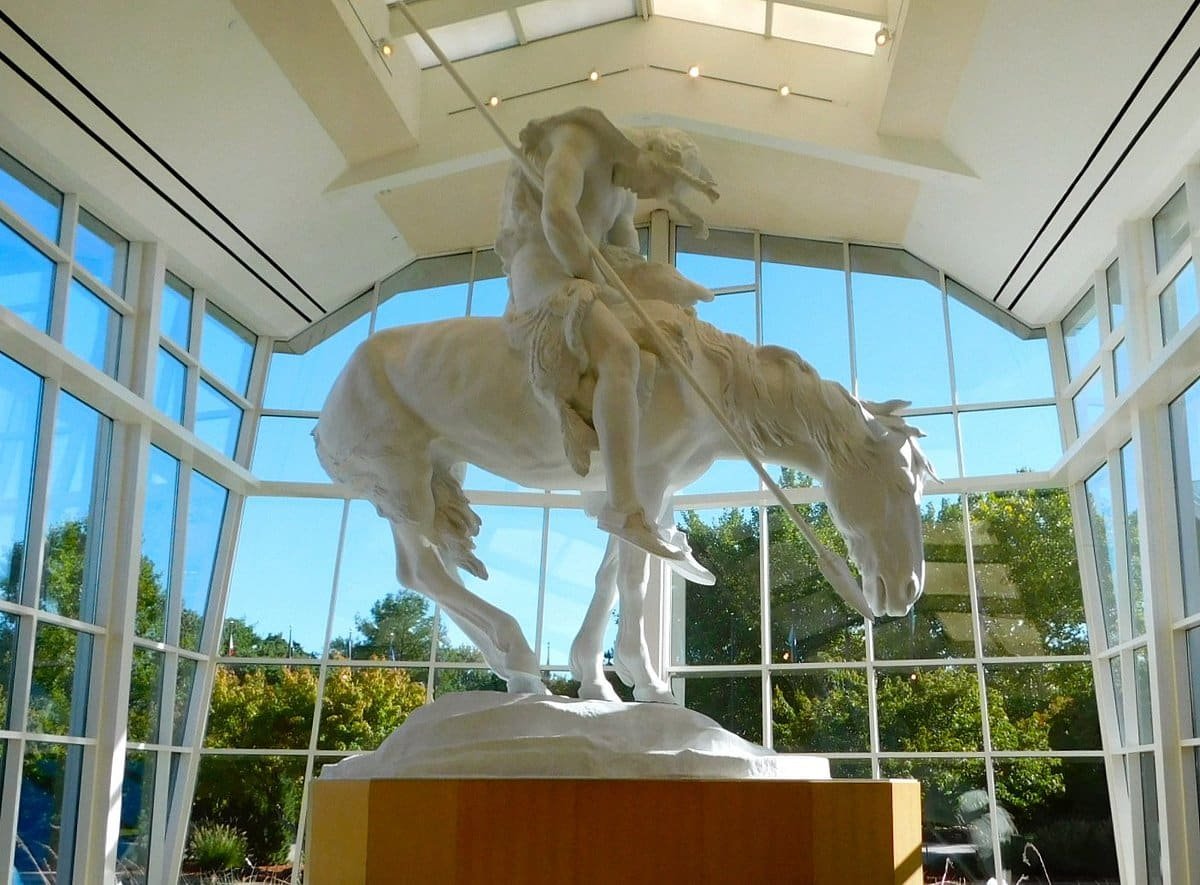
Prepare to have your breath taken away. The moment you see it, the sheer scale of James Earle Fraser’s “The End of the Trail” commands a respectful silence. This towering 18-foot-tall sculpture shows a Native American man, defeated and weary, slumped over his equally exhausted horse. It’s an image of profound exhaustion and displacement that stays with you.
You’ve likely seen small bronze reproductions of this famous image before. What few people realize is that the original, breathtaking masterpiece makes its home right here in OKC. This isn’t a copy, it is the original plaster sculpture Fraser created for the 1915 Panama-Pacific International Exposition in San Francisco, where it rightfully won the Gold Medal for sculpture that year.
Plaster is fragile, lacking the permanence of bronze, but that very fragility seems to amplify the emotional weight of the piece. As the Smithsonian American Art Museum notes, Fraser meant for the work to symbolize the deep suffering of indigenous peoples as they were pushed from their lands.
Standing at the feet of this giant, you can’t help but feel the heavy, complicated history of the frontier. It serves as the emotional heart of the entire museum.
Walk the Streets of a Historic Western Town at Prosperity Junction
So many museums keep history tucked away behind velvet ropes. Prosperity Junction, however, surrounds you with it. Here, you get to step directly into a 14,000-square-foot replica of a cattle town from the turn of the 20th century, all set under lighting that mimics the dim, amber glow of dusk.
Feel the creak of wooden planks and the crunch of dirt beneath your feet. If you listen closely, you can hear authentic sound effects that create the gentle hum of a living settlement. You’re free to peer directly into the Sheriff’s office or check on the day’s rates at the Cattleman’s Bank.
The town is home to a fully furnished saloon, a busy blacksmith shop, and a peaceful Union Church. You can even step inside a one-room Territorial schoolhouse and imagine what learning was like back then.
It gives you a tangible sense of how people truly lived, worked, and learned on the frontier. This exhibit engages all your senses, making the past feel incredibly immediate and real.
Discover a World-Class Collection of Western Art
Long before cameras could capture a single snapshot, the vast, untamed American West was already sparking the imaginations of artists. In the museum’s William S. and Ann Atherton Art of the American West Gallery, you get to see that vision come to life through the eyes of the absolute masters of the genre.
Think of a cowboy. Chances are, the image in your head was first painted by Frederic Remington or Charles M. Russell. Their iconic paintings and sculptures didn’t just document the rough, untamed life of the frontier, they often wove a layer of romance into the daily struggle. But the collection here goes so much deeper than cowboys.
Prepare to be awestruck by the large-scale landscapes from artists of the Hudson River School. Visionaries like Albert Bierstadt and Thomas Moran painted the dramatic, sweeping peaks and valleys of the West.
Their work was so powerful that it actually influenced Congress to protect natural wonders like Yellowstone. The gallery also showcases beautiful pieces from the Taos Society of Artists, offering you a wonderfully broad spectrum of artistic interpretation.

Galleries Honoring All Facets of the West
The story of the West was never just about men on horses herding cattle. This museum understands that, dedicating significant space to celebrating the diverse groups of people who built this region.
In the American Indian Gallery, you can lose yourself in a vast array of cultural items. Take your time examining the intricate beadwork, stunning pottery, delicate basketry, and traditional clothing from tribes all across the continent.
If you’re a rodeo fan, you’ve found your home here, too. The American Rodeo Gallery proudly houses the Rodeo Hall of Fame. Since 1955, this hall has honored over 300 champions and contributors. The stories of legends like Jim Shoulders and Casey Tibbs are preserved right here for you to explore.
Let’s be honest, for many of us, Hollywood played a huge role in shaping our idea of the frontier. The Western Performers Gallery honors the actors who brought these epic stories to the silver screen.
You’ll find heartfelt tributes to icons like the legendary John Wayne and the unmistakable Sam Elliott. This section beautifully connects the real history of the West with the movies that made it famous around the world.
Experience America's Premier Western History Institution
Every great institution starts with a big idea. Back in 1955, the idea was to create the Cowboy Hall of Fame and Museum. From that single seed, it has blossomed into the premier authority on Western history, culture, and art. The facility itself now covers more than 200,000 square feet, making it one of the great things to do in OKC for visitors interested in Western history and culture. To help you picture that, imagine a space larger than three and a half football fields.
Inside, the National Cowboy & Western Heritage Museum holds a treasure trove of over 28,000 artworks and artifacts. The collection’s variety is simply astounding. One moment you might be gazing at a priceless painting, and the next, you’re examining historical firearms that saw real action.
You can study the fascinating evolution of saddles or browse the world’s most extensive collection of American rodeo photographs. They even maintain a specialized collection of barbed wire, which might sound simple, but it tells a profound story of how fences forever changed the open range.
Mark Your Calendar for These Signature Annual Events
This museum isn’t just a quiet building full of artifacts, it’s a living, breathing place that hosts vibrant celebrations of Western culture. If you’re an art lover, the Prix de West Invitational Art Exhibition and Sale is an absolute must-see.
This prestigious event features brand-new works from nearly 100 of the nation’s top contemporary Western artists. In the art world, it’s truly one of the most anticipated shows of the year.
If you’re visiting with family, be sure to circle Memorial Day weekend on your calendar. This is when the museum hosts its beloved Chuck Wagon Festival. It’s a lively, joyous event that tastes every bit as good as it looks.
You can sample authentic food cooked right off traditional chuck wagons. The grounds come alive with trick ropers, captivating storytellers, and fun hands-on crafts for the kids. It’s an experience that brings the exhibits inside the museum to vibrant life outdoors.
Planning Your Visit to the Museum
A little bit of planning goes a long way toward making your trip perfect. You’ll find the museum located at 1700 NE 63rd St, Oklahoma City, OK 73111. It sits right in the city’s Adventure District, so it’s very easy to find. And don’t worry about parking, there’s plenty of it, and it’s free and accessible.
Always check their official website for current operating hours before you head out, as holiday schedules can sometimes change things up. Admission prices are tiered for adults, seniors, and students, and children under a certain age are often welcomed for free.
If you prefer a more peaceful visit, mornings usually offer a quieter experience, giving you more space to soak everything in. The facility is fully accessible for guests with disabilities. And trust us, you’ll want to give yourself at least three to four hours here. There is simply too much to see and experience to rush through it all.
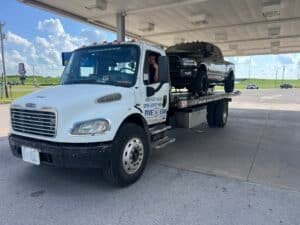
The spirit of the West was built on helping your neighbor when the trail got rough. We operate on that same principle. So, if your own journey to the museum hits a snag and you find yourself stranded on the side of the road in Oklahoma City, just know that we at Five Star Towing are here to help. We provide reliable towing and roadside assistance to get you back on your journey safely.
Frequently Asked Questions
You can expect admission to be between $15 to $20 for adults. There are nice discounts available for seniors (62+) and students with a valid ID. Children also get reduced rates, and little ones under 5 often get in for free.
If you plan on visiting often, the museum offers membership packages that give you free unlimited admission. For larger parties of 15 or more, group rates are usually available if you book in advance.
It's always a smart move to check the official museum website before your visit, as prices can sometimes be adjusted. For anyone who loves the museum, an annual membership often pays for itself in just two visits.
Most visitors find that spending between 3 to 4 hours gives them a great experience exploring the galleries and grounds.
If you're a real art enthusiast or history buff, you could easily spend 5 to 6 hours fully reading the descriptive placards and appreciating all the fine details, especially in the Art of the American West Gallery and Prosperity Junction.
To see everything without feeling rushed, we suggest arriving before noon. This gives you plenty of time for a lunch break at the on-site café before you finish exploring the rest of the exhibits.
The three stops you absolutely can't miss are the powerful "The End of the Trail" sculpture, the immersive Prosperity Junction cattle town, and the fascinating American Rodeo Gallery.
For art lovers, the Prix de West collection and the incredible works by masters Frederic Remington and Charles M. Russell represent the pinnacle of Western art.
Don't forget to check out the barbed wire collection, it's more interesting than it sounds! or the Western Performers Gallery. These exhibits offer a unique look into parts of Western history that are often overlooked.
Absolutely! The museum is wonderfully designed with families in mind. Prosperity Junction lets kids walk through a realistic town, and the Children’s Cowboy Corral is full of fun, hands-on activities.
The Liichokoshkomo’ outdoor education center is a fantastic space that introduces children to cross-cultural stories through interactive play structures and engaging learning stations.
The exhibits do a great job of balancing visual excitement with rich history, making it a perfect place for school-aged children to learn all about the frontier while having a blast.
The original, massive 18-foot plaster sculpture stands proudly in the collection of the National Cowboy & Western Heritage Museum right here in Oklahoma City.
It has a fascinating backstory. It was moved here from Visalia, California, where it had fallen into disrepair. It was lovingly restored upon its arrival in OKC back in 1968.
While you might see many bronze replicas of this statue in parks across the U.S., our museum is the special home of the fragile, original 1915 plaster masterpiece.
The original statue you'll see at the museum is constructed from plaster. Its creator, James Earle Fraser, used plaster for the 1915 Panama-Pacific International Exposition because the sculptures for the event were only intended to be temporary.
Because plaster is so vulnerable to weather damage, bringing it indoors to a climate-controlled environment in OKC literally saved this iconic piece of art from being completely destroyed.
Yes, personal photography is generally welcome in the permanent collection galleries and throughout Prosperity Junction. So feel free to snap some memories!
To help protect the art and ensure everyone has a good experience, flash photography, tripods, and selfie sticks are typically not allowed. Also, some special traveling exhibitions may prohibit photography entirely because of copyright agreements.
The photos you take are for your personal use only. If you're interested in commercial photography, you'll need to get prior written permission from the museum's administration.
Prosperity Junction is a wonderfully immersive 14,000-square-foot environment that fully replicates a cattle town from the turn of the century.
It's not just a set! It includes buildings you can actually walk into, like a schoolhouse, church, saloon, and bank, all set under special lighting that makes it feel like it's always dusk.
The goal is to transport you back in time, giving you a sensory experience of what daily life was like on the frontier, rather than just having you look at artifacts in display cases.
The Prix de West Invitational Art Exhibition and Sale usually opens in early June and runs through early August each year. The opening weekend in June is the main sale event, and it attracts serious collectors from all over the world.
It’s not just an art show, it serves as the museum’s largest annual fundraiser and is a premier showcase for contemporary Western art.
You can join in the fun at the Chuck Wagon Festival, which is held annually on Memorial Day weekend in late May. The event is packed with fun things to do, including traditional chuck wagon cooking, butter making demonstrations, local artisans, and live entertainment.
It’s specially designed as a family-friendly event, offering a wonderful hands-on way for both kids and adults to experience the culture of the frontier.
Yes, absolutely. The museum offers plenty of free, on-site parking for all its visitors. The parking lot is quite large and designed to handle big crowds, even including dedicated spaces for RVs and buses.
You'll find designated handicap parking spaces located conveniently near the main entrance for easy access.
When it was first founded back in 1955, the institution was proudly named the "National Cowboy Hall of Fame and Museum." The name was updated to the "National Cowboy & Western Heritage Museum" in the year 2000.
This name change was made to better reflect the museum's broader mission, which is to embrace and share the histories of all the diverse cultures of the American West, not just the iconic cowboy persona.
Driving Directions From National Cowboy & Western Heritage Museum, 1700 NE 63rd St, Oklahoma City, OK 73111, United States to 5-Star Towing OKC, 2730, 2800 SW 25th St, Oklahoma City, OK 73108 - 16 min (12.3 miles) via I-44
National Cowboy & Western Heritage Museum, 1700 NE 63rd St, Oklahoma City, OK 73111, United States
Get on I-44 from NE 63rd St - 3 min (0.6 mi)
Continue on I-44 to SW 15th St. Take exit 119 from I-44 - 10 min (10.4 mi)
Continue on SW 15th St to your destination - 3 min (1.2 mi)
5-Star Towing OKC, 2730, 2800 SW 25th St, Oklahoma City, OK 73108
We offer towing and roadside assistance near the National Cowboy & Western Heritage Museum. Learn more about our next location Oklahoma City National Memorial & Museum OKC.