
A quiet settles over downtown Oklahoma City, a stillness that isn’t empty. It’s a silence filled with memories, with the strength of a community, and with a solemn promise to never, ever forget.
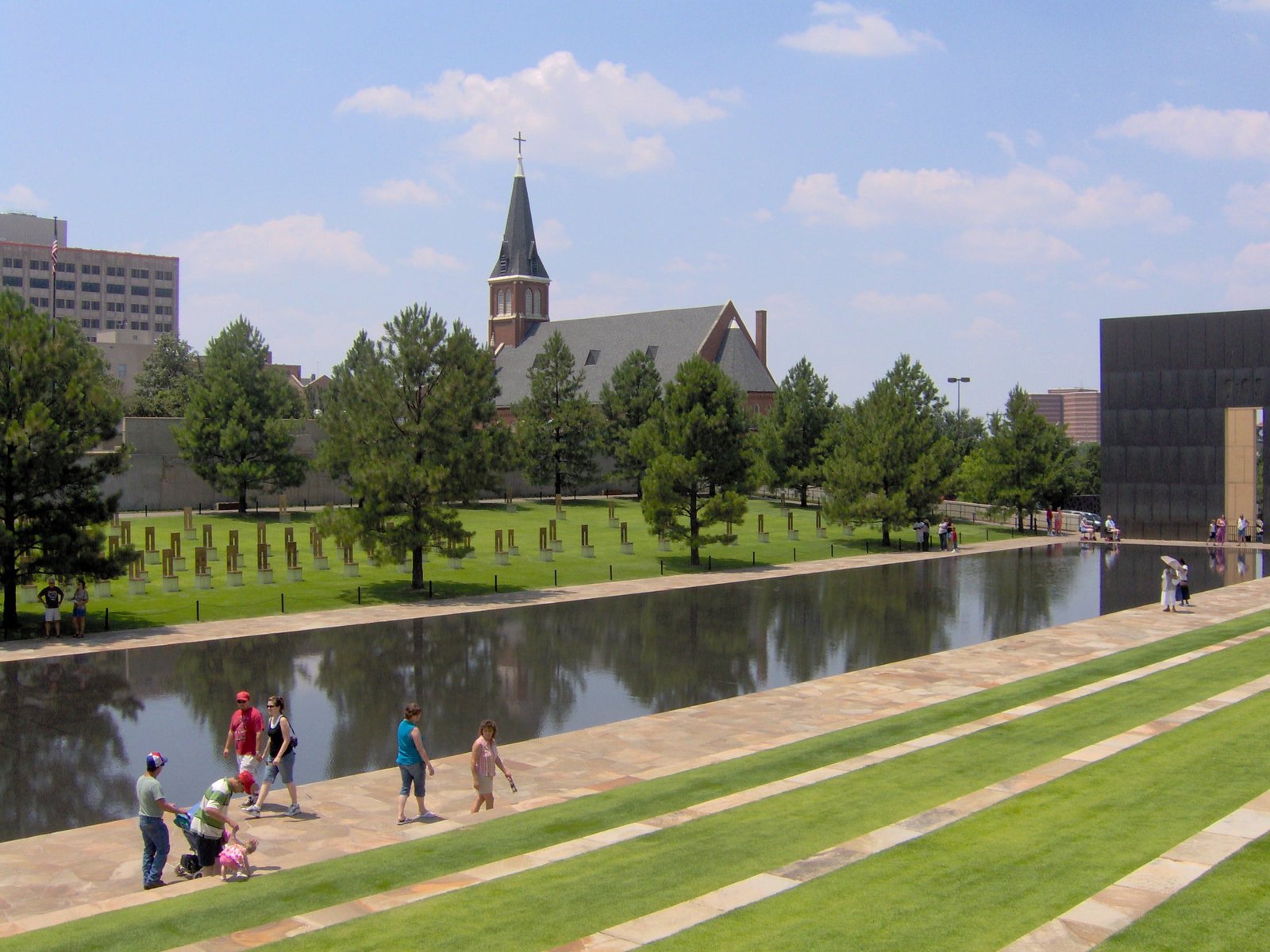
Standing before the Reflecting Pool, the everyday noise of the city seems to dissolve, leaving you with a profound sense of peace that stands in stark contrast to the violence that once tore this ground apart.
This is so much more than a tourist destination, it is a scar on the American landscape that has healed into a beautiful and powerful symbol of strength. April 19, 1995, changed this community forever, but it was the response to that tragedy that truly defined the spirit of Oklahoma.
Key Points
- The bombing on April 19, 1995, was the deadliest act of domestic terrorism in U.S. history at the time, tragically taking 168 lives.
- The Outdoor Symbolic Memorial, featuring the Field of Empty Chairs and the Gates of Time, is a place of reflection open 24 hours a day, every day of the year.
- The Survivor Tree, an American Elm that withstood the blast, has become a living symbol of resilience, with its seeds shared globally to spread a message of hope.
- The Museum guides visitors on an emotional, chronological journey through the bombing, the rescue, and the investigation with interactive exhibits.
- Visitors should plan for a deeply moving 2-3 hour experience and check the museum’s website for ticket information and hours.
An Emotional Journey Through the OKC National Memorial & Museum
The Story of April 19, 1995
The morning of April 19, 1995, unfolded like any other spring day in Oklahoma. People were settling into their desks at the Alfred P. Murrah Federal Building, and parents were kissing their children goodbye as they dropped them off at daycare. That ordinary peace was shattered at exactly 9:02 a.m.
A rental truck parked just outside the building exploded, unleashing a force of destruction that would leave a permanent scar on the nation’s heart. This horrific attack was orchestrated by Timothy McVeigh and Terry Nichols and stood as the deadliest act of domestic terrorism in U.S. history at the time.
The weapon was a monstrous 4,800-pound bomb, crudely built from ammonium nitrate fertilizer and nitromethane. The explosion ripped the entire north face off the nine-story building, leaving a scene of unimaginable horror. The devastation was absolute. The blast claimed the lives of 168 people, a number that included 19 small children who were playing in the America’s Kids Day Care Center on the second floor. The impact rippled far beyond the lives lost. More than 680 other people were injured, suffering everything from minor cuts to life-altering trauma.
The shockwave damaged or destroyed over 300 nearby buildings, instantly and irrevocably changing the downtown skyline. Records from the FBI underscore the scale of this tragedy, marking it as a dark turning point in the history of federal law enforcement.
A Poignant Tribute to the 168 Lives Lost
As you walk onto the footprint of where the building once stood, you are met with a sight that demands silence and reverence. The Field of Empty Chairs stretches across the lawn, 168 of them in total.
Each chair represents a life that was taken, a hauntingly beautiful symbol of the empty seat now left at a family’s dinner table. The chairs themselves are crafted from bronze and stone and rest on delicate glass bases. At night, these bases are illuminated from within, creating a glowing, ethereal tribute that is visible from the street.
There is a heartbreaking logic to their placement. The chairs are arranged in nine distinct rows, each one representing one of the nine floors of the Murrah Building. Every chair sits in the row that corresponds to the floor where that person was working or visiting at the moment of the attack. It is a personalized geography of loss, mapping out where each soul was in their final moments.
Honoring the Youngest Victims
Walking among the rows reveals a detail that will stop you in your tracks, a deep tragedy nestled within the larger one.
- You’ll notice nineteen smaller chairs interspersed among the full-sized ones.
- These smaller seats are a tender tribute to the 19 children who were killed in the daycare center.
- Every single chair, no matter its size, bears the name of a victim etched forever into its glass base.

A Walk Through Hallowed Ground
The Outdoor Symbolic Memorial occupies the very ground where the Murrah Building once stood. It has been transformed into a place for quiet reflection, open and accessible to every person who feels called to visit.
The grounds are open 24 hours a day, 365 days a year, with no admission fee required to walk through this outdoor space. It belongs to the public, to the community, and most of all, to the families of those who were lost.
Two monumental bronze gates, known as the Gates of Time, frame the memorial and serve as its formal entrances. The East Gate is inscribed with the time 9:01, representing the final minute of innocence before the world changed. The West Gate reads 9:03, marking the moment the healing began. Together, they create a permanent frame around the minute of destruction.
Between these gates lies the serene Reflecting Pool. A thin layer of water flows silently over a bed of polished black granite, representing the moment of the explosion at 9:02. The water moves with a calm grace, creating a soothing sound that helps to quiet the noise of the surrounding city and invites visitors to look inward and reflect.
On the east end of the memorial, you will find the Survivor Wall. These panels are the only original walls from the Murrah Building that remain standing. They are not just slabs of concrete, they are silent witnesses to history.
The names of more than 600 survivors from the building and the immediate area are carefully etched into granite salvaged from the site. This powerful feature honors all those who lived through the blast but were forever changed by what they saw and endured.
An American Elm's Testament to Resilience
One element of the memorial stands taller than the rest, both literally and figuratively. An American Elm tree had been growing for years in the parking lot across from the Murrah Building on that fateful day. It took the full, brutal force of the 4,800-pound bomb. The blast violently stripped its leaves, scorched its branches, and embedded glass and shrapnel deep into its bark. When experts surveyed the charred, skeletal remains, they assumed it would never recover.
But against all odds, that tree refused to die. When spring arrived, new leaves began to sprout from its blackened branches. Today, it is known lovingly as the Survivor Tree. It was carefully nursed back to health and now spreads a broad, life-affirming canopy over the memorial grounds. It serves as a living, breathing symbol of resilience, of hope, and of the incredible human capacity to overcome tragedy.
This remarkable elm does more than just provide shade. Every year, the memorial staff collects seeds from the Survivor Tree and cultivates them into saplings. These young trees, direct descendants of that resilient elm, are then shared with communities around the world that have faced their own tragedies. From New York to countries overseas, the tree spreads a global message of healing, proving that life can, and will, persist even after the darkest of moments.
Inside the Oklahoma City National Memorial Museum
While the outdoor memorial invites quiet reflection, the Museum takes you by the hand and guides you through a structured, deeply emotional story. The exhibits are thoughtfully organized into 10 distinct chapters, using interactive technology, priceless artifacts, and raw personal accounts to tell the story of the bombing, the heroic rescue, and the long road to recovery. The museum is also one of the things to do in OKC for visitors exploring the city.
In Chapter 2, you will step into the Blast Exhibit, one of the most jarring and unforgettable parts of the tour. You enter a room designed to look like a hearing room from the Oklahoma Water Resources Board and hear an actual audio recording of a meeting that was in progress that morning. The tape captures the mundane, everyday conversation, and then, without warning, the recording is violently interrupted by the deafening roar of the explosion. At that moment, you are placed viscerally at the scene at 9:02 a.m.
Chapter 5 meticulously details the incredible pursuit of justice. This section breaks down the massive federal investigation that followed the attack. The centerpiece of this exhibit is the mangled, twisted rear axle of the Ryder rental truck.
It looks like a piece of scrap metal, but it was the single most important clue in the case. The axle contained the Vehicle Identification Number (VIN), which allowed FBI agents to trace the truck back to a rental agency, a thread that led them directly to the perpetrator.
Your tour concludes in the Gallery of Honor. This beautiful, interactive exhibit celebrates the 168 individuals who were killed. It doesn’t dwell on how they died, but on how they lived. You can see their photos, read personal stories, and look at treasured artifacts contributed by their families.
It is a powerful space that ensures the victims are remembered not as statistics, but as the vibrant people they were, mothers, fathers, sons, and daughters.
Planning Your Visit to the Memorial and Museum
Before you make your way to this powerful place, a little planning can help ensure your visit is as meaningful as possible. The Oklahoma City National Memorial & Museum is located right in the heart of the downtown district. You can find parking in nearby garages or at street meters.
It’s important to remember that the Outdoor Symbolic Memorial is open 24/7 and is completely free to the public. You are welcome to walk through the Gates of Time or sit near the Survivor Tree whenever you wish.
The Museum, however, operates during specific hours and requires a ticket for entry. It’s a good idea to check the official website for current pricing and opening times before you go. You should allow yourself at least two to three hours to fully experience everything the museum has to offer. The content is heavy and emotionally impactful, and rushing through it would lessen the experience. Give yourself the gift of time to process the history, the stories, and the tributes.
Life on the road is unpredictable. Whether you are a local navigating the daily commute or a visitor paying your respects at the Memorial, vehicle trouble can happen when you least expect it.
Five Star Towing is here to help. We provide reliable towing and roadside assistance across Oklahoma City. We treat your vehicle with the same care and respect we show our community. If you find yourself stranded, call Five Star Towing for fast, professional service that gets you back on the road.
Frequently Asked Questions
To truly take it all in, we recommend setting aside at least two to three hours for the full museum experience. The museum is laid out chronologically in ten chapters, filled with a great deal of reading, audio-visual materials, and interactive exhibits that deserve time to be fully absorbed. Since the content is emotionally heavy, you might also want to take pauses to process everything, so a rushed visit is not ideal.
Yes, the Outdoor Symbolic Memorial is completely free and open to the public 24/7. This includes the Field of Empty Chairs, the Survivor Tree, and the Reflecting Pool.
However, the indoor Museum, which contains the artifacts and the detailed story of the event and investigation, requires a purchased ticket for entry. You'll want to budget for that if you plan to experience the full narrative inside.
The 168 chairs in the Field of Empty Chairs are a tribute to the 168 individual lives lost in the bombing. They serve as a powerful, permanent visualization of the "empty chairs" left at family dinner tables. The chairs are arranged in nine rows to correspond with the nine floors of the Alfred P. Murrah Federal Building, placing each victim in the approximate location where they were when the bomb detonated.
Yes, you can absolutely visit the Outdoor Memorial at any time. It is open 24 hours a day, 365 days a year. Visiting at night offers a uniquely powerful and different perspective, as the glass bases of the 168 chairs are beautifully illuminated. This lighting creates a very somber and reflective atmosphere that is much quieter than during the day, allowing for deeper personal contemplation.
The Survivor Tree is a truly remarkable American Elm that withstood the full force of the bomb, even though it was standing just yards away in a parking lot. Although the blast burned it and embedded it with shrapnel, the tree survived against all odds and was nursed back to health. Today, it stands as a prominent living symbol of resilience, and the Memorial collects its seeds each year to distribute saplings to other communities worldwide that have faced tragedy.
The explosion happened at exactly 9:02 a.m. on April 19, 1995. This specific minute is memorialized throughout the site. You'll see it in the Reflecting Pool, which represents 9:02, and on the Gates of Time, which are marked 9:01 (the last moment of peace) and 9:03 (the moment healing began). The Museum's Blast Exhibit even uses an audio recording that captures the exact moment the explosion interrupted a meeting.
The rear axle from the Ryder rental truck is housed inside the Museum as part of the investigation exhibit (Chapter 5). This piece of twisted metal is a crucial artifact because it survived the blast and, incredibly, retained the Vehicle Identification Number (VIN). This number was the key that allowed FBI agents to trace the rental truck back to where it was rented, directly linking Timothy McVeigh to the crime.
Yes, children are allowed, but it's important for parents to know that the Museum deals with mature and tragic themes, including terrorism and death. The content can be very disturbing for younger visitors, especially the Blast Exhibit and the images of the destruction. It is generally recommended that children be accompanied by adults who can help them process the history, and parents should use their best judgment based on their own child's maturity level.
Photography is permitted at both the Outdoor Memorial and inside the Museum. Visitors are welcome to capture their experience, but everyone is asked to do so respectfully, given the sacred and somber nature of the site. Commercial photography requires a special permit, but personal photos to remember your visit or share the story of this place are encouraged.
The Memorial refers to the outdoor grounds, which are symbolic, open 24/7, and free. It serves as a space for tribute and reflection for the victims and survivors. The Museum is an indoor, ticketed educational center that tells the complete chronological story of the event, the investigation, and the recovery through artifacts, media, and personal accounts. Visiting both provides the most comprehensive and moving understanding of what happened here.
The Memorial does not have its own dedicated free parking lot for visitors. You'll need to use downtown street parking meters or one of the nearby public parking garages, which have varying hourly rates. It's a good idea to bring a credit card or download the local parking app, and you should expect to pay standard downtown rates for the 2-3 hours you'll be visiting.
The bombing was carried out by Timothy McVeigh and his co-conspirator Terry Nichols. McVeigh was the one who drove the Ryder truck containing the bomb and detonated it. Both men were motivated by extreme anti-government ideologies. McVeigh was ultimately convicted and executed for his crimes, while Nichols was sentenced to life in prison without the possibility of parole.
Driving Directions From Oklahoma City National Memorial & Museum, 620 N Harvey Ave, Oklahoma City, OK 73102, United States to 5-Star Towing OKC, 2730, 2800 SW 25th St, Oklahoma City, OK 73108 - 11 min (4.5 miles) via Exchange Ave and S Pennsylvania Ave
Oklahoma City National Memorial & Museum, 620 N Harvey Ave, Oklahoma City, OK 73102, United States
Head toward NW 5th St - 29 sec (384 ft)
Drive along N Classen Blvd, Exchange Ave, S Pennsylvania Ave and SW 25th St - 12 min (4.4 mi)
Turn left, Destination will be on the right - 42 sec (407 ft)
5-Star Towing OKC, 2730, 2800 SW 25th St, Oklahoma City, OK 73108
We offer towing and roadside assistance near the Oklahoma City National Memorial & Museum. Learn more about our next location Museum of Osteology OKC.