
When most of us picture an animal, we see fur, feathers, or scales. But when you walk into a nondescript building in South Oklahoma City, all of that gets stripped away, leaving you with the very architecture of life itself. The Museum of Osteology isn’t your average roadside attraction. It’s a cathedral of calcium, a breathtaking look at how nature literally holds itself together.
Important Takeaways
- Discover America’s one-and-only museum dedicated exclusively to skeletons and the science of osteology.
- Get up close with over 450 real skeletons, including the awe-inspiring 40 foot Humpback Whale.
- Learn from fascinating forensic exhibits that show how bones can tell the story of a life and even its cause of death.
- Tucked away in South OKC, this family-friendly and fully accessible facility is an unforgettable experience.
Inside America's Only Bone Museum
If you’re picturing cheap plastic molds or plaster casts like you might find in a smaller museum, think again. That is not the case here. Every single exhibit features genuine bone.
The facility is home to over 800 specimens in total, with more than 450 of those being fully articulated skeletons, artfully posed in active, lifelike stances. This incredible volume of real skeletons allows you to truly grasp the mechanics of life without the distraction of skin or muscle.
The collection pulls from every corner of the animal kingdom to show you the stark and beautiful reality of adaptation:
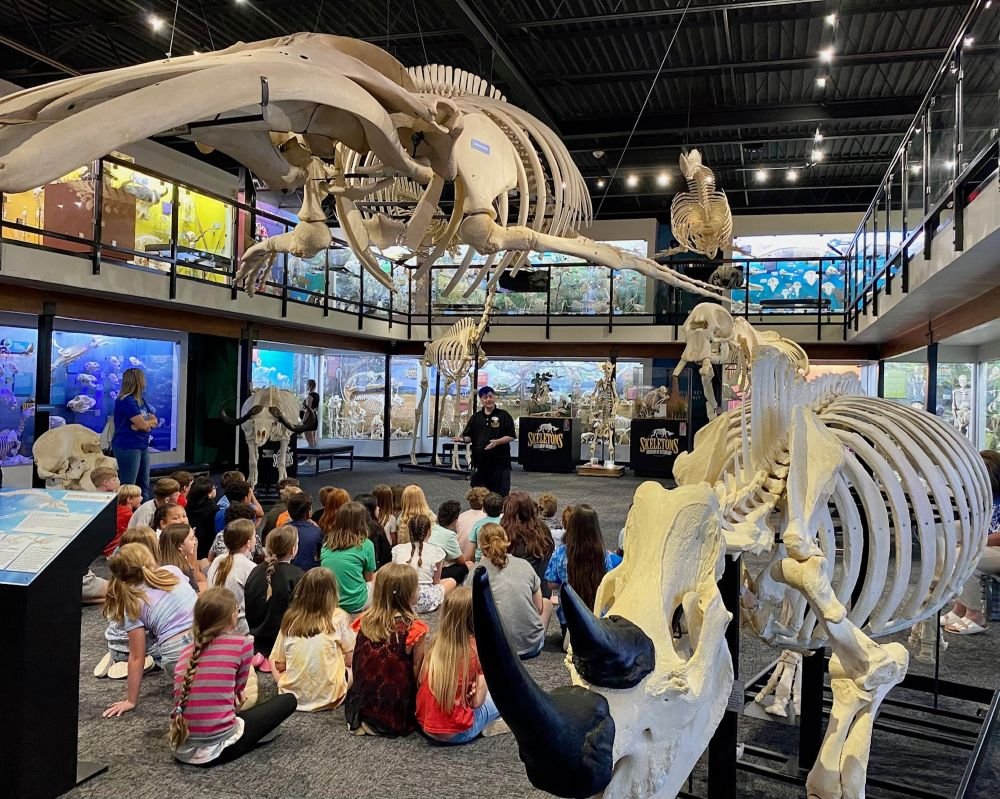
- A magnificent 40 foot Humpback Whale skeleton dominates the ceiling space, hanging overhead in all its breathtaking scale.
- Just a short distance away, a tiny hummingbird skeleton sits in its case, measuring just a few centimeters, highlighting the incredible contrast in vertebrate evolution.
What Makes the Museum of Osteology the Only One of Its Kind?
In most natural history museums, bones often feel like an afterthought, relegated to dusty corners or hidden away in basement drawers. This place flips the script entirely. Founded by the passionate Jay Villemarette and opened on October 1, 2010, it is still the first and only museum in the United States devoted entirely to osteology. Here, the focus is singularly and proudly on the study of bones.
This 7,000 square foot building isn’t just an isolated attraction. It operates as a natural extension of Skulls Unlimited International, Inc., which is known around the world as the premier supplier of osteological specimens.
This unique relationship grants the museum access to rare and fascinating items that other institutions simply can’t get their hands on. So, while other venues might have a dinosaur hall, the Museum of Osteology provides a comprehensive, up-close look at modern vertebrate anatomy that you truly cannot find anywhere else in America.
The Story Behind the Skeletons
When visitors are surrounded by this sheer volume of bones, one of the first questions they ask is, “Where did they all come from?” It’s a great question, and the answer is rooted in a deep, strict ethical framework. The museum does not kill animals for its displays.
The sourcing process is centered on animals that have died from natural causes or were part of conservation efforts that, while sadly failing to save the individual animal, can still serve to educate the public. The acquisition team relies on established and trusted networks to source every specimen responsibly:
- Zoos and wildlife preserves often donate animals that have died of natural causes, allowing them to continue aiding in education.
- Staff carefully prepare specimens found deceased in the wild, ensuring that no harm ever comes to living populations for the sake of an exhibit.

Some Must-See Exhibits You Can't Miss
With so much to see, you’ll want to make sure these incredible displays are at the top of your list of must-see things to do in OKC. The museum layout intuitively guides you through different classes of animals, but a few specific skeletons demand a little extra attention.
The Museum's Centerpiec: The 40 Foot Humpback Whale
The first thing you’ll notice and trust us, you can’t miss it, is the massive shape suspended from the rafters. This 40 foot long female Humpback Whale serves as the undisputed icon of the collection. The whale tragically beached itself in Massachusetts back in 2005.
Its careful preservation turns a natural loss into a permanent and powerful lesson on marine anatomy. Seeing the surprisingly finger-like bones within the whale’s flipper helps you truly understand the evolutionary link between marine mammals and land animals.
Meet "Jigsaw," the 11 Foot Tall Indian Elephant
If one exhibit demonstrates the sheer difficulty of osteology better than the rest, it’s this one. Meet “Jigsaw,” an Indian Elephant skeleton standing an incredible 11 feet tall and weighing 2,500 pounds.
The name is a nod to the grueling, puzzle-like process of piecing together over 300 individual bones to recreate the majestic animal. It stands as a powerful testament to the technical skill and patience required to reassemble such a massive creature with perfect accuracy.
The Forensic Osteology Wing
Fans of crime procedurals and TV dramas often find themselves spending the most time in this compelling section. The exhibits here dive into the world of forensic osteology, explaining how our skeletal structures create a permanent record of our lives.
You will see real, tangible examples of pathology and trauma. Displays include bones affected by cancer and skulls showing clear evidence of gunshot wounds. This area masterfully bridges the gap between biology and law enforcement, showing how bones can speak for those who no longer can.
Other Notable Species on Display
Don’t forget to peer into the smaller cases, where some of the most fascinating and bizarre anatomical wonders are hiding. The diversity of the collection is so vast that even seasoned biology enthusiasts are bound to find something new and surprising.
These specific skeletons offer unique insights into how different species move, adapt, and survive:
- The Saiga Antelope boasts a distinctively strange nasal structure that is rarely seen in collections here in the US.
- The Sumatran Orangutan and Two-toed Sloth showcase incredible limb adaptations built for a life spent in the trees.
- Fierce predators like the Komodo Dragon and Dwarf Crocodile display the raw, ancient geometry of reptiles.
Planning Your Visit to the Museum of Osteology
A little bit of prep work can ensure you get the most out of your trip to South OKC. The museum is a very popular destination for school field trips, so if you’re looking for a quieter experience, visiting on a weekend or later in the afternoon is often a good bet when planning what to do in OKC this weekend.
Location, Hours, and Parking
You’ll find the museum located at 10301 South Sunnylane Road, Oklahoma City, OK 73160. It sits comfortably in the southern part of the city and offers easy access by car. Its operating hours usually run seven days a week, but holidays can sometimes alter the schedule.
It’s always a good idea to check the official museum website before you head over, just to confirm they are open. You’ll be happy to know that parking is generally ample and free, removing one of the common headaches of city tourism.
Admission Prices and How to Buy Tickets
General admission has tiers for adults, seniors, and children between the ages of 3 and 12. Little ones, like toddlers and infants under 3, get in for free. You can always buy your passes right at the door, but purchasing them online beforehand can help speed up your entry process. The prices are quite reasonable compared to other local attractions, making it a fantastic, budget-friendly option for families.
Accessibility and the Unique Gift Shop
The entire building is a single-story layout, which makes it fully wheelchair accessible for everyone. The wide aisles can easily accommodate strollers and other mobility devices. Be sure to leave some time to browse the gift shop on your way out. This isn’t your average shop filled with plastic trinkets.
Here, you can buy real, ethically sourced skulls and fossil replicas directly from the Skulls Unlimited inventory. It is one of the very few places where you can legally purchase a real animal skull to start your own collection.
Getting out to explore all the unique corners of Oklahoma City is best done with a reliable ride. If your car happens to break down on Sunnylane Road or anywhere else in the metro, you don’t want to be left stranded.
Five Star Towing provides fast, professional roadside assistance and towing services right here in OKC. We handle the heavy lifting so you can get back to your plans. Give us a call for help that is as solid as bone.
Frequently Asked Questions
Absolutely! Every skeleton on display is an authentic biological specimen, not a plastic model. The Museum of Osteology prides itself on being America's only skeleton museum, showcasing the actual calcium structures of animals. This dedication to reality allows for a much more detailed study of things like bone density, fractures, and natural variations that you just can't get from replicas.
According to Atlas Obscura, the facility displays hundreds of skulls and skeletons that are all genuine. TravelOK further confirms this, noting that the museum features over 450 real skeletons, which distinguishes it from general natural history museums that often have to rely on casts for their rarer species.
Most visitors find themselves spending between 60 to 90 minutes exploring all the exhibits. The museum is about 7,000 square feet, which is dense with fascinating displays but still very manageable. You could certainly walk through in about 45 minutes, but if you enjoy reading the placards and really examining the forensic section, you'll want to plan for a longer stay.
Reviews on TripAdvisor suggest that families with children often stay for about an hour, while adults with a keen interest in anatomy may find themselves lingering longer. The official Museum of Osteology website suggests planning for at least an hour to fully appreciate the incredible diversity of the collection.
Not at all. The entire environment is carefully designed to be educational rather than frightening. While the subject matter is, of course, skeletons, the museum is brightly lit and the displays are presented in a scientific context. You won't find any jump scares or gore here, the focus is squarely on the mechanics of nature and how animals adapt.
The Museum of Osteology's own FAQ page notes that the museum is family-friendly and a huge hit with school groups. Oklahoma City Mom blogs frequently recommend the museum as a top educational destination for kids, pointing out that children are usually far more fascinated by the animals than they are scared of the bones.
The largest specimen in the entire collection is the incredible 40-foot Humpback Whale. This massive skeleton is suspended from the ceiling, allowing you to walk right underneath it and feel its immense scale. It truly anchors the entire room and provides a sense of wonder.
Skulls Unlimited, the museum's parent company, details the story of acquiring this whale, noting its massive weight and the complexity involved in hanging it. TravelOK highlights this exhibit as the primary "must-see" attraction within the facility, and it's easy to see why, given its sheer size compared to the other 800 specimens.
For the most part, visitors are asked not to touch the main skeletal displays in order to preserve them. The natural oils from our skin can degrade bone over time, and many of the articulated skeletons are quite fragile. However, the museum often includes specific "touch tables" or interactive zones where you are encouraged to handle certain hardy specimens.
The Museum of Osteology visitor guidelines emphasize a "look but don't touch" policy for the primary collection. However, educational programs run by the museum staff, as described on their events page, sometimes offer hands-on opportunities with specific educational props that are separate from the main museum floor exhibits.
For anyone interested in biology, anatomy, or just wonderfully unique oddities, the admission price offers incredible value. It gives you access to a highly specialized collection that you literally cannot find anywhere else in the United States. The niche nature of the museum means you are seeing rare items like the Komodo Dragon or the Jigsaw Elephant that are seldom displayed anywhere else.
Atlas Obscura rates it as a truly unique destination, emphasizing its singularity as the only museum of its kind in America. User reviews on Google Maps consistently give it high marks for value, often citing the cleanliness of the facility and the amazing opportunity to see forensic osteology up close.
The museum is situated in South Oklahoma City, at 10301 South Sunnylane Road. This location places it just south of I-240, making it very accessible for residents of nearby Moore and Norman as well. It is located in a somewhat industrial area, which can sometimes surprise first-time visitors, but it's easy to spot.
TravelOK lists the address and provides a map for visitors, noting its proximity to the Skulls Unlimited headquarters. The Museum of Osteology website advises using a GPS, as the building is set back a bit from the road and shares grounds with the processing facility.
The museum is typically open seven days a week to accommodate both travelers and locals. Standard hours usually run from morning to late afternoon (for example, 8:00 AM or 9:00 AM to 5:00 PM), though Sunday hours often start a little later in the day (e.g., 11:00 AM).
The Museum of Osteology contact page urges visitors to check the calendar online for any holiday closures, such as Thanksgiving or Christmas Day. TravelOK listings for the museum are also updated regularly to reflect current seasonal operating times.
Yes, you'll find a dedicated parking lot just for museum guests. The parking is free and conveniently located directly in front of the building. Since the museum is not in a crowded downtown corridor, finding a spot is rarely an issue.
TripAdvisor reviews frequently mention the ease of parking as a big plus for visiting this attraction. The Museum of Osteology visitor info confirms that their lot can also accommodate buses for school groups as well as individual cars.
Yes, it is! The entire facility is located on a single level with no stairs required to view the main exhibits. The aisles are nice and wide, able to accommodate standard wheelchairs and electric scooters with ease. This design ensures the museum is fully accessible to all visitors with mobility challenges.
TravelOK categorizes the attraction as ADA compliant. The Museum of Osteology website also explicitly states that the facility is wheelchair accessible, ensuring that every guest can view all the displays, from the massive whale down to the tiny hummingbird.
The museum was founded in 2010 by Jay Villemarette. He is also the founder of Skulls Unlimited International. His lifelong passion for collecting skulls, which began when he was just a kid, eventually grew into the world's largest supplier of osteological specimens and, ultimately, this incredible museum.
The Skulls Unlimited history pages detail Villemarette's amazing journey from a hobbyist collector to a successful business owner. Atlas Obscura credits his unique vision for creating a space where the general public could finally access a collection that was previously available only to private buyers or universities.
Yes, you can, and it's one of the things that makes the gift shop so special. Because the museum is an extension of Skulls Unlimited, the shop offers a variety of ethically sourced, real animal skulls, teeth, and bones right alongside standard souvenirs like t-shirts and toys.
The Museum of Osteology online store mirrors the inventory of the physical gift shop, showing a wide selection of real specimens. Skulls Unlimited confirms that they supply the museum shop, which ensures that all items for sale are legally and ethically obtained.
Driving Direction from Museum of Osteology, 10301 S Sunnylane Rd, Oklahoma City, OK 73160, United States to 5-Star Towing OKC, 2730, 2800 SW 25th St, Oklahoma City, OK 73108 - 18 min (13.4 miles) via NE 27th St and I-240 W
Museum of Osteology, 10301 S Sunnylane Rd, Oklahoma City, OK 73160, United States
Get on I-35 N in Moore from SE 104th St and NE 27th St - 7 min (3.4 mi)
Take I-240 W/OK-3 W to SW 29th St in Oklahoma City. Take exit 118 from I-44 E - 10 min (9.3 mi)
Continue on SW 29th St to your destination - 3 min (0.7 mi)
5-Star Towing OKC, 2730, 2800 SW 25th St, Oklahoma City, OK 73108
We offer towing and roadside assistance near the Museum of Osteology. Learn more about our next location, Downtown Oklahoma City.