
Being stranded on the side of I-40 with steam pouring from under your hood is the absolute worst time to start deciphering the fine print of your insurance policy. As semi-trucks roar past, shaking your entire car, the physical stress piles on top of the financial dread that’s already taking root in your mind. You reach for your phone to call for help, thinking your “full-coverage” policy has you, well, fully covered. Unfortunately, that assumption can lead to a very shocking bill.
That roadside assistance you added to your insurance policy isn’t the blank check you might think it is. It’s filled with hidden rules about mileage caps, destination restrictions, and who you’re allowed to call for help. Taking the time to understand these limits before your engine gives out can save you a lot of money and keep you from being strong-armed into using a repair shop you’ve never even heard of.
Essential Takeaways
- Paying a small yearly fee of $15 to $40 for roadside assistance can be a smart way to save, especially since a single tow can cost over $109 out of pocket.
- Most insurance plans will only tow your car up to 15 miles, and any additional distance comes directly from your own wallet.
- Your insurance company usually decides where your car is towed, often sending it to the nearest qualified facility rather than your trusted mechanic.
- Using your insurer’s preferred repair shop, also called a DRP, can help get your car back about 2.5 days faster.
- Every tow through your insurance counts as a claim, and if you use it too often, it could lead to higher premiums.
Everything You Need to Know About Towing and Insurance Before You Call
The Real Cost of a Tow and How Insurance Can Save You Hundreds
There is no doubt that pulling out your credit card on the side of the road is the most expensive way to pay for a tow. The cost difference between a tow covered by insurance and one you pay for immediately can be staggering. Drivers without coverage face the full, immediate market rate. In many cases, the cost of a single tow is higher than what you would pay for an entire year of roadside assistance.
Out-of-Pocket versus Covered Towing
Looking at the numbers shows why a little planning goes a long way. Forbes Advisor reports that the national average for a tow is around $109, with most short trips of 5 to 10 miles costing between $75 and $125.
Now compare that to the cost of being prepared. Adding roadside assistance to your car insurance typically costs just $15 to $40 per year. The math speaks for itself. If your car breaks down and you need a 20-mile tow, paying out of pocket could easily exceed $150 once you include the base rate and mileage fees. With a roadside assistance plan, you would likely pay nothing at that moment for that small yearly fee.
Understanding Tow Bills and Mileage Limits
A tow bill usually has two main parts, the hook-up fee and the per-mile charge. The hook-up fee covers the truck’s arrival and the driver’s work in safely securing your vehicle. The per-mile charge starts as soon as the tow begins toward the repair shop.
Insurance helps cover these costs, but it does not offer unlimited mileage. Most basic plans have a cap, often around 15 miles. Any distance beyond that is your responsibility. Extra miles can cost between $3 and $7 each. For example, if your preferred mechanic is 30 miles away and your policy only covers 15 miles, you would pay for the remaining 15 miles out of pocket. Knowing your plan’s limit in advance is the best way to avoid an unexpectedly high bill.
The "Nearest Repair Facility" Rule Explained
You’d think that if your car breaks down, you get to decide where it goes, right? Maybe to that mechanic in Oklahoma City you’ve trusted for years. Unfortunately, your insurance company might have other plans. Buried in your policy is likely a clause about the “nearest qualified repair facility.” This little phrase gives your insurer the power to pick the destination, all to keep their own towing costs down. The problem is, it puts you in a tough spot when you’re already stressed out.
What "Nearest Qualified Repair Facility" Really Means
In simple terms, this clause means your insurer can pick a repair shop for you based on what’s closest and in their network, not on who you prefer. The dispatcher’s job is to find the nearest place that can do the work, which saves the insurance company money.
What this means for you is your car could end up at a generic chain shop instead of the specialist you know and trust. Let’s say you break down in Norman, but your go-to mechanic is in Edmond. Your insurer will almost certainly refuse to pay for that long trip across the metro. They’ll offer to take it to a shop in Norman, and if you say no, the cost of that decision falls on your shoulders.
The Financial Penalty for Choosing Your Own Mechanic
You absolutely have the right to send your car wherever you want. Just know that exercising that right will probably cost you. Here’s how it works, your insurance will pay for the tow to their chosen “nearest” shop. If you want it to go somewhere else, you have to pay the difference out of your own pocket.
Imagine the closest shop is just 7 miles away, but the specialist you trust is 25 miles away. Your insurance will cover the cost of those first 7 miles. You’re responsible for paying the tow truck driver for the other 18. This is a surprise most people don’t discover until they’re already sitting in the tow truck. It’s a great reason to pull out your policy now and see exactly what you’d be up against if you insisted on using your own mechanic.
Using In-Network Versus Out-of-Network Towing
Your insurance company doesn’t just work with any tow truck that comes along. They have contracts with specific towing companies. These “in-network” towers have already agreed on rates and how to handle billing directly with your insurer. Sticking with them makes your life a whole lot easier. On the other hand, calling the first company you find on Google means jumping through hoops and paying money upfront.
The In-Network Advantage
The biggest plus of using an in-network tow truck? No money changes hands. The tow company bills your insurer directly. All you have to do is sign a form, and your car is on its way. You won’t have to pull out a credit card or empty your wallet for any part of the tow that’s covered.
These days, technology makes it even smoother. Most big insurance companies like Geico, Progressive, State Farm, and Allstate have apps that use your phone’s GPS to pinpoint your location. With a few taps, they can send a truck your way and even give you real-time updates on its arrival. This takes a lot of the guesswork and anxiety out of the situation. According to JD Power, the average wait is about 60 minutes. Knowing help is on the way and that you won’t have to deal with payment makes this the go-to option for most people.
The Risks of Going Out-of-Network
When you call an independent tow company, you suddenly become the middleman. You have to pay their full rate right there on the side of the road, and there’s no guarantee you’ll get all of that money back from your insurance.
To get your money back, you’ll have to file a reimbursement claim. Your insurer will then scrutinize the bill to make sure the charges are “reasonable and customary.” If they think the tow company overcharged you or the mileage was too high, they might only pay for part of the claim, leaving you to cover the rest. For any chance of a successful reimbursement, you need a perfect, itemized receipt. It has to include the towing company’s name, the date, where you broke down, where you were towed, and a full breakdown of the fees. If you’re missing even one of these details, your claim could be denied, and that money is gone for good.
How Your Tow Destination Impacts Repair Time
Where that tow truck takes your car has a huge impact on how quickly you’ll get it back. Insurance companies have special partnerships with certain body shops and mechanics, called Direct Repair Programs (or DRPs). These shops have a direct line to the insurer, which helps cut through a lot of the usual red tape.
The Direct Repair Program (DRP) Fast Track
Sending your car to a DRP shop is like getting it into the express lane. These shops are pre-approved to write up estimates and can start working on your car right away, without having to wait around for an insurance adjuster to show up. They just upload photos and information straight to the insurance company.
This streamlined process makes a real difference. Data from CCC Intelligent Solutions shows that using a DRP shop can get your car repaired and back to you an average of 2.5 days faster. When you’re depending on a rental car or rideshares, getting your own vehicle back almost three days earlier is a huge win.
The Non-DRP Slowdown
If you choose a mechanic that’s not in the DRP network, things can slow down considerably. The shop will write up an estimate, but they can’t touch your car until your insurance company gives them the green light. And that usually means waiting for a field adjuster to come out and physically inspect the damage.
Just getting an adjuster scheduled can take time and you could be waiting anywhere from 24 to 72 hours for the inspection. All the while, your car is just sitting there, untouched. Even though you have every right to use any shop you want, these built-in delays make a pretty strong case for just going with your insurer’s recommendation.
Insurance Roadside Versus AAA
It’s easy to think that the roadside assistance on your car insurance is the same as something like AAA. While they both get you out of a jam, they work very differently. The biggest differences come down to how far they’ll tow you and whether or not using the service counts against your insurance record.
Towing Distance
When it comes to towing distance, insurance plans typically give you just the basics. Auto clubs, on the other hand, make long-distance towing a key feature.
- Your insurance policy usually covers towing up to around 15 miles or just to the nearest repair shop.
- The AAA Classic plan provides up to 5 miles of towing.
- The AAA Plus plan increases coverage to an impressive 100 miles.
- The AAA Premier plan offers ultimate peace of mind with one tow of up to 200 miles each year.
A Service Call or an Insurance Claim?
Many people don’t realize that when you use the roadside assistance from your insurance policy, you’re technically filing a claim. Even if it’s logged as a “zero-dollar” claim because there was no accident, it still goes on your CLUE report, a database insurers use to track your history.
According to the experts at The Zebra, a single call probably won’t hurt your rates. But if you start making a habit of it, say, two or three calls in one year your insurer might see you as a higher risk. This could lead to higher premiums or even cause them not to renew your policy. In contrast, calling a third-party service like AAA has absolutely no effect on your car insurance.
Covering the Vehicle Versus Covering the Member
An easy way to remember the difference is that insurance follows the car. If you’re driving a friend’s truck and it breaks down, your roadside assistance plan won’t help. The coverage is linked specifically to the vehicle listed on your policy.
Auto clubs, however, cover the person. As a AAA member, you’re covered no matter whose car you’re in your own, a rental, or even if you’re just a passenger in a friend’s car. This ‘follow the member’ benefit gives incredible peace of mind to anyone who often travels in different vehicles.
Sooner or later, every driver in Oklahoma City will find themselves in need of a tow. Whether you’re stuck on the Turner Turnpike or on a quiet street in Bricktown, what happens next can be either a minor hiccup or a major headache. The difference comes down to knowing what your coverage actually covers. Your insurance can be a lifesaver, but only if you play by its rules about networks and mileage.
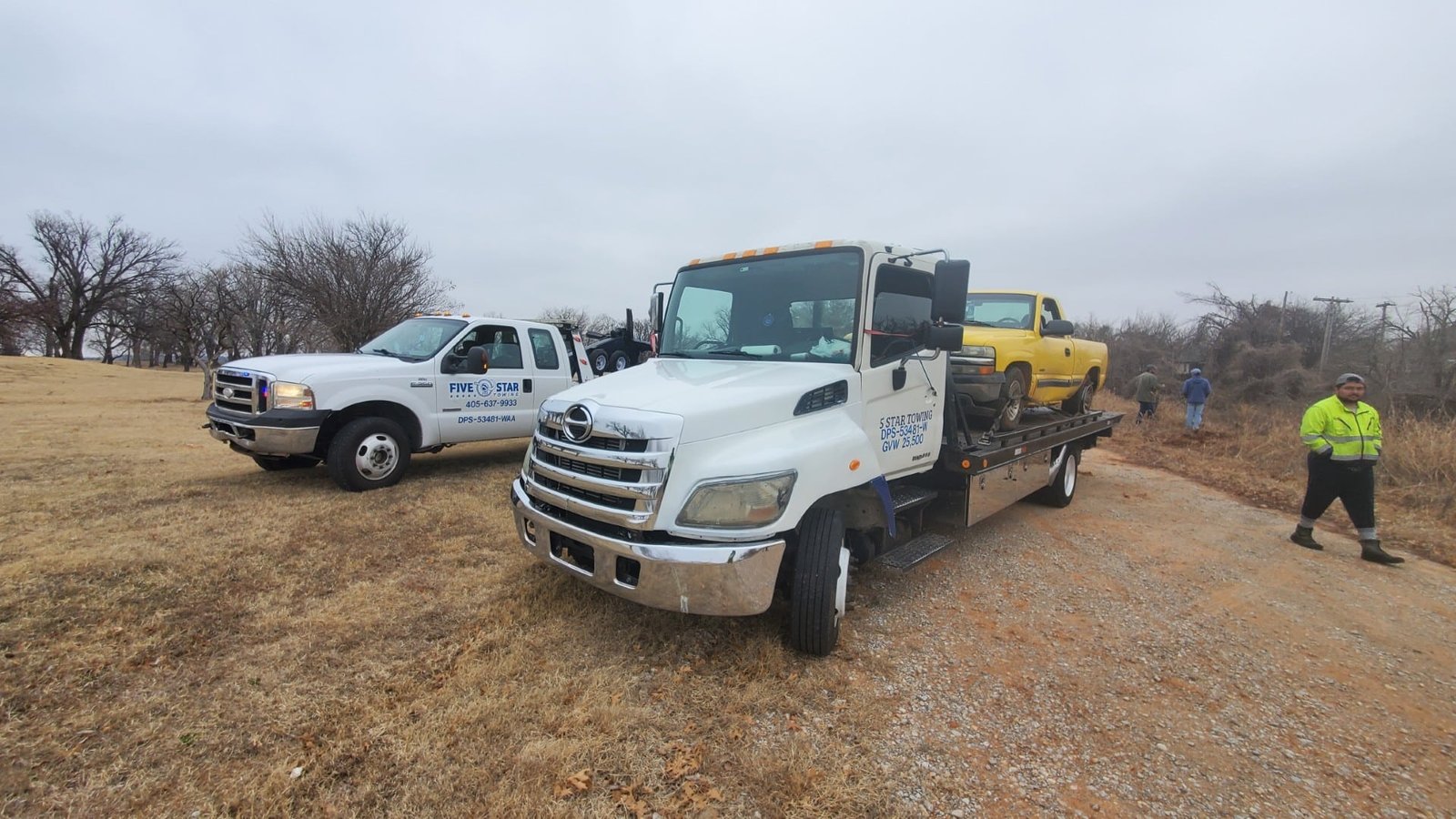
When that unexpected moment arrives, you want a partner on your side who knows the local roads and can work with any insurance provider. At Five Star Towing, we pride ourselves on providing fast, professional service across OKC. We’ll handle all the tricky details of the tow, so you can focus on what matters most, getting on with your day. Give us a call when you need help you can count on.
Frequently Asked Questions
Yes, you always have the final say on where your car goes, but the real question is who will pay for it. Your policy will likely only cover towing to a pre-approved repair facility chosen by your insurance company. If you want your car to go somewhere else, you will have to pay for any extra mileage yourself. Before you decide, figure out the distance to your preferred mechanic versus their choice, because if your shop is much farther, you could face a hefty bill for those additional miles.
It depends on your policy, but most standard plans do not cover very long distances. The industry standard for basic roadside coverage is about 15 miles. Some premium plans might offer more, but this is still very different from the long-distance towing available through auto clubs. You need to know your limit because if you have a long commute, a basic 15-mile plan might not be enough to get you home or to your trusted mechanic without incurring extra costs.
Yes, every time you use your insurance’s roadside service, it is logged as a claim. Even though it is often a "zero-dollar" claim, insurers track how often you use it through your CLUE report. If your driving record already has some blemishes like accidents or tickets, you might want to think twice before using your insurance for a simple tow. Paying for a third-party service could be a smarter choice to protect your premium rates.
A single tow probably will not raise your rates, but using it frequently could. Insurance companies use data to measure risk, and drivers who file multiple roadside claims, such as two or three in a year, are seen as more likely to file a more expensive accident claim in the future. It is best to save your insurance's roadside assistance for real emergencies. For more common mistakes, like locking your keys in the car, paying out of pocket or using an auto club membership can help keep your insurance record clean.
This clause in your policy allows your insurer to limit how much they will pay for your tow. It gives the insurance company the power to choose the tow destination based on what is cheapest and closest, not necessarily your preferred mechanic. This prevents your car from being towed 50 miles to your dealership if there is a capable mechanic only two miles away. If you want your car to go to your preferred shop, you will need to pay for the extra distance.
Using your insurance may be cheaper in the moment, but paying out of pocket can sometimes be smarter for the long term. The upfront cost of a single tow, around $109, is much higher than the yearly cost of roadside assistance, which is about $20. However, if using the service results in a rate increase, that could cost you more over time than paying for the tow yourself. If your insurance record is clean, it is generally fine to use your coverage. If you are concerned about a rate hike or non-renewal, it may be wiser to pay cash for the tow.
You will have to pay for every mile beyond your policy's limit. The tow truck driver will calculate the total mileage, subtract the distance covered by your insurance, and bill you directly for the remainder at their normal rate, usually $3 to $7 per mile. To avoid an unpleasant surprise, ask the driver for an estimate of the extra cost before they hook up your car.
It depends on your needs. AAA is generally better for long-distance towing and flexibility, while insurance is often cheaper and simpler. A mid-tier AAA Plus membership provides 100 miles of towing, far more than the standard 15 miles covered by most insurance policies. AAA also covers any car you drive, whereas your insurance only covers the vehicle listed on your policy. If you travel frequently or drive an older car, AAA may be the better investment. If you have a new car under warranty or mostly take short trips, your insurance coverage might be sufficient.
You have to file a formal claim with your insurance company and provide all the necessary paperwork. Your insurer will review the claim to ensure the costs were reasonable and customary. This requires you to submit a detailed, itemized receipt that breaks down all charges. Do not accept a scribbled note from the driver. Make sure you get a printed or digital invoice with the company’s full details, as this gives you the best chance of getting your claim approved.
The more details you can provide, the better, because good documentation is essential. You will need an itemized receipt or invoice that includes the towing company’s name and phone number, the date of service, the pick-up and drop-off locations, the total miles towed, and a breakdown of the total cost you paid. Take a picture of the tow truck and the receipt with your phone right away. In the stress of a breakdown, it is very easy for a piece of paper to get lost.
The industry average is about one hour, although this can vary. A study by JD Power found that the typical wait time for an insurer-dispatched tow is around 60 minutes. Many insurance apps now offer real-time GPS tracking, so you can see exactly where your tow truck is instead of guessing. If you have broken down in a location that feels unsafe, such as a narrow shoulder on a highway at night, call 911 first. Your safety is more important than waiting for the tow truck.
Most insurance policies do not cover towing your car home. The purpose of the policy is to get your car to a repair shop, not to store it at your residence. A tow to a home usually indicates that you plan to work on the car yourself or leave it there, and insurers generally do not pay for that. If you want your car delivered to your home, you should expect to pay for the tow yourself. Auto clubs like AAA are often more flexible about dropping a car off at a residential address.