
You hear the pop before you feel the shudder. Your steering wheel jerks, and you find yourself wrestling the car over to the shoulder of I-35. As traffic screams past you at eighty miles an hour, the last thing on your mind is “policy limits.” You just want to know if calling a tow truck is about to drain your bank account.
Most drivers here in Oklahoma City figure their “full coverage” policy automatically handles something like a tow. Unfortunately, that assumption often leads to a really frustrating phone call with a claims adjuster and a surprisingly steep bill. Taking a few minutes to understand what your insurance actually covers *before* you’re stranded on the side of the road can save you a world of money and stress.
Key Notes
- Your standard liability, collision, and comprehensive policies almost never cover a tow for a simple mechanical breakdown.
- To get a tow for something like a dead battery or engine failure, you usually need to have added a specific “Towing and Labor” option to your policy.
- Towing that’s needed because of a car accident is typically covered as part of your collision claim.
- Signing up for a roadside assistance plan is almost always much, much cheaper than paying for a single emergency tow out of your own pocket.
Does My Car Insurance Cover Towing?
There’s a ton of confusion out there when it comes to auto insurance and towing. It’s easy to think that if you’re paying for comprehensive or collision, you’ve got a safety net for any and every problem that could happen on the road. That’s just not the case. Your standard car insurance policies; liability, collision, and comprehensive, don’t automatically include towing for a mechanical breakdown.
A blown transmission or a snapped timing belt is seen as a maintenance issue, which falls outside the scope of what standard accident insurance is for. Generally, towing services are only covered in two very specific situations.
First, if your car gets damaged in an accident that’s covered under your collision or comprehensive policy, the cost to tow it away from the scene is almost always included in the claim. Second, you can buy an optional add-on, often called “Towing and Labor” or “Roadside Assistance.” This extra coverage, which comes with an extra premium, is what covers you for non-accident problems like an engine that won’t start or a dead battery. According to Forbes Advisor, adding roadside assistance coverage to your auto policy can be surprisingly affordable, sometimes costing as little as $5 to $20 per vehicle for an entire year.
Towing After an Accident
Accidents and breakdowns are treated completely differently by your insurance. If you’re in a collision that your policy covers, the cost of moving your disabled vehicle from the accident scene to a repair shop is considered a necessary part of the overall claim. For instance, if another driver runs a red light and hits you at an intersection in downtown OKC, your collision coverage will likely pay to have your car towed. Your insurance company sees that tow as a direct and necessary expense caused by the accident. This cost gets bundled in with your repair bill and is subject to your policy’s deductible.
Towing for a Breakdown
When your car just stops working, insurance companies see that as a maintenance issue, not an accident. If your car breaks down because of something that isn’t crash-related, like a dead alternator or you simply ran out of gas, a standard policy won’t cover the tow. For that kind of help, you need that specific Roadside Assistance add-on. This extra coverage is designed for exactly these moments, saving you from a large, unexpected out-of-pocket expense. Without this specific rider on your policy, the tow truck driver is going to expect you to pay for the service on the spot.
What's Included in a Roadside Assistance Plan?
It’s helpful to think of roadside assistance as a package of helpful services rather than just a simple towing agreement. This optional coverage is designed to handle common roadside headaches and, whenever possible, get you back on the road without needing a tow at all.
The main goal is to solve minor problems right there on the spot so you can continue on your way. When you consider that J.D. Power reports the national average for a single tow truck service is about $109, paying a small annual fee for a plan makes a lot of sense. You’re essentially paying a little bit upfront to avoid a much bigger, unpredictable bill down the road.
Services Typically Covered
Most plans offer a standard set of services designed to tackle the most common roadside emergencies. Having these benefits means a minor inconvenience doesn’t have to turn into a major financial problem.
- Your car will be towed to the nearest qualified repair facility, with most basic plans covering a limited distance, usually around 15 to 20 miles.
- A service technician can come out to jump-start your car if the battery is dead.
- The service typically covers the labor needed to change a flat tire by installing your spare.
- If you run out of gas, a technician can deliver a few gallons of fuel to get you back on the road.
- If you lock your keys inside your car, a locksmith can be sent to help you regain access, with coverage usually capped at about $100.
- If your car is stuck in mud, snow, or a ditch, winching or extrication services can help pull it out as long as the vehicle is within roughly 100 feet of a paved road.
Common Exclusions and Limits
It’s important to remember that these policies are designed to cover the service, not the parts. Understanding these limits ahead of time can prevent a shock when the provider asks for your credit card.
- The plan does not cover the cost of replacement parts, such as a new battery, a new tire, or any other parts your car may need.
- You are responsible for paying for the gasoline that is delivered to you.
- Towing from an impound lot or as a result of a parking violation is not covered under most plans.
- Coverage usually only applies to the first hour of labor if a mechanic works on your car at the breakdown site.

Is Roadside Assistance Worth the Small Annual Cost?
Hoping that your car will never break down is a bit of a gamble. For most of us, a breakdown is a matter of “when,” not “if.” Data from Agero shows that there are over 69 million vehicle breakdowns in the U.S. every single year, which means the odds of needing help at some point are pretty high.
For the vast majority of drivers, the small annual cost of a roadside assistance plan makes it a smart investment, especially when you compare it to the high out-of-pocket cost of just one service call. A single tow or lockout service can easily cost you more than you’d pay for several years of the insurance add-on.
Paying Per Service versus Annual Plan
When you look at the numbers, it’s pretty clear that having a plan is the better deal. The annual premium seems tiny compared to what you’d pay for these emergency services on your own.
- A typical out-of-pocket towing cost for a 10-mile trip ranges from $75 to $125.
- The average cost of a battery jump-start paid out of pocket is between $40 and $75.
- A car lockout service usually costs between $50 and $100 when paid out of pocket.
- The average cost of a flat tire change without coverage falls between $50 and $75.
- A basic roadside assistance policy typically costs between $15 and $60 per year.
- Beyond the savings, this type of coverage also offers peace of mind and convenience. In a stressful situation, you only need one reliable number to call for help.
Choosing the Best Roadside Assistance
The good news is you have several ways to get this kind of protection. You can add roadside assistance to your car insurance policy, join a third-party club like AAA, or even get it as a benefit through a credit card or your cell phone provider. The best option for you really depends on your needs, especially how far you think you might ever need your car to be towed.
Insurance add-ons are usually the cheapest and most convenient option since the cost is just bundled with your existing bill. On the other hand, third-party clubs often offer longer towing distances and benefits that cover you as a person, not just your specific car.
Insurance Company Add-Ons
All the major insurance companies now offer roadside plans to compete directly with the motor clubs. For drivers who tend to stay close to home, these are often the most budget-friendly choices.
- Progressive offers 24 hour roadside assistance that includes towing to the nearest qualified repair shop or to a shop of your choice within 15 miles. The service also covers winching, battery jump starts, fuel delivery, lockout assistance, and up to one hour of on scene labor.
- GEICO provides emergency road service that can cost as little as $14 per year per vehicle. Coverage includes towing, battery jump starts, tire changes, and lockout services up to $100.
- State Farm offers emergency road service that includes towing to the nearest repair shop, delivery of gas or oil, a battery jump, and up to one hour of labor from a mechanic or locksmith.
Third-Party Membership Clubs
Motor clubs are different because their entire focus is on travel and helping drivers in a jam. Their higher price tag usually buys you more perks and flexibility.
- AAA, also known as the American Automobile Association, offers several membership levels. The AAA Classic plan provides towing for up to five miles. AAA Plus increases that coverage to 100 miles, while AAA Premier includes one long distance tow of up to 200 miles.
- Better World Club is an eco-friendly alternative to AAA with similar membership tiers and the added benefit of offering roadside assistance for bicycles.
- Allstate Motor Club allows you to join without being an Allstate insurance customer. It offers multiple plans and also includes a pay per use option for non members.
How to Use Your Towing Coverage
It’s natural to feel a wave of panic when your engine dies, but following the right steps will ensure your insurance company foots the bill. To make sure your service is covered, it is absolutely critical that you follow your provider’s specific instructions.
If you just call a local tow company on your own and then ask your insurer for reimbursement later, you might find your request denied. Insurance companies have pre-negotiated rates with specific towing networks.
If you go “out of network” without their permission, you could get stuck with the entire bill. Always use the dedicated phone number or mobile app provided by your plan.
A Step-by-Step Guide for Roadside Assistance
When you’re stuck on the side of the road, your top priorities are staying safe and getting help quickly. Following these steps will help you do both.
- The first thing to do is get to safety by pulling your vehicle as far onto the shoulder and away from traffic as possible, then turning on your hazard lights.
- Before making the call, gather your information by confirming your exact location and having your policy number, your car’s make and model, and a basic idea of the problem ready.
- Next, contact your provider by calling the dedicated roadside assistance number listed on your insurance card or in the mobile app. It is important not to call a local tow company directly.
- The dispatcher will then confirm your coverage, tell you which service company is on the way, and provide an estimated time of arrival.
- In most cases, the provider pays the service company directly, so you should not need to pay out of pocket for covered services. If you do have to pay for any reason, be sure to get an itemized receipt so you can submit it for reimbursement.
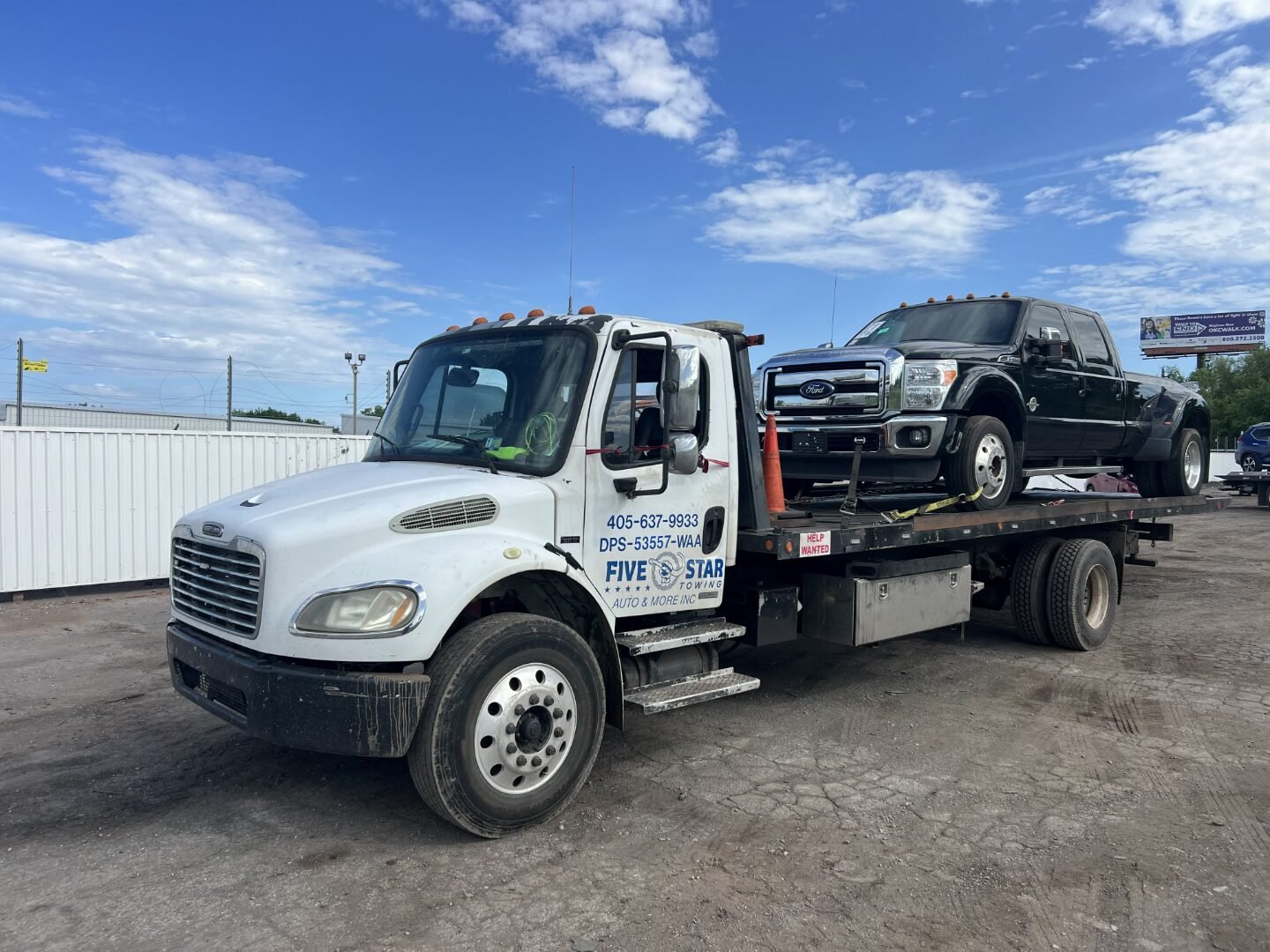
Being prepared for the unexpected is just part of being a responsible car owner. Knowing you have coverage brings peace of mind, but knowing who you can trust when you’re stranded in Oklahoma City is even better. Whether you have an insurance plan or need to pay for help yourself, Five Star Towing delivers prompt and professional service all across the metro area. We work with all the major insurance providers and promise to treat your vehicle as if it were our own. It’s a good idea to keep our number handy for those times the road throws you a curveball.
Frequently Asked Questions
For the most part, no. Insurance companies usually see roadside assistance as a customer service perk, not a red flag like an at-fault accident claim. Using your towing coverage for a mechanical breakdown generally won't cause your premium to go up.
That said, how often you use it matters. If you start calling for help constantly, say, four or five times in a single year, some insurers might take a closer look at your policy. As Bankrate points out, insurers keep track of all claims activity. In really extreme cases of overuse, a company might see you as a higher risk and decide not to renew that specific roadside add-on.
The best strategy is to save your roadside assistance for genuine emergencies. Think of it as your safety net for serious issues like a dead battery or needing a tow, not as a convenience service for every little thing.
The free towing distance depends entirely on the plan you've paid for. Most basic roadside add-ons from insurance companies and entry-level motor club plans will tow you to the "nearest qualified repair facility." If you have a favorite mechanic you'd rather go to, they often cap the free towing distance at a pretty short range, usually somewhere between 3 and 15 miles.
If you need a tow that's longer than your policy's limit, you'll have to pay for the extra mileage yourself. For example, if your plan covers 15 miles but your shop is 25 miles away, you'll pay the tow truck driver directly for those extra 10 miles. The per-mile rate can vary quite a bit depending on the company and where you are.
If you live in a rural area outside of OKC, it's definitely worth looking into a premium plan. Upgraded options, like AAA Plus, can extend your free towing range up to 100 miles, which can be a real lifesaver.
You can always ask to have your car towed to a specific shop, but whether your plan will cover the full cost is another story. Most policies state they will cover the tow to the "nearest qualified facility." If your preferred mechanic happens to be within that radius, then you're all set.
However, if you insist on being towed to a shop that's farther away than the closest option, you'll almost certainly have to pay the difference out-of-pocket. From the insurance company's perspective, they've done their job by offering to get you to the nearest help; taking your car across town to your favorite mechanic is seen as a personal choice that you'll need to pay for.
If you drive a specialty vehicle or you're just really particular about who works on your car, it's crucial to check your policy's wording. Some premium memberships offer more flexibility, allowing you to choose any shop within a 100-mile radius without an extra charge.
Running out of fuel is a classic roadside problem, and nearly every assistance plan includes a fuel delivery service. If your tank hits empty, they'll dispatch someone to your location with enough gas to get you to the nearest service station. It's a much safer alternative to walking along a busy highway.
Just remember, while the delivery service itself is free under your plan, the gasoline is not. You'll have to pay for the two or three gallons of fuel they bring you, usually at the current local pump price. The service driver will expect payment on the spot, so have a credit card or cash ready.
To make things go smoothly, be sure to tell the dispatcher exactly what kind of fuel your car needs (regular, premium, or diesel) when you call. This helps them avoid showing up with the wrong type, which would only delay you further.
Yes, your roadside assistance plan covers the labor involved in changing a flat tire. A technician will come to you, take off the flat, and put on your spare tire. The key thing to remember is that this covers the service of changing the tire, not the cost of a new tire.
This service also depends on you having a good, working spare tire in your car. If your spare is missing, flat, or if your vehicle doesn't have one (which is common in some newer cars), the situation changes from a "tire change" to a "tow." In that case, your car will be towed to a nearby tire shop, which would then be subject to your plan's towing mileage limits.
This is a good reminder to check the air pressure in your spare tire every so often. A roadside technician can't help you if the spare in your trunk is also flat!
Deciding which option is better really comes down to what you value more, a lower price or greater flexibility. Roadside add ons from your insurance company are almost always cheaper and make billing simple since everything appears on one statement. They are a great choice for drivers who mainly want a safety net for their own car at the lowest possible cost.
AAA and other motor clubs, on the other hand, offer benefits that follow the driver, not the car. This is a huge perk, as it means you're covered even if you're just a passenger in a friend's car when it breaks down. On top of that, AAA's higher-tier plans often provide much longer towing distances than what you'd get from a standard insurance add-on.
If you have an older, less reliable car or a very long daily commute, the higher cost of a club like AAA might be well worth it for the extended towing range (up to 100 or even 200 miles). If you have a newer car and mostly stick close to home, the insurance add-on is probably the more cost-effective choice.
Pretty much every policy has a limit on how many times you can use the service to prevent misuse. A standard insurance add-on or a basic motor club membership will typically allow for 3 to 4 service calls per year. Once you go over that limit, your provider will deny the claim, and you'll have to pay the full commercial rate for any further help you need.
These limits reset every year when your policy renews. It's also worth noting that all the different services count toward your total. So, a lockout in January, a jump-start in March, and a tow in July could easily use up three of your four allotted calls for the year.
If you find yourself needing help frequently, you might want to look into "Premier" or other top-tier plans that may offer more service calls. But honestly, if your car breaks down more than four times a year, you might have bigger problems to worry about than your roadside plan.
As long as you follow the proper procedure, you shouldn't have to pay the driver for any covered service. When you call the dispatch number for your insurance or motor club, they arrange the service and handle all the billing directly with the towing company. This "sign and drive" model is designed to be as convenient as possible for you.
The only times you should have to pay out-of-pocket are if you ignore your provider and call a tow truck on your own, or if you ask for services that go beyond your policy limits (like towing for extra mileage). In a reimbursement situation, you have to pay the driver upfront and then submit the receipt to your insurance company, which can be a slow process with no guarantee you'll get the full amount back.
To be safe, always ask the dispatcher, "Is this fully covered?" before they send the truck. This simple question confirms everything is set up correctly and helps you avoid an awkward and stressful negotiation on the side of the road.
This type of insurance is all about getting your car moved, not getting it fixed. Your policy will not pay for the new battery, the new alternator, the new tire, or the mechanic's labor costs to actually repair your car at the shop. It strictly covers the rescue mission to get you off the roadside.
Also, "impound recovery" is a universal exclusion. If your car gets towed by the city for parking illegally or having expired tags, your roadside assistance plan will not pay the fees to get it back. Towing from off-road areas, like deep in a forest or stuck on a beach, is also often excluded if the vehicle is too far from a maintained road.
It's always a good idea to read the "Exclusions" section of your policy. Knowing ahead of time what isn't covered can help you make smarter decisions about where you drive.
This depends on the type of plan you have. If your coverage is an add-on to your personal car insurance policy, the answer is almost always no. That coverage is tied to your specific car's VIN (Vehicle Identification Number). It protects that car, no matter who is driving it, but it won't help you if you're in someone else's car when it breaks down.
However, if you have a membership with a third-party motor club like AAA, the coverage typically follows the member. This means you can use your membership card to get a tow for a friend's car, as long as you are physically there with the vehicle when the service truck arrives.
This is the main selling point for motor clubs. If you often carpool or have kids in college who might be driving different cars, a member-focused plan offers much broader protection than a vehicle-focused insurance rider.
Your personal roadside assistance plan that's part of your car insurance usually does not cover rental cars, since the coverage is tied to your car's VIN. But don't worry, you likely have other options. Many credit cards offer roadside assistance for rentals if you use that card to pay for the car, and rental agencies themselves will always offer you their own breakdown protection at the counter.
If you plan to rely on a credit card benefit, make sure you understand the terms. Often, they only offer a "dispatch service" (meaning they'll find a tow truck for you), but you might still have to pay for the actual tow. The rental agency's plan is usually the most comprehensive, but it's also the most expensive daily option.
Before you travel, it's a good idea to check your credit card's benefits guide. If you're going to be in a remote area, paying the extra daily fee to the rental company might be worth it for the peace of mind.
Yes, in most cases you can add this coverage to your policy at any point during your term. Most insurance companies let you update your coverage instantly online or with a quick phone call. The cost is usually pro-rated, meaning you'll only pay for the time remaining in your policy term.
But there is a catch. There is almost always a waiting period designed to prevent fraud. Insurers do not want someone to break down on the highway, add coverage, and then immediately file a claim. Depending on the company, this waiting period can range from 24 to 72 hours.
So, if you're already stranded, adding coverage right now won't help you with your current problem. You'll have to pay for this tow, yourself, and the new coverage will only be active for future incidents.
It's a great question. Towing is what happens when your car is on a road but just can't move on its own. The tow truck simply hooks up to it and drives it away. Winching, on the other hand, is a recovery operation. This is needed when your car is stuck in a ditch, a snowbank, or mud and has to be physically pulled back onto a solid surface before it can be towed.
Most roadside plans include basic winching, as long as your vehicle is fairly close to a paved road (usually within 50 to 100 feet). If your car is in a really tough spot, like it has rolled over or is partially underwater it might require a more complex operation that could come with extra hourly fees.
If you happen to slide into a ditch during an Oklahoma City ice storm, make sure you tell the dispatcher that you are "stuck" and not just "broken down." This helps them send the right kind of truck with the proper winch and equipment to pull you out safely.