
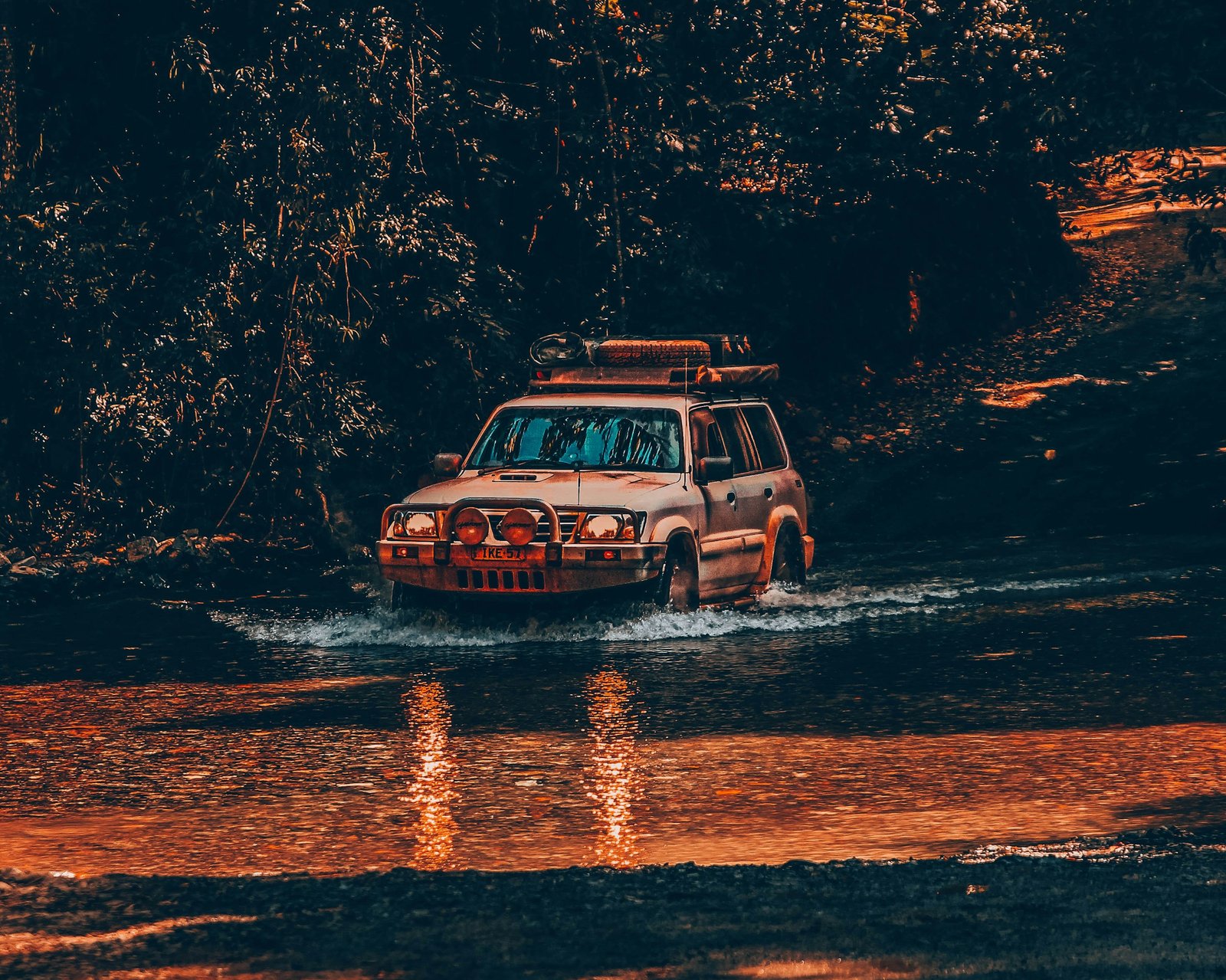
That silence when a stalled engine is the only thing you hear for miles is a different kind of loud. You turn the key, get nothing but a hollow click, and it sinks in. The vast Oklahoma wilderness really doesn’t care about your schedule. Off-roading is the ultimate freedom, but the trails around Oklahoma City aren’t to be taken lightly. They demand respect. Out here on loose terrain, mechanical failures and accidents can happen in the blink of an eye.
What separates a great weekend story from a costly rescue mission or a trip to the hospital is preparation. You need more than just a capable rig, you need the right gear, a sharp eye for maintenance, and the know-how to handle whatever the trail throws at you.
Key Notes
- Recovery gear is non-negotiable. Always pack a winch rated for your vehicle’s weight, along with quality recovery straps and shackles.
- Pre-Trip checks can save your life. Before every ride, run through the T-CLOC checklist to inspect your tires, controls, lights, oil, and chassis.
- Your PPE is your Armor. DOT-certified helmets and ANSI-rated eye protection can dramatically reduce how badly you get hurt in an accident.
- Your driving technique is everything. Learn how weight shifts on hills and how to keep your momentum up in mud or sand without getting reckless with your speed.
- Know the rules of the trail. Always follow local laws about helmets, spark arresters, and sticking to designated trail areas.
Your Off-Road Recovery and Emergency Gear Checklist
Getting stuck is just part of the sport, but staying stuck is a choice you make with your gear. When things go sideways far from help, understanding how off-road recovery works and having the right equipment is what gets you home. The U.S. Fish and Wildlife Service puts it plainly, your survival kit has to match the specific environment you’re heading into. It’s always a good idea to travel with at least one other vehicle or rider in remote spots. A simple mechanical problem on a solo trip can quickly turn into a serious survival situation. Your gear needs to cover three main bases; getting your vehicle unstuck, handling medical emergencies, and being able to call for help.
Vehicle Recovery Equipment
Your number one goal should be to get yourself out of a jam. Think of a winch as your lifeline. Knowing when a vehicle needs winching can help you choose the right recovery method for the situation. Make sure it’s rated for at least 1.5 times the gross weight of your vehicle. A heavy SUV buried in that deep Oklahoma red clay is fighting against forces way beyond its simple curb weight. Pair your winch with recovery straps. And please, don’t confuse these with tow straps. Recovery straps have some stretch to store kinetic energy, which helps pop you out. Tow straps have no give and can snap under that kind of sudden tension, which is incredibly dangerous. Understanding the risks involved in winch recovery is essential when choosing and using your recovery gear.
You’ll also need some D-rings or shackles to connect those straps securely to your vehicle’s frame points. A high-lift or bottle jack will let you lift a wheel out of a deep rut or change a tire on uneven ground. A full-size spare tire isn’t optional; it’s mandatory. A little donut spare just won’t survive the abuse of the trail. And don’t forget a tire repair kit and a high-volume air compressor. You’ll almost certainly air down your tires for better traction, so you’ve got to have a way to air them back up before you hit the highway.
Personal Survival and Medical Gear
When someone gets hurt in the backcountry, you’re the first responder. That’s why you need to carry a well-stocked first-aid kit. For those really remote or dicey areas where an ambulance is an hour or more away, safety experts strongly advise having at least one person in your group certified in first aid and CPR. A simple cut can get infected out there, and a broken bone needs to be splinted before you can even think about moving someone.
With hot engines and dry brush, fire is a very real danger. Mount a fire extinguisher somewhere the driver can grab it in a hurry. Pack some emergency lights or flares so you can signal your location if you need to. A survival whistle and a signal mirror are great backups that work even when your batteries are dead. Always tailor your personal kit to the weather. In the thick of an Oklahoma summer, that means packing extra water to ward off heat exhaustion. In the winter, thermal blankets are a must to prevent hypothermia if you end up having to spend an unexpected night in your rig.
Essential Tools and Spare Parts
You can be the most careful driver in the world, but sometimes, parts just break. A basic tool kit can be the difference between driving home and walking. Keep your fluids in secure, leak-proof containers so they don’t make a mess all over your cargo area. Your onboard tool chest should have:
- A good set of wrenches, sockets, and pliers that match your vehicle’s fasteners, whether they’re metric or SAE.
- A reliable multi-tool for those quick, on-the-fly fixes.
- A bright, high-lumen flashlight for repairs after dark or for peeking into the engine bay’s shadowy corners.
- The trusty duo of duct tape and zip ties for temporarily patching up everything from hoses to body panels.
- Spare belts and hoses that are known to wear out on your engine model.
- A top-off supply of essential fluids, including oil, coolant, and brake fluid.
Communication Devices for Remote Areas
Your cell phone will probably become a paperweight once you get too far from the city. You just can’t count on having service in deep ravines or dense forests. That’s why you should carry a fully charged satellite phone or an emergency beacon, like a Personal Locator Beacon (PLB) or a satellite messenger. These devices talk directly to rescue networks, completely bypassing the need for cell towers. Make sure you test this gear before you leave your driveway. Knowing how to send a distress signal is just as important as having the device in the first place.

The Pre-Trip Off-Road Vehicle Inspection
The off-highway world is tough on machines. A thorough pre-ride inspection is your best bet for stopping a preventable mechanical failure before it even starts. The ATV Safety Institute champions a structured checklist called T-CLOC to make this process second nature. Finding a loose lug nut or a fraying cable in the comfort of your garage is a free fix. Finding it on a steep downhill slope is going to cost you a whole lot more.
Tires and Wheels
Your tires are your only connection to the trail, so give them some attention. Check the tread depth and look over the sidewalls for any cuts or bulges. Grab a torque wrench and confirm your lug nuts are tightened to spec for your particular wheels. Tire pressure is the key to traction. The pressure you run on the highway is way too high for rocks and loose dirt. For instance, you might roll at 35 psi on the road but drop down to 16–20 psi on the trail. Lowering the pressure gives you a bigger contact patch and makes you less likely to get a puncture from a sharp rock, but you have to be sure the tire won’t pop off the rim.
Controls and Brakes
Steep descents and loose ground can make your stopping distance way longer than you’d expect. Give your brake pads, rotors, and fluid levels a good visual inspection. Squeeze the levers or press the pedal and feel for solid resistance. Your cables should all move smoothly, without getting hung up on anything. A throttle that sticks open is a rider’s absolute worst nightmare. Make sure your handlebars or steering wheel can turn smoothly from one side all the way to the other.
Lights and Electrics
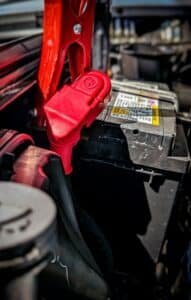
You need to see where you’re going and be seen by others. Test your headlights, taillights, and brake lights. Remember that your winch depends on a healthy electrical system. Check your battery terminals for any corrosion and make sure the battery itself is mounted securely. The vibrations of the trail can shake a loose battery enough for it to short out against the frame or even fail internally.
Oil and Fluids
Your engine works a lot harder off-road than it ever does on the highway. You’re often moving at low speeds, which means less airflow, making your cooling system incredibly important. Check all your fluids: engine oil, coolant, transmission fluid, differential fluids, and brake fluid. Top them off if they’re low. If you spot a leak, that’s a sign of a compromised seal that’s just waiting to fail under pressure. Taking a minute to do this can prevent overheating and the kind of mechanical breakdown that leaves you stranded.
Chain/Drive and Chassis
Take a good look at your suspension and steering components. Check out the shocks, U-joints, and bushings for any leaks, cracks, or excessive looseness. Off-road vibrations can really speed up the wear and tear on these parts. If you’re on a chain-driven machine, check the tension and make sure it’s well-lubricated. A thrown chain can easily crack an engine case. And finally, inspect the frame for any stress fractures, paying close attention to the areas around the welds.
Essential Off-Road PPE
Your Personal Protective Equipment is your first and last line of defense against injury. Metal can be bent back into shape and plastic can be replaced, but our bodies don’t bounce back so easily. Wearing the right gear can completely change the outcome of an accident. Safety organizations have shown time and again that riders without proper PPE suffer much more severe injuries in rollovers and collisions.
Helmets and Eye Protection
Head injuries are the number one cause of death in off-road accidents, period. A helmet that’s been certified by the DOT or Snell is an absolute must for anyone on an ATV, an off-road motorcycle, or in an open-cab UTV. Many states, like North Carolina, have laws that flat-out require helmets meeting USDOT standards. This isn’t the place for bicycle helmets or novelty lids. Official policies for off-road vehicle areas often specify full-face or three-quarter helmets and will explicitly forbid half helmets.
Protecting your eyes is just as important. Roost from the vehicle in front of you, low-hanging branches, and even bugs can blind you in an instant. Your glasses or goggles need to meet ANSI Z87.1 standards, which means they’re shatter-resistant. Your regular sunglasses will shatter on impact, which could send sharp fragments straight into your eyes.
Protective Clothing and Footwear
Protecting your skin will save you from a world of hurt. Always wear long sleeves and long pants to shield yourself from sunburn, branches, and the dreaded “gravel rash.” A good pair of full-fingered gloves will improve your grip on the wheel or handlebars and save your hands if you take a spill. And your choice of footwear really matters. Wear sturdy, over-the-ankle boots that have a distinct heel. That heel will help keep your foot from slipping off a peg or pedal, and the sturdy structure will support your ankle and protect it from twists.
UTV-Specific Safety Gear
UTVs and side-by-sides can give you a false sense of security because of their roll cage. But here’s the deal, if your UTV has a Rollover Protective Structure (ROPS), you must wear your seat belt. That cage can only protect you if you stay inside it. Always keep your doors or nets closed and securely latched. This will keep your arms and legs from flailing outside the vehicle during a rollover, which is how many serious injuries happen. Both manufacturers and safety programs insist that seat belts be worn whenever the vehicle is moving.
Safe Off-Road Driving Techniques
It’s your technique that ultimately keeps the rubber side down. Knowing how to control your speed and read the terrain ahead are the core skills of safe off-roading. Loose surfaces completely change how your vehicle brakes and steers.
Many off-road vehicles don’t have the sophisticated braking systems and stability control you find in highway cars; they’re built for dirt, not pavement. And it should go without saying, but never mix alcohol or drugs with riding. You need your reaction times to be razor-sharp out there.
Navigating Hills, Mud, and Obstacles
Gravity is always working against you. When you’re facing steep climbs and descents, use your low-range gearing. This lets the engine’s compression do the work of controlling your speed, which reduces the risk of overheating your brakes and having them fade on you. When you’re driving in sand and mud, momentum is your best friend.
The key is to maintain a steady pace, not to go crazy with speed. Abrupt steering or braking on soft surfaces can cause your tires to dig in and trigger a rollover. When you come to obstacles like rocks and logs, approach them slowly and at a controlled angle, usually around 45 degrees, to keep at least three wheels on the ground at all times.
Riding with Passengers, Kids, and Groups
Off-roading is often a social activity, but adding more people to the mix also adds more complexity. You are responsible for the safety of every single person in your rig and in your group.
Passenger and Child Safety Rules
Only carry passengers if your vehicle was specifically designed for them. A single-rider ATV becomes incredibly unstable when you add a second person and throw off its center of gravity. Never try to double up on a machine that was built for one. Always follow the manufacturer’s guidelines on what size vehicle is appropriate for children.
Kids just don’t have the strength or the cognitive maturity to handle full-sized machines. In UTVs, every single person must be wearing a seat belt. Use child restraints if they’re compatible with your vehicle and legally required. Manufacturers are very clear that children should never be on adult-sized machines.
Group Riding Etiquette
A little organization prevents a lot of chaos. Before you head out, establish a leader to set the pace and navigate the route, and a “sweeper” to ride at the very back and make sure no one gets left behind. Always maintain visual contact. If the trail is really dusty, drop back to give yourself some space, but always keep the rider ahead of you in sight. Use radios to communicate about upcoming hazards. It’s also important to agree on a safe speed that works for the least experienced rider in your group. Plan out a few regrouping points along the trail where you can all stop and make sure everyone is accounted for.
Long-Term Off-Road Maintenance
Being consistent with your maintenance is what prevents breakdowns and saves you from expensive repairs. Your vehicle takes a beating every single time it leaves the pavement. If you neglect it, you’re asking for rust, seized bolts, and snapped axles.
The Post-Trail Inspection and Cleaning
As soon as you get home from a trip, wash your vehicle. That mud holds moisture right up against the metal, and road salt will just eat away at it, accelerating rust. Give the undercarriage, axles, and suspension a thorough cleaning. Once it’s clean, you can do a proper inspection of the frame and skid plates for any new damage. Look for cracks or deep scrapes that might have weakened the structure. Safety organizations suggest a maintenance routine that includes checking your gas, brakes, tires, and seatbelts before every single use. Making this a habit ensures your rig is always ready for the next adventure.
Off-Road Laws and Regulations
Claiming you didn’t know the law won’t get you out of a ticket. It’s up to you to be aware of the local, state, and federal regulations that govern off-road vehicle use. In Oklahoma and the surrounding states, the rules can change depending on who owns the land you’re on.
Common Legal Requirements
On most public lands, you’ll be required to wear DOT-approved helmets and eye protection. Your vehicle will often need to have brakes that are in good working order and a muffler that’s doing its job. To help prevent wildfires, the US Forest Service requires a qualified spark arrester on all internal combustion engines used on public land. There are also age restrictions for operating vehicles on public roads. For example, laws like GS 20-171.22 in North Carolina clearly state that no one can operate an ATV unless they’re wearing eye protection and a safety helmet that meets United States Department of Transportation standards. Before you go, always look up the specific laws for the county or park you plan to visit.
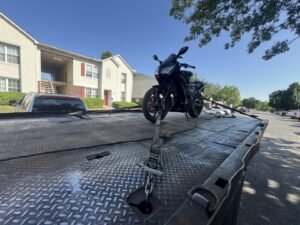
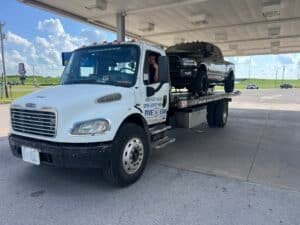
Heading off the beaten path is an incredible experience, but it’s one that requires you to be prepared. You manage the inherent risks through the gear you carry, the maintenance you perform, and the smart decisions you make on the trail. But sometimes, you might find yourself in a situation that your winch and your tool kit just can’t fix. When that happens, calling in professional help is the only safe choice. Five Star Towing offers reliable wrecker service and winch-out service for those tough moments. We have the right equipment to get to you and the expertise to bring your vehicle back without causing any more damage. Stay safe out there, stay prepared, and know who to call when the trail wins.
Frequently Asked Questions
Without a doubt, the most critical rule is to never ride alone.
When you ride by yourself, you're cutting your own safety net. A minor mechanical issue or a small injury can quickly become a life-threatening emergency when there's no one there to help you or call for backup.
Think about it like this, even the pros, like the U.S. Fish and Wildlife Service, have policies that require traveling in pairs or groups for off-road operations. It ensures that if one vehicle gets stuck or breaks down, the other can provide a ride out or help with the recovery.
Always plan your trip with at least one other vehicle. And just as important, make sure someone back home knows your route and when you expect to be back (think of it as a "float plan" for the trail).
A solid kit needs to be ready to handle medical emergencies, fire, and vehicle recovery.
You absolutely need a specialized first-aid kit that goes beyond basic bandages, a fire extinguisher, and self-recovery tools like a winch and straps.
Experts at places like the ATV Safety Institute always stress that you should pack tools for your specific environment. That could mean thermal blankets for a cold-weather trip or extra water for a ride in the summer heat, right alongside your standard mechanical tools.
Pack your most important gear in secure, waterproof containers. The last thing you want is for your first-aid kit to get soaked during a water crossing, making it useless when an emergency actually happens.
You have to let your engine's gearing do the work to control gravity, not just your brakes.
Before you even start the incline or descent, shift into low-range 4WD. This will give you the most torque for climbing up and the most engine braking for coming down.
Vehicle safety guides from manufacturers like Polaris always point out that relying only on your brakes during a steep descent can cause your wheels to lock up and slide, making you lose all steering control. Engine braking keeps the wheels turning and grabbing for traction.
Always drive straight up or straight down a slope. Trying to drive across it diagonally (called traversing) shifts your center of gravity to the downhill side, which dramatically increases your risk of rolling over.
T-CLOC is an easy-to-remember acronym for a pre-ride inspection checklist created by the ATV Safety Institute.
It stands for Tires and wheels, Controls, Lights and electrics, Oil and fuel, and Chain/drive and chassis.
This isn't just a random list; it's a standardized way to make sure you check every critical system on your machine from how tight your lug nuts are to whether your throttle snaps back properly before you ever start the engine. You'll find it detailed in their training manuals.
Make this check a habit before every single ride, not just once in a while. The vibrations from off-roading can loosen critical parts in just one afternoon on the trail.
Yes, in many places and on almost all public lands, they are absolutely required.
While the specific laws can vary from state to state, federal lands almost universally require DOT-approved helmets for all operators and passengers, and the vehicle's roll cage doesn't change that.
State laws and safety groups like the Consumer Product Safety Commission make it clear that while a roll cage can prevent you from being crushed, it doesn't stop your head from hitting the inside of the cage or from being partially ejected during a crash.
Just treat the helmet as a mandatory piece of equipment for every person in the vehicle, every single time you ride. Even if you're on private land where it's not strictly enforced, head injuries are still the leading cause of permanent disability in off-road accidents.
It depends on your vehicle's weight and your tire size, but it will be significantly lower than your highway pressure.
Lowering the air pressure increases the size of the tire's footprint on the ground, which gives you much better traction on surfaces like rock and sand and also softens the ride.
4x4 safety resources like Arrive Alive often note that while your highway pressure might be 35 PSI or more, your trail pressure will likely be somewhere in the 15 to 20 PSI range to help prevent punctures and improve your grip.
Never, ever air down your tires if you don't have an onboard air compressor to fill them back up. Driving on pavement with low tire pressure creates a dangerous amount of heat buildup and can lead to a catastrophic tire failure at high speed.
The biggest difference is elasticity, and that's what makes one safe for recovery and the other dangerous.
A recovery strap (often called a snatch strap) is designed to stretch, storing kinetic energy that helps "snatch" a stuck vehicle free. A tow strap is static and has no stretch at all.
Using a static tow strap to yank on a stuck vehicle creates huge shock loads that can easily snap the strap or rip off the mounting points on your vehicle, turning those metal parts into deadly projectiles.
Only use stretchy, nylon recovery straps for freeing stuck vehicles. Keep the static, polyester tow straps for flat-towing a vehicle that can roll freely on its own back to the trailhead.
Absolutely not, unless the ATV was specifically manufactured as a "2-up" model with a second seat.
Single-rider ATVs were engineered with a very specific center of gravity, and adding a second person completely throws it off, making the machine unstable.
The ATV Safety Institute and your vehicle's owner's manual will both explicitly warn you that a passenger makes it impossible for the operator to shift their weight correctly during turns and on hills, which often leads to a loss of control and rollovers.
If you want to ride with passengers, you need to invest in a UTV (a side-by-side) or a purpose-built 2-up ATV that comes from the factory with proper handholds and footrests for a second person.
Wash your vehicle thoroughly and give it a good inspection for damage right away.
You have to get all the mud and debris off your machine. This not only prevents rust and corrosion but also lets you see any hidden damage to the frame or suspension.
Maintenance checklists from off-road experts always advise you to check for things like torn CV boots, leaking shocks, and clogged radiators, all of which can lead to very expensive failures on your next trip if you don't catch them early.
Pay extra close attention to the undercarriage and your brake components. Trapped rocks and dried mud can wear down your pads and rotors much faster than you'd think.
Your plan needs to have your route, your timing, and details about who is in your group.
The most important part is to leave a written copy of this plan with a responsible person who is not coming on the trip with you.
Government agencies like the U.S. Fish and Wildlife Service recommend that your plan include the specific trails you plan to ride, descriptions of your vehicles, your cell or sat phone numbers, and the exact time you expect to return.
Be sure to set a "panic time". A specific hour when your contact should call for help if they haven't heard from you. This simple step can prevent dangerous delays if you get into real trouble.
It all comes down to managing your speed and respecting the terrain's limits.
Rollovers are almost always caused by turning too fast for the conditions, trying to cross a slope that's too steep, or making other abrupt steering inputs.
Safety data shows that because UTVs have a high center of gravity, they are prone to tipping if you corner too aggressively. Being able to shift your body weight and keep the vehicle's center of gravity low is key.
Always keep your arms and legs inside the vehicle (use your nets or doors) and always wear your seatbelt. If a rollover does start to happen, keep your hands on the steering wheel, brace your feet, and never, ever try to stick your arm out to stop it.
The big three are inexperience, excessive speed, and alcohol.
The vast majority of accidents involve a loss of control because someone was driving beyond their personal skill level or pushing their vehicle past its capabilities.
Insurance and safety reports consistently show that riding on paved roads (where knobby off-road tires handle poorly) and impaired driving are major factors in serious injuries and deaths.
Treat off-roading like the technical sport it is; it requires your full focus. Save the celebratory beers for around the campfire after the keys have been put away for the night.
No, going off-roading by yourself is widely considered to be unsafe.
The biggest risk is that being isolated turns every small problem into a potential major crisis.
Best practices from nearly every off-road club and motor vehicle association stress that having a second vehicle with you provides the essential backup you need for recovery, medical help, and just getting home if your rig breaks down.
If you absolutely must travel alone, then at least stick to well-trafficked trails, carry a satellite communicator, and be extremely strict about following a trip plan you've left with a reliable contact.