
Your car battery just died at the absolute worst time. You’re running late, it’s freezing cold outside, and your phone’s barely hanging on at 12%. While panic starts creeping in, you’ve actually got more options than you might think.
Today, drivers can tap into instant apps, stick with traditional memberships, use insurance perks they’re already paying for, or even access free government services depending on where they’ve broken down.
Key Points
- On-demand apps like HONK and Urgent.ly deliver 50% faster response times than traditional services for $49-$75
- AAA membership runs $60-$170 per year but handles 32 million roadside calls with solid service coverage
- Insurance roadside add-ons cost just $10-$25 annually and work right through your existing mobile app
- Free highway safety patrols cruise major interstates, dial 511 or *55 for immediate help
- Premium credit cards and new car warranties often include roadside benefits you might not even know about
- Portable jump starters eliminate all waiting for a $50-$150 one-time purchase
- Local towing companies charge $50-$120 but show up fastest when you’re paying cash
Pay-Per-Use Roadside Apps With Faster Arrival Times
Digital platforms have completely changed the emergency roadside game by connecting you straight to nearby service vehicles. HONK runs the biggest network with access to over 75,000 service vehicles across the United States. Their guaranteed pricing starts at $49-$75 for jump starts, wiping out those surprise charges that traditional towing companies love to spring on you.
Urgent.ly partners directly with car manufacturers and shows you transparent pricing through their consumer app. You’ll see exactly what you’re paying before you confirm service. Mach1 focuses specifically on making the roadside experience digital with real-time GPS tracking, so you can actually watch your technician heading your way on a live map.
HONK claims response times that beat traditional motor clubs by 50% because they send out the nearest independent truck instead of routing everything through call centers. Their guest checkout feature lets you get immediate service without downloading apps beforehand – absolutely crucial when your phone’s about to die.
Jump start prices typically land between $49-$75 depending on where you are and what time it is. Surge pricing kicks in during holidays, bad weather, or overnight hours after 10 PM. These apps work great for drivers who rarely need service or own reliable newer vehicles and don’t want to mess with annual subscription fees.
Are AAA and Major Roadside Memberships Worth the Cost?
AAA handles roughly 32 million calls for roadside assistance every year, making them the most established choice for battery emergencies. Battery-related problems consistently show up in the top three reasons people call for help, according to AAA Newsroom data.
Basic AAA membership runs about $60-$90 annually, while Plus and Premier tiers range from $100-$170 per year. Most plans give you four service calls yearly before extra charges kick in. Their services follow you as the driver instead of a specific vehicle, covering battery jump starts, testing, and on-the-spot replacement when you need it.
Average wait times range from 30 minutes to an hour during normal conditions. Though extreme weather can stretch response times to 4-6 hours when everyone’s calling at once. Some membership plans make you wait 2-7 days after signup, though AAA offers immediate service for an extra $50-$75.
Other membership options include Better World Club for eco-conscious drivers, Good Sam for RV owners, and National General Motor Club for budget-focused coverage. Each one offers similar battery services with different pricing structures and coverage areas.
Low-Cost Insurance Roadside Add-Ons
Major auto insurers offer roadside assistance as an optional policy rider for surprisingly low annual costs. The average price typically sits between $10-$25 per vehicle per year, tacked right onto your existing premium. USAA offers services for as low as $14 annually for eligible military members and their families.
Service caps are usually financial (up to $100 per incident) rather than mileage-based like traditional motor clubs. Most modern insurers let you request jump starts through their mobile app using GPS location data, so you don’t have to spend forever explaining where you are.
Check your policy declarations page or mobile app right now – you might already have coverage without even knowing it. Providers include State Farm, GEICO, Progressive, Allstate, and USAA. Each one handles requests differently, with some using third-party dispatch services while others work directly with local towing companies.
Using it too much could potentially affect your premiums in rare cases since these count as insurance incidents. Though most insurers won’t penalize reasonable roadside assistance usage unless you’re filing multiple claims every month.
Local Towing Companies Offering Immediate Service
Independent towing companies often deliver the fastest response times because they stick to specific geographic areas. The national average cost for professional jump starts ranges from $50-$120 without membership discounts. Costs jump 25-50% during holidays, overnight hours after 10 PM, or severe weather when everyone needs help.
Most companies offer 24/7 availability and want credit card or cash payment when they arrive. Find options through Google Maps by searching “towing near me” or “battery jump start service.” Read through Google Reviews carefully for response time info before you make the call.
Ask specifically for a “Service Call” or “Battery Jump” rather than requesting a “Tow” because dispatch fees are totally different. Light-duty service companies use portable jump packs instead of massive tow trucks, cutting down costs and arrival times. Many can reach you within 15-30 minutes during regular business hours.
Paying cash sometimes knocks $10-$20 off the bill since companies avoid credit card processing fees. Just make sure to nail down pricing upfront to prevent arguments when the technician shows up.
Free Highway Safety Patrols for Interstate Breakdowns
Government-funded or sponsor-supported safety patrols cruise major highways specifically to clear disabled vehicles and keep traffic moving. These services are tax-funded or corporate-sponsored, making them totally free to stranded motorists.
Coverage is limited to major interstates and freeways – they won’t come to residential driveways or parking lots. Contact them by dialing 511 or state-specific codes like *55 from your cell phone. State Farm Safety Patrol operates in multiple states with sponsored Department of Transportation trucks, according to Bureau of Transportation Statistics data.
Freeway Service Patrol (FSP) is common in metro areas like Los Angeles, where dedicated trucks patrol during rush hours. Their main goal is getting traffic flowing again, so they’ll jump start your vehicle to get it moving, but knowing when a jump-start is enough or when the battery needs replacing can help you avoid another breakdown. .
This option works best if your car dies in a dangerous spot blocking highway traffic. Response times are often faster than commercial services because patrol units are already out there on major routes.

Portable Jump Starters That Get You Moving Instantly
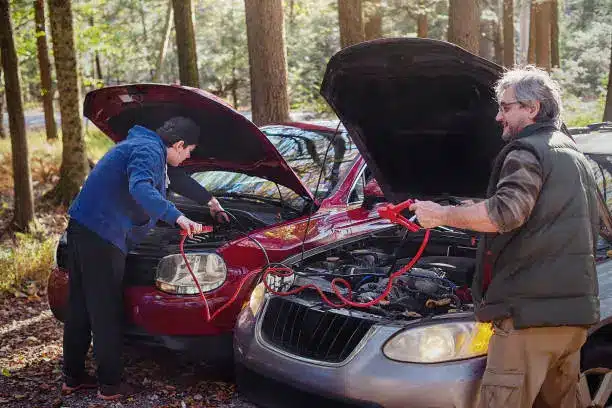
Lithium-ion jump starter packs stored in your trunk let you do a 3-minute self-service job without calling anyone. Modern units come with spark-proof designs and polarity protection that prevents screwing up your vehicle’s electrical system with wrong hookups. Using the correct connection procedure is important because jump-start mistakes can damage your vehicle’s electrical system.
The NOCO Boost Plus GB40 is basically the industry standard for most sedans and SUVs. Stanley J5C09 offers a bigger unit that includes an air compressor for tire emergencies. Anker Roav provides compact options that fit easily in glove compartments.
Cost ranges from $50-$150 as a one-time purchase that pays for itself after two emergency calls. Lithium units hold their charge for 6-12 months when stored in your vehicle. According to Consumer Reports testing, you’ll need 400-500 cranking amps for 4-cylinder vehicles and 1000+ amps for V8 engines or diesel trucks. Watch for signs that your battery is failing, because a jump starter only provides a temporary solution.
These devices pull double duty as power banks for charging phones during outages. They eliminate wait times, work in remote locations without cell service, and don’t require memberships or subscriptions.
Frequently Asked Questions
AAA doesn't charge per-service fees for jump starts if you've got an active membership. Basic membership runs $60-$90 annually and covers four roadside service calls.
AAA handles battery jump starts, testing, and on-the-spot battery replacement as standard services. But if you need immediate service without an existing membership, AAA tacks on an extra $50-$75 on top of the membership fee.
This makes AAA cost-effective for drivers who expect multiple roadside needs throughout the year, but pretty expensive for one-time situations.
Most major auto insurers offer roadside assistance as an optional add-on costing $10-$25 per vehicle annually. State Farm, GEICO, Progressive, Allstate, and USAA provide this coverage through their mobile apps using GPS location.
USAA offers particularly competitive rates at $14 yearly for eligible members. Coverage typically caps at $100 per incident rather than being limited by mileage.
Check your policy declarations page or insurance app right now - lots of drivers already have this coverage without realizing it. The service works by sending out local towing companies who bill your insurance directly.
On-demand roadside apps like HONK and Urgent.ly typically deliver the fastest response times, often 50% quicker than traditional motor clubs according to company data.
These platforms dispatch the closest available service truck instead of routing through centralized call centers. Local towing companies can also respond within 15-30 minutes if you call them directly during business hours.
However, portable lithium jump starters offer truly instant service - you can jump start your vehicle in under 3 minutes without waiting for anyone. Modern jump packs cost $50-$150 and eliminate response time variables completely.
Highway safety patrol services are completely free because they're funded by taxpayers or corporate sponsors like State Farm.
These patrols operate on major interstates and freeways to keep traffic flowing and clear disabled vehicles. Contact them by dialing 511 or state-specific numbers like *55 from your cell phone.
The Bureau of Transportation Statistics confirms these services prioritize traffic safety over comprehensive repairs. They'll jump start your vehicle to get it moving but won't tow you to repair shops. Coverage is limited to highway locations - they don't respond to residential areas or parking lots.
HONK, Urgently, and Mach1 typically charge $49-$75 for jump start services with guaranteed upfront pricing. Costs jump 25-50% during holidays, severe weather, or overnight hours after 10 PM because of surge pricing models.
These apps connect you straight to nearby service vehicles from their networks of 75,000+ trucks. You'll see exact costs before confirming service, eliminating surprise charges.
Payment goes through the app using credit cards. Guest checkout features allow immediate service without downloading apps beforehand, which really helps when your phone battery's dying.
Premium travel and rewards cards often include roadside dispatch services as cardholder benefits. Chase Sapphire Reserve offers roadside assistance up to $50 per event, four times yearly according to their terms.
However, Visa Roadside Dispatch charges approximately $79.95 per service call for cardholders - this is a negotiated rate rather than free coverage.
Check the back of your credit card or call the customer service number to verify existing benefits. Make sure to distinguish between "Covered Service" (free) and "Dispatch Service" (discounted rates you still pay). Lots of cardholders assume coverage is free when it's actually reduced-rate access to nationwide networks.
Private property locations like driveways need paid services since free highway patrols only operate on public roads. Your best bets include insurance roadside add-ons ($10-$25 annually), on-demand apps ($49-$75 per service), or local towing companies ($50-$120 cash payment).
Many insurance companies handle driveway service calls through their mobile apps using GPS coordinates.
Portable jump starters work exceptionally well for home situations since you've got electrical outlets nearby for recharging the units. AAA and similar memberships cover private property locations as standard service.
Response times vary quite a bit by service type and conditions. On-demand apps typically show up in 25-45 minutes during normal weather. AAA averages 30 minutes to an hour but can stretch to 4-6 hours during extreme weather events when everyone's calling.
Local towing companies often provide 15-30 minute response times during business hours. Free highway patrols respond fastest since they're already out there on major routes.
However, severe weather, holidays, and overnight hours increase all response times by 50-100% as available trucks become scarce and demand spikes.
Modern portable jump starters come with spark-proof designs and polarity protection that prevent electrical damage from wrong connections. Consumer Reports confirms that lithium-ion units like the NOCO Boost Plus GB40 provide safe operation for most drivers.
You'll need 400-500 cranking amps for 4-cylinder vehicles and 1000+ amps for larger engines. These devices eliminate risks associated with traditional jumper cables and dead batteries from other vehicles.
Always connect positive to positive and negative to ground points rather than the negative terminal. Units cost $50-$150 and hold charges for 6-12 months when stored properly.
Roughly 85% of new vehicles sold in the United States include complimentary roadside coverage during the warranty period.
Hyundai and Kia often provide 5 years with unlimited mileage, while Toyota ToyotaCare covers 2 years or 25,000 miles according to manufacturer specifications. Check your glovebox owner's manual or manufacturer mobile app for specific coverage details.
These programs typically include battery jump starts, flat tire changes, lockout service, and towing to authorized dealers. Coverage follows the vehicle rather than the driver, so any authorized operator can request service.
Insurance roadside add-ons provide the lowest annual cost at $10-$25 per vehicle yearly. USAA members pay as little as $14 annually for comprehensive coverage including jump starts.
However, portable lithium jump starters offer the best long-term value at $50-$150 one-time purchase that eliminates ongoing fees. Free highway patrol services cost nothing but only operate on major interstates.
For single incidents, local towing companies accepting cash payments sometimes knock off $10-$20 compared to credit card transactions, making them competitive with app-based services.
Membership-based services like AAA provide value for drivers who expect multiple roadside needs annually. Basic coverage costs $60-$90 yearly and includes four service calls.
However, pay-per-use options like HONK and Urgent.ly work better for occasional needs at $49-$75 per incident. Insurance add-ons offer middle-ground coverage for $10-$25 annually without service limits.
Your decision should depend on usage frequency: more than two incidents yearly typically justify membership costs, while occasional needs favor pay-per-use or insurance coverage.
Emergency services typically don't respond to dead batteries unless you're in immediate danger or blocking traffic on busy highways. Though many 911 dispatchers will transfer you to non-emergency numbers or give you contact information for local towing companies.
Some states offer 511 services that connect to highway patrol or transportation departments for interstate breakdowns.
Save 911 calls for genuine emergencies like accidents, medical situations, or safety threats. Dead batteries in parking lots or driveways need commercial roadside assistance rather than emergency services.
Get your exact GPS location using your smartphone's mapping app ready, since street addresses can be wrong or incomplete. Give them your vehicle's year, make, and model since some trucks carry specific equipment for different vehicles.
Specify "battery jump start" rather than general "roadside assistance" to make sure they dispatch proper equipment. Have your payment method ready - most services want credit card information upfront.
Describe your location details like parking lot names, building numbers, or nearby landmarks. Keep your phone charged or mention low battery levels so dispatchers can figure out callback procedures.
Portable lithium jump starters provide excellent value for drivers who want immediate self-service capability. Units cost $50-$150 and eliminate wait times completely while pulling double duty as power banks for electronics.
Consumer Reports testing shows modern devices like the NOCO Boost Plus GB40 can jump start most vehicles safely with spark-proof technology.
They pay for themselves after two emergency service calls compared to $49-$75 app charges or $50-$120 towing fees. Units hold charges for 6-12 months and work in remote locations without cell service where traditional roadside assistance can't reach you.