
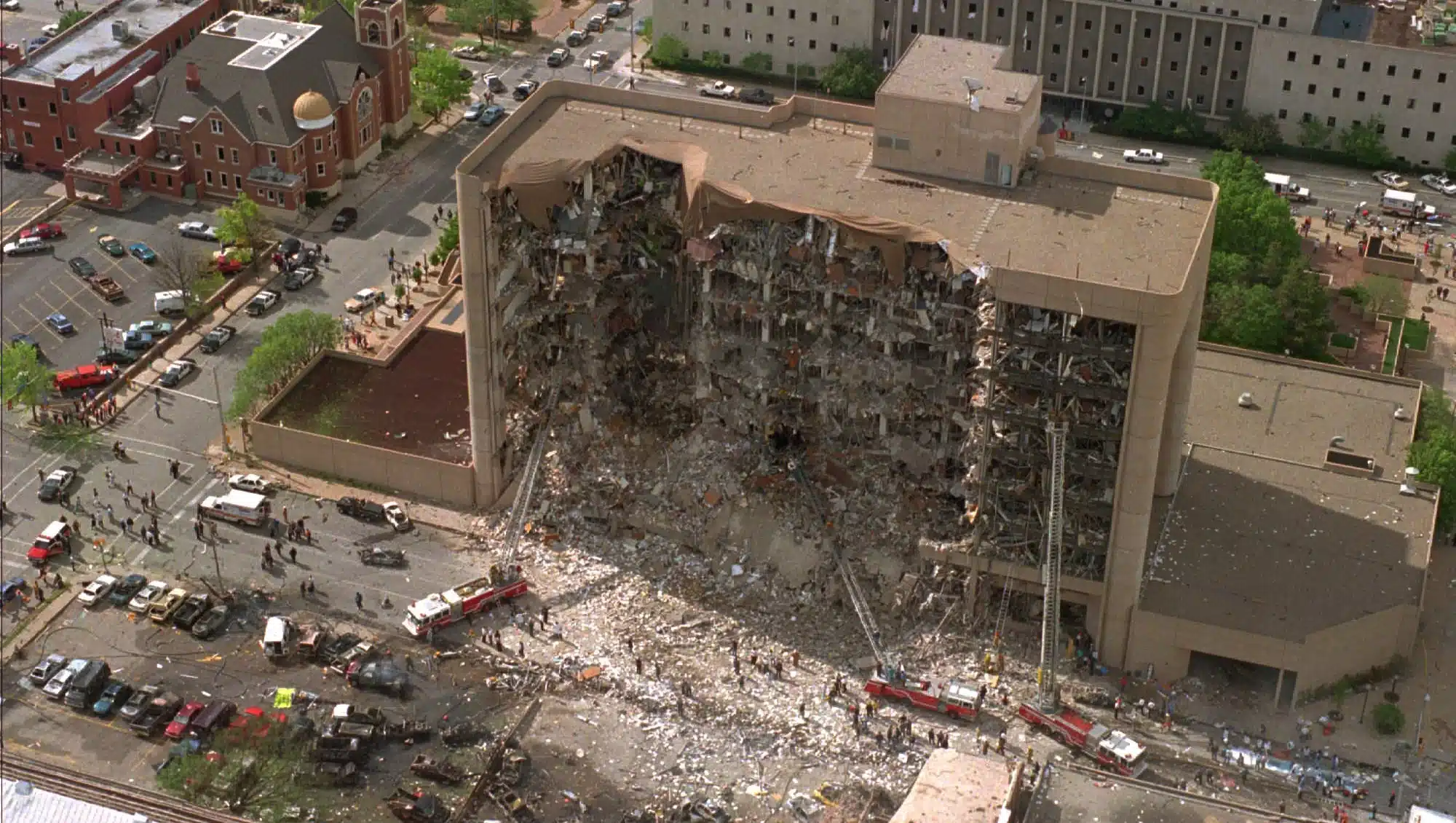
At 9:02 AM on April 19, 1995, a Massive Fertilizer Bomb Tore Through the Alfred P. Murrah Federal Building in Downtown Oklahoma City. Twenty-one children were playing and learning at America’s Kids Day Care Center on the second floor when 4,800 pounds of explosives went off right below them. Only six of those precious lives would make it out alive.
Major Insights
- Six children made it out of America’s Kids Day Care Center alive out of 21 kids who were there that morning, giving us a 28% survival rate
- Fifteen children lost their lives in the daycare center itself, with four more children killed in other parts of the building, bringing the total number of young victims to 19
- The six who survived suffered terrible injuries, fractured skulls, damaged lungs, severe burns, and traumatic brain injuries that required months and years of medical care
- These survivors are now grown adults in their late 20s and early 30s, and many of them still wrestle with health problems and the psychological weight of what happened to them
- The Oklahoma City National Memorial displays 19 small chairs honoring all the children who died, standing alongside 149 larger chairs for the adults who were killed
- Whether a child lived or died came down to where they were standing in the building and how the structure came down around them, survivors were discovered in protected pockets within the wreckage
- Medical teams had never dealt with pediatric blast injuries like this before, and for some of these children, nobody knew if they’d survive even days after being pulled from the rubble
America's Kids Day Care - The Heartbreaking Numbers That Tell the Story
The second floor of the Alfred P. Murrah Federal Building was home to America’s Kids Day Care Center, sitting just 100 feet from where Timothy McVeigh left his yellow rental truck loaded with death.
Federal Bureau of Investigation reports tell us that 21 children were inside the facility the moment everything exploded. The blast created what investigators would later describe as a “pancake collapse” that hit the daycare area harder than anywhere else.
Fifteen children died right away or within hours from the building coming down on top of them and the crushing debris. Six children somehow survived when all the odds said they shouldn’t. This 28% survival rate stands as both a miracle and a tragedy, proof that random chance and protective building pieces saved some while taking others.
Daycare Statistics Breakdown
Beyond those 15 daycare deaths, four more children were killed in other parts of the building while they were visiting the Social Security office with their moms and dads. Not a single child from that section of the federal building survived.
The Oklahoma City National Memorial & Museum’s records show 168 people died in total from the bombing, with over 600 more injured. The 19 children who died were the youngest victims of the deadliest act of domestic terrorism our country had ever seen.
The bomb going off so close to the daycare explains why so few children made it out. According to FBI investigations, the fertilizer bomb’s crushing force focused its worst structural damage right on that second floor where kids were playing and learning. The building’s collapse trapped most of the children in an instant, making it impossible for anyone to get them out once everything started coming down.
The Six "Miracle Babies" Who Shouldn't Have Lived
Brandon Denny, just 3 years old, had his skull fractured with debris embedded deep inside that required emergency brain surgery right away. His 2-year-old sister Rebecca had broken ribs and her lungs were badly injured. They’re the only brother and sister from the daycare who both survived.
P.J. Allen, barely 1 year old, got hit with the worst injuries of any survivor. Concrete dust filled up his little lungs while burns covered half his tiny body. The doctors couldn’t promise he’d make it through that first night. The Oklahoman newspaper wrote that his lung damage from breathing in all that pulverized concrete was one of the toughest pediatric cases the medical teams had ever seen.
Individual Survivor Profiles and Injuries
Joseph Webber, only 18 months old, came out with a broken arm and fractures in his face. Nekia McCloud, 4 years old, had a fractured skull and one of her lungs collapsed. Christopher Nguyen, the oldest survivor at 5 years old, suffered cuts all over his face and a skull fracture that needed reconstructive surgery.
Several children arrived at hospitals barely clinging to life with traumatic brain injuries. Severe breathing failure from inhaling debris pushed medical teams across Oklahoma City to their limits. The Denny siblings ended up in different hospitals, which meant their parents had to frantically search multiple places before they found out both their children were still alive.
From Toddlers to Adults - Life After the Bombing
Twenty-nine years have passed, and these survivors still live with consequences from that early trauma. NPR’s 20-year follow-up report found that chronic asthma affects several survivors from breathing in concrete dust. Hearing loss from the blast pressure of that 4,000-pound fertilizer bomb continues to impact some of them.
Permanent scars and breathing problems haven’t gone away decades later. P.J. Allen, who doctors thought might not survive, needed years of specialized lung care and skin grafts. His recovery became a living example of how far pediatric trauma treatment had come.
Psychological Impact and Recovery
Post-Traumatic Stress Disorder hit all six survivors as they got older and understood what had happened. NBC News talked to them and found they struggle with survivor’s guilt, wondering why they got to live when their friends didn’t. The weight of dealing with consequences from an event they can’t even remember created challenges therapists hadn’t seen before.
Brandon Denny’s road back meant learning how to walk and talk all over again after his brain injury. His recovery showed both how strong the human spirit can be and how lasting the damage from traumatic brain injuries really is, especially to growing minds.
Current Lives as Adults
These days, these survivors are living full lives in their late 20s and early 30s. P.J. Allen works in financial services now, his scarred hands typing up reports and managing accounts. Joseph Webber found his calling as a graphic designer, pouring his creativity into building a career. Several survivors have their own families now, committed to creating something positive from a tragic beginning.
The weight of being “symbols of hope” for Oklahoma City sits heavy on some of them. They’ve become representatives of resilience whether they wanted to be or not, all while managing their own continuing trauma and health struggles.
The Memorial's 19 Small Chairs
The Oklahoma City National Memorial’s Field of Empty Chairs holds 168 bronze chairs spread across where the building once stood. Nineteen smaller chairs represent the children who were killed, their size a painful reminder of lives that barely got started. The chairs are arranged to show which floor of the building people were on when the bomb went off.
A group of small chairs marks where the second floor daycare was, creating a powerful sight that shows just how concentrated the loss was there. The Gates of Time and Reflection Pool finish out the memorial’s design, marking the moments right before and after 9:02 AM.
Survivor Connection to Memorial
The six survivors visit the memorial often to honor the playmates they lost. Seeing 19 small chairs compared to six survivors creates a stark picture of how much was lost. For many survivors, the memorial gives them a physical place to connect their survival with the sacrifice of others.
Every year, remembrance ceremonies bring survivors together with families who lost loved ones and the first responders who tried to save everyone. These gatherings help people connect and heal while honoring those who died. The memorial’s design lets visitors stand right among the chairs, feeling the scale of loss in a personal way.
The Daycare Center's Location Determined Who Would Live and Die
America’s Kids Day Care Center’s spot on the second floor of the Alfred P. Murrah Federal Building put it right in the worst damage zone from the blast. The fertilizer bomb’s force caused the building to fail in stages, hitting the daycare area hardest of all. Federal Bureau of Investigation analysis of the structure shows how the building’s design focused the collapse forces right on that second floor.
Building Structure and Blast Impact
The blast pressure and cloud of debris slammed into the daycare floor with devastating power. The structure failing trapped most children before anyone could get them out. The six survivors turned up in air pockets or spots where parts of the building gave them protection they shouldn’t have had within the collapsed area.
Where you were standing at the exact moment the bomb went off decided whether you lived or died. Kids playing near walls that supported the building’s weight or under heavy furniture had slightly better chances. Those out in open areas took the full force of concrete and steel raining down.
Understanding the Full Picture of Child Casualties
The 15 daycare children make up most of the child victims, but four more children died while visiting the Social Security office with their parents. These families came in to take care of routine government business and found themselves in the middle of a terrorist attack. No children from the Social Security office area survived because of where it was located and how the building came down.
Total Child Victim Breakdown
Multiple families lost children while just trying to handle everyday interactions with federal agencies. Some parents died right alongside their visiting children, creating tragedies that tore through entire families.
The Denny family stands out for having two children who both survived the same incident, a statistical rarity that shows both incredible fortune and devastating loss.
Extended families and daycare staff were also among the 168 total people killed. The Oklahoma City National Memorial & Museum documents show how the attack rippled outward through multiple generations and connected communities.
Medical Response and Rescue Operations for Child Survivors
First responders found the six children within hours of the collapse, working through dangerous, unstable debris to reach trapped survivors. Children were rushed to multiple Oklahoma City hospitals as emergency medical systems activated throughout the region. Specialized pediatric trauma teams mobilized to handle blast injury cases unlike anything they’d seen before.
Life-or-death decisions about traumatic brain injuries and breathing failure pushed medical professionals to their limits. Teams had almost no experience with pediatric blast trauma on this scale. P.J. Allen’s case forced doctors to come up with new approaches to treating severe lung damage from breathing in concrete dust.
Treatment Challenges
Facial reconstruction surgery became necessary for several survivors because of debris embedded in their faces and broken bones. Long-term rehabilitation programs were created specifically for these children’s complicated needs.
Mental health support started right away because everyone knew that recovering from trauma would take far longer than healing physical wounds.
Medical teams wrote down everything about how they treated these cases, contributing to better procedures for handling future pediatric blast injuries. The survivors’ medical records became valuable teaching tools for advancing emergency medicine.
Legacy and Lessons from the Six Survivors
These children’s incredible ability to adapt to physical disabilities shows human resilience at its finest. Schools made special accommodations to help with learning difficulties that came from brain injuries. Community support networks formed around the survivor families, providing ongoing help through every phase of recovery.
Annual medical checkups continue now that they’re adults, tracking long-term effects and new complications. The medical community stays interested in their cases for research, though always being careful about their privacy and ongoing needs.
Their Role in Oklahoma City's Healing
The survivors serve as living proof of hope and resilience for Oklahoma City. Their participation in memorial events and anniversary ceremonies provides powerful testimony to survival and recovery. Several speak out about domestic terrorism awareness and prevention, using their experiences to teach others.
Personal stories from the survivors help other trauma survivors beyond Oklahoma City. Their connection between past tragedy and present community strength keeps inspiring healing efforts. Each survivor’s journey shows different ways of working through trauma toward meaningful adult lives.
Frequently Asked Questions
Nineteen children died in the Oklahoma City bombing on April 19, 1995. The Oklahoma City National Memorial & Museum confirms that 15 children were killed when America's Kids Day Care Center collapsed on the second floor of the Alfred P. Murrah Federal Building.
Four more children died while visiting the Social Security office with their parents in other parts of the building. These 19 children were the youngest victims among the 168 total people killed in the domestic terrorism attack.
The Federal Bureau of Investigation's thorough investigation documented where each victim was and what happened to them, establishing the definitive count that memorials and official records maintain today.
America's Kids Day Care Center was operating on the second floor of the Alfred P. Murrah Federal Building when Timothy McVeigh's bomb went off at 9:02 AM.
The Oklahoma City National Memorial & Museum records show the facility took care of children whose parents worked for federal agencies and other families in the downtown area.
The daycare's location about 100 feet from where the bomb exploded put it in the zone of maximum structural damage when the fertilizer bomb went off.
Federal Bureau of Investigation reports tell us the facility was fully licensed and staffed, serving as a convenient childcare option for parents working in the federal building and nearby downtown offices.
Six children survived when America's Kids Day Care Center collapsed out of 21 children who were there when the bomb exploded.
The Oklahoman's detailed reporting identified these survivors as Brandon Denny (age 3), Rebecca Denny (age 2), P.J. Allen (age 1), Joseph Webber (18 months), Nekia McCloud (age 4), and Christopher Nguyen (age 5).
This gives us a 28% survival rate from the daycare facility specifically. NPR's follow-up coverage documented how these children were found in air pockets or protected areas within the sections of building that had collapsed.
The Federal Bureau of Investigation's analysis of the structure explains how where you were standing at the exact moment the bomb went off determined whether you lived or died for these young victims.
America's Kids Day Care Center was located on the second floor of the Alfred P. Murrah Federal Building. Federal Bureau of Investigation reports about the structure show this floor position put the daycare right in the path of the worst blast damage when the fertilizer bomb exploded below.
Being on the second floor made getting the kids out impossible once the building started its "pancake collapse," which is how investigators described the way the structure failed.
Oklahoma City National Memorial & Museum documentation explains how the blast's force hit this floor hardest, creating the devastating conditions that killed 15 of the 21 children who were there. Being so close to where the bomb went off explains the tragically low survival rate compared to other parts of the building.
Brandon Denny (3), Rebecca Denny (2), P.J. Allen (1), Joseph Webber (18 months), Nekia McCloud (4), and Christopher Nguyen (5) survived when America's Kids Day Care Center collapsed.
The Oklahoman's profiles of survivors detail how each child got different injuries depending on where they were when the blast happened. Brandon and Rebecca Denny are the only brother and sister from the daycare who both survived.
NPR's anniversary coverage followed these survivors into adulthood, documenting their recoveries and what their lives look like now. P.J. Allen got hit with the worst injuries, burns over 50% of his body and severe lung damage, while others faced skull fractures, broken bones, and breathing problems from inhaling concrete dust.
The six survivors suffered severe traumatic injuries that required extensive medical intervention. NBC News medical reporting documented Brandon Denny's skull fracture and debris embedded deep inside that required brain surgery, while his sister Rebecca had broken ribs and injured lungs.
P.J. Allen was in the most critical condition with burns covering 50% of his body and severe lung damage from concrete dust that made doctors unsure if he'd survive the night. Joseph Webber had a broken arm and facial fractures, Nekia McCloud had a fractured skull and collapsed lung, and Christopher Nguyen suffered facial cuts requiring reconstructive surgery.
The Oklahoman's medical coverage showed that several children arrived in critical condition with traumatic brain injuries and breathing failure from inhaling debris, pushing pediatric trauma teams across Oklahoma City hospitals to their limits.
The daycare survivors were between 1 and 5 years old when the bombing happened on April 19, 1995. Christopher Nguyen was the oldest survivor at 5 years old, followed by Nekia McCloud at 4 years old and Brandon Denny at 3 years old.
Rebecca Denny was 2 years old, while Joseph Webber was 18 months old and P.J. Allen was just 1 year old. Federal Bureau of Investigation documentation of victims confirms these ages, with P.J. Allen being among the youngest survivors of any major terrorist attack in U.S. history.
The Oklahoma City National Memorial & Museum records show how being so young complicated both their initial medical treatment and long-term psychological recovery, since most of them have no memory of the traumatic event that shaped their entire lives.
All six daycare survivors are still alive today, now adults in their late 20s and early 30s nearly three decades after the bombing. NPR's 20-year follow-up reporting confirmed each survivor's status and documented their journeys into adulthood.
P.J. Allen works in financial services despite his extensive early injuries, while Joseph Webber became a graphic designer. The Oklahoman's anniversary coverage shows many survivors have started families of their own and built successful careers.
However, they continue dealing with long-term health consequences including chronic asthma from breathing in concrete dust, hearing loss from blast pressure, and ongoing psychological impacts from their early trauma. Annual medical monitoring continues tracking their health status and any new complications emerging from their childhood injuries.
Brandon and Rebecca Denny are the only brother and sister from America's Kids Day Care Center who both survived the bombing. The Oklahoman's detailed reporting documented how Brandon, age 3, needed brain surgery for his skull fracture and embedded debris, while 2-year-old Rebecca had broken ribs and severe lung injuries.
NBC News coverage revealed the siblings were initially taken to different hospitals, forcing their parents to search multiple facilities before confirming both children survived. Brandon's recovery required extensive rehabilitation to relearn basic things like walking and talking after his traumatic brain injury.
NPR's follow-up interviews show both siblings grew into successful adults, though they continue managing ongoing health issues and psychological impacts from their shared trauma that created unique family dynamics around survival and recovery.
Nineteen small bronze chairs in the Oklahoma City National Memorial's Field of Empty Chairs specifically represent the children killed in the bombing. The Oklahoma City National Memorial & Museum designed these smaller chairs to emphasize lives cut short, positioned among 149 larger chairs representing adult victims for a total of 168 chairs.
The chair arrangement shows which building floor each victim was on when the bomb went off, with a cluster of small chairs marking where the second floor daycare was located.
Federal documentation shows the 19 children include the 15 who died in America's Kids Day Care Center plus 4 more children killed while visiting the Social Security office with their parents. The memorial's design creates a powerful visual impact contrasting the 19 small chairs with the six children who survived.
Chronic health issues continue affecting the six survivors nearly three decades later. NPR's long-term follow-up documented chronic asthma in multiple survivors from breathing in concrete dust during the building collapse.
Hearing loss from the 4,000-pound fertilizer bomb's blast pressure permanently affected several children's ability to hear. The Oklahoman's health reporting shows permanent scarring and ongoing breathing issues persist, with P.J. Allen requiring years of specialized lung care and skin grafts.
NBC News medical coverage revealed Post-Traumatic Stress Disorder diagnoses affected all survivors as they got older, creating unique therapeutic challenges since most have no conscious memory of the traumatic event.
Annual medical monitoring continues tracking potential complications, with some survivors experiencing learning difficulties from traumatic brain injuries that required special educational accommodations throughout their school years.
The six survivors now live as adults across the United States, pursuing various careers and building families nearly three decades after the bombing. NPR's anniversary reporting confirmed P.J. Allen works in financial services despite his extensive early injuries that once made survival uncertain.
Joseph Webber became a graphic designer, channeling creativity into professional success. The Oklahoman's follow-up coverage shows several survivors have started their own families, determined to build positive futures from their tragic beginnings.
NBC News interviews revealed many maintain connections to Oklahoma City and participate in annual memorial ceremonies, though they've also moved beyond being defined solely by their survival. However, they continue carrying the weight of serving as "symbols of hope" for the community while managing their own ongoing trauma and health issues in private.
P.J. Allen's survival at age 1 with burns over 50% of his body and severe lung damage represents one of the most remarkable cases from the bombing. The Oklahoman's medical reporting documented how concrete dust filled his lungs while debris burned his tiny body, making doctors uncertain he'd survive the night.
NPR's follow-up coverage revealed he was found in a protected air pocket within the collapsed daycare section that shielded him from immediate death but not from severe injuries.
His survival required innovative medical approaches since pediatric blast trauma cases this severe were unprecedented for Oklahoma City medical teams. NBC News documented years of specialized lung care and skin grafts that gradually restored his lung function and healed his burns.
Federal Bureau of Investigation analysis of the structure suggests his specific position when the building collapsed created just enough protection to preserve life while still allowing devastating injuries to occur.
Post-Traumatic Stress Disorder diagnoses affected all six survivors as they developed greater awareness of their experience with age.
NBC News psychological reporting revealed unique challenges since most survivors have no conscious memory of the traumatic event that fundamentally shaped their lives. Survivor's guilt emerged as a common issue, wondering why they lived while 15 playmates died in the same facility.
The Oklahoman's mental health coverage documented how the burden of being "symbols of hope" for Oklahoma City created additional psychological pressure on the children as they grew. NPR's long-term follow-up showed specialized therapeutic approaches were necessary to help children process trauma they couldn't remember experiencing.
The psychological impact extended to carrying consequences without personal memory, creating complex therapeutic challenges that required innovative approaches from mental health professionals experienced in pediatric trauma recovery.
The daycare center's second floor position put it right in the zone of maximum structural damage when Timothy McVeigh's fertilizer bomb exploded.
Federal Bureau of Investigation analysis of the structure shows the blast created a "pancake collapse" that devastated the daycare area most severely because of how close it was to where the bomb went off about 100 feet away.
The building's progressive failure focused collapse forces on the second floor where America's Kids Day Care Center operated, trapping most children instantly before getting them out became possible.
Oklahoma City National Memorial & Museum documentation explains how the blast pressure and debris cloud hit the daycare with devastating force, while the six survivors were found in air pockets or areas where building elements provided unexpected protection.
Where you were standing at the moment the bomb went off determined whether you lived or died, with children near walls that supported the building's weight or under sturdy furniture having slightly better survival chances than those in open play areas.
We offer towing and roadside assistance services in OKC, and her environs.