
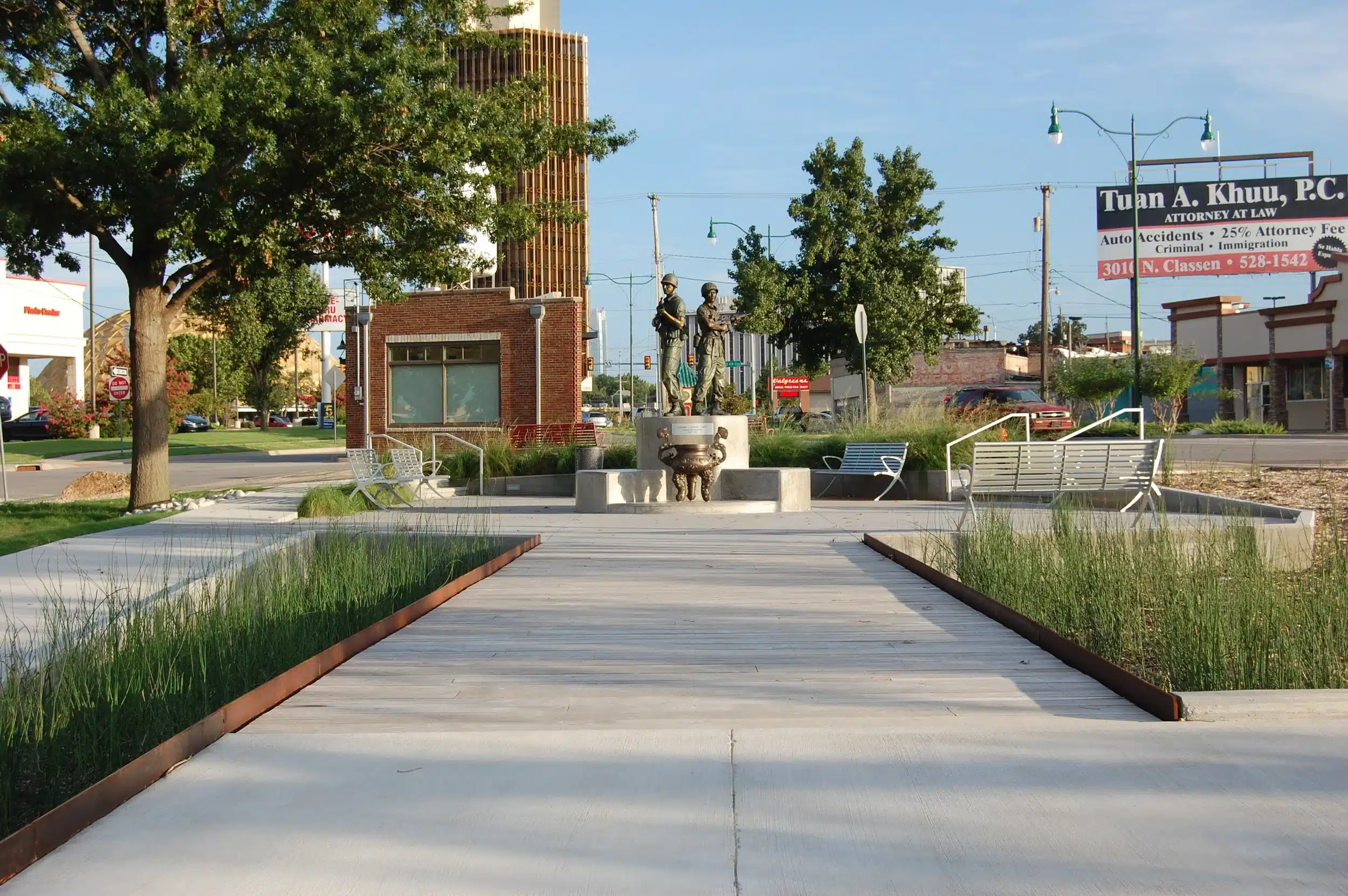
A $250,000 bronze memorial stands in Oklahoma City’s Military Park, honoring something rarely acknowledged in American public spaces, the brotherhood between U.S. soldiers and their South Vietnamese allies. Sculptor Thomas Jay Warren created this striking tribute called “Brothers in Arms,” depicting two soldiers positioned back-to-back, weapons ready, symbolizing mutual defense during the Vietnam War.
This powerful bronze sculpture, dedicated in July 2017, represents one of the few memorials worldwide that explicitly celebrates the cooperative alliance between American military forces and ARVN (Army of the Republic of Vietnam) troops. Warren crafted every detail with historical precision, from the soldiers’ authentic equipment to their protective stance that embodies trust between allies.
The Vietnamese community largely funded this memorial through private donations, demonstrating their commitment to preserving this shared history. Each soldier wears period-accurate gear, including detailed weaponry and uniforms that reflect the realities of combat service. Their back-to-back positioning creates a visual metaphor for interdependence and mutual protection that defined many battlefield relationships during the conflict.
According to The Oklahoman, the memorial’s dedication ceremony brought together veterans from both nations, creating an emotional bridge across decades and cultures. The sculpture serves as more than artistic expression, it functions as a healing space where complex wartime relationships receive proper recognition.
Major Points
- Military Park houses a $250,000 bronze memorial honoring American and South Vietnamese military cooperation during the Vietnam War
- The park underwent a $1.6 million renovation through Oklahoma City’s 2017 Better Streets, Safer City Bond Issue
- Three flagpoles display the U.S., Oklahoma, and Republic of Vietnam flags at the memorial plaza
- The park serves as the northern anchor of Oklahoma City’s Asian District, which has one of the highest Vietnamese populations per capita in the United States
- Annual Tet Festival celebrations and Black April commemorations take place at the renovated performance area
- The distinctive triangular shape sets Military Park apart from standard city block parks
- Originally established in 1908, the park transformed from basic green space into a significant cultural landmark
Major $1.6 Million Renovation Transforms Historic 1908 Park
Oklahoma City’s 2017 Better Streets, Safer City Bond Issue funded a complete transformation of Military Park, with renovation work completed around 2021-2022. This comprehensive overhaul converted what was originally platted in 1908 as one of the city’s oldest parks into a modern cultural destination.
The renovation included new walking promenades with concrete pathways that improve accessibility and create clear circulation patterns. Enhanced landscaping with updated irrigation systems ensures year-round beauty, while decorative LED lighting extends usable hours and creates an inviting atmosphere after dark. Fresh benches and picnic tables provide comfortable gathering spaces for visitors and community members.
A dedicated stage and performance area now anchors the park, designed specifically to accommodate cultural festivals and community events. City planners removed outdated playground equipment during the renovation, shifting the park’s classification from a neighborhood playground to a community park focused on reflection and cultural celebration.
The 2.4 acre site at Northwest 36th Street and North Classen Boulevard received these improvements as part of a broader city initiative to enhance public spaces. Oklahoma City Parks & Recreation documentation shows that the renovation prioritized creating contemplative areas while maintaining the park’s historic character.
Vietnam War Memorial Plaza Features Three Sacred Flags
Three flagpoles create a solemn focal point at the memorial plaza, displaying the United States flag, Oklahoma state flag, and the Republic of Vietnam flag featuring yellow fabric with three red stripes. Granite panels surrounding the flagpoles honor those who served during the Vietnam War, creating space for quiet reflection.
The South Vietnamese Armed Forces Association in Oklahoma drove the memorial plaza’s development, ensuring authentic representation of their service and sacrifice. That yellow flag with three red stripes holds deep significance as the Heritage Flag for the Vietnamese refugee community, though Vietnam’s current government doesn’t recognize it.
KFOR News 4 reported that this flag display creates powerful symbolism, representing both American gratitude and Vietnamese-American pride. The plaza provides a contemplative contrast to the busy traffic along Classen Boulevard, where granite memorials create stillness amid urban energy.
Heart of Oklahoma City's Asian District Since 1975
Military Park occupies a central position within Oklahoma City’s Asian District, historically known as the Gatewood neighborhood, at the triangular intersection of Classen Boulevard and Military Avenue. This location makes it a natural gathering point for one of the highest Vietnamese populations per capita in the United States, a community that traces its roots back to 1975 refugee resettlement.
The park serves as the northern anchor of the Asian District, which stretches from NW 23rd to NW 36th along Classen Boulevard. This strategic position connects it directly to Operation New Life and the massive 1975 refugee influx that brought thousands of Vietnamese families to Oklahoma City after the Fall of Saigon.
The Oklahoman documented how this area transformed from a quiet residential neighborhood into a vibrant cultural hub. Military Park’s gateway location provides easy access to nearby pho restaurants and Asian supermarkets like Super Cao Nguyen, making it a natural starting point for visitors exploring the district.
Vietnamese refugees chose this area partly because of affordable housing and the welcoming attitude of existing residents. Over nearly five decades, they’ve built businesses, raised families, and created institutions that preserve their culture while contributing to Oklahoma City’s diversity.
Annual Cultural Celebrations and Community Events
Military Park hosts Oklahoma City’s annual Lunar New Year (Tet) festival celebrations, utilizing the new stage and open spaces created during the recent renovation. These vibrant festivals bring thousands of visitors to experience traditional Vietnamese culture through food, music, and performances.
Black April commemorations take place at the memorial plaza each spring, marking the Fall of Saigon and honoring those who fought alongside American forces. The Asian District Cultural Association organizes these and other community gatherings throughout the year, ensuring the park remains an active gathering spot rather than a static monument.
The new performance area accommodates everything from traditional Vietnamese music performances to cultural education programs. Community organizers appreciate having dedicated infrastructure that supports both intimate memorial services and large festival crowds.
These events demonstrate how the park functions as a living memorial where the Vietnamese-American community celebrates heritage while sharing it with broader Oklahoma City. Festival attendance includes families from across the metro area, creating cross-cultural connections that strengthen community bonds.
Unique Triangular Design Sets Park Apart from Standard City Blocks
Military Park’s distinctive triangular shape results from its position at the intersection of Classen Boulevard and Military Avenue, setting it apart from the standard square city block parks found elsewhere in Oklahoma City. This unusual geometry creates interesting sightlines and gathering spaces that wouldn’t exist in a conventional rectangular layout.
The city received this land through deed in the early 20th century, before surrounding urban development shaped the street grid. This timing allowed the park to maintain its unique configuration even as neighborhoods grew around it.
The triangular design acts as a gateway to the Asian District, with its particular street orientation at NW 36th and Classen creating natural entry points from multiple directions. For decades, this served as simple green space before evolving into a focal point for the Vietnamese-American community.
Urban planners recognize that this unusual shape contributes to the park’s identity and functionality, providing intimate corners for reflection while maintaining open areas for community gatherings.
From Refugee Resettlement to Cultural Landmark
Military Park’s evolution from basic neighborhood green space to significant cultural destination mirrors the broader journey of Oklahoma City’s Vietnamese refugee community. The transformation reflects how 1975 refugees and veterans worked together to claim public space for their shared history.
This grassroots community effort demonstrates remarkable persistence, as families who fled South Vietnam’s collapse invested their own resources to create lasting memorials. The contrast between the park’s 1908 establishment and its modern cultural significance highlights both the space’s longevity and Oklahoma City’s changing demographics.
The memorial represents successful Vietnamese integration into Oklahoma City while maintaining distinct cultural identity. Community leaders emphasized creating something that honors the past while serving present and future generations.
The park’s development shows how refugee communities can transform public spaces into places of healing and celebration, turning historical trauma into sources of strength and pride.
Visiting Military Park
Military Park offers visitors a well-lit, carefully maintained plaza focused on memorial significance and cultural celebration. Enhanced pedestrian access through new concrete promenades and professional landscaping creates a welcoming environment for both casual visitors and those seeking contemplative space.
The park serves as an ideal stopping point for tourists exploring Asian District restaurants and shops, providing context for the community’s history and values. The stage area regularly hosts community programming and cultural events, so visitors might encounter ongoing celebrations or ceremonies.
The memorial plaza provides dedicated space for reflection on Vietnam War alliance and sacrifice, with granite panels and flagpoles creating appropriate solemnity. Clear pathways and modern lighting ensure safe access during evening hours, when LED illumination highlights the bronze sculpture and memorial elements.
Parking is available along adjacent streets, and the park’s central Asian District location makes it accessible by public transportation. The combination of historical significance and modern amenities creates a destination that serves both memorial purposes and community celebration.
Frequently Asked Questions
Military Park sits at the intersection of Northwest 36th Street and North Classen Boulevard in Oklahoma City's Asian District. The park occupies approximately 2.4 acres in a distinctive triangular shape formed by the meeting of Classen Boulevard and Military Avenue.
According to Oklahoma City Parks & Recreation documentation, this location places it at the northern anchor of the Asian District, which stretches from NW 23rd to NW 36th along Classen Boulevard.
The park's position in the historically Gatewood neighborhood makes it easily accessible by both vehicle and public transportation, with street parking available along the adjacent roads.
The Brothers in Arms statue is a $250,000 bronze memorial created by sculptor Thomas Jay Warren and dedicated in July 2017. The sculpture depicts two soldiers standing back-to-back, representing American military forces and ARVN (Army of the Republic of Vietnam) troops during the Vietnam War.
KFOR News 4 reported that this memorial stands as one of the few worldwide that explicitly celebrates the cooperative alliance between U.S. and South Vietnamese forces. Warren crafted every detail with historical accuracy, including period-correct uniforms, equipment, and weaponry.
The back-to-back positioning symbolizes mutual defense and brotherhood, creating a powerful visual metaphor for the trust and interdependence that defined many battlefield relationships during the conflict.
The comprehensive Military Park renovation cost $1.6 million and was funded through Oklahoma City's 2017 Better Streets, Safer City Bond Issue. According to City of Oklahoma City documentation, the renovation work was completed around 2021-2022 and included significant infrastructure improvements.
The project added new walking promenades with concrete pathways, enhanced landscaping with updated irrigation systems, decorative LED lighting, benches, and picnic tables. A dedicated stage and performance area was constructed to accommodate cultural festivals and community events.
The renovation also involved removing outdated playground equipment and reclassifying the space from a neighborhood playground to a community park focused on cultural significance and reflection.
Three flagpoles at the memorial plaza display the United States flag, the Oklahoma state flag, and the Republic of Vietnam flag featuring yellow fabric with three red stripes. The Oklahoman reported that the South Vietnamese Armed Forces Association in Oklahoma drove the development of this flag display as part of the memorial plaza.
The yellow flag with three red stripes holds deep significance as the Heritage Flag for the Vietnamese refugee community, representing their pre-1975 homeland, though Vietnam's current government doesn't recognize this flag.
These flags create powerful symbolism at the granite memorial panels, representing both American gratitude for shared sacrifice and Vietnamese-American pride in their heritage and service during the Vietnam War.
Military Park was originally platted in 1908, making it one of Oklahoma City's oldest parks. The land was deeded to the city in the early 20th century, before surrounding urban development shaped the current street grid.
According to Oklahoma City Parks & Recreation records, this early establishment allowed the park to maintain its unique triangular configuration as neighborhoods grew around it. For decades, the space served as simple neighborhood green space until the Vietnamese refugee community's arrival in 1975 began its transformation into a cultural landmark.
The contrast between its 1908 origins and its modern significance as a Vietnam War memorial demonstrates both the park's longevity and Oklahoma City's evolving demographics over more than a century.
Military Park hosts several significant annual events, most notably the Lunar New Year (Tet) festival celebrations that utilize the renovated stage and open spaces. Black April commemorations take place each spring at the memorial plaza, marking the Fall of Saigon and honoring those who served alongside American forces.
The Asian District Cultural Association organizes these and other community gatherings throughout the year, ensuring the park remains an active cultural hub. The Oklahoman documented how these events range from traditional Vietnamese music performances to cultural education programs, accommodating both intimate memorial services and large festival crowds.
The new performance area infrastructure specifically supports these diverse cultural celebrations while maintaining the space's memorial dignity.
Military Park serves as the northern anchor of Oklahoma City's Asian District, positioned centrally within what was historically known as the Gatewood neighborhood. The park sits at the triangular intersection of Classen Boulevard and Military Avenue, providing a gateway to the district that stretches from NW 23rd to NW 36th along Classen Boulevard.
According to The Oklahoman's coverage of the Asian District's development, this area became home to one of the highest Vietnamese populations per capita in the United States following 1975 refugee resettlement after Operation New Life.
The park's location connects it directly to nearby pho restaurants and Asian supermarkets like Super Cao Nguyen, making it a natural starting point for visitors exploring Vietnamese businesses and cultural sites throughout the district.
The $250,000 Brothers in Arms statue was funded largely through private donations from the Vietnamese community in Oklahoma City. The Oklahoman reported that this grassroots fundraising effort demonstrated the community's commitment to preserving their shared history with American forces during the Vietnam War.
The South Vietnamese Armed Forces Association in Oklahoma played a key role in organizing the funding and development of the memorial. This community-driven approach reflects how Vietnamese refugees and veterans worked together to claim public space for their memorial, investing their own resources to create a lasting tribute.
The successful fundraising campaign showed remarkable persistence from families who fled South Vietnam's collapse and were determined to honor their alliance with American troops.
Following the $1.6 million renovation completed around 2021-2022, Military Park features new walking promenades with concrete pathways that improve accessibility throughout the 2.4-acre space.
The upgrades include enhanced landscaping with updated irrigation systems, decorative LED lighting for evening use, comfortable benches, and picnic tables for community gatherings.
A dedicated stage and performance area was constructed specifically to accommodate cultural festivals and community events. Oklahoma City Parks & Recreation documentation shows that the renovation also involved removing outdated playground equipment and installing granite memorial panels around the three flagpoles.
The improved infrastructure creates clear circulation patterns while maintaining contemplative areas for reflection, balancing memorial dignity with community celebration needs.
Military Park is open to the public year-round, with enhanced LED lighting installed during the renovation ensuring safe access during evening hours. The updated irrigation systems and professional landscaping maintenance keep the park attractive through all seasons, while the concrete promenades provide accessible pathways regardless of weather conditions.
According to community event schedules, the park hosts activities throughout the year, from spring Black April commemorations to winter Lunar New Year celebrations. The memorial plaza and Brothers in Arms statue are accessible daily for visitors seeking reflection or paying respects.
The park's central Asian District location and street parking availability make it convenient for both planned visits and spontaneous stops while exploring nearby Vietnamese restaurants and businesses along Classen Boulevard.
Street parking is available along the adjacent roads surrounding Military Park's triangular location at Northwest 36th Street and North Classen Boulevard. The park's position in the Asian District provides multiple access points from different directions due to its unique triangular shape formed by the intersection of Classen Boulevard and Military Avenue.
Visitors can park on nearby residential streets and easily walk to the memorial plaza and performance areas. The park's central location also makes it accessible by Oklahoma City's public transportation system, with bus routes serving the Classen Boulevard corridor.
During major events like Tet Festival celebrations, organizers typically coordinate additional parking arrangements to accommodate larger crowds, though the Asian District Cultural Association recommends arriving early for popular community gatherings.
The yellow flag with three red stripes displayed at Military Park represents the Republic of Vietnam flag, serving as the Heritage Flag for Oklahoma City's Vietnamese refugee community. According to The Oklahoman's reporting on the memorial development, this flag holds deep emotional significance for families who fled South Vietnam after the Fall of Saigon in 1975.
While Vietnam's current government doesn't recognize this flag, it represents the homeland that South Vietnamese soldiers and their American allies fought to defend during the Vietnam War.
KFOR News 4 documented how the flag display creates powerful symbolism alongside the U.S. and Oklahoma flags, representing shared sacrifice and the continuing bond between Vietnamese-Americans and their adopted home. The flag serves as both memorial tribute and cultural identifier for a community that has maintained its identity while integrating into Oklahoma City over nearly five decades.
Military Park covers approximately 2.4 acres in its distinctive triangular configuration at the intersection of Northwest 36th Street and North Classen Boulevard.
According to Oklahoma City Parks & Recreation documentation, this size makes it a compact but significant community park that serves memorial and cultural purposes rather than recreational activities like larger city parks.
The triangular shape, formed by the meeting of Classen Boulevard and Military Avenue, creates unique sightlines and gathering spaces that wouldn't exist in conventional rectangular park layouts.
The renovation maximized this limited space by creating defined areas: memorial plaza with granite panels and flagpoles, performance stage area for community events, walking promenades with seating, and landscaped sections that provide visual appeal while maintaining open areas for festivals and celebrations.
Military Park's location at the northern anchor of the Asian District provides easy access to numerous Vietnamese restaurants and Asian businesses along Classen Boulevard. The park sits within walking distance of several pho restaurants that serve traditional Vietnamese noodle soup, along with establishments offering other Southeast Asian cuisines.
Super Cao Nguyen, a large Asian supermarket, operates nearby and serves as a cultural landmark for the Vietnamese community. According to The Oklahoman's coverage of the Asian District's development, this concentration of Vietnamese businesses between NW 23rd and NW 36th along Classen Boulevard created one of the most authentic Vietnamese dining experiences outside of Vietnam.
The park's gateway location makes it an ideal starting point for food tours of the district, allowing visitors to experience Vietnamese culture through both memorial reflection and culinary exploration.
While specific guided tour information isn't documented in available sources, the Asian District Cultural Association organizes community programming that includes educational components about the park's significance and the broader Vietnamese-American experience in Oklahoma City.
During major events like Black April commemorations and Tet Festival celebrations, community leaders often provide historical context about the memorial and the refugee experience.
The memorial plaza's granite panels and the Brothers in Arms statue include interpretive elements that help visitors understand the significance of the American-South Vietnamese alliance.
Given the park's role as a cultural landmark and its connection to significant historical events, visitors interested in guided experiences should contact the Asian District Cultural Association or Oklahoma City Parks & Recreation for information about scheduled programming or group tour availability.
Driving Directions From Original Military Park, Oklahoma City, OK 73118 to 5-Star Towing OKC, 2730, 2800 SW 25th St, Oklahoma City, OK 73108 - 15 min (5.9 miles) via N Pennsylvania Ave and N May Ave
Original Military Park, Oklahoma City, OK 73118
Head south on N Indiana Ave toward NW 32nd St - 54 sec (0.2 mi)
Follow N Pennsylvania Ave, NW 10th St and N May Ave - 13 min (5.6 mi)
Turn right
Destination will be on the right - 38 sec (407 ft)
5-Star Towing OKC, 2730, 2800 SW 25th St, Oklahoma City, OK 73108
We also offer towing and roadside assistance near Military Park OKC. Learn more about our next location Will Rogers Park.